
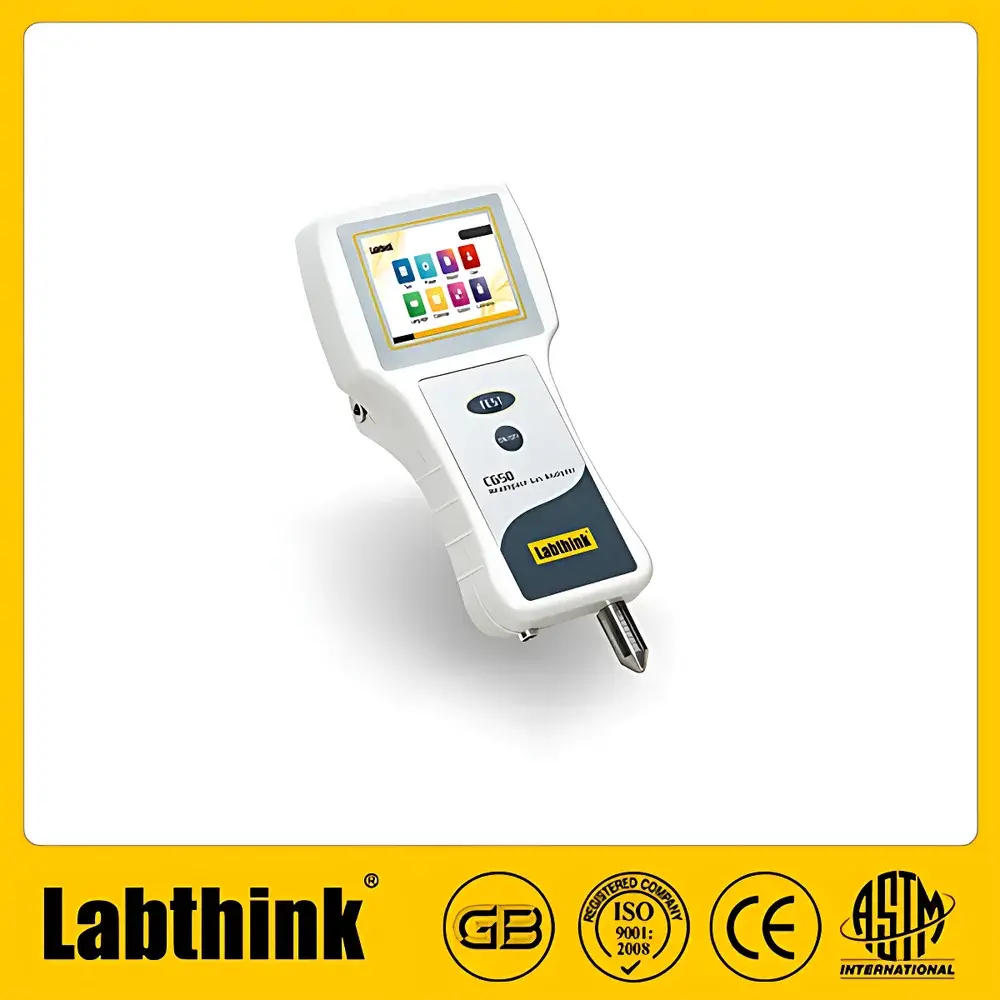
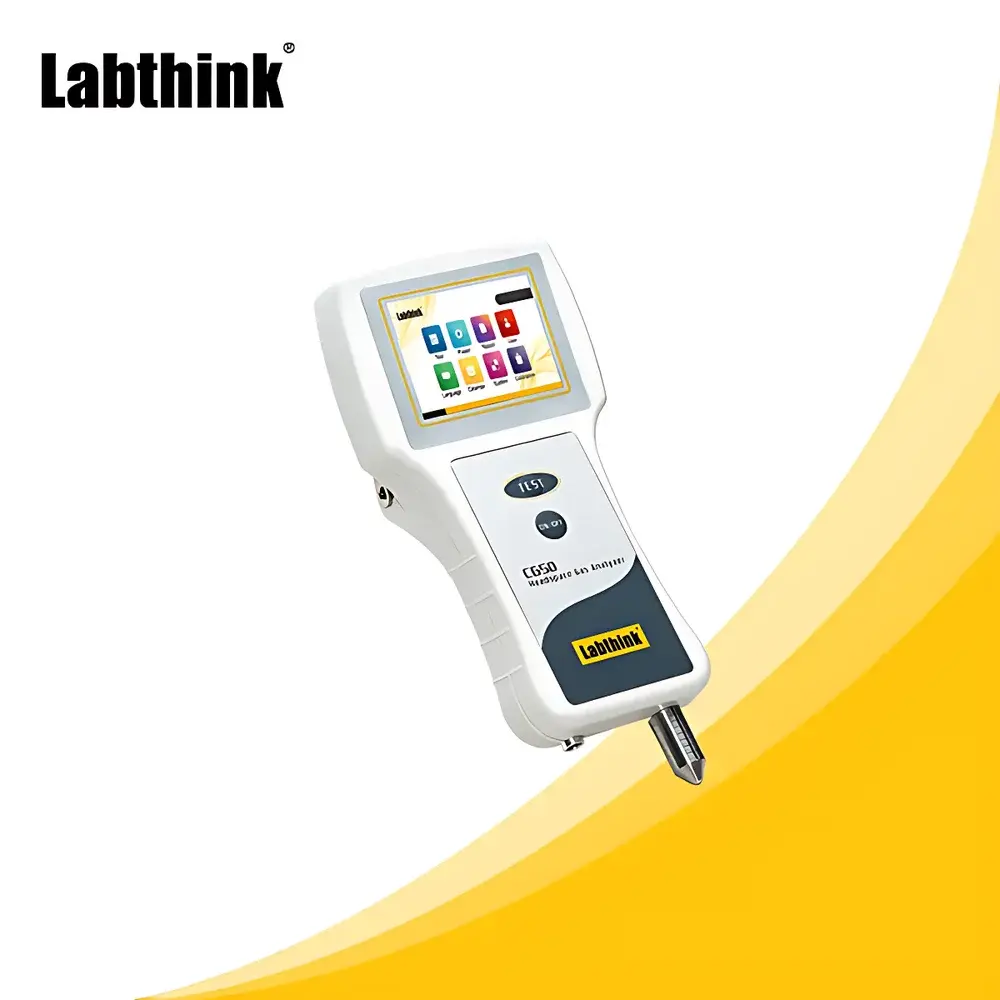
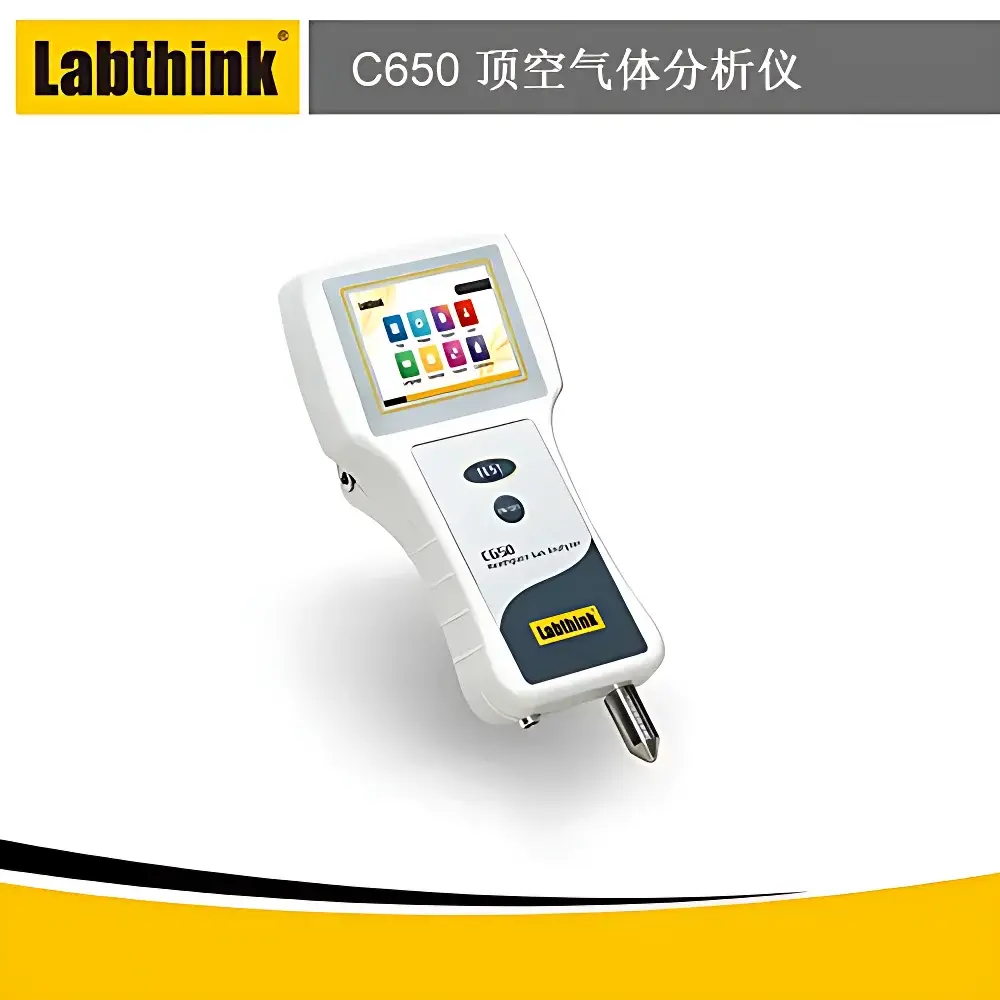
Labthink C650B Handheld Headspace Oxygen and Carbon Dioxide Analyzer
| Brand | Labthink |
|---|---|
| Model | C650B |
| Origin | Shandong, China |
| Manufacturer Type | Direct Manufacturer |
| Category | Domestic Instrument |
| Price Range | USD 1,400 – 7,000 |
| O₂ Measurement Principle | Electrochemical Sensor |
| O₂ Range | 0–100% |
| O₂ Resolution | 0.1% |
| O₂ Accuracy | ±0.3% |
| CO₂ Measurement Principle | NDIR (Non-Dispersive Infrared) |
| CO₂ Range | 0–100% |
| CO₂ Resolution | 0.01% |
| CO₂ Accuracy | ±(0.03% + 5% of reading) |
| Sample Volume (O₂) | 6–8 mL |
| Sample Volume (CO₂) | 15 mL |
| Dimensions | 220 × 110 × 70 mm |
| Weight | 0.6 kg |
| Power Supply | 220 VAC ±10%, 50 Hz / 120 VAC ±10%, 60 Hz |
Overview
The Labthink C650B Handheld Headspace Oxygen and Carbon Dioxide Analyzer is an engineered solution for rapid, on-site quantitative analysis of residual gases in sealed food and pharmaceutical packaging. Designed around dual-sensor electrochemical (O₂) and non-dispersive infrared (NDIR) (CO₂) detection principles, the instrument measures headspace gas composition without compromising package integrity. Its operation conforms to fundamental gas sampling protocols defined in ASTM F2476–21 (“Standard Test Method for Determining Oxygen and Carbon Dioxide Concentrations in Modified Atmosphere Packaging”) and aligns with ISO 11607-2 requirements for packaging validation under controlled atmosphere conditions. The C650B delivers real-time, traceable measurements critical for quality control in MAP (Modified Atmosphere Packaging), vacuum-sealed production lines, cold chain logistics, and stability testing environments—where precise O₂ and CO₂ quantification directly correlates with shelf-life prediction, microbial inhibition, and oxidative degradation risk.
Key Features
- Handheld ergonomic form factor (220 × 110 × 70 mm; 0.6 kg) enabling single-handed operation in production floors, warehouse inspection zones, and field laboratories.
- Integrated dual-sensor architecture: factory-calibrated electrochemical O₂ sensor (0–100%, ±0.3% accuracy, 0.1% resolution) and optional NDIR CO₂ sensor (0–100%, ±(0.03% + 5% of reading), 0.01% resolution) with >15-year service life.
- Onboard pressure transducer for simultaneous vacuum level assessment—supporting correlation between residual O₂ concentration and seal integrity performance per ASTM D3078.
- Automated zero-point calibration via one-touch sequence using ambient air reference; no external calibration gas required for routine O₂ verification.
- Ruggedized sampling interface with quick-connect protective sleeve for stainless-steel sampling needle—minimizing contamination risk and operator exposure during puncture-based headspace extraction.
- Industrial-grade capacitive touchscreen with intuitive icon-driven workflow; firmware upgradable remotely via USB or embedded Wi-Fi module (optional).
Sample Compatibility & Compliance
The C650B accommodates a broad spectrum of rigid and semi-rigid packaging formats including aluminum cans, glass jars, PET bottles, stand-up pouches, laminated foil bags, Tetra Pak® cartons, and pharmaceutical vials (e.g., ampoules and serum bottles). It supports both atmospheric and sub-atmospheric headspace conditions, with validated performance across sample volumes from 6 mL (O₂-only mode) to 15 mL (CO₂-enabled mode). All measurement procedures comply with GLP documentation standards: audit trails, user authentication, timestamped results, and electronic signature support are available when paired with Labthink’s optional PC-based control software (v4.2+), which meets FDA 21 CFR Part 11 requirements for electronic records and signatures. Data export formats include CSV, PDF, and XML—compatible with LIMS integration and internal QA/QC reporting systems.
Software & Data Management
The C650B embeds 1200-test local memory with auto-save and power-loss recovery functionality. Each record stores O₂/CO₂ values, sampling time, ambient temperature/pressure, operator ID, and instrument serial number. Optional Labthink Control Suite enables advanced data visualization, statistical process control (SPC) charting, batch-level trend analysis, and automated report generation compliant with ISO/IEC 17025 clause 7.8. Data transfer occurs via USB 2.0 or Bluetooth 5.0 (optional), supporting secure synchronization with enterprise QMS platforms. Firmware updates preserve calibration coefficients and historical settings—ensuring metrological continuity across device lifecycle.
Applications
- Food manufacturing: Verification of O₂ 30% in fresh-cut produce trays, and residual O₂ in infant formula cans to prevent lipid oxidation.
- Pharmaceutical packaging: Headspace monitoring of lyophilized vials and blister packs per USP and ICH Q5C stability guidelines.
- Quality assurance labs: Routine release testing of MAP meat trays, cheese wedges, and ready-to-eat meals against internal specifications and retailer AQL limits.
- Process validation: Correlation of headspace composition with sealing temperature, dwell time, and gas flush parameters during packaging line qualification (IQ/OQ/PQ).
- Research & development: Accelerated aging studies assessing O₂ ingress rates through barrier films using repeated headspace sampling over time.
FAQ
What is the recommended recalibration interval for the O₂ sensor?
Electrochemical O₂ sensors should be verified quarterly using certified reference air (20.9% O₂); full recalibration is advised annually or after 2,000 test cycles.
Can the C650B measure other gases such as N₂ or Ar?
No—the instrument is configured exclusively for O₂ and CO₂. Nitrogen and argon are inferred by difference only when total headspace composition is known and O₂/CO₂ sum ≤ 100%.
Is underwater sampling supported for buoyant or low-density packages?
Yes—optional B2226 underwater sampling module enables headspace extraction from floating pouches or low-buoyancy containers without gas loss or water intrusion.
Does the device meet CE or UKCA marking requirements?
Yes—certified to EN 61000-6-2 (immunity) and EN 61000-6-3 (emissions); RoHS-compliant construction and medical-grade electrical isolation.
How is measurement traceability maintained?
Each unit ships with NIST-traceable calibration certificate; sensor output is logged with raw voltage signals, environmental compensation factors, and algorithmic correction parameters accessible via diagnostic mode.





