
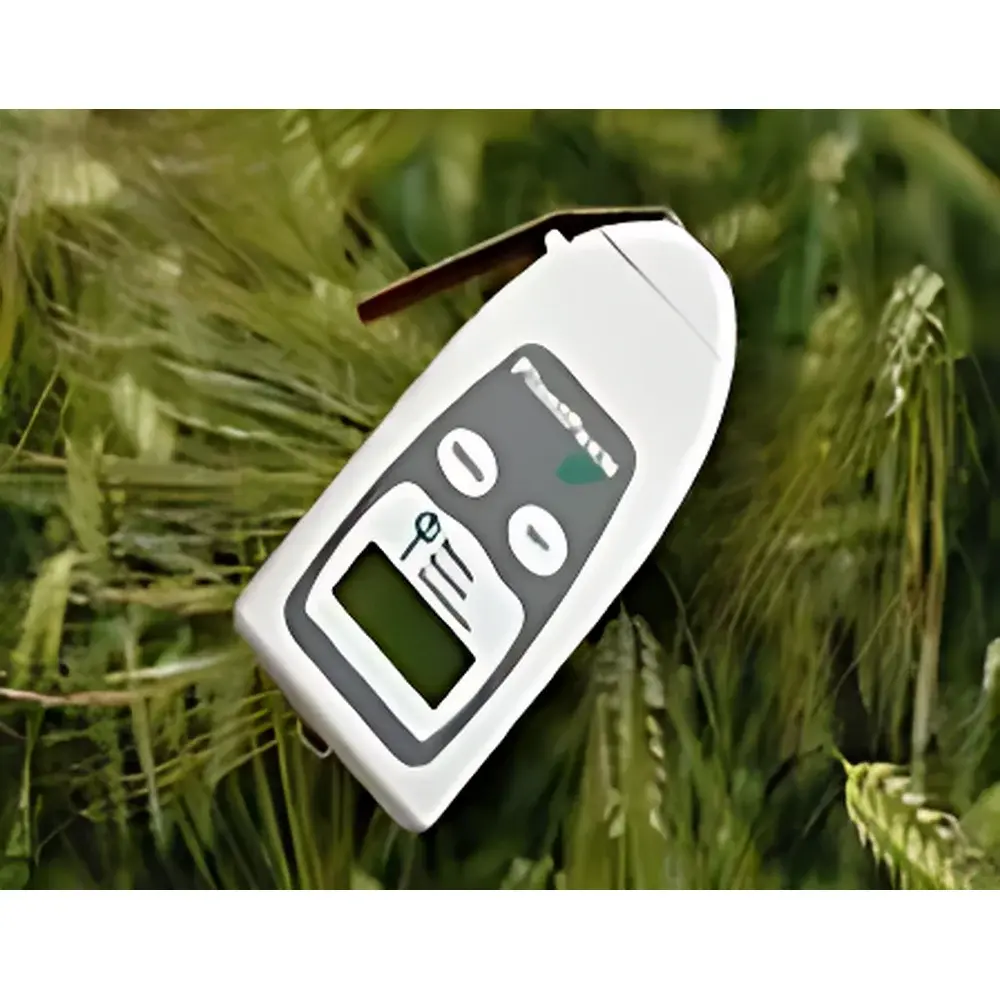
N-Pen Handheld Leaf-Clip Nitrogen Meter
| Origin | Czech Republic |
|---|---|
| Manufacturer Type | Distributor |
| Origin Category | Imported |
| Model | N-Pen |
| Pricing | Upon Request |
Overview
The N-Pen Handheld Leaf-Clip Nitrogen Meter is a field-deployable, non-destructive optical instrument engineered for rapid, in situ estimation of leaf nitrogen (N) concentration in actively growing plants. It operates on the well-established physiological principle that leaf nitrogen content correlates strongly with chlorophyll concentration, which in turn modulates spectral reflectance—particularly in the visible to near-infrared range. By measuring differential reflectance at two discrete wavelengths (565 nm and 760 nm), the N-Pen calculates a normalized index calibrated against destructive laboratory reference measurements (e.g., Kjeldahl or Dumas combustion analysis). This empirical calibration approach enables direct readout of relative or absolute nitrogen content (% dry weight or mg/g), provided species-specific calibration curves are applied. Designed for agronomic decision support, the N-Pen supports real-time assessment of plant N status during critical growth stages—facilitating precision nitrogen management without tissue sampling or lab turnaround delays.
Key Features
- Non-invasive leaf-clamp design ensures zero tissue damage and enables repeated longitudinal measurements on the same plant across phenological stages.
- Dual-wavelength LED optical system (565 nm & 760 nm) with broad-spectrum detection range (500–800 nm) optimized for chlorophyll-a/b absorption minima and red-edge reflectance features.
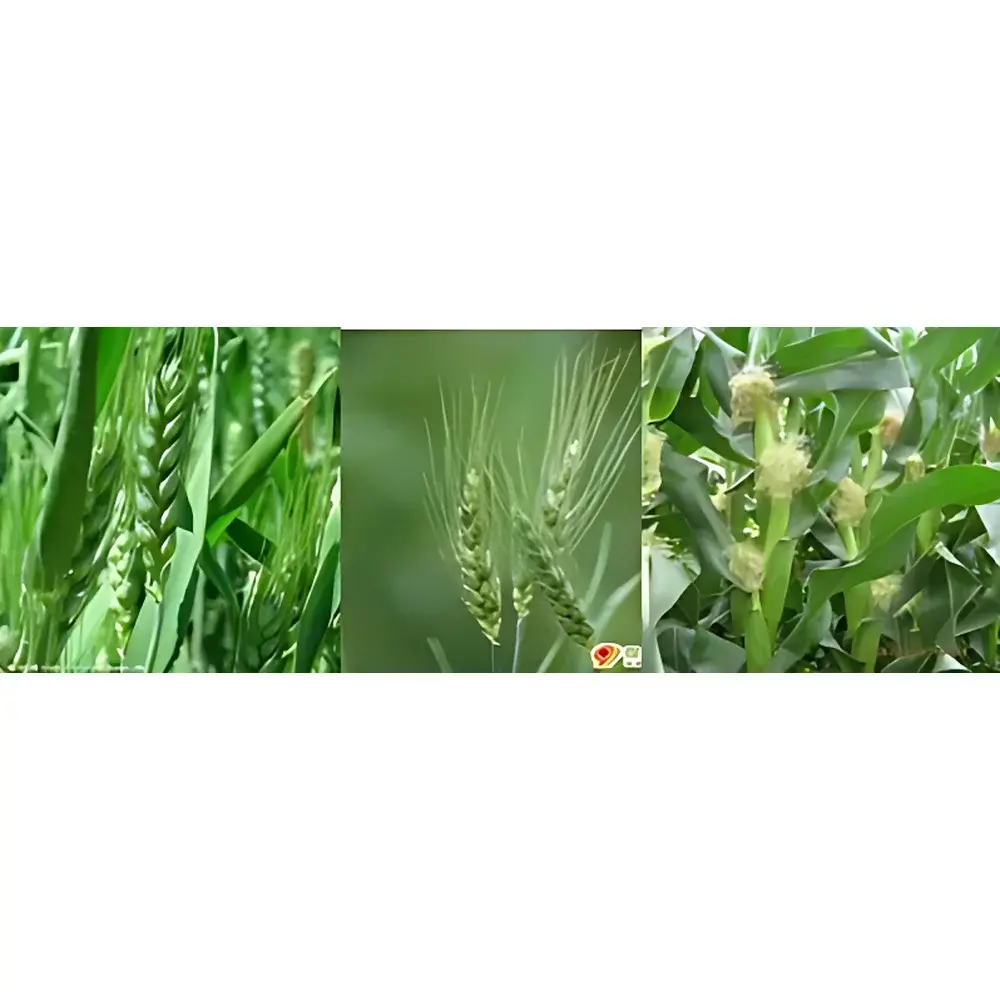
- Pre-loaded factory calibrations for major cereals: wheat (Triticum aestivum), barley (Hordeum vulgare), and maize (Zea mays), validated against ISO 14284 and AOAC 992.23 reference methods.
- Onboard data storage capacity of 100,000 readings with timestamping, supported by 4 MB internal flash memory compliant with IEC 60730-1 safety standards for embedded systems.
- Rugged ergonomic housing (170 × 57 × 30 mm; 180 g) rated IP65 for dust and water resistance; sealed membrane keypad prevents ingress under field conditions.
- Extended battery life: up to 48 hours of continuous operation using four AAA alkaline or rechargeable NiMH cells; low-battery warning and auto-power-off after 3 minutes of inactivity.
- Operational temperature range: 0–55 °C; storage range: −10–60 °C; humidity tolerance: 0–95% RH (non-condensing), meeting ASTM D4169 environmental conditioning requirements for portable instrumentation.
Sample Compatibility & Compliance
The N-Pen is validated for use on intact, fully expanded leaves from monocot and dicot species exhibiting uniform mesophyll structure and minimal surface wax or pubescence. Standardized sampling protocol recommends measurement on the second or third fully expanded leaf from the apex, at a consistent position (mid-lamina, avoiding veins and margins). While pre-calibrated for cereal crops, users may develop custom calibration models using paired field-collected leaf samples and certified laboratory N analysis—adhering to GLP-compliant documentation practices. The device conforms to CE marking directives (2014/30/EU EMC Directive and 2011/65/EU RoHS), and its optical output complies with IEC 62471 photobiological safety classification (Risk Group 1).
Software & Data Management
Data export is supported via USB-C interface (USB 2.0 full-speed) to Windows/macOS platforms using vendor-supplied PC software. Exported files follow CSV format with columns: Timestamp, Sample ID, Raw Reflectance Ratio (R760/R565), Calibrated N Value (mg/g), Standard Deviation (if multiple readings per sample), and Calibration ID. Audit trail functionality logs all calibration updates, firmware revisions, and user-initiated resets—supporting 21 CFR Part 11–aligned record integrity where required. No cloud connectivity or proprietary subscription services are implemented; all firmware updates are distributed as signed binary packages with SHA-256 checksum verification.
Applications
- Site-specific nitrogen fertilizer optimization in cereal production systems, reducing over-application and mitigating nitrate leaching risks per EU Nitrates Directive (91/676/EEC).
- Phenotyping trials for N-use efficiency (NUE) traits in breeding programs, enabling high-throughput screening under field conditions.
- Academic teaching labs for plant physiology courses—demonstrating links between nutrient status, photosynthetic pigment composition, and spectral response.
- Long-term ecological monitoring of forest understory or grassland species responding to atmospheric N deposition gradients.
- Validation of satellite- or UAV-based vegetation indices (e.g., NDVI, CIred-edge) through ground-truthing at plot scale.
FAQ
How does the N-Pen differ from conventional chlorophyll meters like the SPAD-502?
Unlike SPAD devices that report unitless chlorophyll index values, the N-Pen outputs nitrogen concentration estimates (mg/g or %) after species-specific calibration—bridging the gap between optical proxy and agronomically actionable nutrient metrics.
Can the N-Pen be used on senescing or stressed leaves?
Accuracy declines significantly in leaves exhibiting chlorosis, necrosis, or severe drought stress due to decoupling of chlorophyll–N relationships; it is recommended for use only on healthy, green, fully turgid foliage.
Is firmware upgrade capability available?
Yes—firmware updates are distributed annually and include improvements to baseline drift compensation algorithms and expanded calibration file management.
Does the device require annual recalibration against reference standards?
No physical recalibration is needed; however, users conducting long-term multi-year studies should revalidate their custom calibration curves every 12–18 months using concurrent lab-analyzed samples.
What is the measurement repeatability under controlled conditions?
Intra-leaf coefficient of variation (CV) is ≤3.2% (n=10 readings per leaf) on homogeneous wheat flag leaves at 25 °C, as verified per ISO 5725-2 precision testing protocols.



