
SL3500 LED Programmable Light Source for Plant Physiology Research
| Origin | Czech Republic |
|---|---|
| Manufacturer Type | Authorized Distributor |
| Origin Category | Imported |
| Model | SL3500 |
| Price | Upon Request |
| Light Output at 12.7 cm | Up to 3,000 µmol(photon)·m⁻²·s⁻¹ |
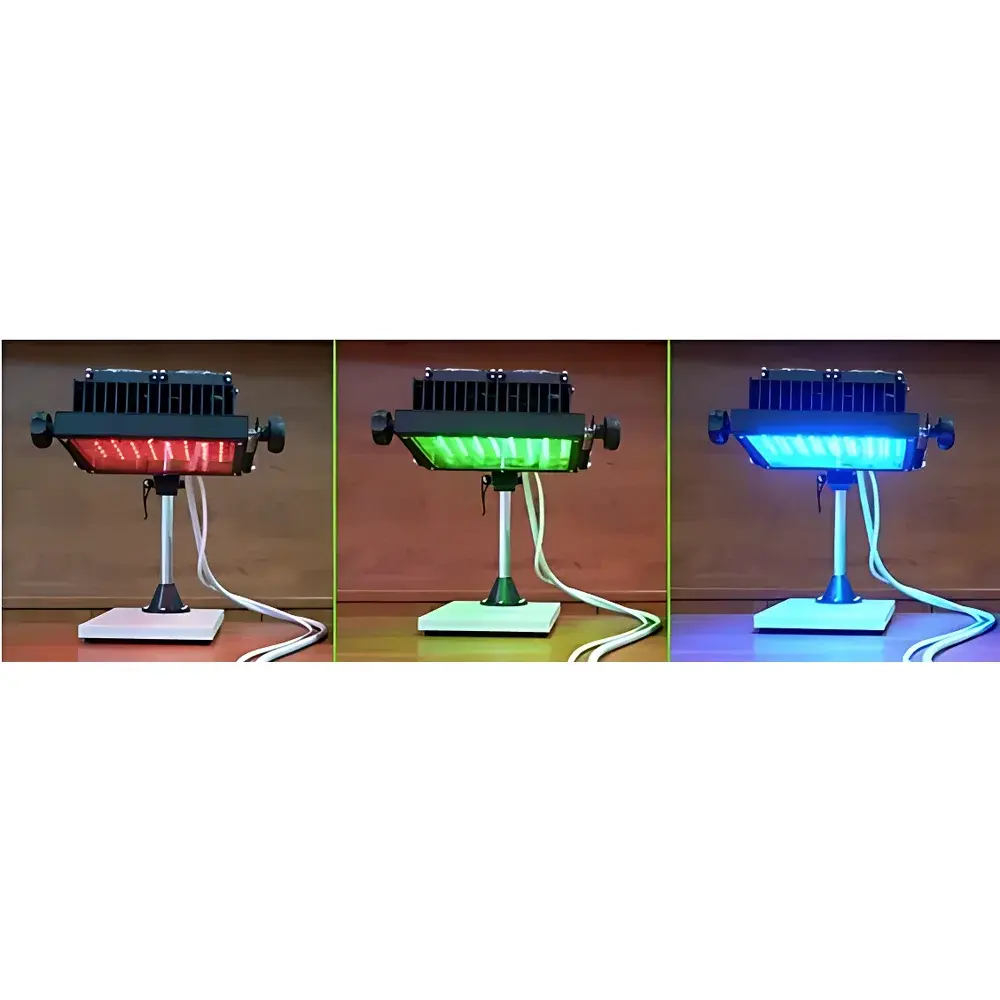
| Spectral Options | Cool White, Warm White, Deep Blue (447 nm), Red-Orange (617 nm), RGB (627/530/447 nm), Far-Red (optional) |
| Temporal Resolution | Down to 100 µs pulse width |
| Control Modes | Manual keypad, External controller, PC-based Light Studio software |
| LED Lifetime | ≥50,000 h (6–7 years typical operation) |
| Cooling | Integrated active thermal management |
Overview
The SL3500 LED Programmable Light Source is a precision-engineered illumination system designed specifically for controlled-environment plant physiology and photosynthesis research. Unlike conventional broad-spectrum lamps, the SL3500 employs high-efficiency, narrow-band LED arrays calibrated to deliver spectrally defined, temporally precise photon fluxes—enabling rigorous experimental control over light quality (wavelength), quantity (PPFD), and timing (duration, frequency, duty cycle). Its architecture is grounded in photobiological measurement principles: photon flux density (µmol·m⁻²·s⁻¹) is traceably quantified using calibrated silicon photodiodes, while spectral output is characterized per CIE 127:2007 and IEC 62471 standards. The system supports both steady-state and dynamic light regimes—including microsecond-scale flash protocols essential for chlorophyll fluorescence induction kinetics (e.g., OJIP transient analysis) and non-photochemical quenching (NPQ) assays—making it suitable for compliance with ISO 10211 (photosynthetic performance testing) and ASTM E2937 (light exposure protocol validation).
Key Features
- High-intensity, spectrally stable output: Delivers up to 3,000 µmol(photon)·m⁻²·s⁻¹ at 12.7 cm (5 inches), with <±2% spatial uniformity across active irradiation area.
- Multi-timescale programmability: Pulse widths adjustable from 100 µs to hours; ramp rates configurable for linear, exponential, or stepwise intensity transitions.
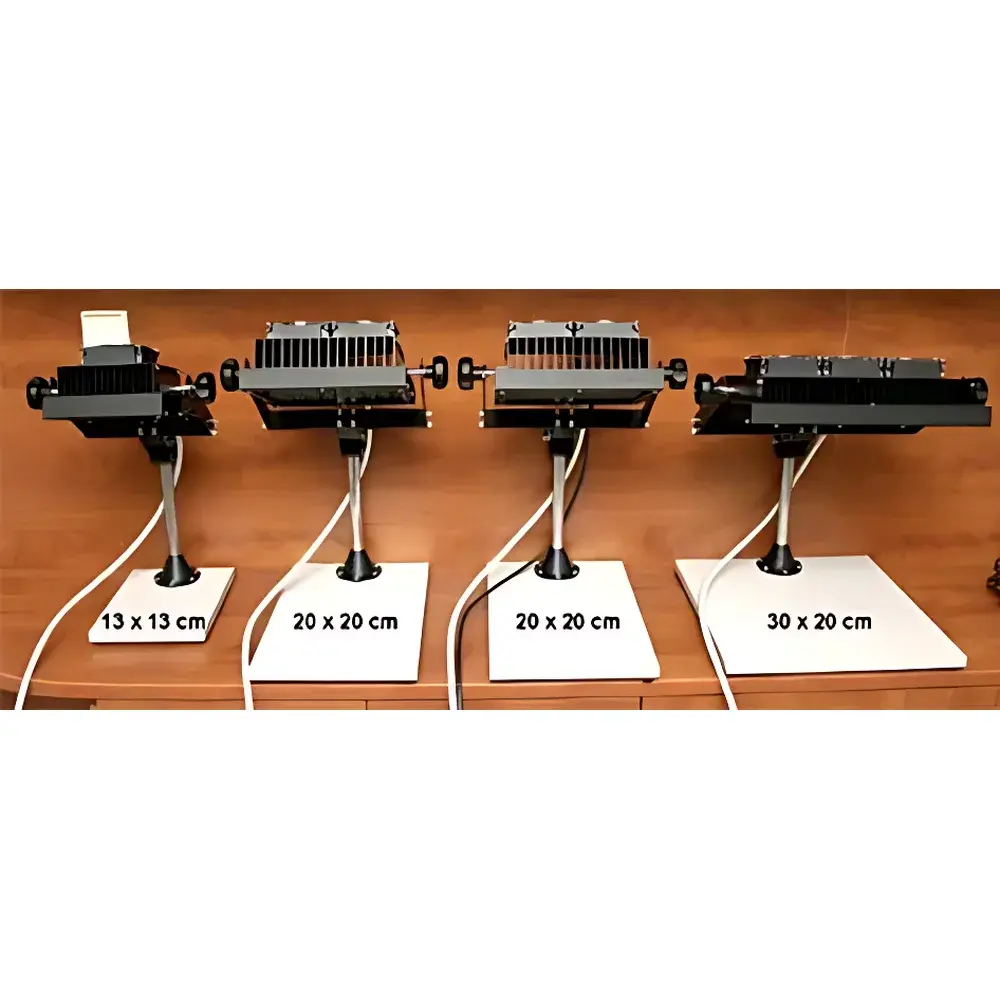
- Modular spectral configurations: Five model variants (SL3500-A through SL3500-E) support single-wavelength, dual-wavelength, or full RGB + far-red (730 nm) combinations—each LED channel independently addressable.
- Dual-control architecture: Intuitive four-button front-panel interface for rapid manual setup; optional Light Studio software enables script-based automation, real-time monitoring, and audit-trail logging compliant with GLP/GMP documentation requirements (21 CFR Part 11-ready when used with validated software environment).
- Thermally regulated operation: Integrated fan-and-heat-sink assembly maintains junction temperature ≤65°C under continuous max-output conditions, ensuring wavelength stability (<±1 nm drift) and long-term radiometric repeatability.
- Scalable integration: Designed for compatibility with commercial chlorophyll fluorometers (e.g., Walz, Hansatech), gas exchange systems (e.g., LI-COR 6800), and custom growth chambers via TTL/RS-232/USB interfaces.
Sample Compatibility & Compliance
The SL3500 accommodates diverse biological samples—from detached leaves and seedlings in cuvette-based assays to whole plants in controlled-environment cabinets. Its uniform irradiance profile (measured per ISO 9050 Annex B) ensures reproducible photoresponse across replicates. For regulatory applications, the system supports experimental designs aligned with OECD Test Guideline 208 (terrestrial plant toxicity) and EPPO PM 7/142 (light stress evaluation in phytosanitary protocols). All optical components meet IEC 60825-1 Class 1 laser safety classification when operated within specified duty cycles; CE marking confirms conformity with EU Electromagnetic Compatibility (2014/30/EU) and Low Voltage (2014/35/EU) directives.
Software & Data Management
Light Studio (v3.2+, optional) provides a deterministic, event-driven programming environment for constructing complex illumination sequences. Users define time-series light regimes using hierarchical logic: nested loops, conditional triggers (e.g., “if Fv/Fm < 0.7, initiate recovery protocol”), and synchronized multi-channel modulation. All parameter changes—including intensity setpoints, spectral ratios, and timing events—are timestamped and stored in encrypted SQLite databases with SHA-256 checksum integrity verification. Export formats include CSV (for MATLAB/Python analysis), XML (for LIMS integration), and PDF reports containing metadata (operator ID, calibration date, firmware version) required for ISO/IEC 17025-accredited labs.
Applications
- Photosynthetic phenotyping: Standardized light adaptation prior to PAM fluorometry or CO₂ assimilation measurements, minimizing pre-assay variability.
- Abiotic stress simulation: Controlled imposition of high-light, UV-B, or spectral imbalance stressors to quantify photoinhibition kinetics and antioxidant response dynamics.
- Circadian rhythm studies: Precise entrainment of endogenous clocks via programmable dawn/dusk transitions and low-amplitude sinusoidal modulation.
- LED-based growth chamber augmentation: Supplemental lighting with tunable R:FR ratios to modulate phytochrome photoequilibrium and stem elongation responses.
- Method development: Calibration reference source for validating quantum sensors and spectroradiometers per NIST-traceable protocols.
FAQ
Is the SL3500 compatible with third-party data acquisition systems?
Yes—TTL trigger inputs/outputs and RS-232 serial communication enable hardware synchronization with fluorometers, IRGA units, and environmental controllers.
What calibration documentation is provided?
Each unit ships with a factory spectral irradiance certificate (NIST-traceable photodiode calibration), spatial uniformity map, and full spectral power distribution (SPD) report measured on an OL 750-LED spectroradiometer.
Can I run multiple SL3500 units from one Light Studio instance?
Yes—Light Studio supports daisy-chained USB or Ethernet-connected systems with independent timeline scheduling and cross-unit event triggering.
Does the system require external cooling or ventilation?
No—the integrated active cooling subsystem operates autonomously; ambient operating temperature range is 10–35°C without derating.
How often does recalibration recommended?
Annual recalibration is advised for GLP-compliant workflows; drift remains <±1.5% per 10,000 hours of operation under standard use conditions.




