
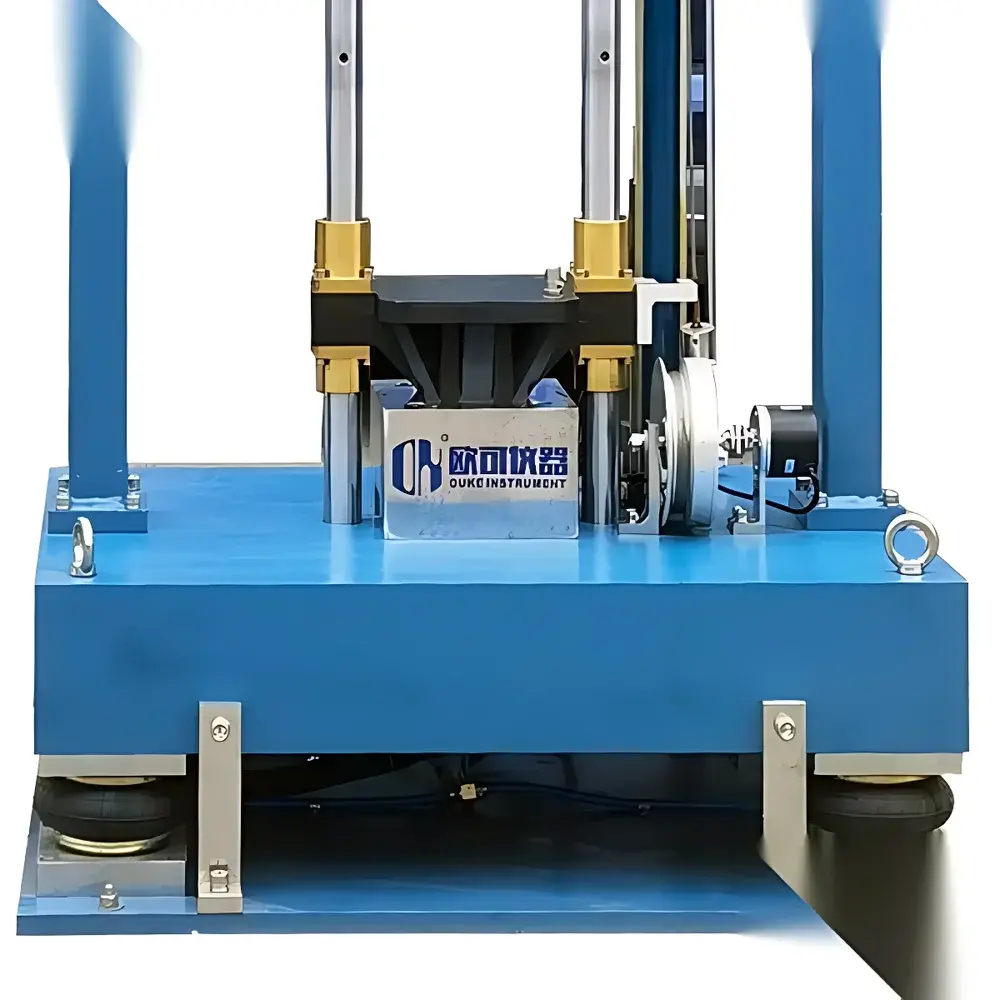
English Product Name
| Brand | OK Instrumentation |
|---|---|
| Origin | Imported |
| Manufacturer Type | Authorized Distributor |
| Price | USD 14,000–42,000 (FOB) |
| Load Capacity | 10–100 kg |
| Table Dimensions | 20×20 to 80×65 cm |
| Acceleration Range | 150–15,000 m/s² |
| Pulse Duration | 0.5–30 ms |
| Waveform Options | Half-sine, Trapezoidal, Post-peak Sawtooth |
| Power Supply | AC 380 V ±5%, 50/60 Hz, 3-phase 5-wire |
Overview
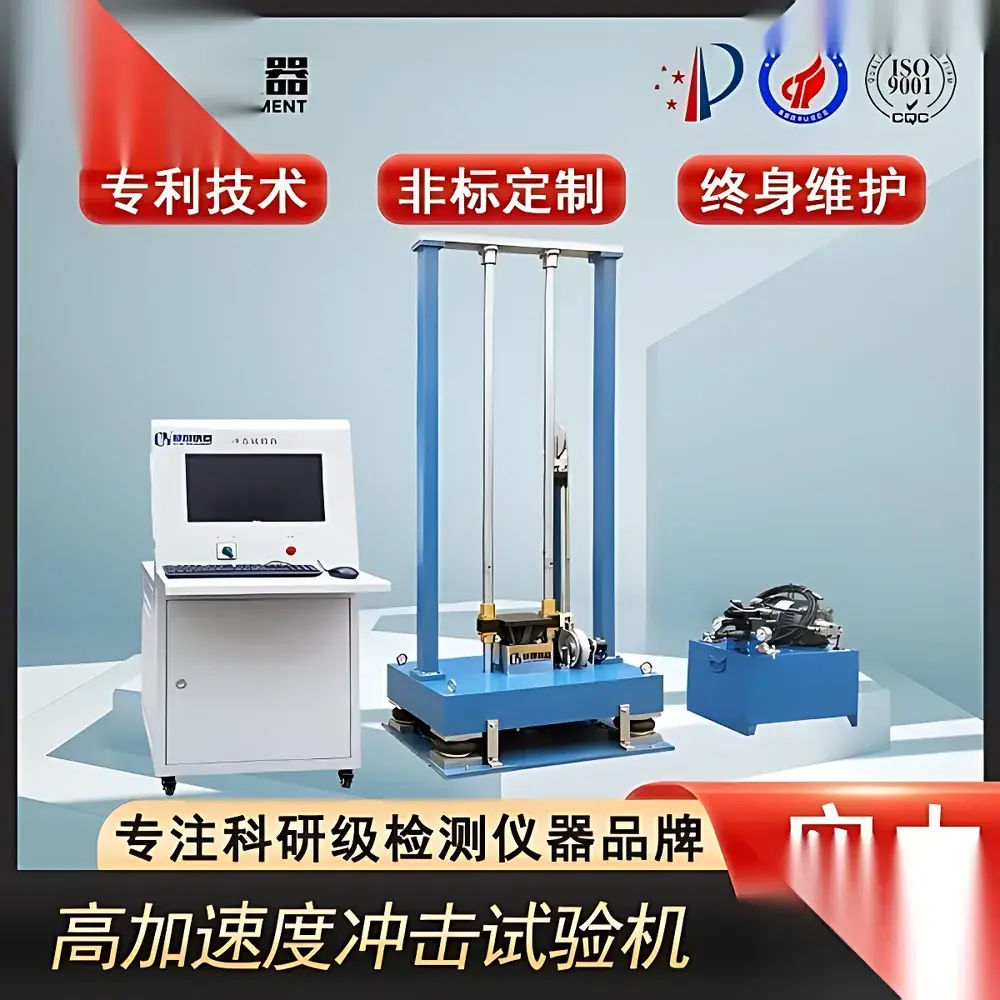
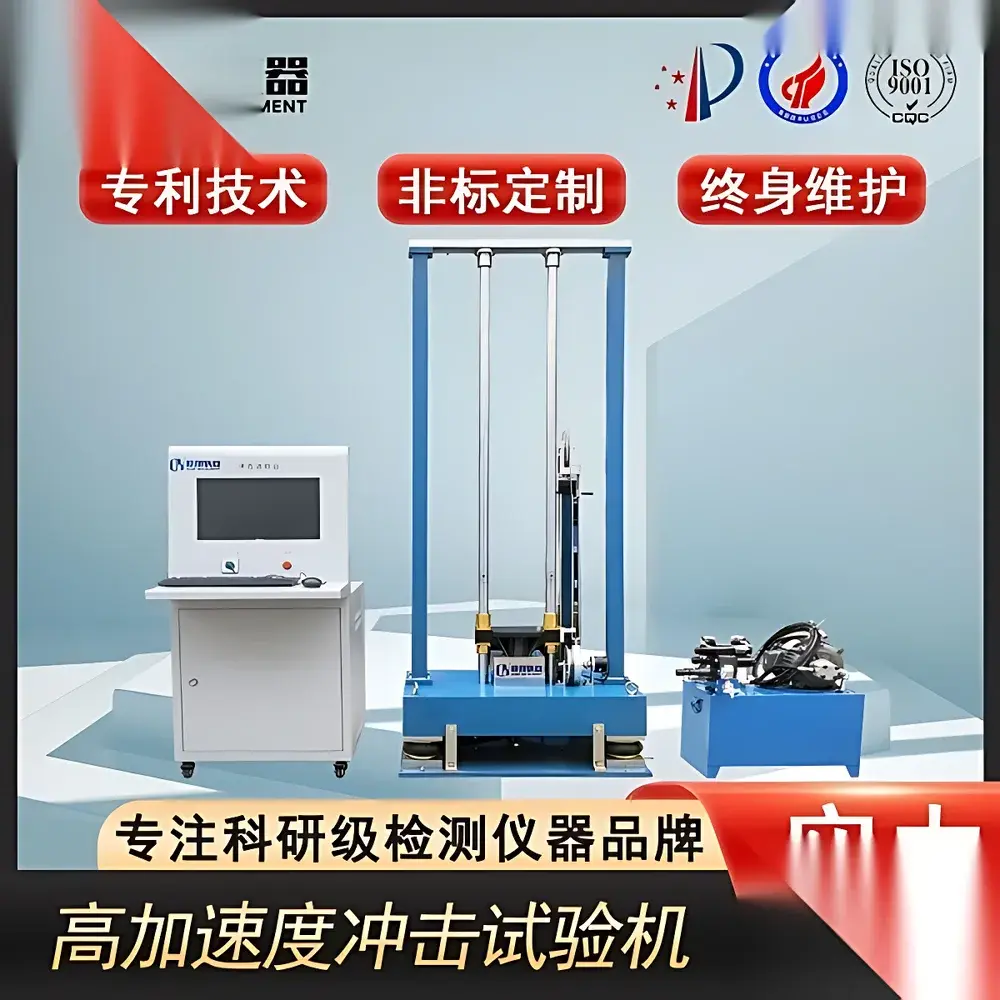
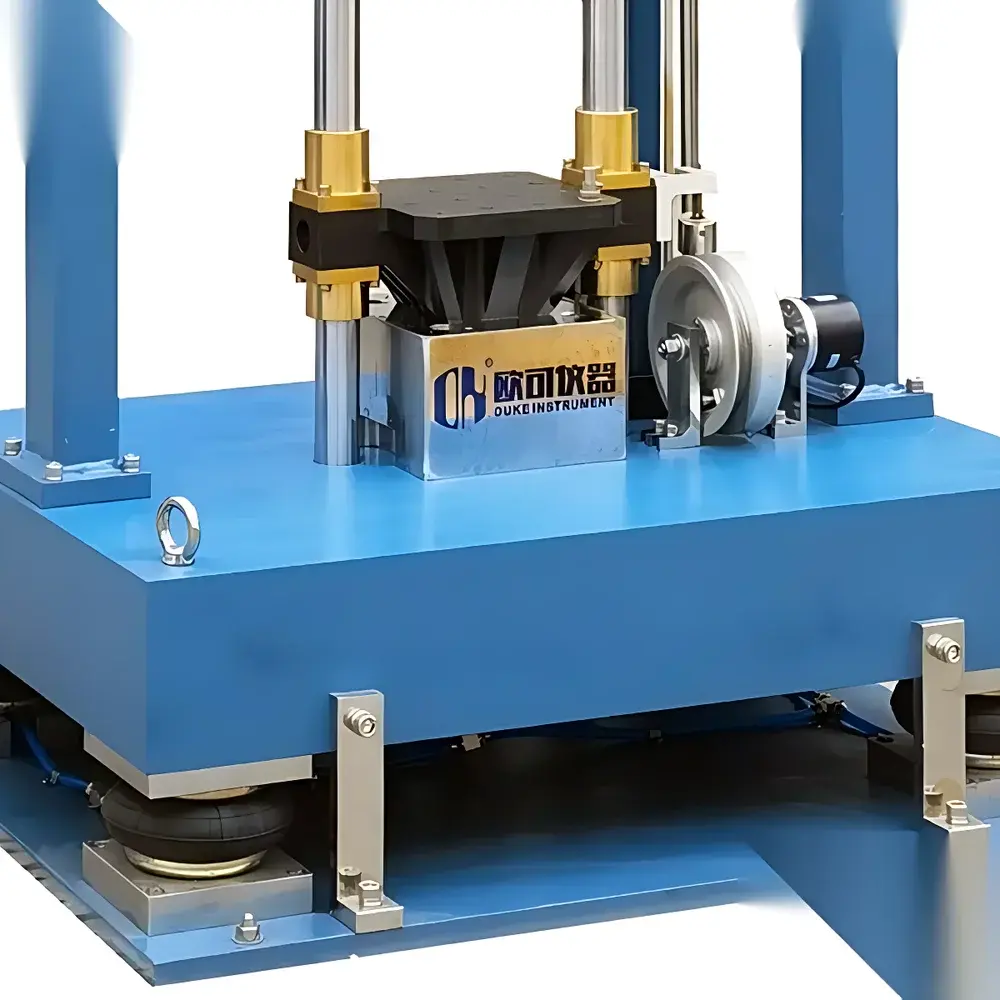
The OK-S Series Electromechanical Shock Testing Machine is a precision-engineered system designed for controlled mechanical shock simulation in compliance with international environmental stress testing standards. It operates on the principle of electromechanically induced free-fall impact or spring-compression release to generate repeatable, programmable shock pulses—primarily half-sine, trapezoidal, and post-peak sawtooth waveforms—as defined in IEC 60068-2-27, MIL-STD-810H Method 516.7, GJB 150.18A, JIS C 0041, and ASTM D999. Unlike pneumatic or hydraulic shock testers, this series employs a DC motor-driven lifting mechanism with precision gear reduction and roller-guided vertical motion, enabling accurate control over impact velocity, acceleration magnitude, pulse duration, and repetition frequency. The machine’s base incorporates high-damping structural isolation to minimize energy transmission to the facility floor—critical for laboratories sharing infrastructure with sensitive metrology or vibration-sensitive instrumentation.
Key Features
- Electromechanical actuation with brushless DC motor and planetary gear reducer ensures stable lift speed control and long-term repeatability without compressed air dependency or hydraulic fluid maintenance.
- Adjustable impact height and programmable spring pre-compression allow independent tuning of peak acceleration (150–15,000 m/s²) and pulse width (0.5–30 ms), supporting both low-g/high-duration and high-g/short-duration test profiles.
- Interchangeable anvil and cushioning interface—compatible with elastomeric pads, aluminum honeycomb, and polyurethane buffers—enables waveform shaping per test specification requirements.
- Integrated safety architecture includes dual-channel emergency stop circuitry, mechanical limit switches, real-time position monitoring, and automatic power cutoff during power loss or overload events.
- Robust welded steel frame with reinforced base plate and vibration-damped mounting feet reduces transmitted force to <5% of input shock energy, satisfying ISO 2041 and ANSI S2.70 recommendations for lab environment compatibility.
Sample Compatibility & Compliance
The OK-S series accommodates test specimens up to 100 kg across four standard configurations (OK-S-10, OK-S-25, OK-S-50, OK-S-100), each validated for mounting via threaded inserts, T-slots, or custom fixture plates. Specimens include electronic enclosures, avionics modules, automotive ECUs, medical device housings, and packaging systems. All models are CE-marked and comply with electromagnetic compatibility (EMC) directives (2014/30/EU) and low-voltage directive (2014/35/EU). Calibration traceability follows ISO/IEC 17025-accredited procedures; factory-certified shock pulse verification reports are provided with each unit. The system supports GLP/GMP-aligned test documentation when paired with optional data acquisition modules meeting FDA 21 CFR Part 11 audit trail requirements.
Software & Data Management
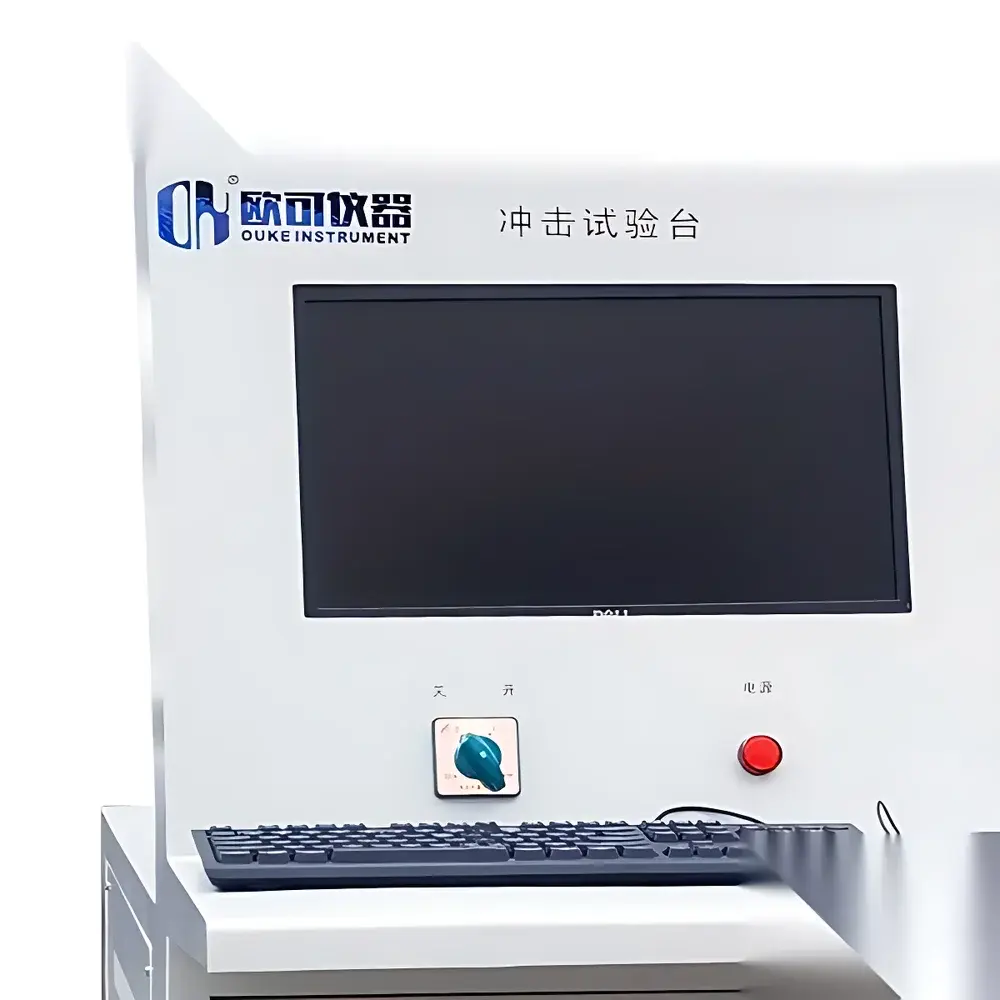
While the base configuration operates via front-panel digital controls, optional PC-based software (OK-TestControl v3.2) enables full waveform parameter scripting, real-time acceleration monitoring via integrated piezoelectric accelerometers, and automated pass/fail evaluation against user-defined tolerance bands. Data export is supported in CSV, MATLAB (.mat), and universal TDMS formats. Software logs include timestamped operator ID, environmental conditions (optional temperature/humidity sensor input), calibration status, and system diagnostics—facilitating traceability for internal audits and regulatory submissions.
Applications
This tester serves critical roles in product development, qualification, and production line screening. Typical use cases include: validating structural integrity of PCB assemblies under transit shock; assessing solder joint reliability in aerospace-grade electronics; verifying latch retention in portable diagnostic devices; evaluating drop resistance of handheld industrial scanners; and performing accelerated life testing of battery module housings subjected to repeated mechanical transients. Its deterministic pulse generation makes it especially suitable for comparative analysis between material variants, design iterations, or supplier components—where statistical confidence in pulse fidelity directly impacts failure mode correlation.
FAQ
What standards does the OK-S series support out-of-the-box?
It natively generates waveforms compliant with IEC 60068-2-27 (half-sine, trapezoidal, sawtooth), MIL-STD-810H Method 516.7 (Shock), and GJB 150.18A. Custom waveform synthesis requires optional software licensing.
Can the system be integrated into an existing test automation platform?
Yes—RS-232, Ethernet (TCP/IP), and optional GPIB interfaces support SCPI command set integration with LabVIEW, Python, or PLC-based control systems.
Is on-site calibration and certification available?
Factory-certified calibration is included. On-site recalibration by ISO/IEC 17025-accredited field engineers is available globally upon request.
What is the typical lead time for spare parts such as impact anvils or cushioning pads?
Standard consumables ship within 3 business days from EU and US distribution hubs; custom-machined fixtures require 10–15 working days.
Does the system meet seismic anchoring requirements for earthquake-prone facilities?
Mounting templates and seismic anchor kits conforming to ASCE 7-22 and IBC 2021 Appendix Chapter A1 are available as accessories.



