
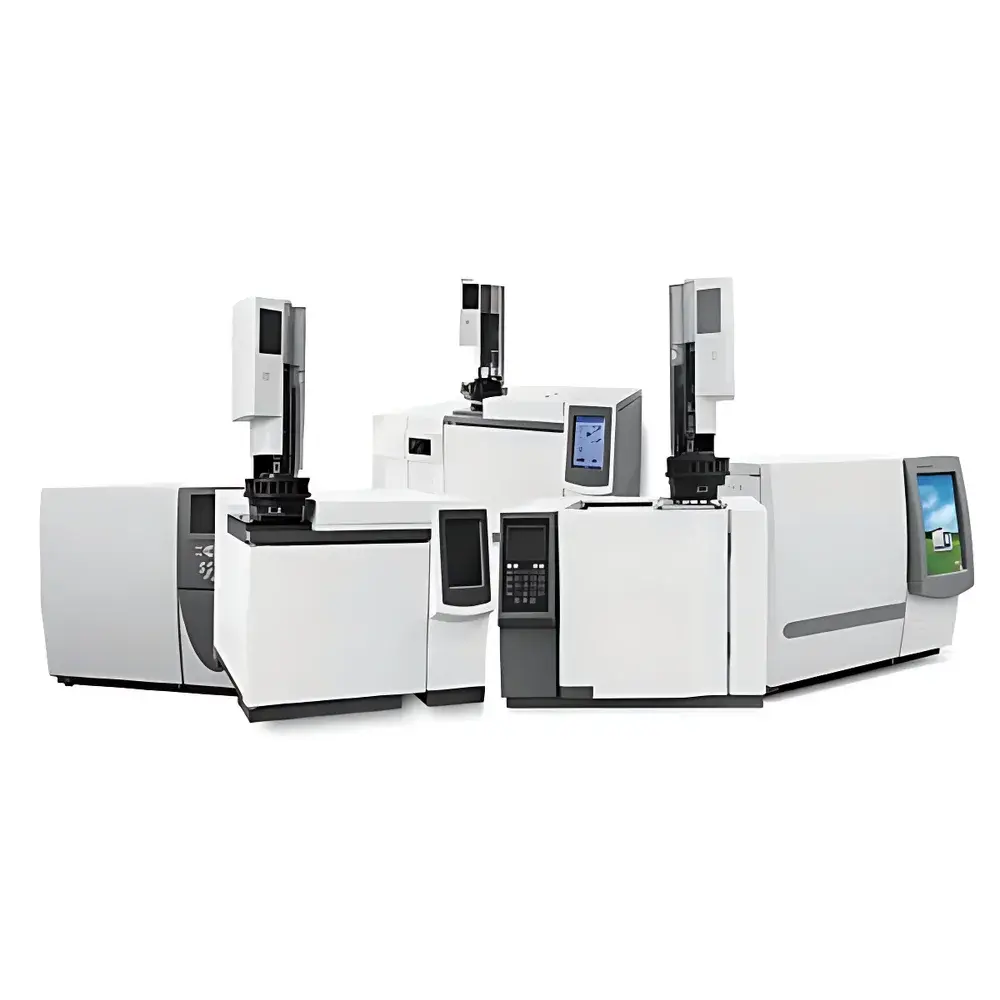
Hailong TD-2000 Dual-Stage Thermal Desorption System with Cryo-Focusing Trap
| Brand | Hailong |
|---|---|
| Origin | China |
| Manufacturer Type | Authorized Distributor |
| Model | TD-2000 |
| Primary Desorption Temp Range | 40–380 °C, ±1 °C |
| Valve Heating Range | 40–240 °C, ±1 °C |
| Transfer Line Temp Range | 40–220 °C, ±1 °C |
| Cryo-Focusing Trap Temp Range | −35 to 400 °C |
| Flash Desorption Ramp Rate | >3000 °C/min |
| Peak Width (FWHM) | <3 s |
| Sample Tube ID | ≤6.5 mm |
| Primary Desorption Time | 0–60 min |
| Injection Time | 0–10 min |
| Simulated Sampling Duration | 0–60 min |
| Simulated Sampling Flow Rate | 16–160 mL/min |
| RSD | ≤2.5% (benzene in 0.05 µg methanol standard) |
| Power Consumption | 500 W |
| Cooling Method | Solid-State Thermoelectric (Peltier) |
| Valve Actuation | Motor-Driven 6-Port Rotary Valve |
| System Architecture | Integrated Benchtop Unit with Embedded Microcontroller and Full-Text LCD Interface |
Overview
The Hailong TD-2000 Dual-Stage Thermal Desorption System with Cryo-Focusing Trap is engineered for high-fidelity, quantitative analysis of volatile and semi-volatile organic compounds (VOCs and SVOCs) from solid sorbent tubes in conjunction with gas chromatography–mass spectrometry (GC–MS) or GC–flame ionization detection (GC–FID). Unlike single-stage desorption systems, the TD-2000 implements a two-step thermal transfer process: primary thermal desorption releases analytes from the sampling tube into a focusing trap cooled to −35 °C via solid-state Peltier cooling; secondary flash desorption then rapidly transfers the cryo-concentrated analytes as a narrow, solvent-free band onto the GC column. This dual-stage architecture enhances sensitivity by up to two orders of magnitude, minimizes band broadening, and ensures chromatographic integrity—particularly critical for trace-level environmental monitoring, indoor air quality assessment, occupational hygiene testing, and method validation per ISO 16017-1, EPA TO-17, and ASTM D6196. The system operates without cryogenic liquids (e.g., liquid nitrogen or CO₂), reducing operational cost and logistical complexity while maintaining reproducible low-temperature trapping performance.
Key Features
- Solid-state thermoelectric (Peltier) cooling eliminates reliance on consumable cryogens, lowering total cost of ownership and enabling unattended overnight operation.
- Entire sample pathway—including transfer lines, six-port valve, and trap assembly—is constructed from high-inertness, silanized fused-silica or electropolished stainless-steel tubing, minimizing surface adsorption and carryover across consecutive injections.
- Motor-driven, high-temperature 6-port rotary valve (rated to 240 °C) ensures precise, repeatable switching without external pneumatic drivers—enhancing laboratory safety and simplifying integration in regulated environments.
- Heated valve manifold and transfer line junctions are fully embedded within an insulated thermal enclosure, eliminating cold spots and preventing condensation or analyte loss during transfer.
- Ultra-rapid secondary desorption (>3000 °C/min ramp rate) produces sub-3-second peak widths at base, improving resolution of co-eluting isomers and enhancing signal-to-noise ratio.
- Embedded microcontroller with full-text LCD interface supports standalone operation, real-time parameter monitoring, and programmable method storage for up to 20 user-defined protocols.
- Standard TTL/RS-232 trigger output enables synchronized start of GC oven ramp and data acquisition software—fully compliant with GLP/GMP workflows requiring audit-trail-capable instrument control.
Sample Compatibility & Compliance
The TD-2000 accommodates standard 1/4″ OD stainless-steel or glass sorbent tubes (≤6.5 mm inner diameter), including multi-bed configurations (e.g., Tenax TA, Carbopack B/C, Carboxen 1000) used in EPA Method TO-17 and ISO 16017-1 sampling. All thermal zones maintain stability within ±1 °C across their respective operating ranges, ensuring method transferability between laboratories. The system meets mechanical and electrical safety requirements per IEC 61010-1 and supports compliance with FDA 21 CFR Part 11 when integrated with validated chromatography data systems (CDS) that provide electronic signatures, audit trails, and user access controls. RSD ≤2.5% (n=6) for benzene spiked at 0.05 µg in methanol confirms precision under routine QC conditions.
Software & Data Management
While the TD-2000 operates autonomously via its front-panel interface, it provides native hardware-level compatibility with major GC vendor software suites (Agilent OpenLab, Thermo Chromeleon, Shimadzu GC Solutions) through configurable digital trigger and analog status outputs. Optional USB-to-serial adapter enables direct command-line control via Python or LabVIEW for custom automation sequences. All method parameters—including temperature ramps, timing windows, and valve events—are timestamped and stored locally in non-volatile memory. When paired with compliant CDS platforms, full instrument metadata (including desorption temperatures, trap hold times, and flash rates) is embedded into raw data files for regulatory reporting.
Applications
- Environmental air monitoring: quantification of BTEX, PAHs, chlorinated solvents, and oxygenated VOCs from ambient, stack, or soil-gas samples.
- Indoor air quality (IAQ) assessment: screening for formaldehyde precursors, terpenes, plasticizers (e.g., phthalates), and flame retardants (e.g., PBDEs).
- Occupational exposure evaluation: analysis of workplace air samples per OSHA and NIOSH criteria methods.
- Product emissions testing: determination of VOC off-gassing from building materials, automotive interiors, and consumer electronics per ISO 16000 series standards.
- Method development and validation: support for robustness testing, LOD/LOQ determination, and matrix spike recovery studies in accredited laboratories.
FAQ
Does the TD-2000 require liquid nitrogen or other cryogenic gases?
No—the system utilizes solid-state Peltier cooling for trap refrigeration down to −35 °C, eliminating dependency on cryogens and associated handling hazards.
Can the TD-2000 be integrated with third-party GC systems?
Yes—standard TTL and RS-232 interfaces allow seamless synchronization with all major GC platforms, including Agilent, Thermo Fisher, Shimadzu, and PerkinElmer instruments.
What is the maximum allowable moisture content in sampled air before breakthrough occurs?
When using hydrophobic sorbents such as Carbopack X or Carboxen 1000, the system maintains integrity for samples containing ≤80% relative humidity at flow rates ≤200 mL/min; optional Nafion™ dryers are recommended for high-moisture applications.
Is firmware upgrade capability supported?
Yes—firmware updates are delivered via USB stick and installed through the LCD menu, ensuring long-term compatibility with evolving regulatory and analytical requirements.
How is calibration verified?
Calibration is performed using certified gas standards or liquid-spiked sorbent tubes traceable to NIST SRMs; built-in temperature verification ports allow independent validation of zone setpoints with external calibrated probes.



