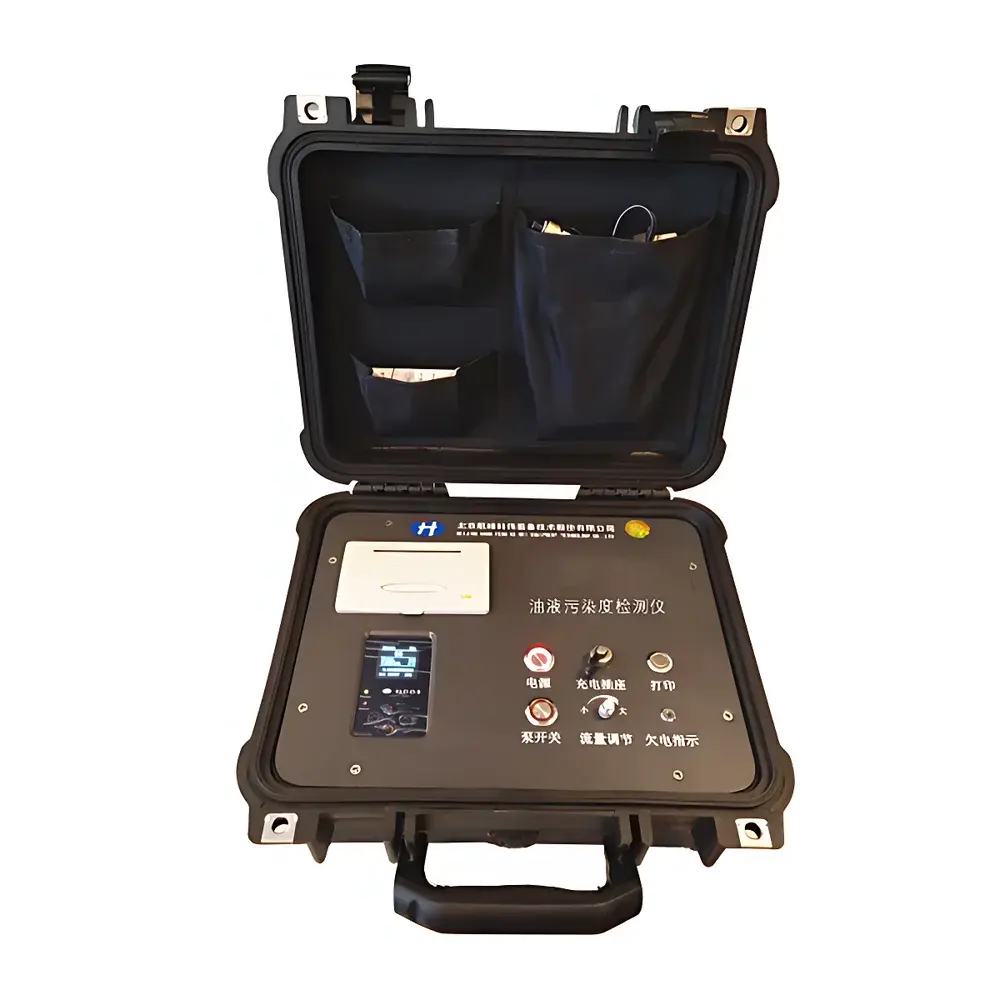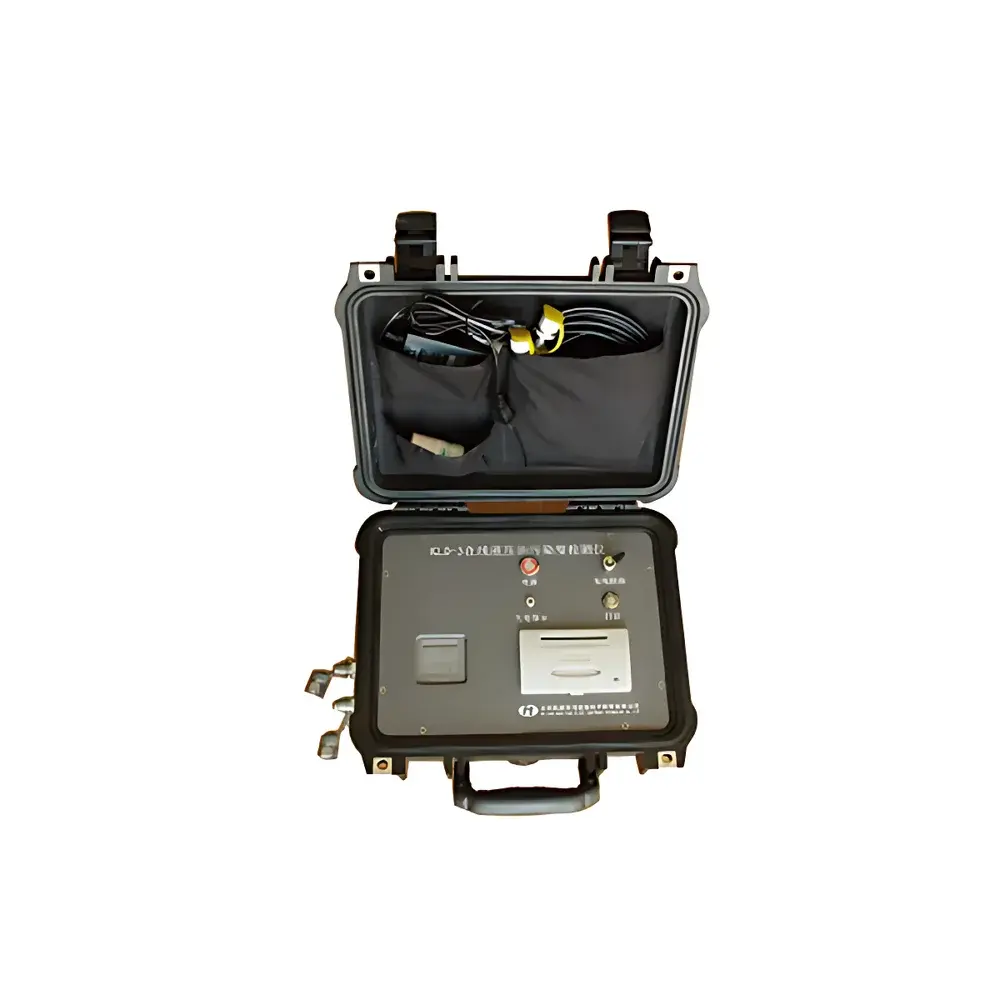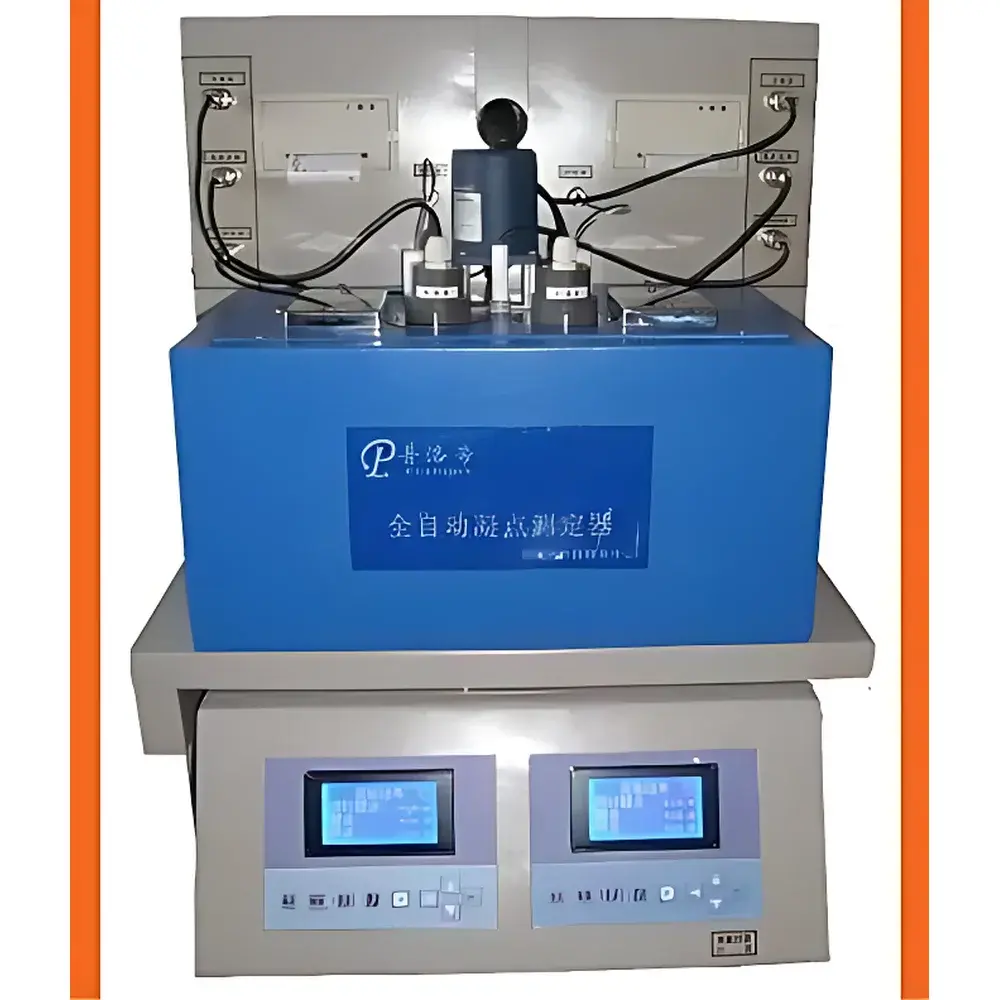
PULUODY PLD-510C Fully Automatic Pour Point Analyzer
| Brand | PULUODY |
|---|---|
| Model | PLD-510C |
| Origin | Shaanxi, China |
| Manufacturer Type | OEM Manufacturer |
| Country of Origin | China |
| Temperature Range | 60 °C to −38 °C |
| Temperature Resolution | 0.1 °C |
| Sample Channels | 2 |
| Detection Method | Top-mounted photoelectric liquid-level sensor with automated sample tube tilting |
| Cooling System | Mechanical compressor-based refrigeration |
| Cooling Medium | Air-cooled condenser |
| Temperature Differential Control | Programmable ΔT between coolant and sample |
| Tilt Mechanism | Micro-tilt actuation with real-time liquid-level feedback |
| Heating Element | Integrated micro-heater for rapid sample recovery |
| Display | 128×64 dot-matrix LCD (Chinese character support) |
| Printer | 20-column thermal dot-matrix printer (Chinese character support) |
| Power Supply | AC 220 V ±10%, 50 Hz ±2 Hz |
Overview
The PULUODY PLD-510C Fully Automatic Pour Point Analyzer is an ASTM D97-22 and GB/T 510–2010 / GB/T 3535–2018 compliant instrument engineered for precise, repeatable determination of the pour point of petroleum products—including crude oil, fuel oils, lubricants, and dark-colored distillates. Based on the standardized cooling-and-tilt methodology, the analyzer measures the lowest temperature at which a sample remains mobile under specified conditions: after controlled cooling, the test tube is incrementally tilted at user-defined intervals (1–10 °C), and cessation of flow—detected via high-sensitivity optical liquid-level monitoring—is recorded as the pour point. Unlike manual or semi-automated systems, the PLD-510C eliminates operator subjectivity and mechanical disturbance through its vibration-isolated split-body architecture and top-mounted photoelectric detection system, ensuring compliance with GLP and laboratory quality assurance protocols.
Key Features
- Vibration-dampened split-chassis design isolates the measurement module from compressor-induced mechanical noise, preventing disruption of wax crystal formation and improving result reproducibility.
- Top-mounted photoelectric liquid-level sensor detects sub-millimeter meniscus displacement during tilt cycles, enabling reliable identification of flow arrest without visual inspection or manual intervention.
- Micro-tilt actuation mechanism rotates the sample tube in precise angular increments; upon real-time detection of liquid movement (or lack thereof), tilt halts immediately and the tube returns to vertical orientation—eliminating unnecessary thermal cycling and preserving sample integrity.
- Intelligent ΔT control algorithm dynamically regulates coolant temperature relative to sample temperature, maintaining uniform, ISO/IEC 17025-aligned cooling rates across the full test range (60 °C to −38 °C).
- Integrated micro-heater enables rapid sample recovery between tests without overheating the refrigeration circuit, reducing turnaround time and enhancing throughput for multi-sample batch analysis.
Sample Compatibility & Compliance
The PLD-510C is validated for use with opaque, viscous, and thermally sensitive petroleum matrices—including residual fuels, bitumen blends, and untreated crude oils—where conventional capillary-based methods fail. Its dual-channel configuration supports parallel testing of reference and unknown samples, facilitating method verification per ASTM D4057 and ISO 4259. The instrument meets essential requirements of ISO/IEC 17025:2017 for analytical instrumentation used in accredited laboratories, including traceable temperature calibration (NIST-traceable Pt100 sensor), audit-ready operation logs, and hardware-level interlock safeguards. While not inherently 21 CFR Part 11 compliant, its data output format (ASCII text + timestamped printouts) supports integration into validated LIMS environments with supplementary electronic signature workflows.
Software & Data Management
The PLD-510C operates via embedded firmware with no external PC dependency. All operational parameters—including tilt interval, target cooling rate, hold duration, and pass/fail thresholds—are configurable via the onboard 128×64 Chinese-character LCD interface. Test results—including ambient temperature, final pour point, cooling curve timestamps, and detection events—are stored internally and output via integrated 20-column thermal printer. Printouts include instrument ID, operator code (manually entered), date/time stamp, and sample identifier—enabling direct inclusion in QC records. Raw data export is supported via RS-232 serial interface for archival in laboratory information management systems (LIMS) or statistical process control (SPC) platforms.
Applications
- Refinery quality control of pipeline-spec crude oils prior to transportation
- Monitoring wax deposition behavior in heavy fuel oils and marine distillates
- Formulation validation of cold-flow improvers (CFIs) in diesel and jet fuels
- Research-grade characterization of bio-oil blends and synthetic hydrocarbons
- Regulatory submission testing for ASTM D97, IP 15, and EN 116 compliance
FAQ
What standards does the PLD-510C comply with?
It conforms to ASTM D97–22, GB/T 510–2010, GB/T 3535–2018, and IP 15 for pour point determination of petroleum products.
Can the instrument test highly viscous or waxy crudes?
Yes—the optical detection system and micro-tilt mechanism are specifically optimized for opaque, high-wax-content samples where traditional visual methods yield inconsistent endpoints.
Is external software required for operation?
No—the analyzer is fully self-contained with local parameter configuration and thermal printing; optional RS-232 connectivity supports external data logging.
How is temperature calibration verified?
The Pt100 sensor is factory-calibrated against NIST-traceable references; users may perform periodic verification using certified thermometer standards per ISO/IEC 17025 Section 6.6.
What maintenance is required for the compressor cooling system?
Annual inspection of condenser airflow, refrigerant pressure checks, and desiccant replacement (if equipped) are recommended; no routine oil changes are needed for hermetic compressors.
Related Products