
PULUODY TQ-01A Fully Automatic Vacuum Degasser
| Brand | PULUODY |
|---|---|
| Origin | Shaanxi, China |
| Manufacturer Type | Authorized Distributor |
| Product Category | Domestic |
| Model | TQ-01A Vacuum Degasser |
| Unit Price | USD 12,300 (FOB) |
| Volumetric Dispensing Range | Unlimited |
| Dispensing Accuracy | ±1% (≥2 L) |
| Medium Compatibility | Dissolution media (pH 1–14, non-ionic surfactant-free) |
| Degassing Flow Rate | 1.6 L/min |
| Dimensions (L×H×W) | 500 × 340 × 295 mm |
| Rated Power | 1700 W |
| Heating Control Accuracy | ±2 °C |
| Residual Dissolved Oxygen | 3.0–5.0 mg/L (upgradable to <2.8 mg/L) |
| Minimum Inlet Medium Temperature | ≥18 °C |
| Pre-filter Options | 40 µm / 25 µm / 20 µm stainless steel mesh |
Overview
The PULUODY TQ-01A Fully Automatic Vacuum Degasser is an engineered solution for high-reproducibility degassing of dissolution media in pharmaceutical quality control laboratories. It operates on the principle of vacuum-assisted gas removal—reducing ambient pressure within a sealed chamber to lower the partial pressure of dissolved gases (primarily O₂ and CO₂), thereby accelerating their release from aqueous solutions without thermal decomposition or chemical alteration. Designed specifically for USP , , and Ph. Eur. 2.9.40-compliant dissolution testing workflows, the TQ-01A integrates inline heating, precision volumetric delivery, and programmable temperature control into a single compact platform. Its architecture eliminates manual handling steps traditionally associated with flask-based boiling or helium sparging, reducing operator variability and enabling unattended operation during overnight or multi-batch preparation cycles.
Key Features
- Vacuum degassing chamber with adjustable vacuum setpoint and real-time pressure monitoring via integrated digital sensor
- Inline pre-heating module (35–42 °C range, ±2 °C stability) upstream of the degassing stage to enhance gas solubility reduction prior to vacuum exposure
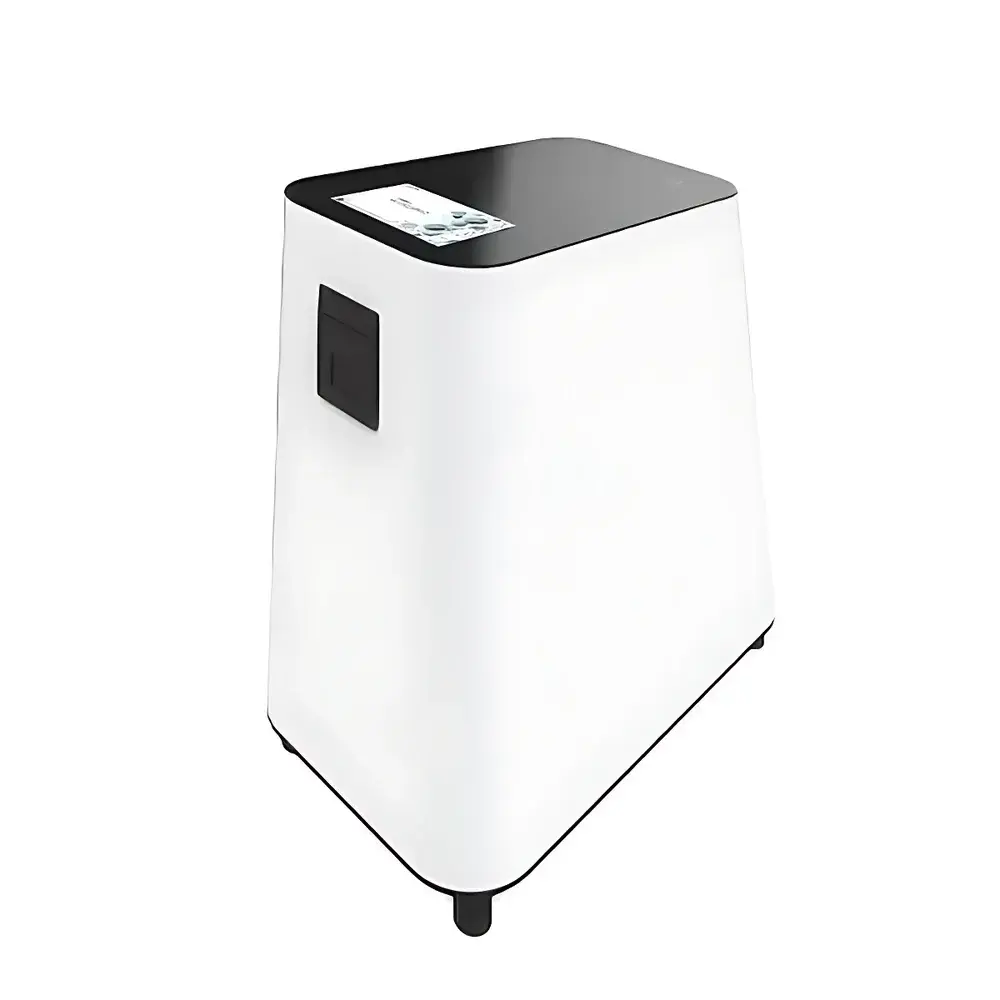
- Touchscreen HMI with high-resolution LCD display and intuitive icon-driven navigation—no training required for routine operation
- Volumetric dispensing system calibrated to ±1% accuracy for volumes ≥2 L, supporting unlimited batch sizing through programmable multi-step protocols
- Modular stainless-steel inlet filtration: user-selectable 40 µm, 25 µm, or 20 µm mesh filters to prevent particulate ingress without compromising flow integrity
- Compact footprint (500 × 340 × 295 mm) optimized for benchtop integration adjacent to dissolution apparatus or automated sampling stations
- Service-oriented mechanical design: all fluid-path components—including pump head, filter housings, and vacuum chamber seals—are tool-free replaceable within <5 minutes
Sample Compatibility & Compliance
The TQ-01A is validated for use with standard dissolution media including purified water, distilled water, buffer solutions (e.g., phosphate, acetate), and organic-aqueous mixtures containing ≤10% v/v ethanol or isopropanol—provided surfactants (e.g., SDS, polysorbates) are excluded per USP guidance. Its pH tolerance (1–14) accommodates acidic gastric simulants (e.g., 0.1 N HCl) and alkaline intestinal simulants (e.g., phosphate buffer pH 6.8). The system meets mechanical and electrical safety requirements per IEC 61010-1:2010 and complies with electromagnetic compatibility standards EN 61326-1:2013. While not intrinsically certified for hazardous locations, its sealed fluid path and absence of ignition sources render it suitable for general laboratory environments under ISO/IEC 17025-accredited QC labs.
Software & Data Management
The embedded controller supports audit-trail-enabled operation logs (date/time stamp, operator ID, parameter settings, error codes) stored locally on internal flash memory with export capability via USB 2.0. Optional Ethernet connectivity enables remote status monitoring and protocol synchronization with LIMS or electronic lab notebooks (ELN). All critical parameters—including vacuum level, medium temperature, dispensed volume, and cycle duration—are recorded at 1-second intervals and exportable as CSV files for statistical process analysis (SPC) or FDA 21 CFR Part 11-compliant review. Firmware updates are performed via signed binary packages to ensure traceability and integrity.
Applications
- Preparation of deaerated dissolution media for USP Apparatus I (baskets) and II (paddles) validation studies
- Support of forced degradation studies requiring oxygen-sensitive media conditions
- Batch preparation for automated dissolution systems (e.g., SOTAX AT7smart, Distek 2500) with synchronized volume delivery triggers
- GLP-compliant method development where residual oxygen must be documented below 5.0 mg/L per batch certificate
- Multi-laboratory harmonization projects requiring identical media conditioning across sites
FAQ
What is the minimum inlet temperature requirement for optimal degassing performance?
The system requires incoming medium at ≥18 °C to ensure stable vacuum formation and avoid condensation-induced pressure fluctuations.
Can the TQ-01A handle media containing surfactants?
No—surfactants induce foam formation under vacuum and compromise degassing efficiency and volumetric accuracy; they are explicitly excluded per USP and manufacturer specifications.
Is the residual oxygen level independently verifiable?
Yes—users may validate dissolved oxygen concentration using ASTM D888-22-approved portable optical sensors (e.g., Hach LDO or Mettler Toledo InPro 6970i) prior to each batch release.
Does the system support GMP documentation requirements?
Yes—the built-in audit trail, parameter locking, and electronic signature-ready log export satisfy core elements of FDA 21 CFR Part 11 and EU Annex 11 for computerized system validation.
What maintenance intervals are recommended?
Filter elements should be inspected after every 50 L processed; vacuum chamber O-rings require replacement every 12 months or after 2000 operating hours, whichever occurs first.



