
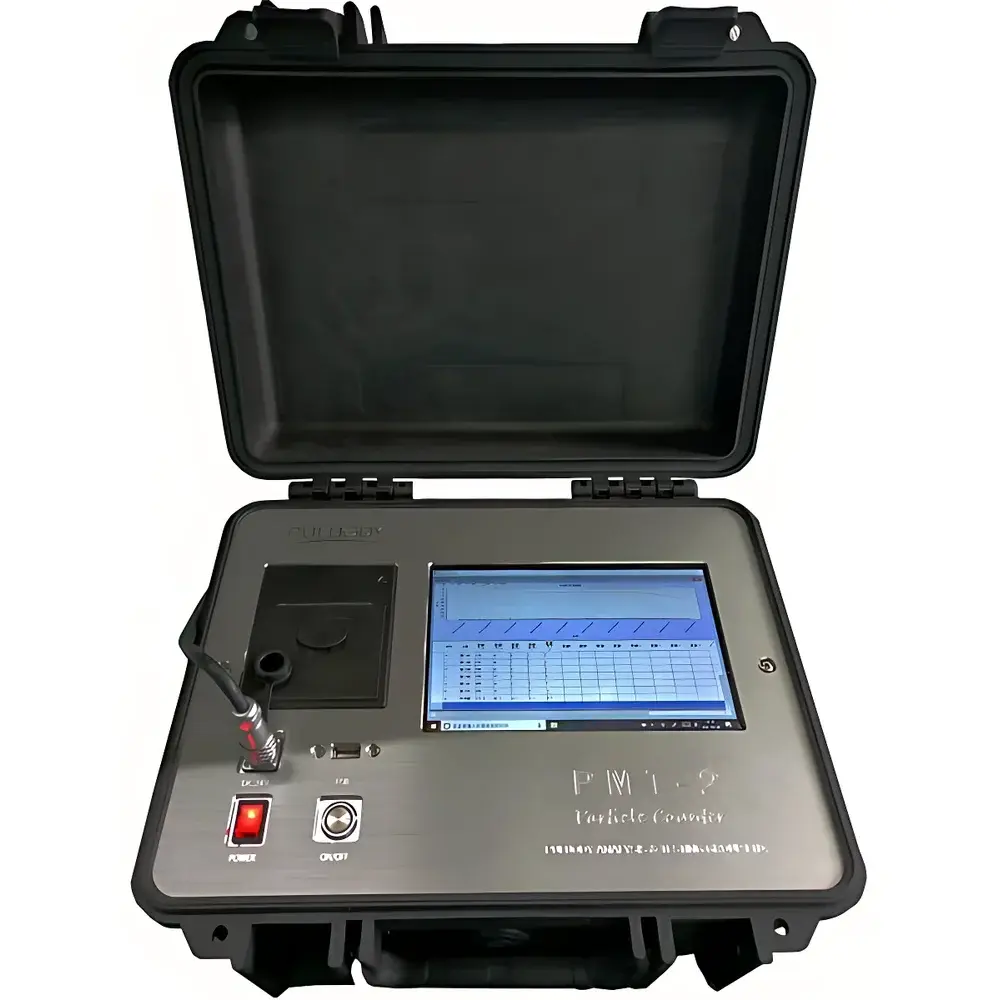
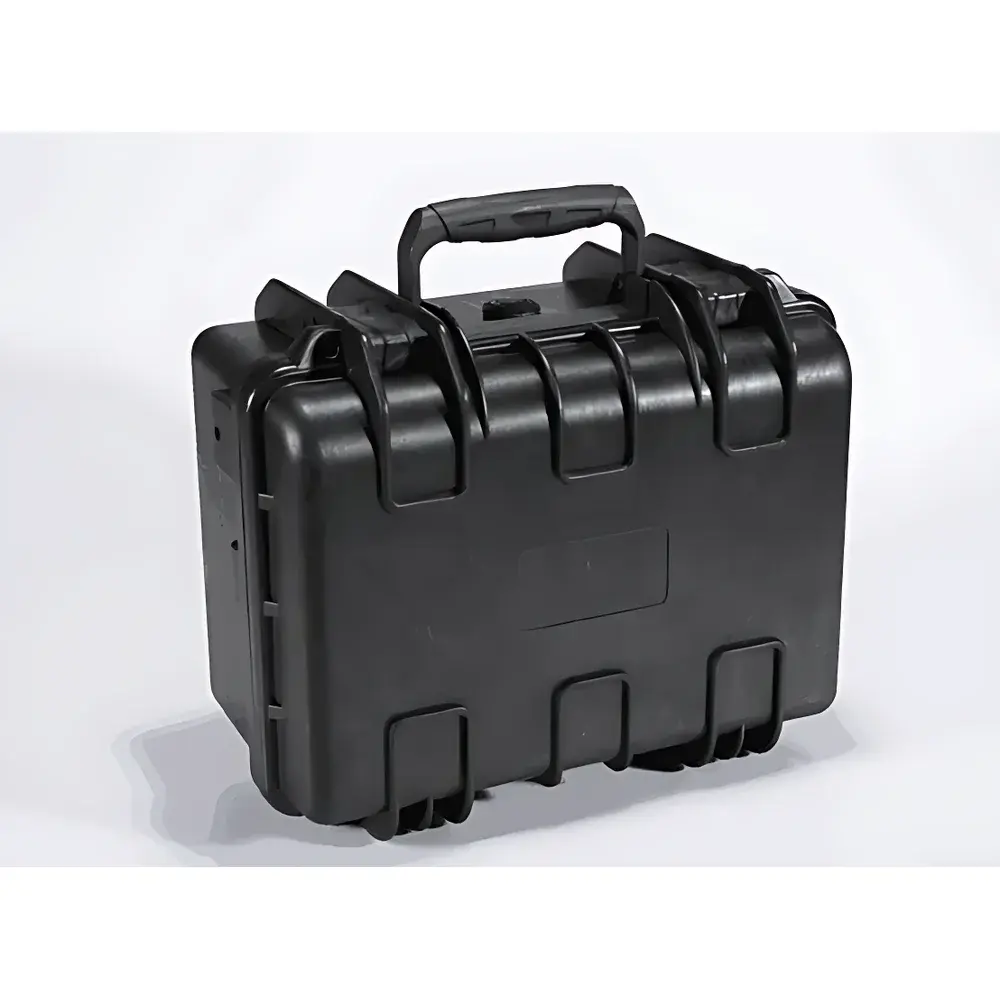
PULUODY PMT-Series Portable Oil Particle Contamination Monitor
| Brand | PULUODY |
|---|---|
| Origin | Shaanxi, China |
| Manufacturer Type | Direct Manufacturer |
| Product Origin | Domestic (China) |
| Model | PMT- |
| Pricing | Available Upon Request |
| Detection Principle | Light Obscuration (7th-Generation Dual-Laser Narrow-Beam Sensor) |
| Calibration Standards | ISO 11171, ISO 4402, GB/T 18854 |
| Measurement Range | 2–100 µm (or 4–70 µm[c]) |
| Customizable Channels | Up to 1000 size bins, user-selectable 16 channels |
| Accuracy | <3% typical |
| Flow Rate | Sampling: 10–60 mL/min |
| Cleaning | 20–150 mL/min |
| Operating Pressure | 0–0.6 MPa (standard), up to 50 MPa (with pressure regulator) |
| Viscosity Range | Offline: 0–99 mm²/s |
| Online | 0–500 mm²/s |
| Temperature Range | Fluid: 0–80 °C |
| Ambient | −15–50 °C |
| Data Storage | ≥20,000 test records (expandable via USB drive) |
| Compliance | ISO 4406, NAS 1638, SAE AS4059D, GB/T 14039, DL/T 432, GJB 420B, MIL-STD-1246C, ISO 11500 |
| Output Interface | RS232 / RS485-to-USB / Native USB |
| Display | Color LCD touchscreen |
| Power Input | 100–265 VAC, 50–60 Hz |
| Optional Modules | Water Activity (0–1.0 aw, ±0.02 accuracy, NIST-traceable), Trace Moisture (0.1–100,000 ppm), Temperature (−45–125 °C, ±0.00003 °C stability) |
Overview
The PULUODY PMT-Series Portable Oil Particle Contamination Monitor is an engineered solution for real-time, field-deployable assessment of solid particulate contamination in liquid media—primarily hydraulic oils, lubricants, transformer insulating oils, turbine oils, and other industrial fluids. It operates on the internationally standardized light obscuration (LO) principle, utilizing a proprietary 7th-generation dual-laser narrow-beam optical sensor to detect and size particles as they pass through a precisely defined sensing zone. This method complies with ISO 11500 and DL/T 432 for particle counting in oils, and its calibration traceability aligns with ISO 11171 (MTD reference material) and ISO 4402 (ACFTD-based verification), ensuring metrological integrity across laboratory, workshop, and online process environments. Designed for both offline benchtop use (with integrated sampling chamber) and online continuous monitoring (via pressurized flow cell), the PMT-Series supports seamless integration into predictive maintenance workflows, fluid health management systems, and regulatory compliance programs governed by ISO 4406, NAS 1638, or SAE AS4059D.
Key Features
- 7th-generation dual-laser narrow-beam optical sensor optimized for high signal-to-noise ratio and minimal coincidence error in viscous and opaque fluids
- Configurable particle sizing range: standard 2–100 µm or 4–70 µm(c); extended capability for custom thresholds including ≥4 µm(c), ≥6 µm(c), ≥14 µm(c), ≥21 µm(c), ≥25 µm(c), ≥38 µm(c), ≥50 µm(c), and ≥68 µm(c)
- 1000-channel resolution with user-definable binning—enabling selection of any 16 discrete size ranges per measurement cycle
- Integrated industrial-grade touch interface with color LCD display; no external PC required for operation or result review
- Onboard data storage for ≥20,000 test records; expandable via USB flash drive with unlimited archival capacity
- Flexible connectivity: native USB, RS232, RS485-to-USB adapter support, and isolated 4–20 mA analog output with programmable alarm thresholds
- Robust thermal and pressure tolerance: fluid operating temperature from 0–80 °C; system pressure rating up to 50 MPa (with integrated pressure regulator)
- Modular architecture supporting optional water activity (aw), trace moisture (ppm), and high-stability temperature modules—all NIST-, PTB-, or BEV-traceable
Sample Compatibility & Compliance
The PMT-Series is validated for use with mineral-based, synthetic, and bio-based hydraulic fluids, turbine oils, gear oils, engine oils, aviation fuels (e.g., Jet A-1), water-glycol and phosphate ester fire-resistant fluids, and non-aqueous polymer solutions. It meets the physical and metrological requirements of multiple international standards, including ISO 4406 (contamination code assignment), ISO 11171 (calibration protocol), ISO 11500 (LO methodology), NAS 1638 (U.S. aerospace classification), SAE AS4059D (modern aerospace particle distribution reporting), GB/T 14039 (Chinese national standard), DL/T 432 (power industry oil cleanliness), GJB 420B (PLA military specification), and MIL-STD-1246C (contamination control for space systems). Its design accommodates GLP/GMP-aligned audit trails when paired with P6.4 software and supports FDA 21 CFR Part 11-compliant electronic signatures in regulated environments.
Software & Data Management
The instrument ships with P6.4 Analysis & Testing Software (integrated and PC versions), offering full control over acquisition parameters, real-time histogram visualization, automatic contamination code generation per ISO 4406 or NAS 1638, and customizable report templates compliant with internal QA protocols or third-party certification bodies. Data export is supported in CSV, PDF, and XML formats, with timestamped metadata including operator ID, calibration status, environmental conditions, and instrument firmware version. The software maintains a secure, tamper-evident audit log and enables remote diagnostics via encrypted Ethernet or USB tethering. All raw count data—including channel-by-channel pulse height distributions—is retained for reprocessing and statistical trending (e.g., ISO Cleanliness Code delta analysis over time).
Applications
- Routine condition monitoring of hydraulic and lubrication systems in aerospace ground support equipment, wind turbine gearboxes, and naval propulsion units
- Acceptance testing of new oil batches prior to commissioning in critical rotating machinery (turbines, compressors, generators)
- Wear debris analysis during component endurance testing and failure mode investigations
- In-service fluid evaluation at power plants, refineries, steel mills, and semiconductor fabrication facilities
- Validation of filtration efficiency in offline kidney-loop systems and coalescer performance in fuel handling infrastructure
- Research-grade particle dispersion studies in polymer processing fluids, dielectric coolants, and specialty solvents
- Field-based forensic analysis following hydraulic system failures or unexpected bearing wear events
FAQ
Does the PMT-Series require annual recalibration?
Yes—annual recalibration against ISO 11171-certified MTD reference particles is recommended to maintain traceability. Certificate of calibration is issued by the National Northwest Metrology Testing Center (civilian) or the Defense Science & Technology Commission Level-1 Particle Metrology Station No. 116 (military-grade).
Can it measure particles in highly viscous oils such as gear oils?
Yes—offline mode supports viscosities up to 99 mm²/s; online configurations with heated flow cells and pressure-assisted pumping extend compatibility to 500 mm²/s, enabling stable measurements in EP gear oils and heavy-duty transmission fluids.
Is the water activity module compatible with ISO 21337 or ASTM D8057?
The integrated aw sensor meets ISO 21337 Annex B specifications for traceable aw measurement in hydrocarbon liquids and provides documentation suitable for ASTM D8057 alignment upon request.
What level of cybersecurity is implemented in the embedded OS?
The industrial PC platform runs a hardened Linux kernel with disabled unnecessary services, read-only root filesystem, and firmware-signed boot sequence. Network interfaces support VLAN segmentation and TLS 1.2 for remote data transfer.
Can the instrument be operated without a PC in harsh field environments?
Yes—the fully self-contained touchscreen interface enables standalone operation across −15 °C to 50 °C ambient conditions, with IP54-rated enclosure options available for outdoor or mobile deployment.





