
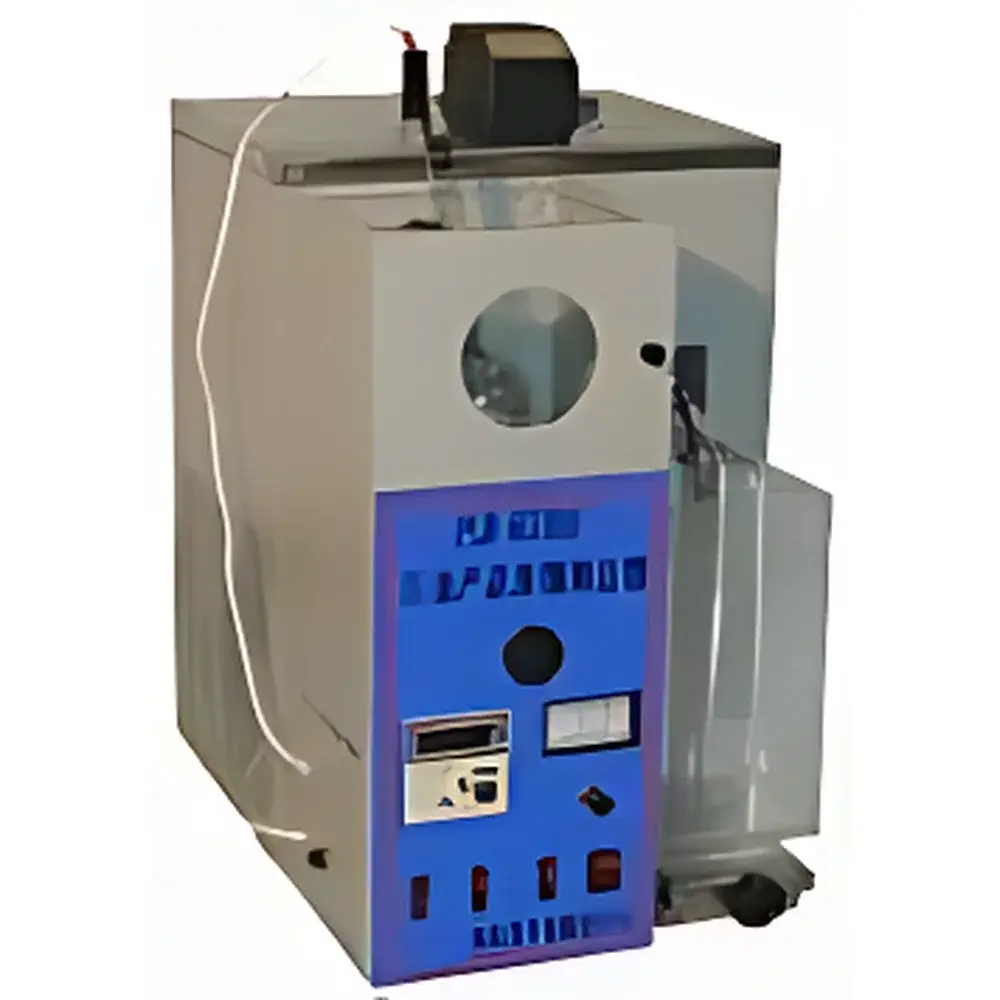
PLD-6536B Petroleum Distillation Apparatus (ASTM D86 / ISO 3405 / GB/T 6536 Compliant)
| Origin | Shaanxi, China |
|---|---|
| Manufacturer Type | Authorized Distributor |
| Model | PLD-6536B |
| Price | USD 2,350 (FOB China) |
Overview
The PLD-6536B Petroleum Distillation Apparatus is a precision-engineered laboratory instrument designed to perform standardized atmospheric distillation tests on volatile petroleum fractions in strict accordance with ASTM D86, ISO 3405, and GB/T 6536. It implements the classical batch distillation method under controlled heating conditions to determine the boiling range distribution—specifically initial boiling point (IBP), 10%, 50%, 90% recovery temperatures, and final boiling point (FBP)—of light to medium distillates including gasoline, jet fuel (Jet A-1), naphtha, kerosene, diesel fuel (EN 590, ASTM D975), and petroleum solvents. The apparatus operates on a fixed-pressure, open-system configuration with manual or semi-automated temperature ramp control, ensuring repeatability and traceability required for quality control laboratories in refineries, third-party testing facilities, and regulatory compliance units.
Key Features
- Integrated three-module architecture: distillation assembly, condensation unit, and receiving system—each functionally isolated and mechanically optimized for thermal stability and operator safety.
- Programmable heating rate control via solid-state voltage regulator, enabling precise adjustment of distillation ramp profiles (e.g., 4–5 °C/min for Group 1 fuels; 1–1.5 °C/min for Group 4 diesel); output voltage displayed continuously on analog panel meter for real-time verification.
- Quartz-tube electric heating furnace: eliminates oil splash hazards, provides uniform radial heat distribution, resists oxidation at sustained 400 °C operation, and delivers >92% thermal efficiency versus conventional coil-based furnaces.
- Hinged front access window with tempered borosilicate glass allows unobstructed visual monitoring of flask positioning, vapor path integrity, and condensate flow—critical for detecting bumping, superheating, or column flooding during test execution.
- Adjustable furnace lift mechanism with calibrated height scale enables rapid alignment of the distillation flask neck with the condenser inlet, minimizing vapor residence time and reducing fractionation error.
- Optically transparent acrylic receiver bath housing a calibrated 100-mL graduated cylinder, illuminated by LED cold-light source to enhance meniscus readability without thermal interference; compatible with both ambient and chilled coolant circulation (optional).
Sample Compatibility & Compliance
The PLD-6536B supports sample volumes of 100 mL ± 0.5 mL per test run, accommodating Class 1–4 distillates as defined in ASTM D86. It is validated for use with hydrocarbon mixtures exhibiting initial boiling points from 30 °C (light gasoline) to 360 °C (heavy diesel). All mechanical and thermal components comply with IEC 61010-1:2010 safety standards for electrical equipment used in laboratory environments. Test reports generated using this apparatus satisfy documentation requirements under ISO/IEC 17025:2017 for accredited testing laboratories and are admissible in GLP-compliant audits when paired with procedural SOPs and calibration records traceable to NIM (China) or NIST SRMs.
Software & Data Management
While the PLD-6536B is primarily a manually operated benchtop apparatus, it supports digital integration through optional RS-232 or USB-to-serial interface modules (sold separately). When connected to compliant LIMS or QC data acquisition software (e.g., LabWare LIMS, Thermo Fisher SampleManager), temperature readings from the ASTM-certified mercury-in-glass or Pt100 sensor (calibrated per ISO 17025), along with timed volume recovery data, can be logged with timestamp, operator ID, and instrument serial number. Audit trails comply with FDA 21 CFR Part 11 requirements when deployed with electronic signature-enabled platforms and secure user authentication protocols.
Applications
- Refinery process control: monitoring cut-point consistency between crude assay predictions and actual atmospheric distillation cuts.
- Fuel specification verification: confirming conformance of diesel batches to EN 590 Clause 5.2 (distillation characteristics) or ASTM D975 Table 1 limits.
- Research & development: evaluating volatility shifts in bio-blended diesel (e.g., B5–B20) relative to base fossil diesel.
- Regulatory submission support: generating reference-grade distillation curves for product registration with CNPC, Sinopec, or provincial market supervision bureaus.
- Educational laboratories: teaching fundamental concepts of fractional volatility, Raoult’s law deviations, and ASTM standard practice interpretation.
FAQ
What standards does the PLD-6536B fully support?
ASTM D86, ISO 3405, and GB/T 6536—covering all four distillation groups and associated apparatus configurations (e.g., different condenser lengths, thermometer placements, and receiver cooling conditions).
Is automatic temperature ramping available?
The base model features manual voltage regulation; however, an optional microprocessor-based ramp controller (PLD-6536B-ATC) can be retrofitted to deliver programmable multi-stage heating profiles with ±0.5 °C setpoint accuracy.
Can the unit be used for biodiesel (FAME) distillation analysis?
Yes—provided the sample is pre-filtered to remove particulates and tested within Group 3 or 4 parameters; note that FAME degradation above 220 °C may require shortened hold times and inert gas purging (N₂ blanket kit available as accessory).
What calibration documentation is supplied?
Each unit ships with factory calibration certificates for the main thermometer (traceable to NIM), voltage regulator linearity, and receiver cylinder volumetric accuracy (±0.1 mL at 100 mL), all valid for 12 months from date of shipment.
Is technical support available in English for international users?
Yes—authorized distributors provide remote troubleshooting, ASTM/ISO procedure guidance, and on-site commissioning services (travel fees apply); firmware and manual updates are hosted on the manufacturer’s secure extranet portal.




