smartGAS SM-CDT NDIR Carbon Dioxide Sensor
| Brand | SmartGas |
|---|---|
| Origin | Germany |
| Model | SM-CDT |
| Measurement Principle | Non-Dispersive Infrared (NDIR) |
| Detection Range | 0–5000 ppm CO₂ |
| Accuracy | ±2% of reading |
| Output Options | Modbus RTU (RS-485), 4–20 mA, 0–1 V / 0–2.5 V |
| Dual-Wavelength Compensation | Yes |
| Temperature Compensation | Integrated |
| Expected Service Life | ≥10 years |
| Power Supply | 12–24 VDC |
| Enclosure Rating | IP65 (for SMF/SMP variants) |
| Compliance | CE, RoHS, EMC Directive 2014/30/EU |
| Operating Temperature | –10 to +50 °C |
| Humidity Range | 0–95% RH (non-condensing) |
Overview
The smartGAS SM-CDT is a high-stability, non-dispersive infrared (NDIR) carbon dioxide sensor engineered for continuous, long-term monitoring in demanding indoor air quality (IAQ) and ventilation control applications. Based on dual-wavelength absorption spectroscopy, the SM-CDT measures CO₂ concentration by detecting the characteristic infrared absorption band at 4.26 µm. Unlike single-beam NDIR configurations, its dual-channel optical architecture employs an active measurement channel and a reference channel—each modulated at distinct wavelengths—to actively compensate for signal drift caused by LED aging, optical window contamination, or thermal fluctuations. This design ensures metrological stability over extended operational periods without field recalibration. The sensor operates on the fundamental principle that CO₂ molecules absorb infrared radiation at specific wavelengths; the differential attenuation between the measurement and reference beams yields a robust, gas-specific signal proportional to concentration. Designed and assembled in Germany, the SM-CDT meets stringent industrial reliability requirements and is optimized for integration into HVAC control systems, demand-controlled ventilation (DCV), and environmental monitoring networks where accuracy, longevity, and low total cost of ownership are critical.
Key Features
- Dual-wavelength NDIR detection with integrated temperature compensation for drift-free operation over 10+ years
- High selectivity: No cross-sensitivity to common indoor gases (e.g., CO, CH₄, VOCs, NOₓ) due to narrow-band spectral filtering
- Low-power consumption (<1.2 W typical), suitable for battery-backed or energy-constrained deployments
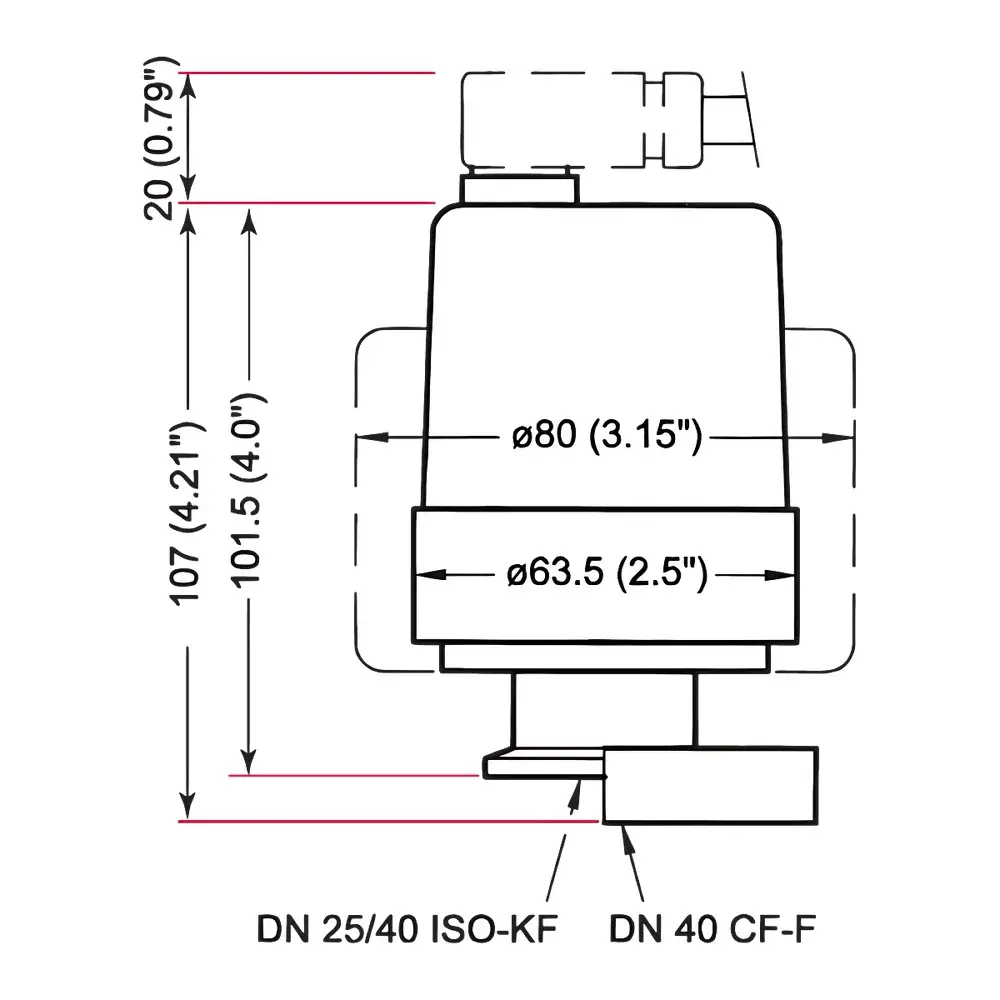
- Compact form factor (SM-CDT diffusion variant: 72 × 42 × 28 mm) with modular mounting options (diffusion, duct-mounted, or pipe-threaded)
- Flexible output interface: Isolated 4–20 mA analog output + RS-485 Modbus RTU digital communication (slave ID configurable)
- Robust mechanical construction: IP65-rated enclosure (SMF/SMP variants), stainless steel or ABS housing options, and corrosion-resistant optical windows
- Factory-calibrated traceable to NIST-traceable standards; zero/span verification supported via Modbus commands
Sample Compatibility & Compliance
The SM-CDT is intended for gaseous sample analysis in ambient air and conditioned airstreams. It is validated for use in non-explosive, non-corrosive environments with particulate loading below ISO 14644 Class 8. The sensor complies with EU directives CE 2014/30/EU (EMC), 2011/65/EU (RoHS), and EN 61000-6-2/6-3 for industrial immunity and emissions. While not intrinsically safe certified, it is widely deployed in HVAC, educational facilities, commercial buildings, greenhouses, and retail spaces per ASHRAE Standard 62.1 ventilation guidelines. For regulatory data integrity, Modbus register logging supports audit-ready timestamped records compatible with GLP/GMP-aligned SCADA systems. Optional firmware enables configurable alarm thresholds and event-triggered data capture aligned with ISO 14644-1 cleanroom monitoring protocols.
Software & Data Management
Configuration and diagnostics are performed via ASCII-based Modbus RTU commands over RS-485 (addressable up to 247 nodes on a single bus). A dedicated PC utility (Windows/Linux/macOS) provides real-time waveform visualization, calibration history export (CSV), and firmware update capability. All operational parameters—including range selection, averaging time (1–60 s), output scaling, and alarm setpoints—are programmable and retained in non-volatile memory. The sensor supports time-synchronized data logging when integrated with BACnet/IP or Modbus TCP gateways. Audit trails include firmware version, last calibration date, and cumulative operating hours—essential for FDA 21 CFR Part 11–compliant environments when paired with validated host software. No cloud dependency or proprietary drivers are required.
Applications
- HVAC demand-controlled ventilation (DCV) in office buildings, schools, universities, and theaters
- Greenhouse climate management for precision horticulture and CO₂ enrichment control
- Indoor air quality (IAQ) dashboards and smart building management systems (BMS)
- Occupancy estimation and energy optimization in LEED- or BREEAM-certified structures
- Environmental monitoring in museums, archives, and pharmaceutical storage areas
- Integration into IoT-enabled air quality nodes for municipal or campus-wide sensor networks
FAQ
What is the recommended calibration interval for the SM-CDT?
SmartGas recommends annual verification against a certified CO₂ standard gas (e.g., 1000 ppm in N₂). Field zeroing using fresh outdoor air (<400 ppm) may be performed quarterly if ambient conditions permit.
Can the SM-CDT operate in high-humidity environments?
Yes—condensation-free operation is guaranteed up to 95% RH. For sustained exposure above 80% RH, optional hydrophobic filter caps (P/N F-HF-01) are advised to prevent water film formation on optics.
Is the sensor compatible with BACnet MS/TP or BACnet/IP?
Native BACnet support requires an external Modbus-to-BACnet gateway (e.g., Tridium Niagara AX, Honeywell WEBx). Direct BACnet integration is available in the SM-CDT-B variant.
Does the SM-CDT require warm-up time before stable readings?
Stabilization occurs within 60 seconds after power-on; full metrological stability is achieved within 5 minutes under nominal conditions.
How is long-term drift mitigated in this NDIR design?
Dual-wavelength referencing combined with real-time temperature compensation algorithms reduces baseline drift to <±0.5% FS/year—verified per ISO 12099:2017 Annex C test methodology.