
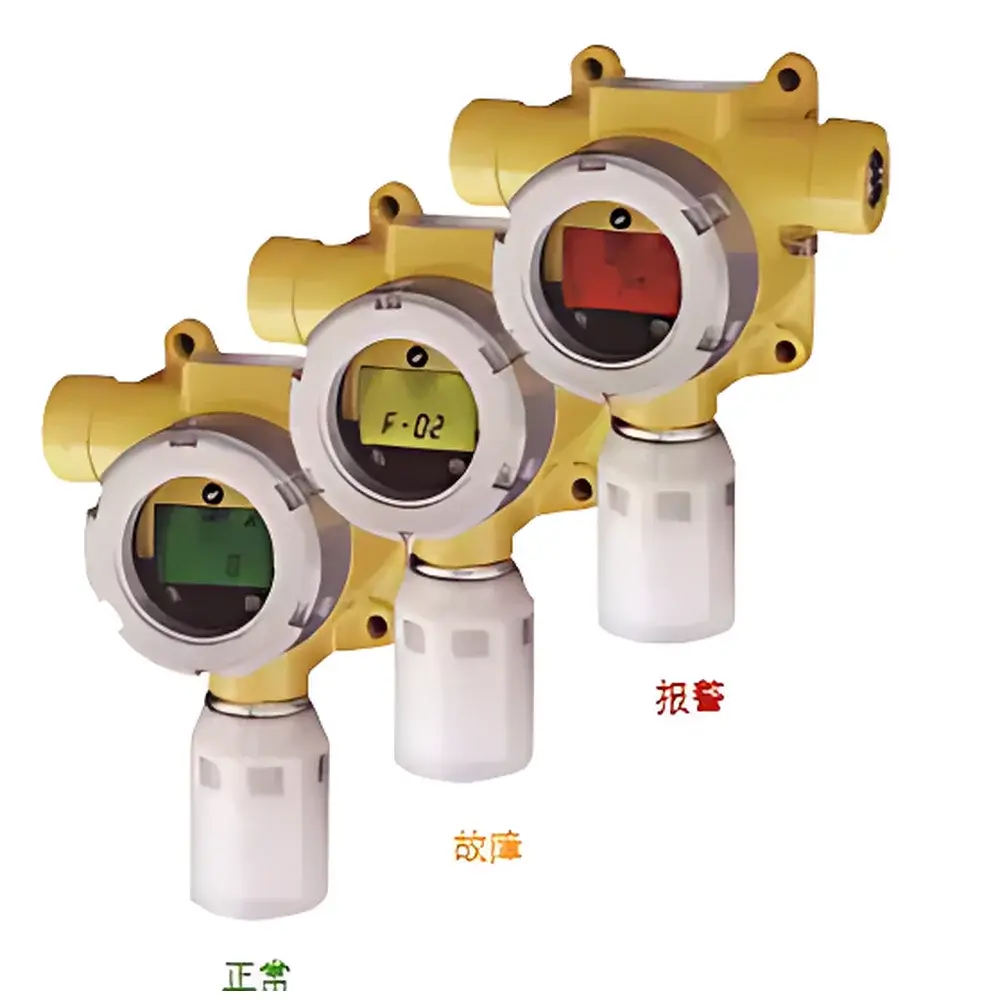
Honeywell Sensepoint XCD Fixed Gas Detector
| Brand | Honeywell |
|---|---|
| Origin | USA |
| Model | Sensepoint XCD |
| Sensor Compatibility | Catalytic Bead (LEL), Electrochemical (Toxic Gases), NDIR (CO₂, CH₄, etc.) |
| Enclosure Material | LM25 Aluminum Alloy & 316 Stainless Steel |
| Certifications | IECEx, ATEX, UL, CSA, KTL, GB-Ex, CCCF |
| Output Signals | 4–20 mA (2-wire/3-wire sink/source), 3 Programmable Relays, Modbus RTU (RS-485) |
| Display | Backlit LCD with Tri-color Status Indicator (Green/Amber/Red) |
| Diagnostic Features | SureCell™ Sensor Recognition, Reflex™ Self-Diagnostics, Auto-Calibration Support |
| Environmental Rating | IP66, NEMA 4X, -40°C to +70°C Operating Range |
| Mounting | Integrated Wall-Mount Brackets, Plug-in Sensor Cartridge Design |
| Compliance | Designed for use in Class I Div 1/Zone 1 hazardous areas per IEC 60079-29-1, EN 45544-1, ISO 10156, and aligned with FDA 21 CFR Part 11 data integrity principles for alarm logging |
Overview
The Honeywell Sensepoint XCD Fixed Gas Detector is an intrinsically safe, field-installable gas monitoring solution engineered for continuous, reliable detection of combustible gases (via catalytic bead sensors), toxic gases (via electrochemical sensors), and carbon dioxide or hydrocarbons (via non-dispersive infrared—NDIR—technology) in industrial environments. Built upon Honeywell’s proven SureCell™ platform, the XCD employs a universal transmitter architecture that accepts interchangeable sensor cartridges—eliminating hardware redesign when changing gas measurement requirements. Its core operational principle relies on electrochemical redox reactions (for H₂S, CO, Cl₂, SO₂, NO₂, NH₃, etc.), catalytic oxidation (for methane, propane, hydrogen), or infrared absorption spectroscopy (for CO₂, CH₄, refrigerants)—each calibrated traceably to NIST-traceable standards. The device is designed for permanent installation in classified hazardous locations, including offshore platforms, refinery process units, chemical storage zones, and utility tunnels where personnel safety, process continuity, and regulatory compliance are mission-critical.
Key Features
- Universal sensor platform supporting catalytic bead (LEL), electrochemical (toxic), and NDIR (CO₂, hydrocarbons) technologies within a single housing
- Tri-color backlit LCD status indicator: green (normal operation), amber (fault or maintenance alert), red (gas alarm or critical fault)
- SureCell™ technology enables automatic sensor identification, range validation, and firmware-matched calibration parameters upon cartridge insertion
- Reflex™ self-diagnostics continuously monitor sensor health, signal integrity, temperature drift, and internal circuitry—providing early warnings before failure
- Robust mechanical design: IP66/NEMA 4X-rated enclosure fabricated from LM25 aluminum alloy and 316 stainless steel components; operating temperature range –40°C to +70°C
- Flexible signal output options: 4–20 mA analog (2-wire or 3-wire sink/source configurable), three user-programmable SPDT relays, and Modbus RTU over RS-485 for integration into DCS, PLC, or SCADA systems
- Plug-and-play sensor cartridge system with integrated mounting holes—no tools required for replacement; supports hot-swap capability in non-hazardous zones
Sample Compatibility & Compliance
The Sensepoint XCD is certified for use in Zone 0/1 and Class I Division 1 hazardous areas under multiple global frameworks: IECEx and ATEX for European markets; UL/cULus Class I, Division 1, Groups B, C, D; CSA C/US Class I, Division 1; KTL for Korea; and GB-Ex, GB-PA, and CCCF for China. It complies with EN 45544-1 (electrochemical gas detectors), EN 50104 (catalytic bead), EN 50545-1 (NDIR), and ISO 10156 for gas mixture compatibility. Sensor-specific performance meets EN 50194-1 (toxic gas), EN 50104 (combustible), and EN 50545-1 (infrared) linearity and response time requirements. Alarm event logs—including timestamped gas concentration values, relay activation, and diagnostic flags—are retained locally and support audit-ready export per GLP/GMP-aligned practices.
Software & Data Management
Configuration and diagnostics are performed via Honeywell’s proprietary Sensepoint Configuration Tool (SCT), a Windows-based PC application communicating over USB or Modbus. SCT enables full parameterization—including alarm thresholds (TWA, STEL, LEL %, O₂ deficiency/enrichment), relay logic (latching/non-latching), zero/span calibration routines, and sensor lifetime tracking. All configuration changes are logged with user ID, timestamp, and action type—supporting 21 CFR Part 11-compliant audit trails when deployed with validated IT infrastructure. Firmware updates are delivered via signed binary packages, ensuring cryptographic integrity. No cloud dependency: all operational data remains on-site unless explicitly exported via secure USB or Modbus polling.
Applications
The Sensepoint XCD serves as a primary fixed-point gas safety layer across high-risk industrial sectors: upstream and midstream oil & gas (offshore platforms, compressor stations, LNG terminals), petrochemical refining (FCC units, hydrotreaters), bulk chemical manufacturing (chlor-alkali, ammonia synthesis), power generation (coal-fired boiler rooms, hydrogen-cooled generators), water/wastewater treatment (chlorine feed rooms, biogas digesters), food & beverage (CO₂-controlled cold storage, ammonia refrigeration), and semiconductor fabrication (toxic precursor gas cabinets). Its corrosion-resistant construction and wide temperature tolerance make it suitable for marine environments, arctic facilities, and desert installations alike.
FAQ
What sensor technologies does the Sensepoint XCD support?
It accommodates catalytic bead (for combustibles), electrochemical (for toxic gases), and NDIR (for CO₂, CH₄, and select hydrocarbons) sensors—all using the same mechanical and electrical interface.
Is field calibration possible without removing the sensor?
Yes—zero and span calibration can be performed in-situ using magnetic wand or SCT software; no disassembly or sensor removal is required.
Does the XCD support Modbus communication with existing DCS systems?
Yes—Modbus RTU over RS-485 is standard, with configurable slave ID, baud rate, and register mapping per Honeywell’s Modbus map documentation.
How is sensor lifetime managed and tracked?
Each SureCell™ sensor contains embedded EEPROM storing manufacturing date, calibration history, and operational hours; SCT reads and displays remaining service life based on usage and environmental exposure models.
Can the XCD operate in oxygen-deficient atmospheres?
Electrochemical and NDIR sensors function independently of ambient O₂; catalytic bead sensors require ≥10% O₂ for accurate LEL measurement—this limitation is clearly indicated in the product datasheet and SCT configuration wizard.
Related Products







