
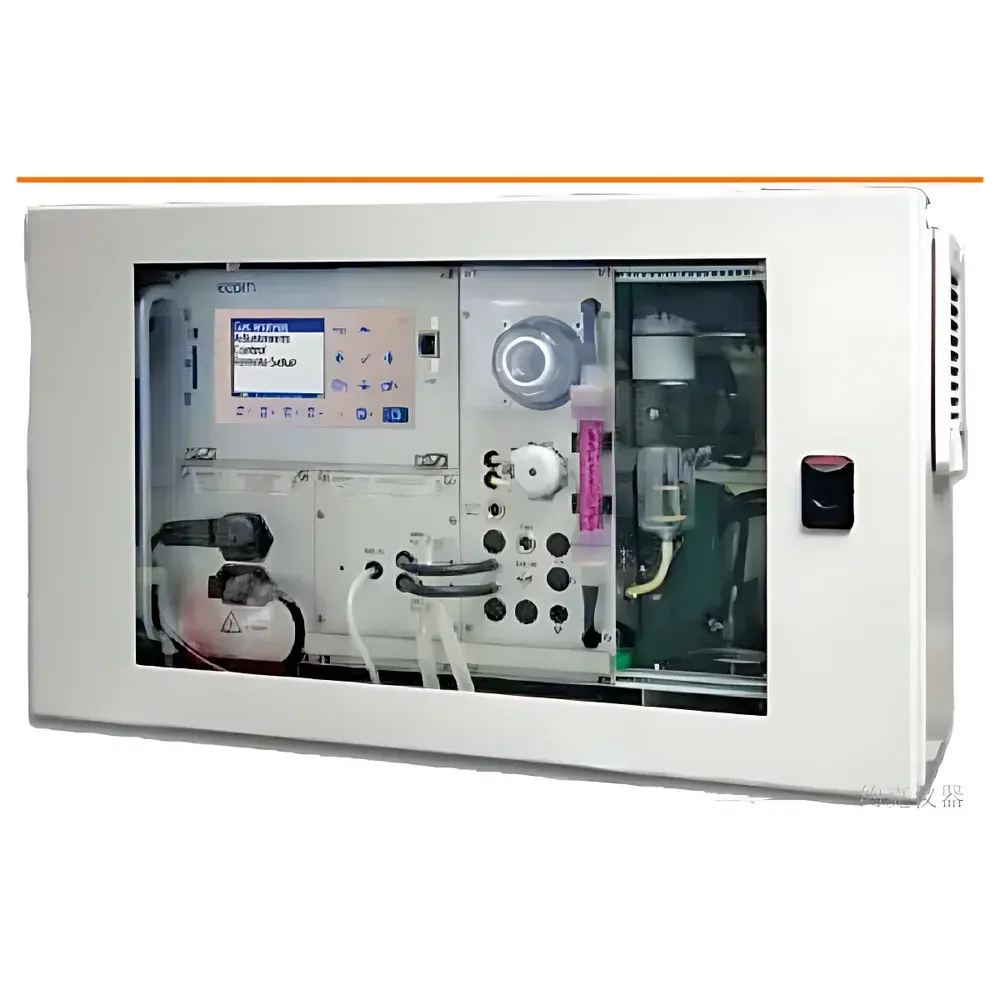
ecom-ST CEMS Portable Flue Gas Analyzer
| Brand | Ecom (Czech Republic) |
|---|---|
| Origin | Germany |
| Model | ecom-ST (CEMS) |
| Instrument Type | Portable Flue Gas Analyzer |
| Measurement Range | O₂, CO (H₂-compensated), optional CO₂, THC (IR), NO/NO₂, SO₂ |
| Sampling Flow Rate | 2.6 L/min |
| Cooling | Peltier-based gas cooler with condensate level sensing and automatic drainage |
| Communication | Modbus RTU, RS458 |
| Power Supply | 100–240 VAC |
| Enclosure Rating | IP52 (customizable to higher ingress protection) |
| Mounting | Wall-mounted |
| Calibration | 100% sensor calibration performed in controlled environmental chamber |
| Compliance | CE-marked |
Overview
The ecom-ST CEMS Portable Flue Gas Analyzer is an engineered solution for regulatory-compliant, long-term flue gas emission monitoring in combustion facilities operating on natural gas or light fuel oil. Designed for integration into Continuous Emission Monitoring Systems (CEMS), it adheres to the functional and performance requirements outlined in EN 15267-3 (QA/QC of automated measuring systems) and EN 14181 (quality assurance of CEMS). Its core measurement architecture employs electrochemical sensors for O₂ and CO (with integrated H₂ cross-sensitivity compensation), supplemented by optional non-dispersive infrared (NDIR) modules for CO₂ and total hydrocarbons (THC), and chemiluminescence or electrochemical detection for NO/NO₂ and SO₂. The instrument utilizes a high-stability Peltier-cooled gas conditioning system with real-time condensate level monitoring and autonomous drainage—ensuring sample integrity across variable ambient humidity and temperature conditions. All sensors undergo full traceable calibration in a certified environmental test chamber prior to shipment, guaranteeing metrological consistency at installation.
Key Features
- Robust Peltier-based gas cooler with integrated condensate level detection and fully automatic drainage—eliminates manual intervention and prevents sensor saturation from moisture ingress.
- Dual-mode operation: supports both portable field diagnostics and fixed-wall CEMS deployment with 24/7 unattended operation capability.
- High-flow sampling pump delivering stable 2.6 L/min volumetric flow—optimized for representative sample extraction from ducts and stacks under varying backpressure conditions.
- CO sensor with active over-range protection: maintains measurement continuity even during transient CO spikes exceeding nominal range without requiring recalibration or downtime.
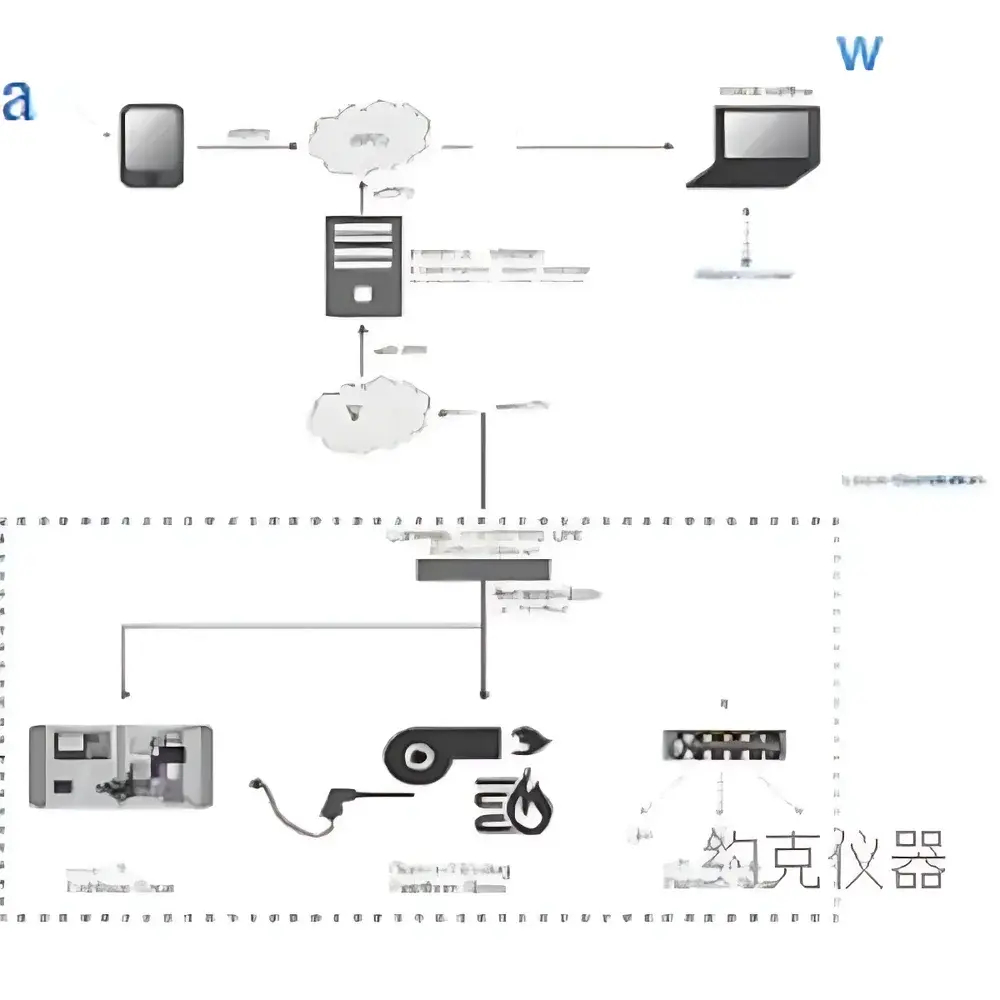
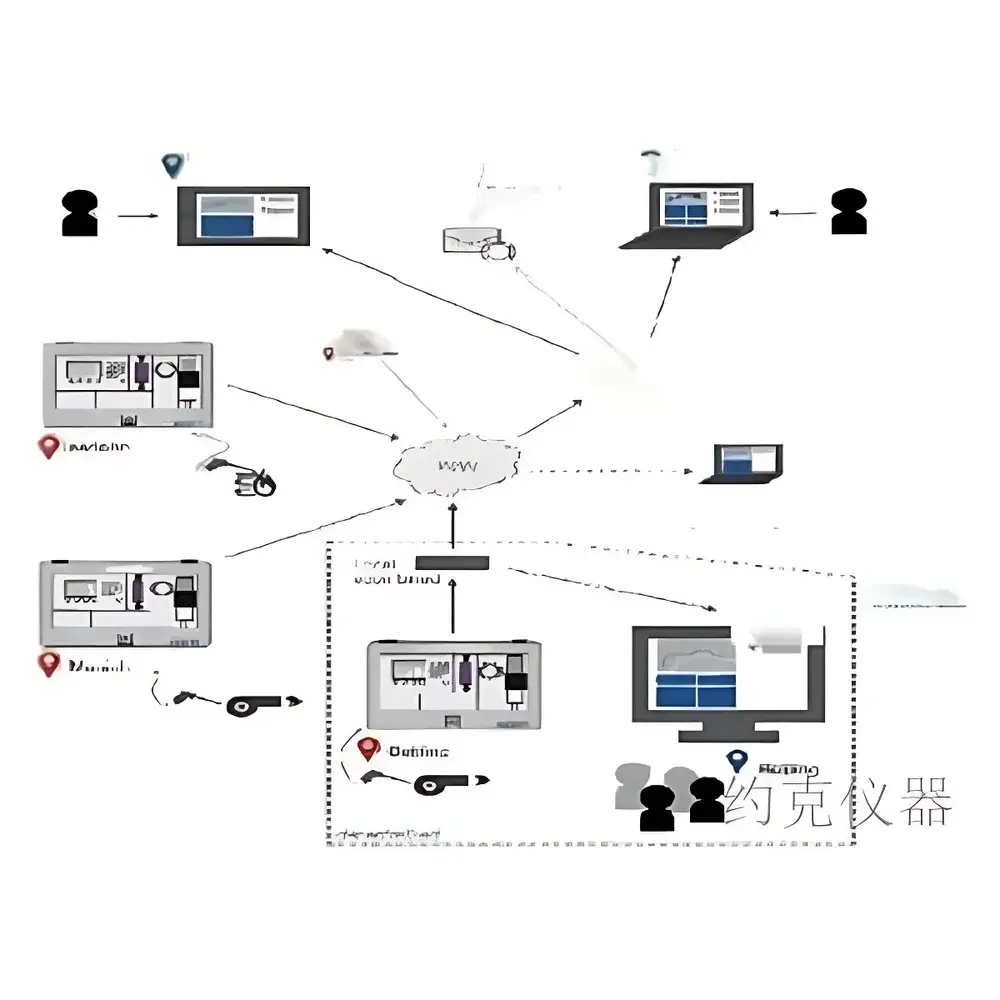
- Modbus RTU protocol over RS485 interface enables seamless integration into SCADA, DCS, or central data acquisition systems for remote configuration, real-time parameter readout, and alarm event logging.
- Metal enclosure with integrated viewing window allows visual verification of internal status indicators and sensor module integrity—enhancing operational transparency and maintenance efficiency.
- Electromagnetically actuated fresh-air purge system automatically engages during idle cycles or calibration sequences, ensuring baseline stability and minimizing zero drift between measurements.
Sample Compatibility & Compliance
The ecom-ST CEMS is validated for use with dry and wet flue gases from low- to medium-capacity combustion sources—including industrial boilers, thermal oil heaters, and gas-fired turbines. It meets the physical and environmental robustness criteria defined in EN 14181 for QAL2 (Quality Assurance Level 2) and AST (Automated System Test) validation. Its electromagnetic compatibility conforms to IEC 61000-6-2 (immunity) and IEC 61000-6-3 (emissions), supporting reliable operation in electrically noisy plant environments. The device carries CE marking under the EU Measuring Instruments Directive (MID) and Electromagnetic Compatibility Directive. While not certified as a Class I, Division 1 hazardous area instrument, its IP52-rated enclosure may be upgraded upon request to meet ATEX or IECEx Zone 2 requirements for specific site deployments.
Software & Data Management
Data acquisition and system control are managed via embedded firmware supporting configurable measurement cycles—including timed sequences (up to 144 measurements per day) and event-triggered sampling. All measurement records include timestamp, sensor status flags, ambient temperature/pressure, and raw analog outputs. Audit-trail functionality logs all user-initiated actions (e.g., zero/span, calibration, parameter changes) with operator ID and timestamp—supporting GLP/GMP-aligned documentation practices. Export options include CSV via USB and Modbus register mapping for direct ingestion into enterprise-level environmental data management platforms (EDMS). Firmware updates are performed via secure HTTP or local file upload, maintaining version traceability per ISO/IEC 17025 clause 5.9.4.
Applications
- Regulatory compliance monitoring for NOₓ, SO₂, CO, O₂, and CO₂ emissions in small- to mid-scale combustion plants subject to EU Industrial Emissions Directive (IED) or U.S. EPA Subpart GG reporting.
- Combustion optimization and excess air tuning in district heating systems and commercial boiler rooms—reducing fuel consumption while maintaining thermal efficiency.
- Pre-commissioning verification and periodic QA testing of permanently installed CEMS installations per EN 14181 QAL3 procedures.
- Field-based troubleshooting of burner instability, incomplete combustion, or flue gas recirculation faults using time-resolved multi-parameter trend analysis.
- Environmental due diligence assessments during facility acquisitions or permit renewals, where rapid, legally defensible emission snapshots are required.
FAQ
Is the ecom-ST CEMS certified for permanent CEMS installation under EN 15267?
Yes—the instrument is type-approved for QAL1 (Quality Assurance Level 1) according to EN 15267-3 when deployed with certified calibration gases, documented maintenance schedules, and third-party QAL2 verification.
Can the unit operate continuously without manual condensate removal?
Yes—its Peltier cooler includes capacitive condensate level sensing and motorized drain valve actuation, enabling fully autonomous operation for ≥72 hours under typical flue gas dew points.
What is the recommended calibration frequency for regulatory compliance?
Per EN 14181, daily zero checks and weekly span verification are required; full multi-point calibration must be performed at least every 3 months—or after sensor replacement, major maintenance, or exposure to extreme contamination events.
Does the device support hydrogen-compensated CO measurement in biogas applications?
No—the standard H₂-compensation algorithm is optimized for natural gas and light fuel oil combustion profiles; for biogas or syngas, custom calibration and extended-range CO sensors are available as engineering options.
How is data integrity ensured during power interruptions?
Internal non-volatile memory retains all measurement logs, calibration history, and configuration parameters across power loss; real-time clock maintains accurate timestamps independent of AC supply.







