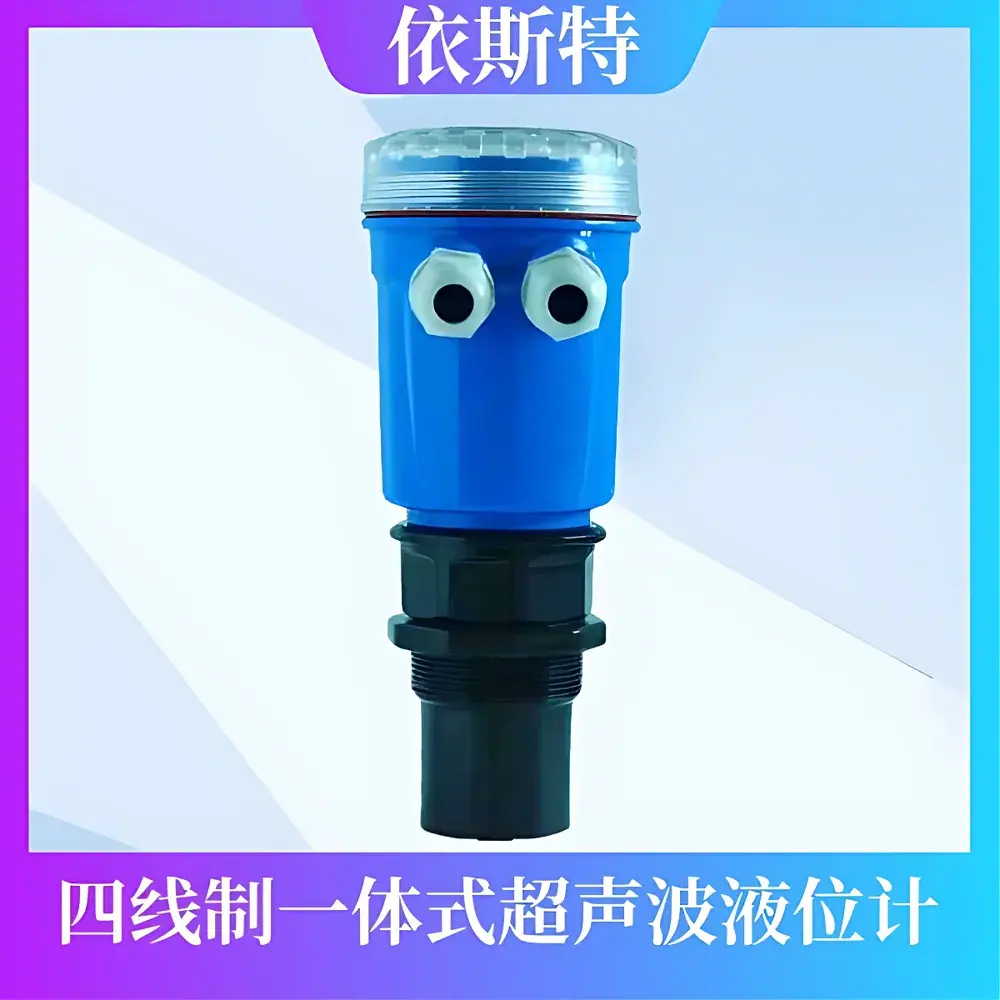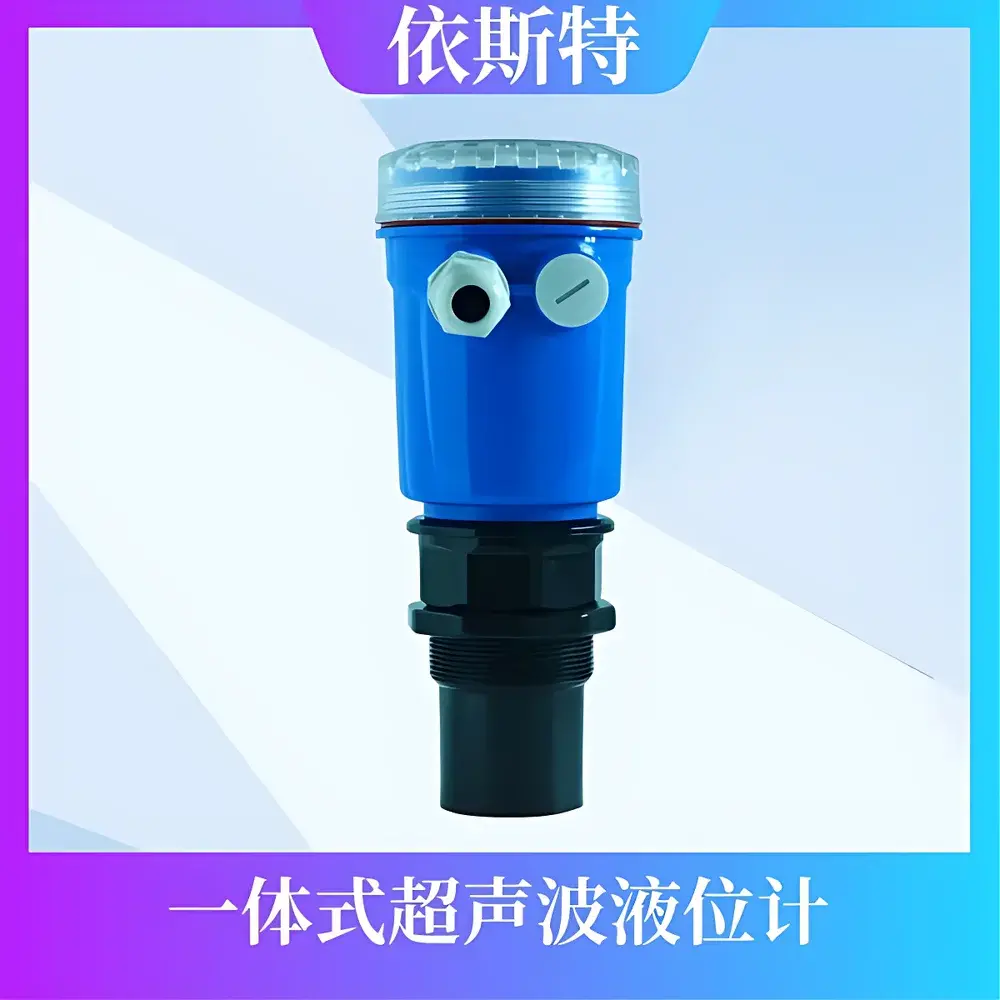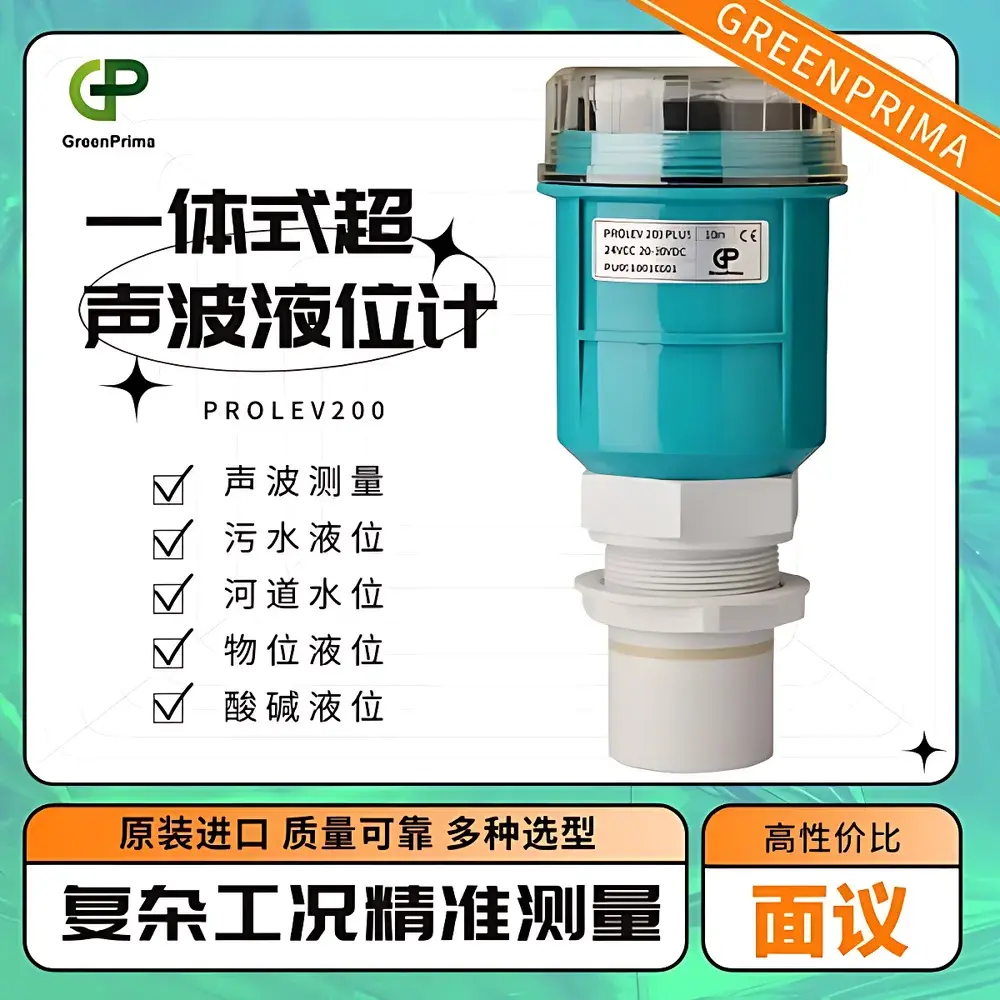
GreenPrima PROL EV200 Ultrasonic Level Transmitter
| Brand | GreenPrima |
|---|---|
| Origin | United Kingdom |
| Manufacturer Type | Manufacturer |
| Origin Category | Imported |
| Model | PROL EV200 |
| Product Type | Ultrasonic Level Transmitter |
| Measuring Range | 6 m / 10 m |
| Blind Zone | 0.25 m / 0.5 m |
| Accuracy | ±0.2% FS |
| Display | LCD |
| Resolution | 1 mm |
| Max. Process Pressure | 1.5 bar |
| Operating Temperature | −30 to +70 °C |
| Housing Material | PC/PP |
| Sensor Material | ETFE or PVDF |
| Output | 2-wire 4–20 mA (max. 750 Ω) |
| Power Supply | 24 VDC |
| Protection Rating | IP67 |
| Explosion Protection | None |
| Process Connection | G2" |
| Media Compatibility | Liquids and solids |
Overview
The GreenPrima PROL EV200 is a high-performance, microprocessor-based ultrasonic level transmitter engineered for non-contact continuous level measurement in industrial process environments. It operates on the time-of-flight (ToF) principle: an integrated transducer emits high-frequency ultrasonic pulses (typically 20–100 kHz) toward the surface of the medium; the elapsed time between pulse emission and echo return is precisely measured and converted into distance using the speed of sound in air—temperature-compensated in real time. This physics-based approach eliminates mechanical wear, avoids media contamination risks, and ensures long-term stability across diverse applications including open-channel flow monitoring, tank inventory management, and silo level surveillance. Designed for deployment in demanding ambient conditions—from outdoor water treatment facilities to chemical storage areas—the PROL EV200 delivers consistent performance without requiring recalibration under normal operating parameters.
Key Features
- Intelligent signal processing with adaptive gain control and automatic power adjustment to maintain optimal echo detection across varying surface conditions (e.g., foam, vapor, dust, or agitated surfaces)
- Real-time temperature compensation via built-in sensor, ensuring accurate sound velocity correction across the full operating range (−30 °C to +70 °C)
- Advanced echo profiling algorithm with dynamic interference suppression—effectively filters false echoes from tank walls, ladders, agitators, or internal structures
- Dual-range configuration (6 m / 10 m) with selectable blind zone (0.25 m / 0.5 m), enabling flexible deployment in both shallow sumps and tall vessels
- Robust housing constructed from UV-stabilized polycarbonate (PC) and polypropylene (PP), rated IP67 for dust-tight and temporary immersion resistance
- Chemically resistant transducer face made of ETFE or PVDF—suitable for aggressive media including acids, alkalis, solvents, and food-grade slurries
- Fixed 2-wire 4–20 mA analog output with HART-compatible signal conditioning, supporting loop-powered operation at 24 VDC and load up to 750 Ω
Sample Compatibility & Compliance
The PROL EV200 is validated for use with liquids (water, wastewater, oils, chemicals, beverages) and bulk solids (grains, pellets, powders, granules) where surface reflectivity and acoustic impedance permit reliable echo return. It complies with electromagnetic compatibility standards EN 61326-1 (industrial environment) and meets RoHS Directive 2011/65/EU requirements. While not certified for hazardous areas (ATEX or IECEx), its design adheres to functional safety principles aligned with IEC 61508 SIL 2 for basic integrity in non-safety-critical level monitoring tasks. The device supports traceable calibration documentation and is compatible with GLP/GMP-aligned operational procedures when integrated into validated systems.
Software & Data Management
Configuration and diagnostics are performed locally via intuitive LCD interface with multi-level menu navigation—no external software required for routine setup. All parameter changes (e.g., damping, damping time, fail-safe output mode, unit selection) are stored in non-volatile memory. The transmitter logs operational events—including signal strength history, temperature trends, and echo quality metrics—for post-deployment analysis. While native Modbus RTU or digital communication is not supported on the EV200 variant (reserved for the PROL EV300 series), its 4–20 mA output integrates seamlessly with DCS, PLC, SCADA, and MES platforms compliant with ISA-5.1 and IEC 62443-3-3 cybersecurity frameworks.
Applications
- Water and wastewater treatment: influent/effluent channel level, clarifier sludge blanket monitoring, pump station wet well control
- Food & beverage: syrup tanks, fermentation vessels, grain silos, CIP tank fill-level verification
- Chemical manufacturing: intermediate storage tanks, reagent dosing bins, solvent recovery sumps
- Power generation: cooling tower basin level, ash handling hopper monitoring, demineralized water storage
- Municipal infrastructure: stormwater detention basins, lift station level alarms, flood warning systems
FAQ
What is the minimum measurable distance (blind zone) for the PROL EV200?
The blind zone is configurable at either 0.25 m or 0.5 m, depending on selected range and installation constraints. This represents the near-field region where acoustic ringing prevents reliable echo detection.
Can the PROL EV200 measure through foam or vapour layers?
Yes—its adaptive gain control and echo filtering algorithms enhance signal-to-noise ratio, enabling stable measurements over light to moderate foam and saturated vapour conditions typical in biological reactors or heated tanks.
Is temperature compensation automatic and internal?
Yes. A dedicated NTC thermistor embedded within the transducer housing continuously measures ambient air temperature and dynamically adjusts the speed-of-sound calculation in real time.
Does the device support HART communication?
No—the PROL EV200 provides only a standard 2-wire 4–20 mA analog output. HART-enabled functionality is available in the PROL EV300 series.
What mounting options are available for the G2″ process connection?
Standard configurations include fixed flange mount (DIN 11851 or ANSI B16.5), threaded adapter, or optional bracket kits for side-wall or top-mounted installations on flat or domed vessel roofs.