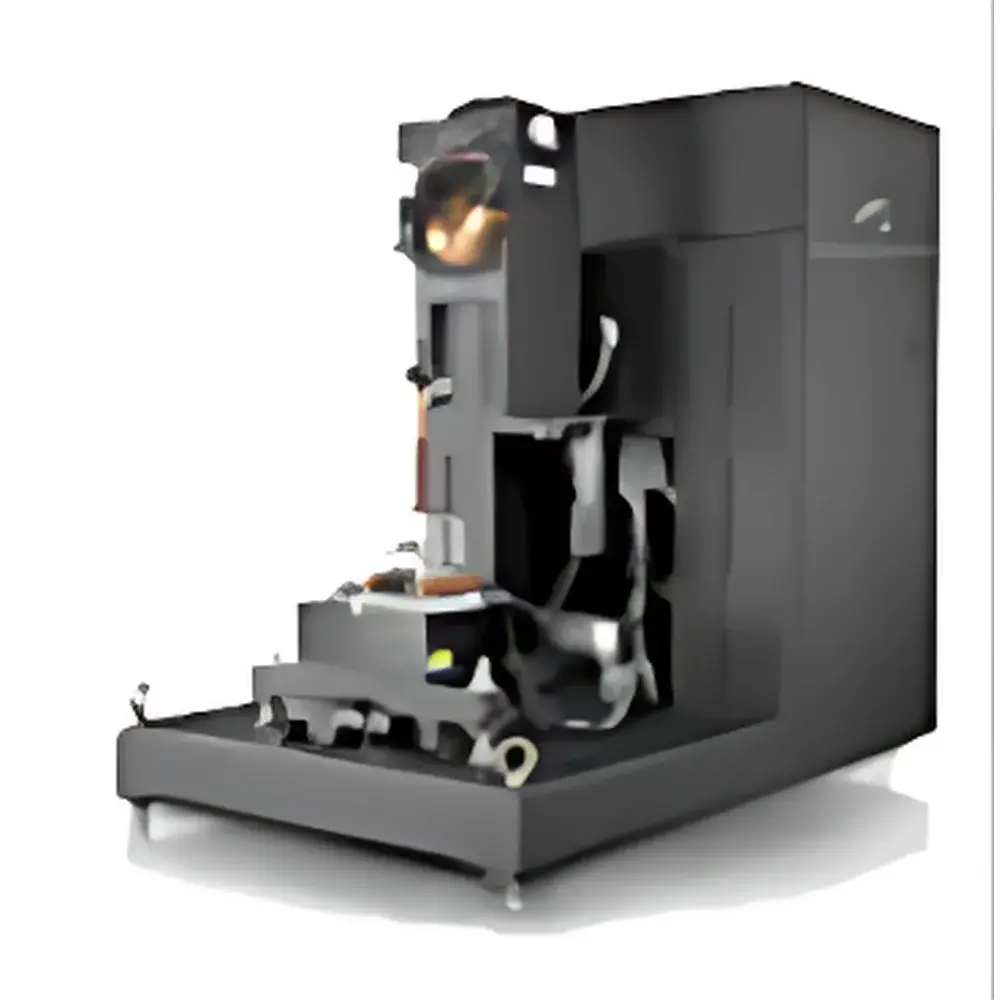
Radiant Zemax SIG-300 Imaging Goniophotometer
| Brand | Radiant Zemax |
|---|---|
| Origin | USA |
| Manufacturer Type | Authorized Distributor |
| Origin Category | Imported |
| Model | SIG-300 |
| Pricing | Upon Request |
| CCD Type | Full-frame, thermoelectrically cooled CCD |
| CCD Dynamic Range | 16-bit (65,536:1) |
| Resolution Options | 512 × 512 or 1024 × 1024 pixels |
| FOV (Standard) | 2 mm, 4 mm, 8 mm (512×512) |
| FOV (Micro Extension) | 0.5 mm, 1.2 mm |
| FOV (Large Extension) | 40 mm, 80 mm |
| Color Filter Set | CIE 1931 XYZ tristimulus filters |
| Neutral Density Filters | ND0 to ND5 |
| Polar Rotation Range | −10° to +370° |
| Azimuthal Tilt Limit | ±24° from lamp axis |
| Angular Step Resolution | 0.10°/min |
| Mechanical-Optical-Software Runout | < 0.025 mm |
| System Dimensions | 120 cm × 77 cm × 177 cm |
| Minimum Operating Footprint | 120 cm × 120 cm |
| Mass | 360 kg |
| Structural Frame | Welded steel cast housing with thermal stability design |
| Software Platform | SIG 2.0 — supports luminance, illuminance, chromaticity (CIE x,y |
Overview
The Radiant Zemax SIG-300 Imaging Goniophotometer is a precision near-field optical measurement system engineered for comprehensive spatial characterization of light sources across luminance, chromaticity, and angular intensity distribution. Based on high-resolution imaging goniometry, the system combines a motorized multi-axis mechanical stage with a thermoelectrically cooled, full-frame CCD sensor and calibrated CIE 1931 XYZ color filter set to acquire synchronized radiometric and photometric data at discrete angular positions around the source under test (SUT). Unlike conventional point-measurement goniometers, the SIG-300 captures full two-dimensional luminance and chromaticity maps at each angular orientation—enabling reconstruction of a complete Radiant Source Model (RSM). This RSM serves as a physically accurate, ray-traceable representation suitable for integration into optical design software (e.g., LightTools, TracePro, Zemax OpticStudio) and virtual prototyping workflows. The system is designed to meet the metrological requirements of LED module development, automotive lighting validation, display backlight analysis, and architectural luminaire qualification—where near-field source modeling directly impacts far-field prediction fidelity and compliance with IESNA LM-79, CIE S 025/E:2015, and ENERGY STAR® verification protocols.
Key Features
- Motorized dual-axis goniometric stage with sub-arcminute repeatability and mechanical-optical-software runout < 0.025 mm—ensuring geometric fidelity in RSM generation
- Thermoelectrically cooled 16-bit CCD options (512 × 512 or 1024 × 1024 pixels) delivering >65,000:1 dynamic range for simultaneous capture of hotspots and low-luminance regions
- Modular field-of-view architecture supporting micro-scale (0.5 mm), standard (2–20 mm), and large-format (40–80 mm) source geometries via interchangeable lens and relay optics
- NIST-traceable calibration suite including absolute luminance, chromaticity, and irradiance references—maintained per ISO/IEC 17025-accredited procedures
- Integrated ND filter wheel (ND0–ND5) enabling linear response across luminance ranges from 0.01 cd/m² to >10⁷ cd/m² without saturation or gain switching artifacts
- Vertical/horizontal source mounting configurations with azimuthal tilt compensation (±24°), accommodating directional emitters, COB packages, and edge-lit panels
Sample Compatibility & Compliance
The SIG-300 accommodates a broad spectrum of light-emitting devices—from miniature chip-on-board (COB) LEDs and micro-LED arrays to mid-size automotive headlamp modules and architectural linear fixtures. Its mechanical architecture supports both collimated and Lambertian emission profiles, while the software’s adaptive exposure control and pixel binning modes optimize signal-to-noise ratio for pulsed, PWM-driven, or thermally unstable sources. All measurements adhere to the spectral and geometric constraints defined in CIE Publication 127:2007 (Measurement of LEDs), IES TM-21 (Lifetime extrapolation), and IEC 62471 (Photobiological safety). The system’s calibration traceability chain is documented for GLP/GMP environments and satisfies audit requirements under FDA 21 CFR Part 11 when operated with SIG 2.0’s electronic signature and audit trail modules enabled.
Software & Data Management
SIG 2.0 software provides end-to-end control—from automated goniometer positioning and synchronized image acquisition to RSM export and visualization. It implements real-time gamma-corrected grayscale and CIE-compliant false-color rendering, with support for user-defined color spaces and perceptual uniformity metrics (e.g., CIELAB ΔE₀₀). Measurement datasets include full metadata (exposure time, ND filter position, temperature log, stage coordinates) embedded in industry-standard HDF5 and CSV formats. The software enables batch processing of multi-source comparisons, statistical tolerance analysis (e.g., luminance uniformity σ/μ), and direct export of RSMs in .rs3 format compatible with optical simulation platforms. All calibration certificates, correction matrices, and version-controlled firmware logs are archived within the software’s secure local database, supporting ISO 9001 documentation requirements.
Applications
- Generation of ray-sampled RSMs for predictive optical design and tolerance stack-up analysis in illumination engineering
- Validation of near-field luminance uniformity and chromaticity shift across viewing angles in OLED and Mini-LED backlights
- Characterization of beam shaping optics and secondary reflectors in automotive ADB (Adaptive Driving Beam) systems
- Quantification of spatial CCT gradients and angular color consistency per ANSI C78.377 and IEC TR 62778
- Supporting DOE CALiPER program testing protocols for SSL product benchmarking and energy efficiency certification
- Development of digital twins for smart lighting controls—linking measured angular data to IoT-based dimming and color-tuning algorithms
FAQ
What types of light sources can be measured with the SIG-300?
The SIG-300 is optimized for solid-state lighting (SSL) devices—including discrete LEDs, multi-die packages, COBs, and edge-lit panels—up to approximately 100 mm in maximum dimension. It also supports arc lamps, OLED tiles, and laser-based projection sources when configured with appropriate attenuation and thermal management.
Is the Radiant Source Model (RSM) compatible with commercial optical design software?
Yes. The RSM output (.rs3) is natively supported by Zemax OpticStudio, Synopsys LightTools, and Lambda Research TracePro. Export formats also include ASCII-based ray files (e.g., .dat, .csv) for custom integration into MATLAB, Python, or proprietary ray-tracing engines.
How is calibration maintained over time and across operating conditions?
The system includes automated self-calibration routines for dark current, flat-field, and photometric linearity. Annual recalibration is recommended and performed using NIST-traceable standards at Radiant’s ISO/IEC 17025-accredited facility. Temperature-stabilized CCD operation minimizes drift during extended acquisitions.
Can the SIG-300 measure pulsed or modulated light sources?
Yes. SIG 2.0 supports external trigger synchronization and adjustable integration timing, enabling precise capture of transient emissions—including PWM-driven LEDs and strobed displays—without motion blur or aliasing artifacts.
Does the system support remote operation and integration into automated test lines?
The SIG-300 offers Ethernet-based API access (TCP/IP) and LabVIEW, Python, and C++ SDKs. It complies with SEMI EDA/Interface A standards for semiconductor equipment integration and supports scheduled unattended operation with email alerting and error logging.