
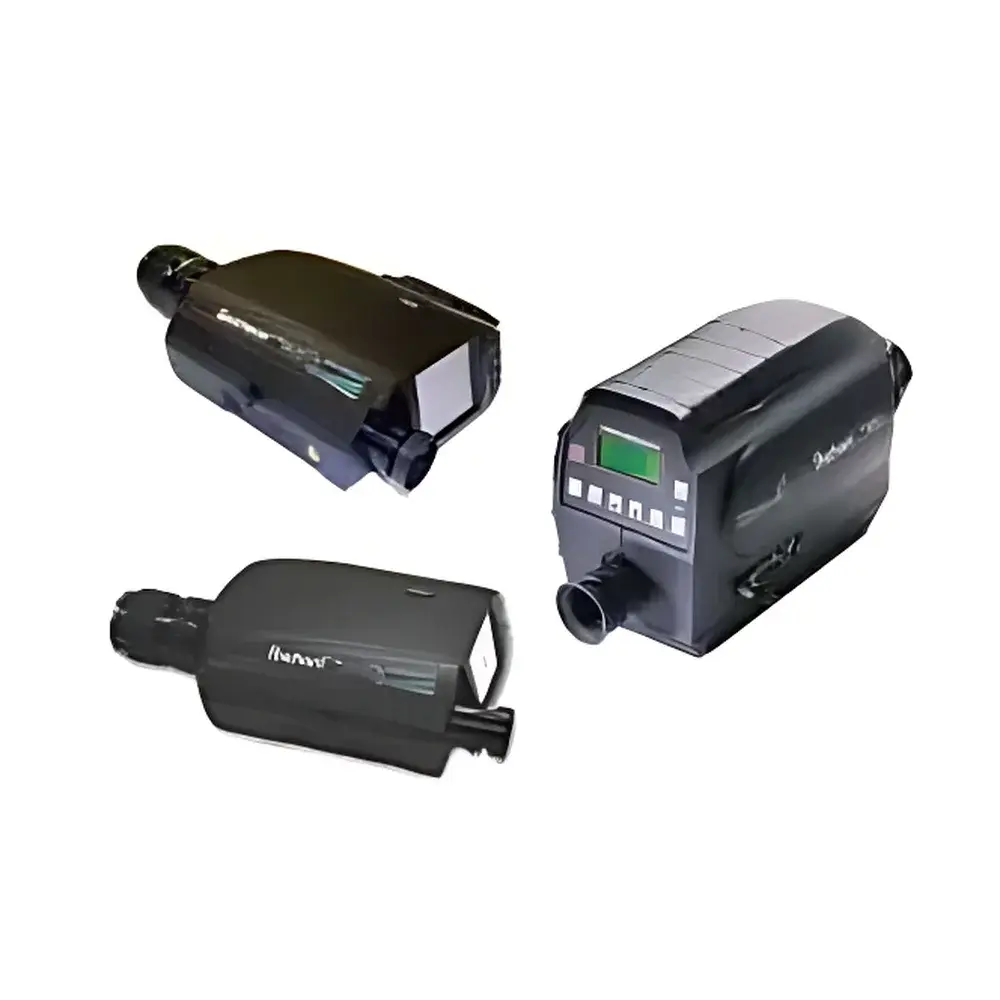
Photo Research PR-805/810/880/810L Filter-Based Photometers
| Brand | Photo Research |
|---|---|
| Origin | USA |
| Model Series | PR-805, PR-810, PR-880, PR-810L |
| Detection Principle | Photomultiplier Tube (PMT) with Precision Interference Filter Wheel Architecture |
| Luminance Range (PR-810L) | 1 × 10⁻⁶ to 5.184 × 10⁵ fL |
| Luminance Range (PR-880) | 1 × 10⁻⁴ cd/m² min |
| Luminance Range (PR-810) | 1 × 10⁻⁴ fL min |
| Luminance Range (PR-805) | 9 × 10⁻⁴ fL min |
| Field-of-View Options | 3°, 1°, 0.25°, 0.125° (PR-810 & PR-810L) |
| Dynamic Range | 9 × 10⁶:1 (PR-805/810), 9 × 10⁸:1 (PR-810L) |
| Built-in Rechargeable Battery | >12 h continuous operation |
| Calibration Traceability | NIST-traceable, internal reference source (PR-880) |
| Compliance | MIL-STD-461E (EMI), ANSI PH2.17, CIE S 014/E:2006, ISO/CIE 11664-2:2019 |
Overview
The Photo Research PR-805/810/880/810L series represents a family of high-precision, filter-based photometers engineered for absolute luminance measurement across extreme dynamic ranges—from ultra-low-light night vision applications to high-brightness display and lighting characterization. Each model employs a cooled, low-noise photomultiplier tube (PMT) detector coupled with a mechanically indexed interference filter wheel system, enabling spectrally selective photometric response aligned with the CIE 1931 V(λ) luminosity function. Unlike silicon photodiode-based instruments, this PMT architecture delivers sub-femtolumen sensitivity, exceptional signal-to-noise ratio at low flux levels, and intrinsic linearity over nine orders of magnitude. The PR-880 integrates an on-board stabilized tungsten-halogen reference source for in-situ calibration verification, mitigating drift-related uncertainty during extended field or laboratory sessions. All units conform to ANSI PH2.17 photometric accuracy standards and support traceable calibration paths to NIST via factory-certified reference lamps.
Key Features
- Photomultiplier tube detection with spectral response matched to CIE V(λ) via precision interference filters
- Motorized neutral density (ND) filter wheels enabling automatic attenuation—9,000,000:1 dynamic range (PR-805/810); 900,000,000:1 (PR-810L)
- Interchangeable field stops: standard options include 3°, 1°, 0.25°, and 0.125°; PR-880 supports five calibrated field angles
- Integrated rechargeable lithium-ion battery providing ≥12 hours of continuous operation without external power
- Onboard microprocessor with real-time auto-zero, gain optimization, and nonlinearity correction algorithms
- MIL-STD-461E compliant electromagnetic shielding for operation in defense, aerospace, and avionics test environments
- PR-880-specific internal calibration source with drift-compensated feedback loop for GLP-compliant long-duration measurements
Sample Compatibility & Compliance
These photometers are designed for non-contact luminance measurement of emissive surfaces including OLED and microLED displays, aircraft cockpit instrumentation, automotive HUDs, night-vision device outputs, and low-luminance signage. They accommodate curved, textured, and spatially non-uniform sources through precise field-stop selection and cosine-corrected input optics. All models comply with ISO/CIE 11664-2:2019 for photometric quantity definitions and ANSI PH2.17 for instrument performance validation. The PR-880 meets U.S. Department of Defense requirements for night vision imaging system (NVIS) testing per MIL-L-85762A and is routinely deployed in DoD-contracted laboratories. Data integrity is maintained under GLP/GMP frameworks via timestamped measurement logs and optional audit-trail-enabled firmware (compatible with FDA 21 CFR Part 11 when paired with validated software).
Software & Data Management
Instrument control and data acquisition are supported via the Photo Research SpectraWin™ v6.x platform (Windows 10/11 compatible), which provides full remote command capability through USB 2.0 or RS-232 interfaces. SpectraWin enables automated measurement sequences—including multi-point luminance mapping, time-series stability analysis, and contrast ratio computation—with export to CSV, XML, or industry-standard .SPE format. Raw PMT gain settings, filter positions, and ambient temperature compensation values are embedded in each data record. For integration into automated test systems, SCPI-compliant command sets allow seamless interoperability with LabVIEW, Python (PyVISA), and MATLAB environments. Calibration certificates include full uncertainty budgets per ISO/IEC 17025 requirements.
Applications
- Characterization of emissive display technologies: peak luminance, black-level uniformity, contrast ratio (ANSI/FOCAL), and temporal luminance stability
- Night vision compatibility testing of cockpit panels and helmet-mounted displays per MIL-STD-3009
- Verification of photometric compliance for medical device status indicators (IEC 62304 Annex C)
- Low-light sensor calibration and radiometric validation in astronomical instrumentation labs
- Quality assurance of backlight units (BLUs) and edge-lit LCD modules in manufacturing environments
- Research in mesopic and scotopic vision physiology requiring sub-10⁻⁶ cd/m² resolution
FAQ
What distinguishes the PR-810L from the PR-810?
The PR-810L features enhanced PMT cooling, optimized low-noise preamplification, and an expanded ND filter set—achieving a minimum detectable luminance of 1 × 10⁻⁶ fL versus 1 × 10⁻⁴ fL for the PR-810.
Can these instruments measure colorimetric quantities?
No—these are dedicated photometers. For chromaticity, Photo Research recommends pairing with the PR-740/780 series spectroradiometers or using the PR-880 with optional CIE x,y and u’,v’ filter sets (sold separately).
Is factory recalibration required annually?
Yes—NIST-traceable recalibration is recommended every 12 months or after 200 hours of operation in demanding thermal environments to maintain ANSI PH2.17 conformance.
Do the PR-805/810 models support external triggering?
Yes—TTL-compatible trigger input allows synchronization with pulsed light sources or frame-grabber systems for flicker and PWM analysis.
How is cosine response error corrected?
Each unit ships with a calibrated diffuser assembly; angular response deviation is characterized per CIE Publication 127 and stored in firmware for real-time correction during off-axis measurements.



