
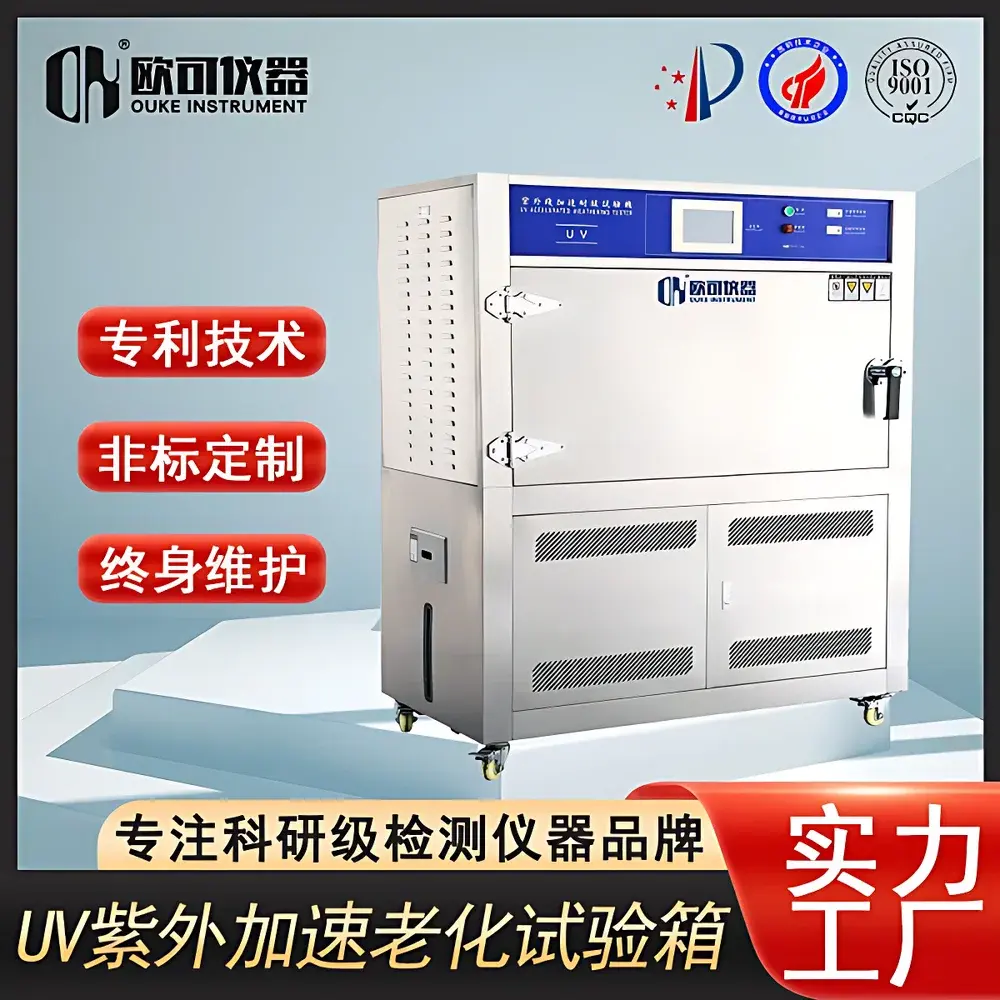
OK UV Aging Test Chamber OK-UV-290.0000
| Brand | OK Instruments |
|---|---|
| Origin | Guangdong, China |
| Manufacturer Type | Direct Manufacturer |
| Country of Origin | China |
| Model | OK-UV-290.0000 |
| Humidity Range | ≥95% RH (actual chamber humidity) |
| Lamp Power | 40 W per tube |
| Irradiance Range | 0.72 W/m² |
| Exposure Time | 1–9999 h (adjustable) |
| Illumination Temperature Range | RT to 70 °C |
| UV Wavelength | 300 nm |
| Chamber Dimensions (L×W×H) | 1170 × 400 × 400 mm |
Overview
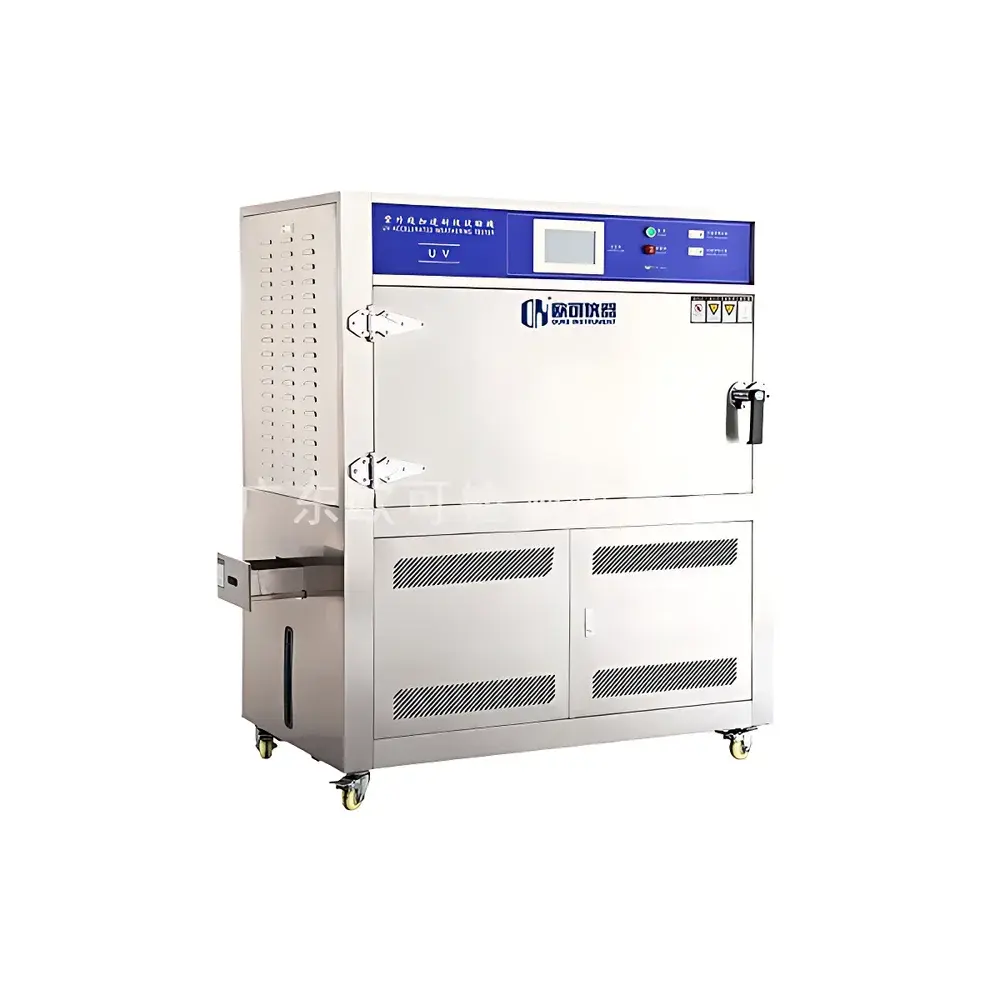
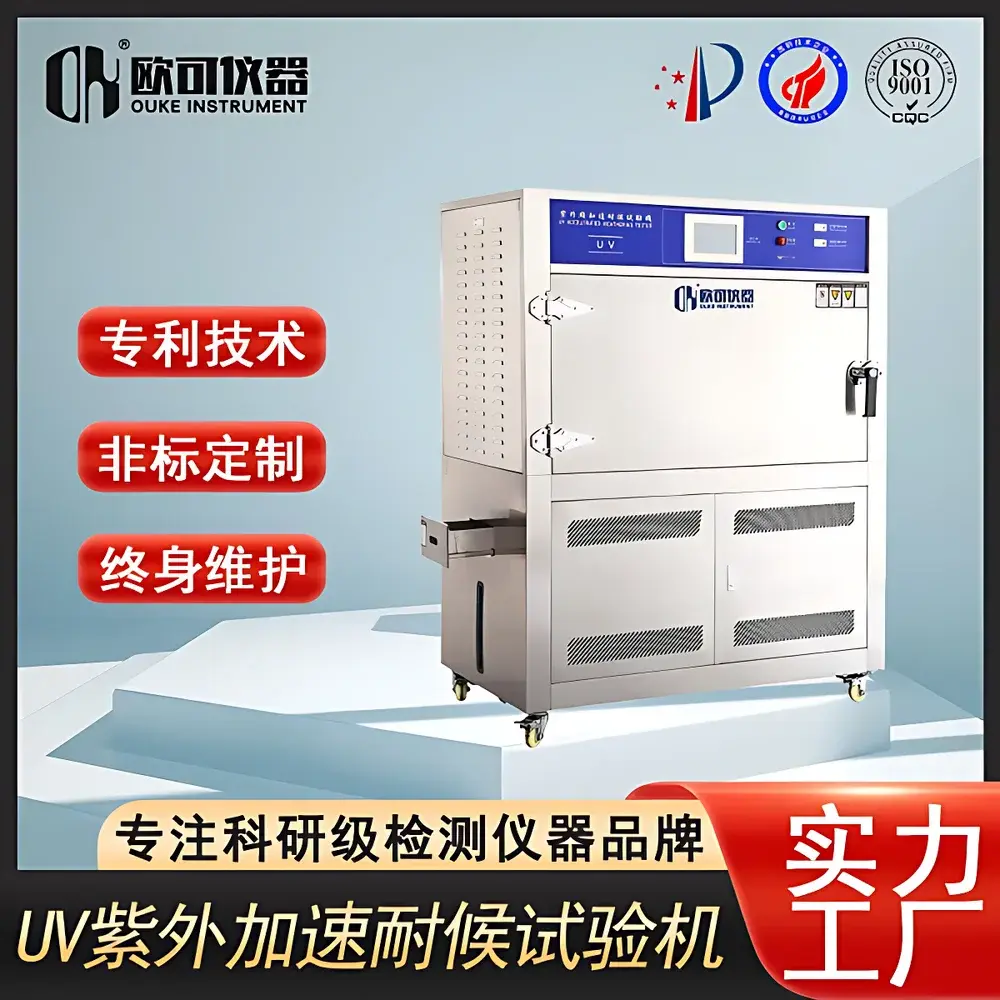
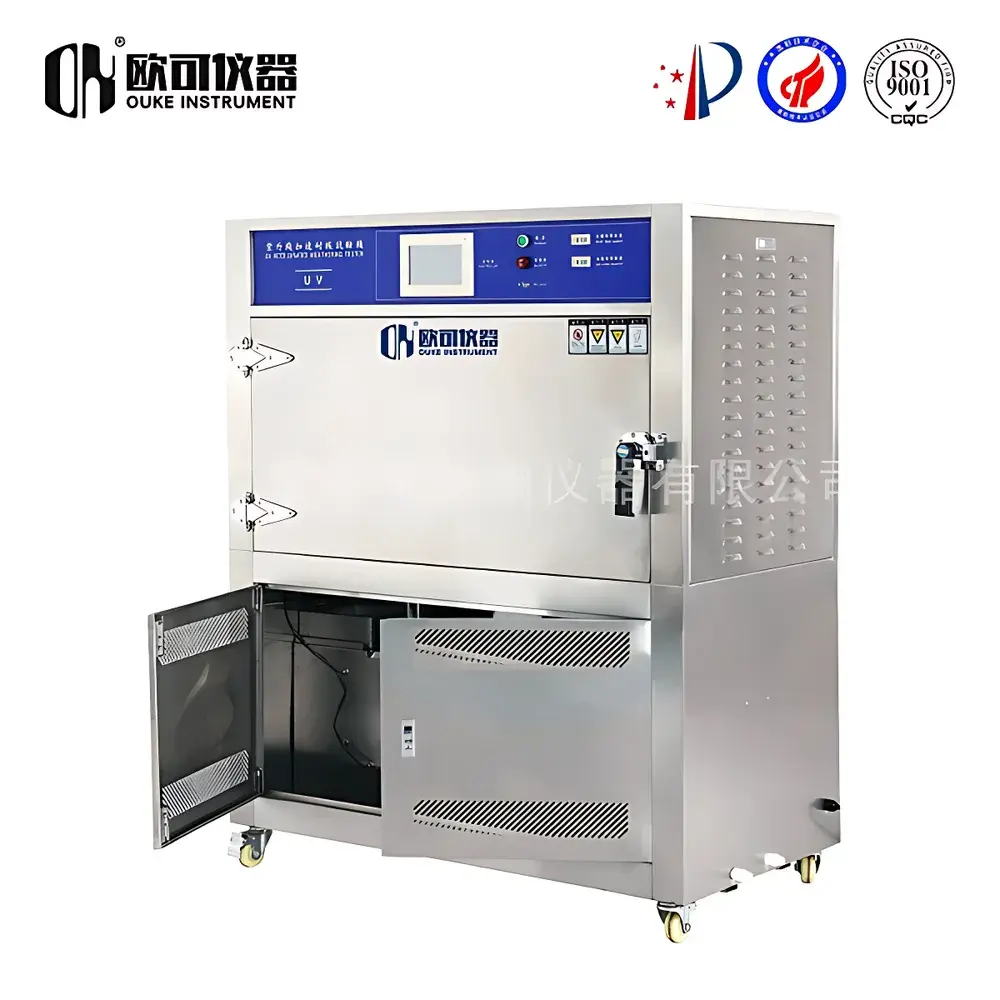
The OK UV Aging Test Chamber OK-UV-290.0000 is a precision-engineered fluorescent ultraviolet (UV) accelerated weathering instrument designed for laboratory-based simulation of outdoor solar UV exposure combined with moisture-induced degradation mechanisms. It operates on the principle of controlled UV irradiation—primarily in the UVA and UVB spectral bands—coupled with cyclic condensation and water spray to replicate key environmental stressors: photodegradation, thermal cycling, and hygrothermal aging. Unlike full-spectrum xenon arc systems, this chamber isolates and intensifies the UV component (centered at 300 nm), which is responsible for the majority of polymer chain scission, pigment bleaching, and surface embrittlement in organic materials. Its architecture conforms to the fundamental test logic defined in ISO 4892-3, ASTM G154, and GB/T 16422.3, enabling standardized, repeatable evaluation of material resistance to UV-driven deterioration under regulated temperature and humidity conditions.
Key Features
- Fluorescent UV lamp system with calibrated 40 W UVA/UVB tubes (300 nm peak emission), delivering stable irradiance of 0.72 W/m² at specimen plane—engineered for high reproducibility across test cycles.
- Integrated condensation and water spray subsystems: condensation cycle simulates nocturnal dew formation via controlled water vapor saturation on cooled specimen surfaces; spray cycle applies calibrated water impact to emulate rain erosion and thermal shock.
- Precise illumination temperature control from ambient (RT) to 70 °C, monitored via black panel thermometer (BPT) or black standard thermometer (BST) configuration per ASTM G154 requirements.
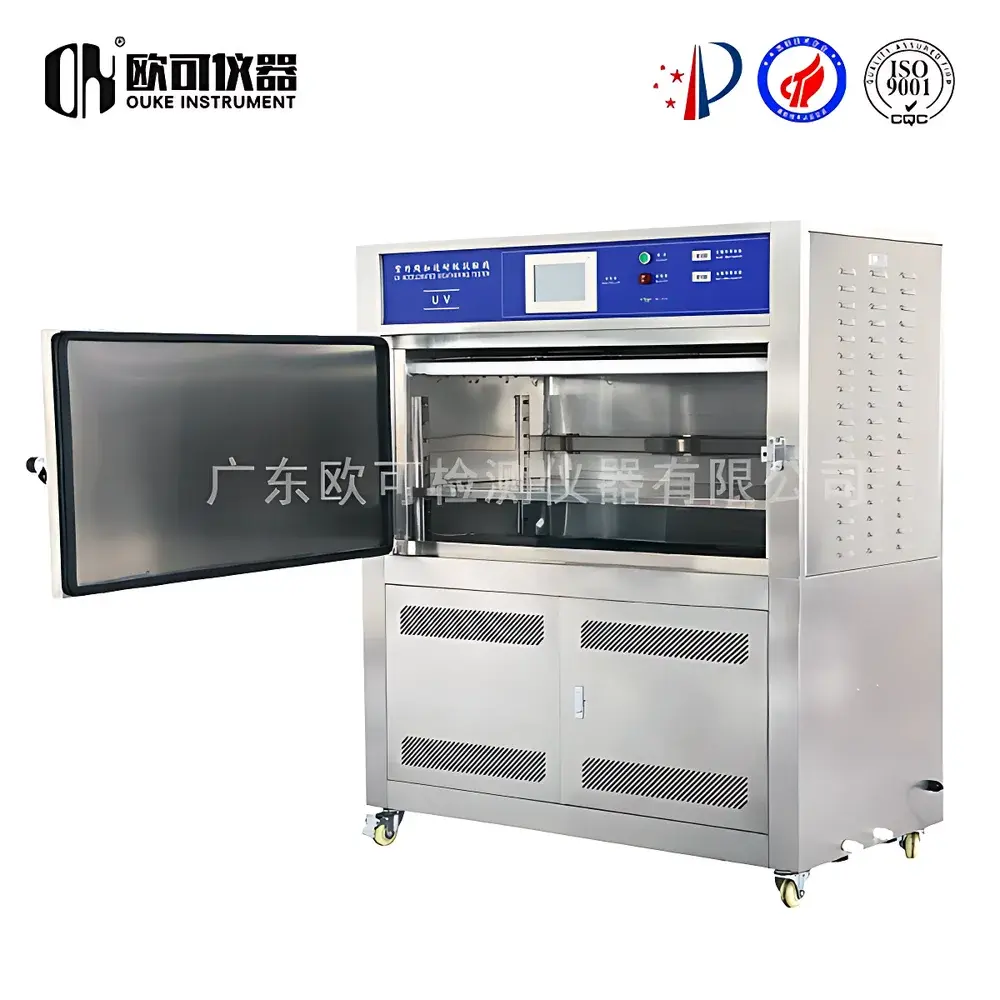
- Chamber interior constructed from SUS304 stainless steel with seamless welding and anti-corrosion finish, ensuring long-term stability in high-humidity (≥95% RH) operational environments.
- Programmable digital controller supporting customizable exposure cycles—including independent timing for UV irradiation, condensation, and spray phases—with up to 9999 hours total runtime capability.
- Uniform UV distribution achieved through optimized lamp array geometry and reflective chamber walls, minimizing spatial irradiance variance across the 1170 × 400 × 400 mm test volume.
Sample Compatibility & Compliance
The OK-UV-290.0000 accommodates flat-panel specimens up to 150 mm × 75 mm × 20 mm (standard fixture dimensions), with modular sample racks allowing simultaneous testing of multiple material types—including thermoplastics, coatings, elastomers, textiles, adhesives, and composites. All operational parameters are traceable to internationally recognized standards: test protocols align with ISO 4892-3 (Plastics — Methods of exposure to laboratory light sources — Part 3: Fluorescent UV lamps), ASTM G154 (Standard Practice for Operating Fluorescent Ultraviolet (UV) Lamp Apparatus for Exposure of Non-Metallic Materials), and GB/T 16422.3 (Chinese national standard for plastic UV exposure testing). The system supports both UVA-340 (sunlight-spectrum simulation) and UVB-313 (accelerated degradation) lamp configurations, enabling method flexibility based on application-specific validation needs. It is suitable for GLP-compliant laboratories where audit-ready documentation of exposure parameters, lamp replacement logs, and calibration history is required.
Software & Data Management
The embedded microprocessor-based control system provides real-time monitoring of irradiance (via integrated UV sensor), chamber temperature, relative humidity, and cycle phase status. While the base model features a tactile LCD interface with password-protected parameter locking, optional RS485/Modbus RTU communication enables integration into centralized lab data acquisition networks. Exportable CSV log files record timestamped values for irradiance, temperature, and operational state—supporting retrospective analysis and regulatory compliance reporting. For laboratories operating under FDA 21 CFR Part 11 requirements, third-party validated software modules (available upon request) provide electronic signatures, audit trails, and user access controls—ensuring data integrity throughout the test lifecycle.
Applications
This UV aging chamber serves as a core qualification tool in R&D and quality assurance workflows across multiple industrial sectors. In automotive plastics engineering, it evaluates color stability, gloss retention, and tensile property decay in exterior trim, bumpers, and lighting housings. Coating manufacturers use it to assess blistering, chalking, and adhesion loss in architectural paints, coil coatings, and powder finishes. Rubber compounders rely on its accelerated UV-condensation cycles to quantify crack initiation in EPDM, SBR, and silicone elastomers. Textile labs apply it to determine lightfastness of dyed fabrics and UV-stabilized synthetic fibers per AATCC TM16 or ISO 105-B02. Sealant and adhesive developers employ it to monitor cohesive strength degradation and interfacial delamination under repeated wet-dry cycling. Its deterministic UV focus makes it especially valuable for comparative screening, formulation optimization, and failure mode analysis—not as a direct outdoor lifetime predictor, but as a robust discriminant for relative UV resistance.
FAQ
What UV lamp types are compatible with the OK-UV-290.0000?
The chamber accepts industry-standard 40 W fluorescent UV lamps, including UVA-340 (365 nm cutoff, solar-spectrum match) and UVB-313 (290–365 nm, high-energy acceleration); lamp selection must be specified at time of order.
How often must UV lamps be replaced to maintain irradiance accuracy?
Per ASTM G154 guidance, lamps should be replaced after 1600–2000 hours of cumulative operation—or sooner if irradiance falls below 90% of initial calibrated value—as measured by a NIST-traceable UV radiometer.
Does the system meet requirements for ISO/IEC 17025-accredited testing laboratories?
Yes—the chamber’s design supports metrological traceability when used with calibrated reference sensors and documented maintenance records; full accreditation requires site-specific validation per ILAC-G8.
Can the condensation and spray cycles be operated independently?
Yes. The controller allows fully decoupled programming of UV exposure, condensation duration, and spray frequency/duration—enabling custom test sequences such as “UV only”, “UV + condensation”, or “UV + spray” per test method requirements.
Is external cooling water required for operation?
No. The system uses air-cooled ballasts and passive heat dissipation; no chilled water supply or external HVAC integration is necessary for standard operation within ambient room temperatures of 15–30 °C.



