
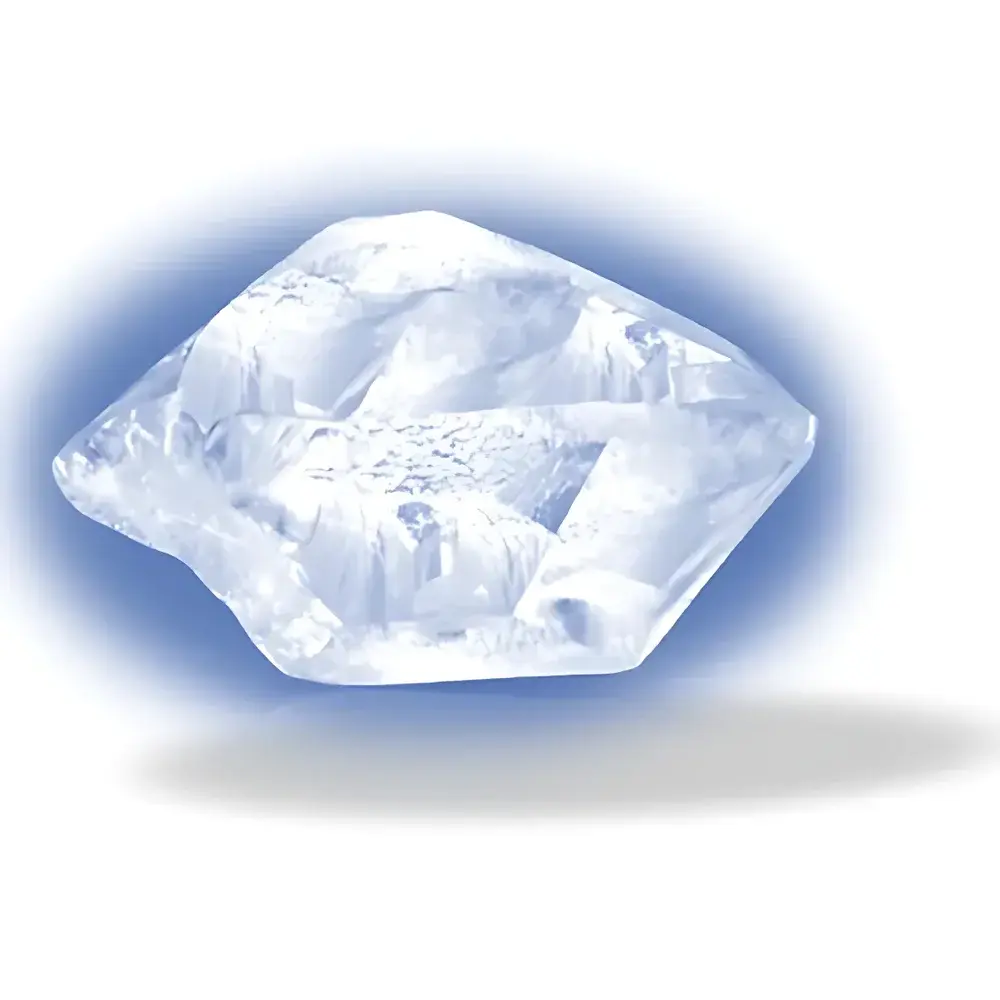
High-Anti-Gray-Track HGTR KTP Crystal for QCM and Electro-Optic Applications
| Brand | TEO |
|---|---|
| Origin | Israel |
| Manufacturer Type | Authorized Distributor |
| Origin Category | Imported |
| Model | HGTR KTP |
| Pricing | Upon Request |
Overview
The High-Anti-Gray-Track HGTR KTP Crystal is a premium-grade potassium titanyl phosphate (KTiOPO₄) single crystal engineered specifically for high-power, high-repetition-rate electro-optic and frequency-conversion applications—particularly where long-term photostability under intense laser irradiation is mission-critical. Unlike standard KTP crystals, the HGTR variant employs Raicol Crystals’ proprietary flux-growth methodology and optimized post-growth thermal treatment, resulting in significantly suppressed gray track formation—a degradation mechanism characterized by localized color center generation and lattice distortion under prolonged 532 nm or near-IR pump exposure. This crystal is not a generic optical component but a rigorously qualified material for integration into quartz crystal microbalance (QCM) sensor platforms requiring stable piezoelectric response under thermal–optical stress, as well as in electrochemical–optical hybrid systems where simultaneous electrical biasing and optical probing demand minimal dielectric loss and thermal drift.
Key Features
- Exceptional resistance to gray track formation: Demonstrated stability at average power densities up to 5 kW/cm² at 532 nm—validated via accelerated lifetime testing per ISO 11146-2 beam characterization protocols.
- Enhanced nonlinear optical performance: Second-harmonic generation (SHG) coefficient deff ≈ 3.8 pm/V at 1064 nm, approximately four times higher than LBO in comparable phase-matching configurations.
- Low intrinsic absorption: <0.05% cm⁻¹ across 400–2000 nm spectral range, minimizing thermal lensing and enabling high-fidelity QCM signal transduction in optically coupled resonator designs.
- Thermally robust phase-matching: Temperature bandwidth ΔT ≈ 35 °C·cm for type-II SHG (1064 nm → 532 nm), supporting stable operation without active temperature stabilization in industrial environments.
- Non-hygroscopic crystalline structure: Eliminates need for hermetic sealing or desiccant packaging—critical for long-term deployment in uncontrolled laboratory or field-deployable QCM systems.
- Favorable angular acceptance: Large acceptance angle (>10 mrad) and minimal walk-off (ρ < 2.5 mrad), facilitating alignment tolerance in compact electro-optic modulator and QCM–laser feedback architectures.
Sample Compatibility & Compliance
The HGTR KTP crystal is compatible with standard AT-cut and SC-cut quartz substrates used in commercial QCM systems, and supports direct metallization (e.g., Au/Ti or Cr/Au electrodes) without interfacial delamination under thermal cycling. Its dielectric constant (εr ≈ 35 @ 1 MHz) and low loss tangent (tan δ < 2×10⁻⁴) ensure minimal perturbation of resonant frequency shift measurements during electrochemical impedance spectroscopy (EIS)-coupled experiments. The crystal complies with RoHS Directive 2011/65/EU and meets material traceability requirements per ISO 9001:2015. Batch-specific certification includes full spectral transmission data (200–2500 nm), SHG efficiency mapping, and gray track threshold reporting per ASTM F2627-19 (Standard Practice for Laser-Induced Damage Threshold Testing).
Software & Data Management
While the HGTR KTP itself is a passive optical–electrochemical transducer material, its integration into QCM systems requires precise calibration against known mass loading and environmental variables. When deployed in GLP-compliant laboratories, the crystal’s performance metrics are logged via validated QCM control software (e.g., Q-Sense Biolin, SRS QCM200, or custom LabVIEW-based acquisition suites) that support 21 CFR Part 11–compliant audit trails, electronic signatures, and metadata tagging (including crystal lot number, irradiation history, and thermal soak duration). Raw frequency–dissipation (Δf–ΔD) datasets generated using HGTR KTP-enhanced sensors are fully exportable in HDF5 or ASCII formats for downstream chemometric analysis.
Applications
- High-stability QCM-D sensors for real-time monitoring of photoactive thin-film growth (e.g., perovskite or organic semiconductor deposition under in situ laser annealing).
- Electro-optic QCM modules in corrosion studies involving pulsed-laser stimulated electrochemical reactions.
- Frequency-doubled pump sources in time-resolved electrochemical Raman setups requiring >10⁷ shot endurance at 10 kHz repetition rates.
- Stable reference oscillators in metrology-grade electrochemical impedance analyzers operating under ambient thermal fluctuations.
- Material screening platforms for evaluating photoelectrocatalyst adhesion kinetics under combined optical excitation and potentiodynamic control.
FAQ
Is the HGTR KTP crystal suitable for integration into existing QCM hardware?
Yes—standard dimensions (e.g., φ14 mm × 0.5 mm thickness) and electrode-compatible surface finish allow drop-in replacement in most commercial QCM resonators. Custom geometries and metallization patterns are available upon request.
What is the maximum recommended laser fluence for continuous-wave operation?
For CW 532 nm irradiation, the damage threshold exceeds 5 kW/cm² at 100 µm spot size with >10 s exposure; pulsed operation (ns–ps) requires individual pulse energy assessment per ISO 21254-1.
Does the crystal require special storage or handling conditions?
No—its non-hygroscopic nature eliminates humidity-controlled storage; however, anti-reflection coating application and cleaning must follow Raicol’s solvent protocol (isopropanol + nitrogen purge) to preserve surface integrity.
Can batch-to-batch performance be traced for regulatory submissions?
Yes—each crystal is supplied with a Certificate of Conformance including Lot ID, spectral transmission report, SHG efficiency map, and gray track test summary aligned with ICH Q5D and USP analytical instrument qualification guidelines.





