
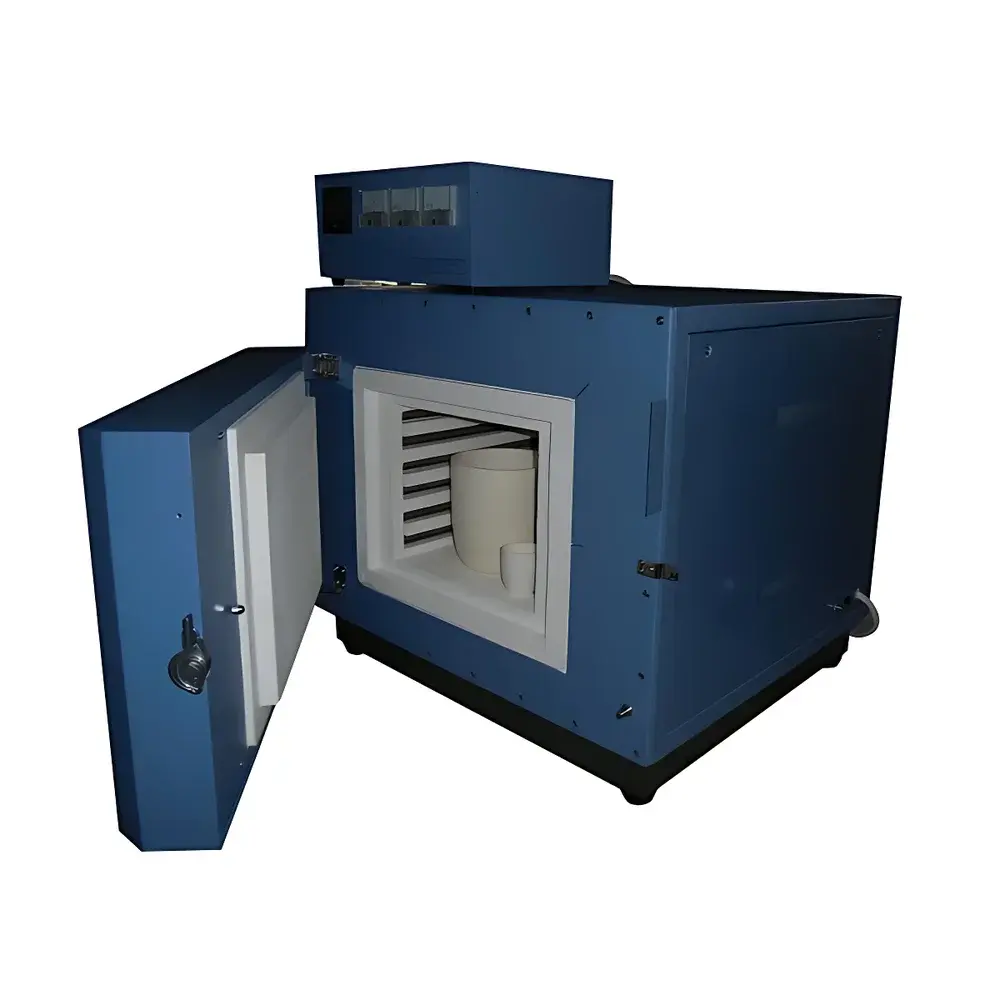
Zhongke Aobo TL6010 High-Temperature Ashing Furnace (Box-Type Muffle Furnace)
| Brand | Zhongke Aobo |
|---|---|
| Origin | Beijing, China |
| Model | TL6010 |
| Instrument Type | Box-Type Muffle Furnace |
| Maximum Temperature | 1200 °C |
| Temperature Control Accuracy | ±1 °C |
| Rated Power | 12 kW |
| Heating Method | Electrical Resistance Heating |
| Internal Chamber Dimensions (W×D×H) | 500 mm × 400 mm × 300 mm |
| Chamber Volume | 60 L |
| Time to Reach Max Temperature | ≤80 min (from 100 °C to 1200 °C) |
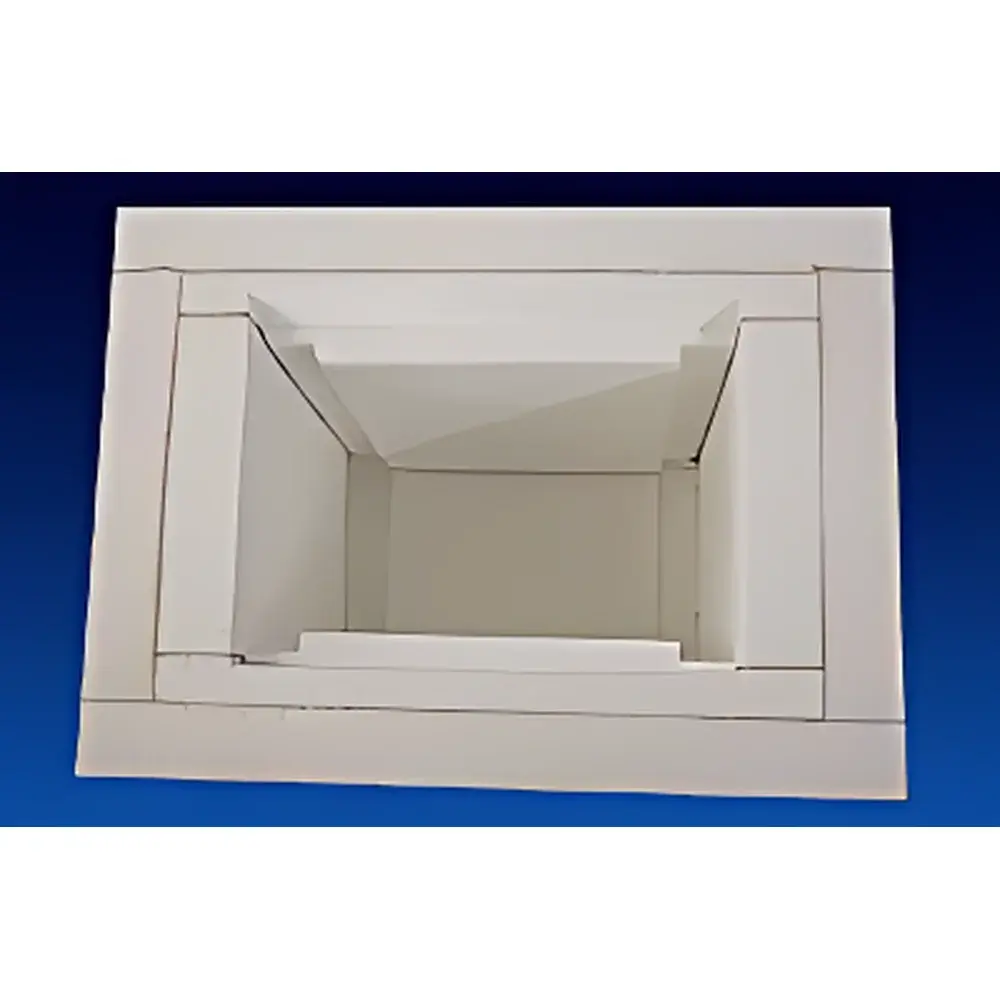
| Insulation Material | Ceramic Fiber |
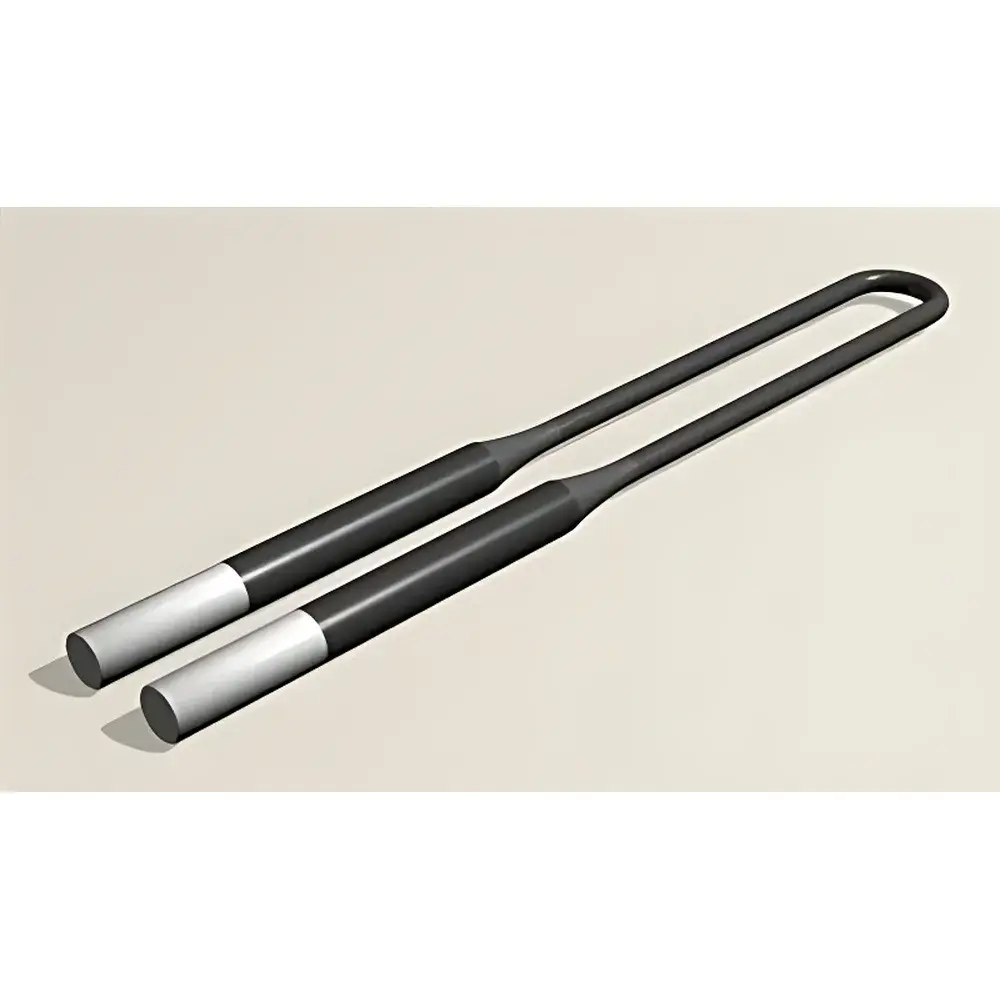
| Heating Element Type | High-Performance Resistance Wire |
| Thermocouple Type | K-Type |
| Power Supply | 3-Phase 380 V AC, 25 A |
| Net Weight | 150 kg |
Overview
The Zhongke Aobo TL6010 High-Temperature Ashing Furnace is a precision-engineered box-type muffle furnace designed for controlled thermal decomposition, ash content determination, and high-temperature sample preparation in analytical, environmental, pharmaceutical, and materials laboratories. Operating on the principle of resistive heating within a fully insulated ceramic fiber chamber, the furnace isolates samples from combustion byproducts via a sealed muffle structure—ensuring accurate gravimetric analysis per ASTM D3174, ISO 1171, USP , and EPA Method 2540E. Its maximum operating temperature of 1200 °C supports complete organic matrix removal from coal, biomass, food, soil, and pharmaceutical excipients while maintaining thermal uniformity across the 60 L working volume (500 × 400 × 300 mm). The unit complies with IEC 61000-6-3 (EMC) and IEC 61010-1 (safety), and its robust mechanical architecture enables routine use in GLP-compliant QA/QC environments.
Key Features
- Advanced ceramic fiber insulation: Achieves rapid heating (≤80 min to 1200 °C) and minimizes standby heat loss; external surface temperature remains ≤55 °C at steady state, reducing operator risk and energy consumption.
- Modular dual-zone heating design: Dual-sided resistance wire elements ensure axial and radial temperature uniformity ±5 °C across the chamber—critical for reproducible ash yield and volatile matter quantification.
- Digital PID temperature controller (TL12 series): Supports up to 50 programmable segments with ramp/soak profiles; temperature stability maintained at ±0.3% FS over full range; real-time deviation alarm and auto-shutdown on thermocouple failure.
- Side-hinged muffle door with high-temperature gasket: Enables safe, ergonomic loading/unloading without disturbing thermal equilibrium; optional gas inlet/outlet ports accommodate inert or oxidative atmospheres (N₂, O₂, air).
- Independent controller enclosure: Separated from furnace body to reduce thermal drift in electronics and simplify maintenance; front-panel USB port enables firmware updates and parameter backup.
- Comprehensive safety architecture: Includes over-temperature cutoff (mechanical & electronic), door-open interlock, ground-fault circuit interruption (GFCI), and short-circuit protected heating circuits.
Sample Compatibility & Compliance
The TL6010 accommodates crucibles (alumina, platinum, silica), boats, and custom fixtures up to 150 mm in height. It is validated for standard methods including ASTM D3174 (coal ash), ASTM E1755 (biomass ash), ISO 2171 (cereal ash), and AOAC 942.05 (food ash). All electrical and thermal performance parameters meet EN 60519-1 for industrial electroheating equipment. Optional data logging modules support 21 CFR Part 11–compliant audit trails when paired with validated software, enabling traceability for FDA-regulated pharmaceutical testing and environmental reporting.
Software & Data Management
While the base unit operates via embedded digital controller, optional PC connectivity (RS485/USB) enables integration with laboratory information management systems (LIMS). Third-party SCADA-compatible drivers allow remote monitoring of setpoint, actual temperature, elapsed time, and fault status. Controller logs retain the last 100 cycle records—including start/end timestamps, max deviation, and user ID—exportable as CSV for QA review. Firmware supports password-protected parameter locking to prevent unauthorized configuration changes during regulated workflows.
Applications
- Coal and solid fuel analysis: Determination of ash content, volatile matter, fixed carbon, and ash fusion temperature per ASTM D3172–D3176.
- Environmental testing: Preparation of soil, sludge, and airborne particulate filters for heavy metal analysis (ICP-MS/AAS) following EPA SW-846 Method 3050B.
- Pharmaceutical QC: Residue-on-ignition (ROI) testing of APIs and excipients per USP ; sterilization validation residue studies.
- Materials science: Pre-sintering of ceramics, catalyst calcination, and thermal stability screening of polymers and composites.
- Food and agriculture: Mineral content assessment in feed, grains, and dairy products per AOAC Official Methods.
FAQ
What is the recommended maintenance schedule for the TL6010?
Inspect heating elements and thermocouple integrity every 200 operational hours; replace ceramic fiber liner if cracked or compressed beyond 20% original thickness. Calibrate temperature uniformity annually using NIST-traceable reference thermocouples.
Can the furnace operate under inert gas atmosphere?
Yes—optional inlet/outlet fittings support continuous purge with N₂ or Ar; maximum flow rate: 2 L/min at 0.1 bar overpressure. Gas compatibility requires stainless-steel internal hardware upgrade.
Is the TL6010 suitable for GMP production environments?
When equipped with 21 CFR Part 11–enabled software and operated under documented SOPs, it meets baseline requirements for equipment qualification (IQ/OQ/PQ) in pharmaceutical manufacturing.
How does the ceramic fiber insulation compare to traditional firebrick?
Ceramic fiber reduces thermal mass by ~65%, enabling faster ramp rates and 40–50% lower energy consumption at 1200 °C versus brick-lined furnaces of equivalent volume.
What crucible materials are compatible at 1200 °C?
Alumina (Al₂O₃), silicon carbide (SiC), and high-purity fused quartz are approved; platinum is limited to ≤1000 °C and prohibited under reducing conditions.



