
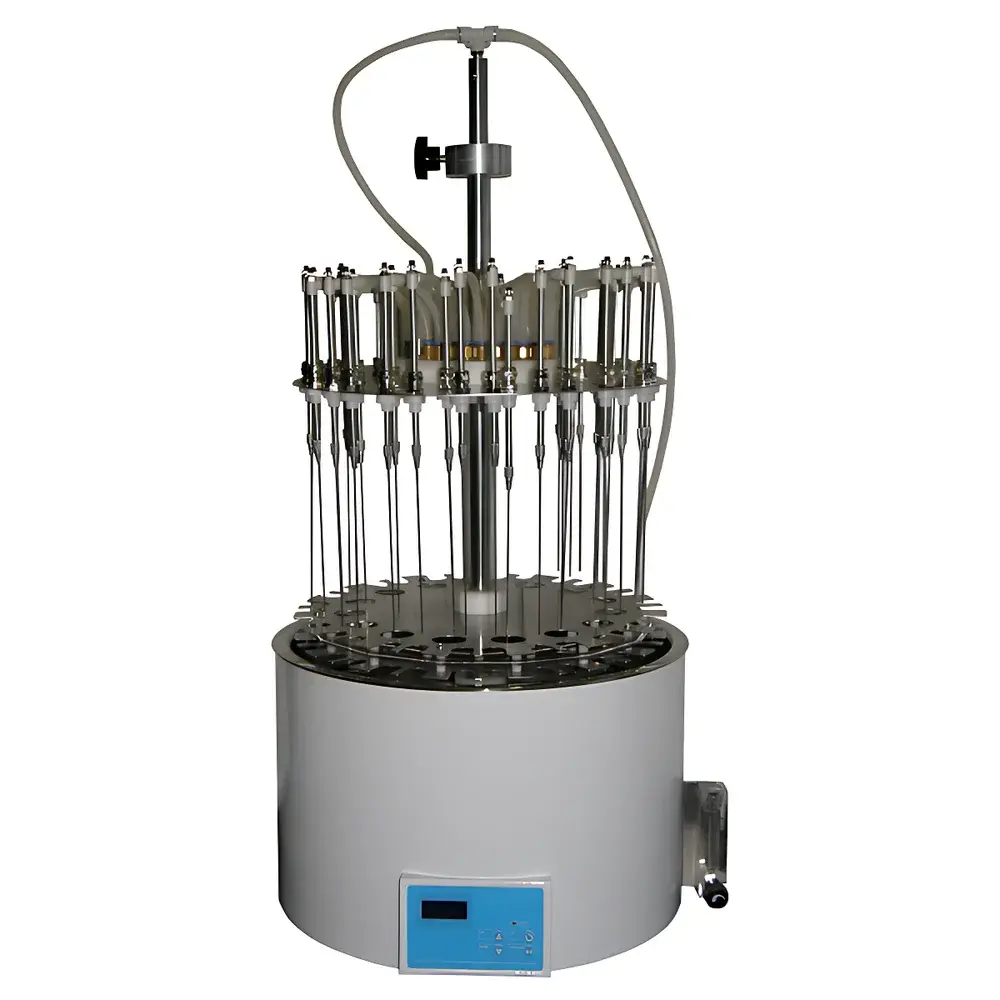
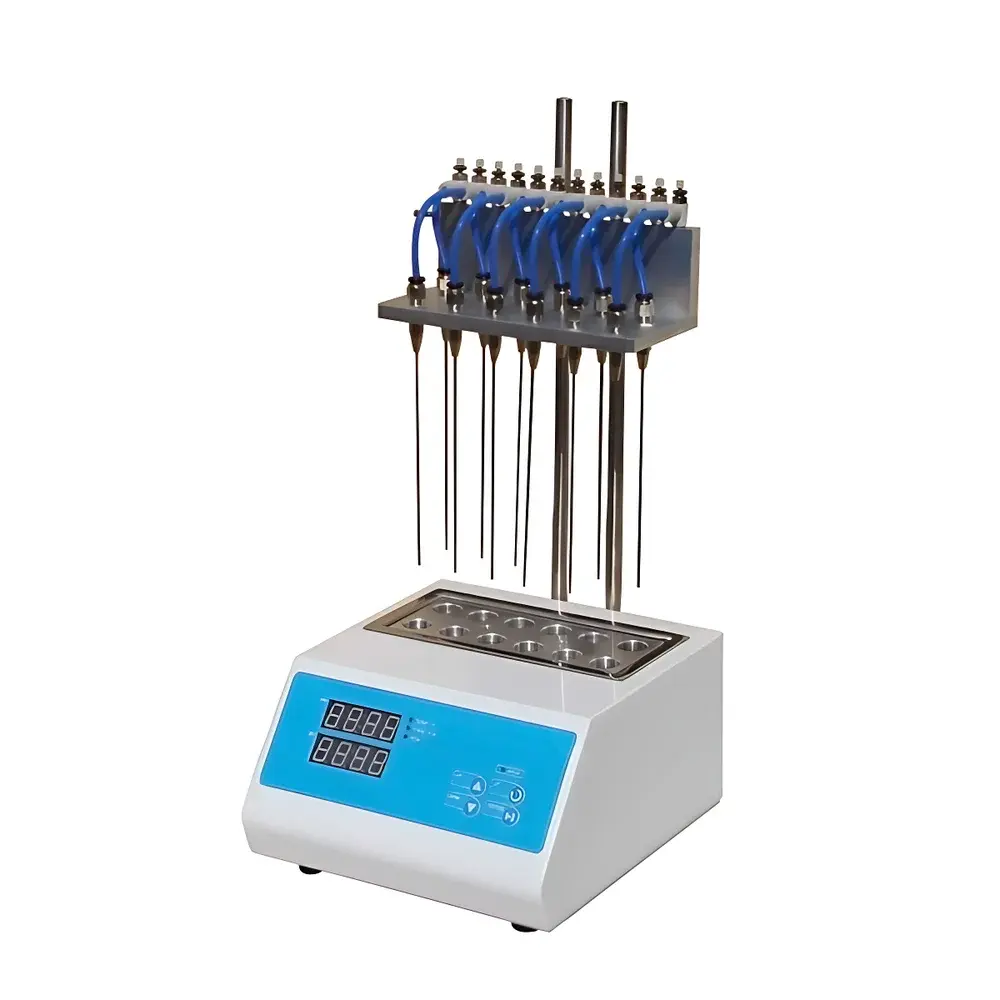
Zhongke Aobo UGC-12F Electric Nitrogen Evaporator with Water Bath Heating
| Brand | Zhongke Aobo |
|---|---|
| Origin | Beijing, China |
| Model | UGC-12F |
| Heating Method | Water Bath |
| Temperature Range | 5–99 °C |
| Temperature Stability | ±1 °C |
| Tube Diameter Compatibility | 10–29 mm |
| Gas Flow Rate | 0–10 L/min |
| Sample Positions | 12–45 |
| Heating Power | 400 W |
Overview
The Zhongke Aobo UGC-12F Electric Nitrogen Evaporator is a precision-controlled sample concentration system engineered for reproducible solvent removal under inert atmospheric conditions. It operates on the principle of gentle nitrogen gas stream impingement combined with regulated thermal energy transfer—either via water bath immersion or dry-block heating (model-dependent)—to accelerate evaporation while minimizing analyte degradation, oxidation, or cross-contamination. Unlike vacuum-based concentrators, this instrument maintains ambient pressure and avoids foaming or bumping in volatile or viscous matrices. Its design conforms to standard laboratory workflows in regulated environments where trace-level analyte integrity is critical—particularly in pesticide residue analysis (e.g., following AOAC 2007.01), pharmaceutical stability testing (per ICH Q5C), and environmental contaminant quantification (EPA Method 525.3). The UGC-12F variant integrates electrically actuated vertical sample rack positioning, enabling precise height adjustment relative to the nitrogen needle array for optimal gas shearing geometry across variable tube lengths.
Key Features
- Electric motor-driven vertical lift mechanism for programmable, repeatable positioning of the sample holder—eliminating manual height calibration errors and reducing operator fatigue during high-throughput runs.
- Water bath heating system with PID-controlled temperature regulation (range: 5–99 °C; stability: ±1 °C), ensuring uniform thermal distribution across all sample wells without hot-spot formation.
- Individual mass-flow adjustable nitrogen channels per sample position (0–10 L/min total; fine-tuned via calibrated needle valves), supporting method-specific optimization for diverse solvents (e.g., ethyl acetate vs. dichloromethane).
- Large backlit LCD interface with dual-mode timer (0–99 h 59 min or continuous operation), real-time countdown display, and audible end-of-cycle alert—fully compliant with GLP documentation requirements for time-stamped process records.
- Anodized aluminum heating block with corrosion-resistant stainless steel bath chamber (internal dimensions: Ø260 × 140 mm), compatible with tube diameters from 10 to 29 mm; optional custom bore configurations available upon request.
- Ergonomic 15° inclined control panel for unobstructed visibility and tactile access to all controls, even when wearing lab gloves.
Sample Compatibility & Compliance
The UGC-12F accommodates standard borosilicate glass test tubes, centrifuge tubes, and culture vials within the 10–29 mm outer diameter range. Its water bath configuration ensures minimal thermal shock to thermolabile compounds—critical for preserving labile metabolites in clinical toxicology or unstable agrochemical standards. All wetted components meet USP Class VI biocompatibility criteria. The unit complies with IEC 61010-1:2010 safety standards for electrical equipment used in laboratory environments and incorporates over-temperature cut-off protection. When operated in conjunction with validated nitrogen supply systems (input pressure: 30–150 psig), it supports audit-ready workflows aligned with FDA 21 CFR Part 11 requirements—particularly when paired with electronic lab notebook (ELN) integration for full traceability of run parameters, timestamps, and operator IDs.
Software & Data Management
While the UGC-12F operates as a standalone instrument with embedded firmware, its timer logs and parameter settings are retained through power cycles. For laboratories requiring centralized data capture, the device supports optional RS-232 or USB-to-serial connectivity (via third-party adapters) to export timestamped event logs—including start/stop times, setpoint temperatures, and elapsed duration—to LIMS or ELN platforms. All user-modifiable parameters (temperature, timer, flow rate presets) are stored in non-volatile memory and subject to password-protected access levels to satisfy GMP change-control protocols. Audit trails generated during operation meet ALCOA+ principles (Attributable, Legible, Contemporaneous, Original, Accurate, Complete, Consistent, Enduring, Available).
Applications
- Routine concentration of extractables in multi-residue pesticide analysis (e.g., QuEChERS extracts prior to GC-MS/MS injection).
- Preparative cleanup steps in pharmacokinetic studies—removing organic solvents from plasma or urine supernatants without compromising protein-bound drug fractions.
- Standardization of reference material dilutions in certified reference labs accredited to ISO/IEC 17025:2017.
- High-throughput sample preparation for environmental monitoring programs targeting PFAS, PAHs, or PCBs in aqueous and sediment matrices.
- Method development for residual solvent testing in APIs per ICH Q3C guidelines, where controlled, low-temperature nitrogen sweep prevents thermal decomposition.
FAQ
Is the UGC-12F compatible with corrosive solvents such as hydrochloric acid or trifluoroacetic acid?
No—the water bath chamber and aluminum heating block are not chemically resistant to strong acids or halogenated solvents. Use only with common organic solvents (e.g., acetonitrile, methanol, ethyl acetate) and aqueous buffers. For aggressive chemistries, consult the optional PTFE-coated accessory kit.
Can the instrument be integrated into an automated liquid handling workflow?
Yes—via external relay trigger input (dry contact), the UGC-12F can synchronize start/stop signals with robotic arms or autosamplers. Custom I/O pinout diagrams are available under NDA.
What maintenance intervals are recommended for long-term accuracy?
Calibrate temperature sensors annually using NIST-traceable reference thermometers; inspect nitrogen needle tips quarterly for clogging; replace water bath fluid every 3 months or after 200 operational hours—whichever occurs first.
Does the unit include validation documentation for IQ/OQ/PQ execution?
A comprehensive User Requirement Specification (URS) template and blank OQ protocol are supplied with shipment. Full PQ support requires site-specific performance qualification under actual load conditions and is provided as a billable service.



