
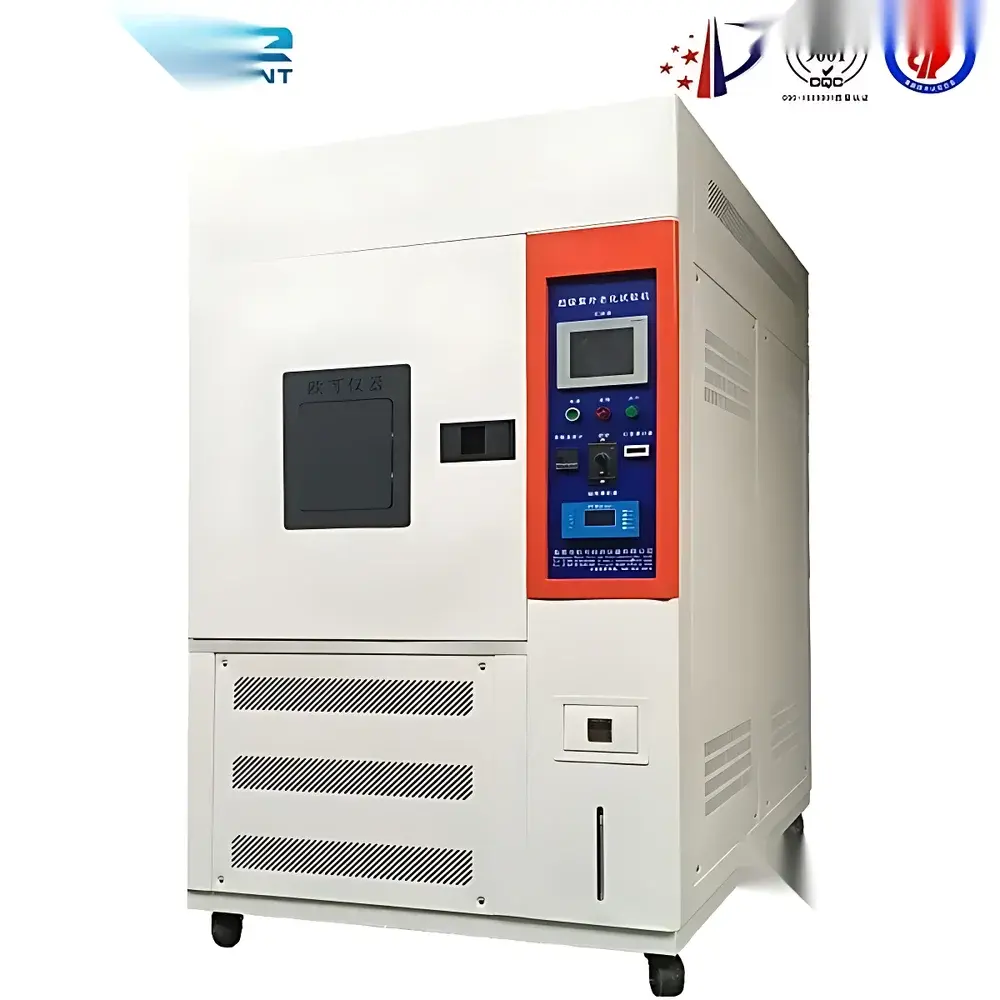
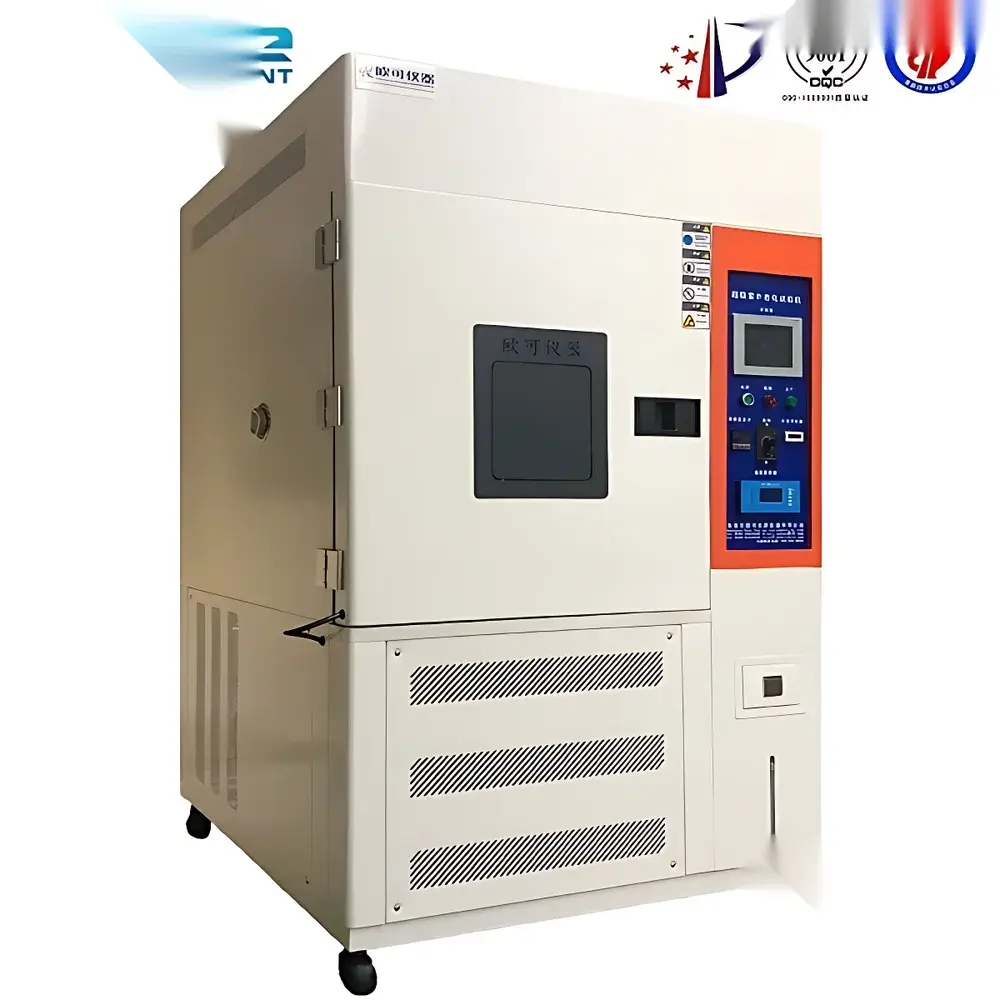
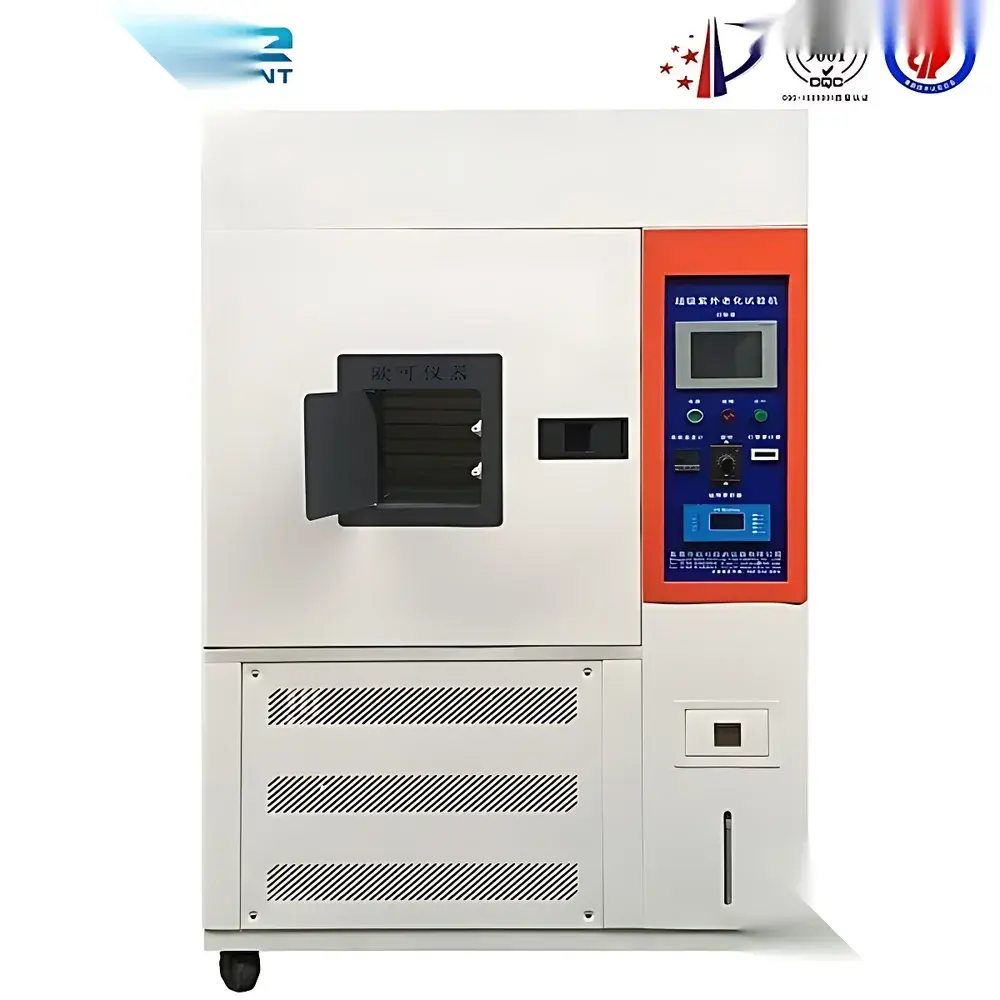
Super QUV UV Accelerated Weathering Tester
| Brand | Other Brands |
|---|---|
| Origin | Imported |
| Manufacturer Type | General Distributor |
| Price | USD 21,000 (approx.) |
| Sample Rack Dimensions | 500 × 400 mm |
| Irradiation Source | Air-Cooled Metal Halide Lamps |
| Spectral Range | 295–450 nm |
| Irradiance | 200 ± 8 W/m² |
| Irradiance Uniformity | ≥90% |
| Black Panel Temperature (BPT) Range | 40–85 °C |
| Cooling Method | Internal Forced-Air Circulation |
| Filter System | Custom High-Borosilicate Glass + 30% IR-Blocking Filter (optional) |
| Irradiance Monitoring | Integrated UV Spectral Irradiance Transmitter (developed by No. 622 Research Institute) |
| Display & Control | LCD-based Irradiance Accumulation Meter with Auto-Calculation |
Overview
The Super QUV UV Accelerated Weathering Tester is an engineered environmental test chamber designed to replicate and accelerate the photochemical degradation mechanisms induced by solar ultraviolet radiation, temperature cycling, and moisture exposure—key stressors in real-world outdoor aging of polymeric materials, coatings, adhesives, and photovoltaic components. Unlike conventional fluorescent UV systems limited to narrow UVA/UVB bands, this instrument employs air-cooled metal halide lamps emitting a continuous spectrum from 295 nm to 450 nm, closely matching the spectral power distribution (SPD) of terrestrial sunlight after atmospheric filtering through 3 mm of optical glass. This spectral fidelity enables high-fidelity simulation of both direct and diffuse solar irradiance, supporting correlation studies between laboratory exposure and field performance per ISO 4892-2, ASTM G154, and SAE J2527. The system integrates controlled condensation cycles and optional water spray functionality, permitting sequential or simultaneous application of UV irradiation, thermal loading (via black panel temperature control), and hygrothermal stress—mimicking diurnal and seasonal environmental transitions observed in automotive, aerospace, and building envelope applications.
Key Features
- High-fidelity 295–450 nm broadband UV–visible irradiation source using multiple air-cooled metal halide lamps, optimized for spectral match to filtered solar irradiance
- Black panel temperature (BPT) control range of 40–85 °C, independently regulated via PID-controlled heating and forced-air thermal management
- Integrated UV spectral irradiance transmitter (developed by China’s No. 622 Research Institute) enabling real-time, traceable irradiance monitoring at sample plane
- Custom high-borosilicate glass filter combined with optional 30% infrared energy rejection filter to minimize non-photochemical thermal loading
- LCD-based irradiance accumulation meter with auto-calculated radiant exposure (J/m²) and time-weighted dose logging
- Uniform irradiance distribution (>90% uniformity across 500 × 400 mm sample rack) achieved via optimized lamp array geometry and reflective top-mounted irradiation configuration
- Modular design accommodating condensation-only, UV-only, or combined UV/condensation/spray exposure protocols
Sample Compatibility & Compliance
The Super QUV accommodates flat-panel specimens up to 500 × 400 mm, making it suitable for full-size automotive exterior trim, solar cell laminates, architectural cladding panels, and large-format electronic enclosures. Its operational envelope meets the technical requirements of international standards including ISO 4892-2 (Methods A and B), ASTM G154 (Cycle 1–6), IEC 61215-2 (for PV module qualification), and SAE J2527 (for automotive exterior materials). The system supports GLP-compliant data integrity through timestamped irradiance logs, temperature profiles, and cycle sequencing records—compatible with audit-ready documentation workflows under FDA 21 CFR Part 11 when integrated with validated third-party data acquisition software.
Software & Data Management
While the base unit features an embedded LCD controller with manual parameter entry and real-time irradiance integration, optional PC-based software enables automated test scheduling, multi-channel environmental logging (BPT, chamber air temperature, irradiance), and export of CSV-formatted datasets for statistical analysis. All irradiance measurements are referenced to NIST-traceable calibration protocols applied during factory commissioning. The system architecture supports external relay interfaces for integration into centralized lab monitoring networks (e.g., Modbus RTU or Ethernet/IP), facilitating centralized validation and periodic requalification per ISO/IEC 17025 requirements.
Applications
This tester is routinely deployed in R&D and quality assurance laboratories for accelerated life assessment of: automotive paint systems and plastic fascias; encapsulants and backsheets in photovoltaic modules; silicone sealants and fluoropolymer membranes in façade engineering; printed electronics subjected to outdoor signage conditions; and aerospace-grade composites exposed to high-altitude UV flux. Its ability to decouple and recombine UV intensity, thermal load, and moisture phase enables mechanistic studies on photooxidation kinetics, hydrolytic degradation pathways, and pigment stabilization efficacy—supporting root-cause analysis beyond pass/fail compliance testing.
FAQ
What spectral standard does the metal halide lamp output conform to?
The unfiltered emission approximates CIE Standard Illuminant D65; after passing through the high-borosilicate + IR-rejection filter assembly, the output matches the relative spectral irradiance of global horizontal solar radiation filtered through 3 mm borosilicate glass, as defined in ISO 4892-2 Annex B.
Is black panel temperature (BPT) measurement traceable to national standards?
Yes—BPT sensors are calibrated against reference thermocouples certified to ISO/IEC 17025-accredited laboratories, with calibration certificates provided upon installation.
Can the system operate without water spray functionality?
Absolutely—the condensation and UV exposure modes are fully independent; spray nozzles are removable and the chamber seals remain intact during dry-cycle operation.
What maintenance intervals are recommended for lamp replacement and filter recalibration?
Lamps require replacement every 1,200–1,500 hours of operation; filter transmission verification is advised every 6 months or after 500 h of cumulative UV exposure, using a spectroradiometer traceable to NIST SRM 2065.
Does the system support user-defined exposure profiles?
Yes—up to 99 programmable cycles can be stored locally, each with independent settings for irradiance setpoint, BPT target, condensation duration, and spray timing.



