
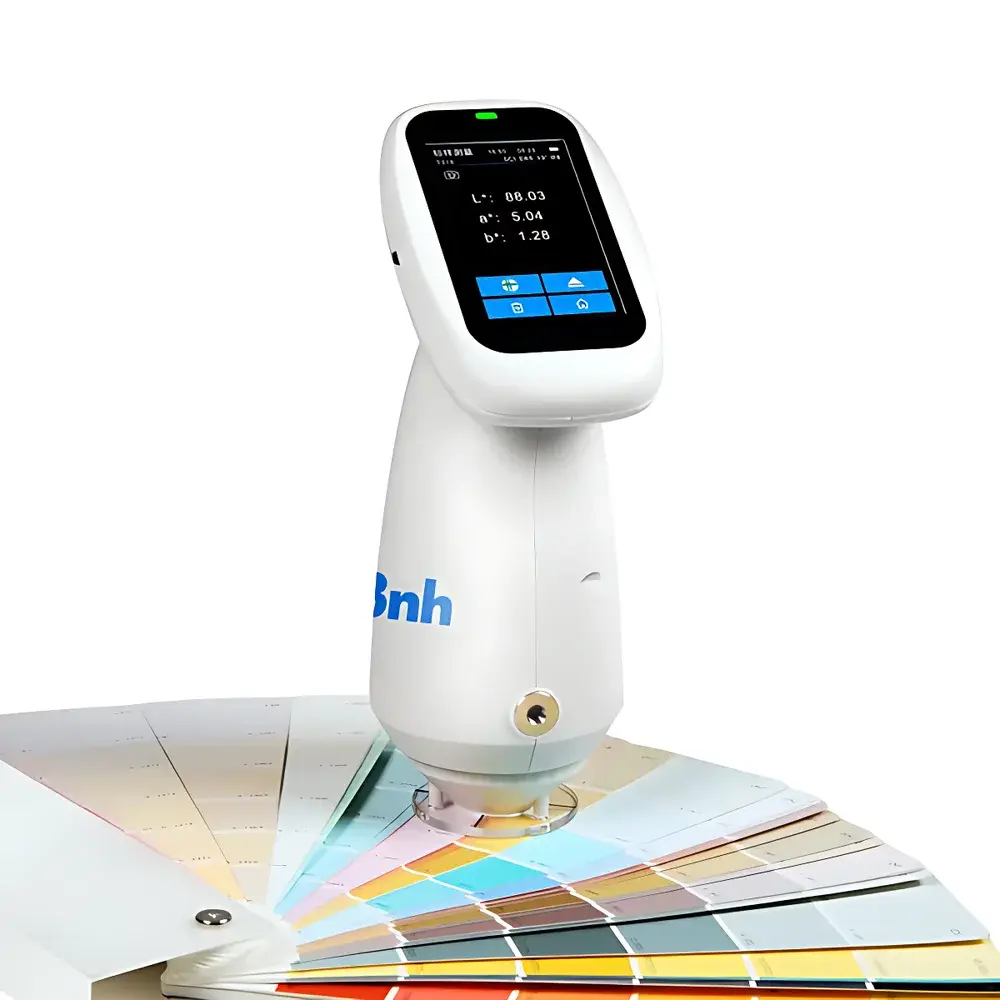
3nh PS2070 Handheld Spectrophotometric Colorimeter
| Brand | 3nh |
|---|---|
| Origin | Guangdong, China |
| Manufacturer Type | Manufacturer |
| Product Category | Domestic |
| Model | PS2070 |
| Product Type | Color Difference Meter |
| Instrument Type | Portable |
| Optical Geometry | d/8° Integrating Sphere |
| Light Source | Full-Spectrum LED + UV LED |
| Spectral Range | 400–700 nm |
| Repeatability | ΔE*ab ≤ 0.02 (MAV/SCI, after warm-up and calibration, 30 measurements of white tile at 5 s intervals) |
Overview
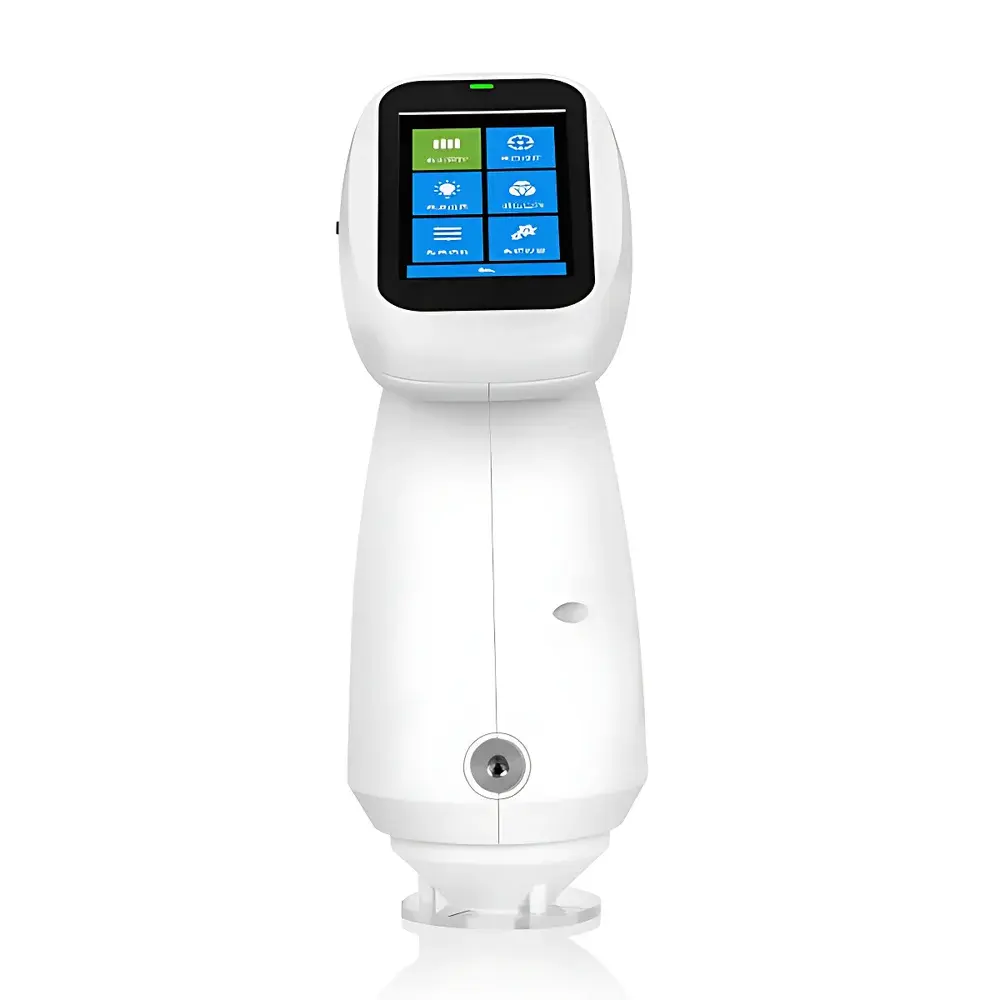
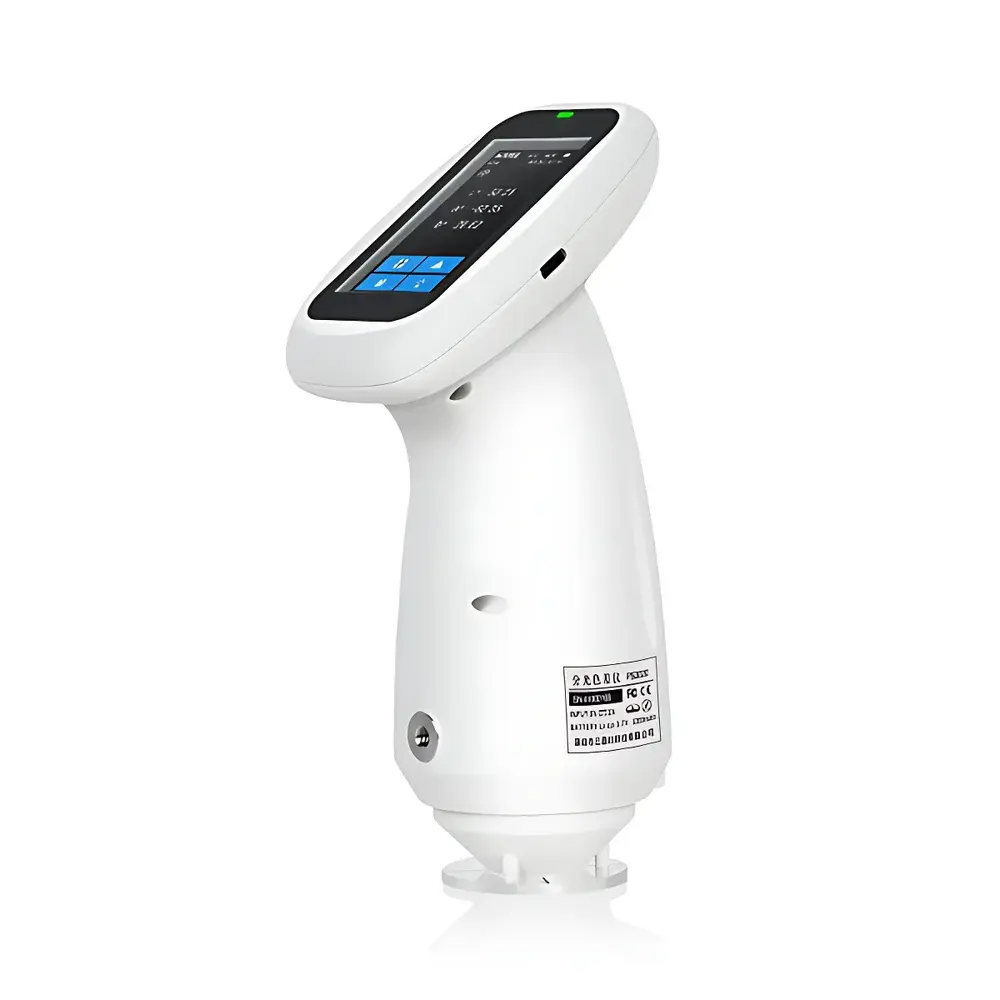
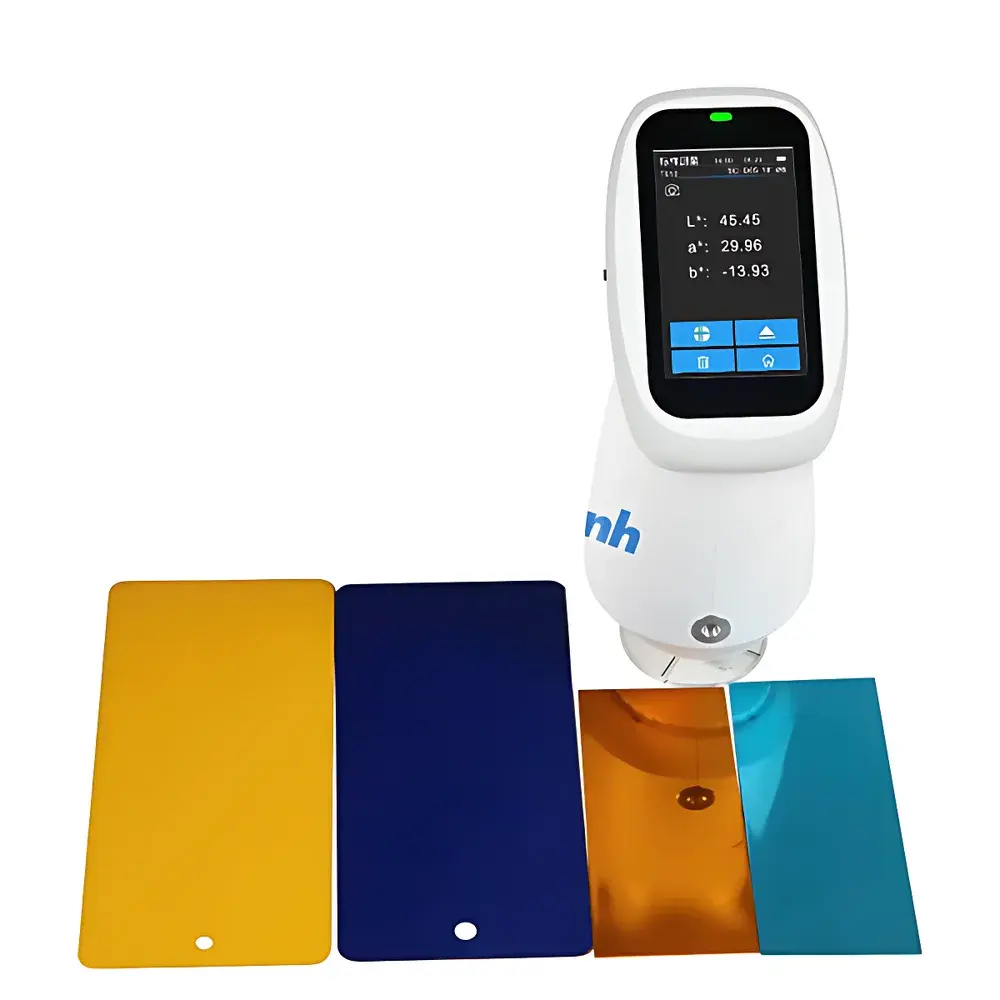
The 3nh PS2070 Handheld Spectrophotometric Colorimeter is an ISO- and CIE-compliant portable spectrophotometer engineered for high-precision color measurement across industrial quality control environments. It operates on the d/8° integrating sphere geometry with simultaneous SCI (Specular Component Included) and SCE (Specular Component Excluded) measurement modes—fully conforming to CIE Publication No. 15, ISO 7724-1, ASTM E1164, DIN 5033-7, and GB/T 3978. This dual-mode capability enables accurate characterization of both diffuse and specular-reflected components, essential for evaluating textured, glossy, or coated surfaces in plastics, paints, textiles, printing inks, ceramics, and cosmetics. The instrument employs a full-spectrum LED illumination system (400–700 nm) supplemented by a dedicated UV LED channel, enabling reliable quantification of fluorescent materials—including optical brighteners in paper, detergents, and textile finishes—without spectral gaps common in conventional white LEDs.
Key Features
- CMOS dual-channel spectral sensor architecture delivering high-speed acquisition (≈1 s per measurement) and enhanced signal-to-noise ratio for stable spectral reflectance data
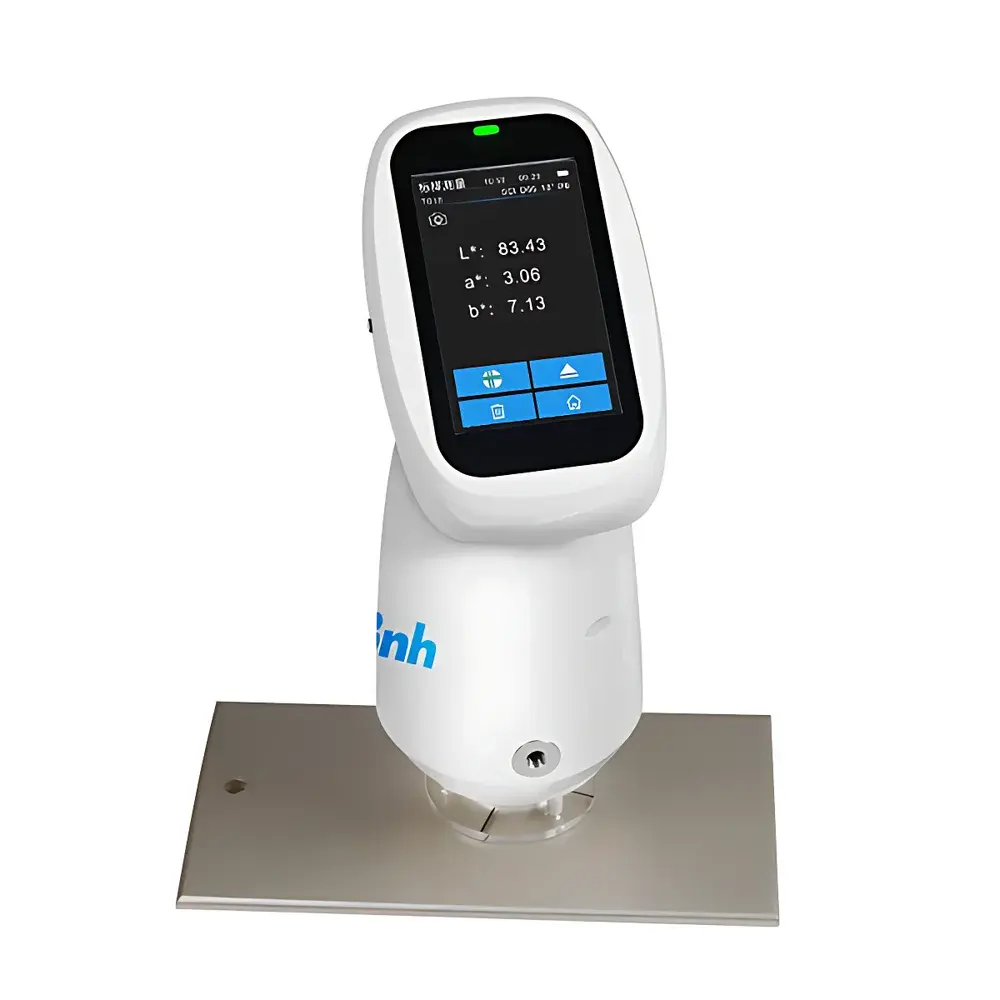
- Four interchangeable apertures: MAV Φ8 mm & Φ10 mm (flat + conical tip), SAV Φ4 mm & Φ5 mm (flat + conical tip), supporting flexible sampling of flat, curved, granular, or recessed surfaces
- Non-contact auto-calibration via motorized lift mechanism and certified reference white tile (R ≥ 95%, uniformity ±0.2%, long-term stability verified per NIM traceability)
- Integrated 2.8-inch capacitive touchscreen with real-time camera-assisted targeting—enabling precise region-of-interest alignment without physical contact or parallax error
- Bluetooth 5.0 and USB-C connectivity for seamless synchronization with cloud-based color databases and cross-platform software (Windows, macOS, Android, iOS, HarmonyOS, WeChat Mini Program)
- Robust mechanical design: 270 g weight, IP52-rated enclosure, ergonomic grip optimized for extended handheld operation in production-line or field inspection scenarios
Sample Compatibility & Compliance
The PS2070 supports non-destructive, surface-normal measurement of solid, liquid, and powdered samples—including opaque polymers, metallic coatings, dyed fabrics, ceramic glazes, and UV-fluorescent substrates. Its UV-enabled optical path meets ASTM D1925 (Yellowness Index), ASTM E313 (Whiteness Index), AATCC Evaluation Procedure 1 (Colorfastness), and ISO 105-J03 (Metamerism Index) requirements. All units undergo factory calibration traceable to China’s National Institute of Metrology (NIM), with individual metrological verification reports provided. Instrument compliance extends to GLP/GMP-aligned workflows: audit trails, user access control, electronic signatures, and 21 CFR Part 11–ready data export formats are supported through the optional ColorExpert QC software suite.
Software & Data Management
The PS2070 integrates with 3nh’s cross-platform ColorExpert ecosystem—delivering synchronized cloud storage, multi-user collaboration, and automated report generation. Local device memory retains up to 500 standard samples and 10,000 test readings (each storing concurrent SCI/SCE spectra). Cloud-tier functionality includes version-controlled database sharing, trend analysis across batches, pass/fail threshold mapping against internal specifications or industry standards (e.g., RAL, Pantone, Munsell C/2), and spectral deviation overlays. Raw spectral data (31-point reflectance values at 10 nm intervals) is exportable in CSV, XML, and CxF/XRGA formats for third-party integration with ERP, LIMS, or formulation systems. Firmware updates and spectral library expansions are delivered over-the-air.
Applications
This instrument serves as a primary color verification tool in manufacturing QA/QC labs and on-site process lines. Key applications include: batch-to-batch consistency validation in injection-molded plastic housings; gloss-invariant color matching of automotive clearcoats; fluorescence-corrected whiteness assessment in paper and textile mills; metamerism evaluation under multiple illuminants (D65, TL84, U30, etc.) for retail packaging; and quantitative assessment of colorfastness after washing, light exposure, or heat treatment. Its portability and battery endurance (8 h / 8,000 measurements) make it suitable for supplier audits, raw material receiving inspection, and in-process checks during roll-to-roll coating or screen printing operations.
FAQ
Is the PS2070 compliant with international color measurement standards?
Yes—it adheres to CIE No. 15, ISO 7724-1, ASTM E1164, DIN 5033-7, and GB/T 3978, with NIM-traceable calibration certificates supplied with each unit.
Can the PS2070 measure fluorescent or optically brightened materials?
Yes—the integrated UV LED source (peak ~365 nm) excites fluorescence across the visible range (400–700 nm), and spectral data includes corrected UV contribution per ASTM E308 and CIE 15.2 guidelines.
What is the inter-instrument agreement (IIA) performance?
Typical inter-instrument agreement is ΔE*ab ≤ 0.20 (MAV/SCI) when measuring BCRA Series II tiles, meeting ISO 13655:2017 Class II tolerance requirements.
Does the device support regulatory-compliant data integrity practices?
Yes—ColorExpert software provides ALCOA+ principles implementation: attributable, legible, contemporaneous, original, accurate records with full audit trail, electronic signature, and role-based permissions.
How is spectral data validated for long-term stability?
Each unit undergoes accelerated aging tests (120,000+ cycles), thermal drift compensation algorithms, and quarterly NIST-traceable recalibration recommendations aligned with ISO/IEC 17025 laboratory practice.




