
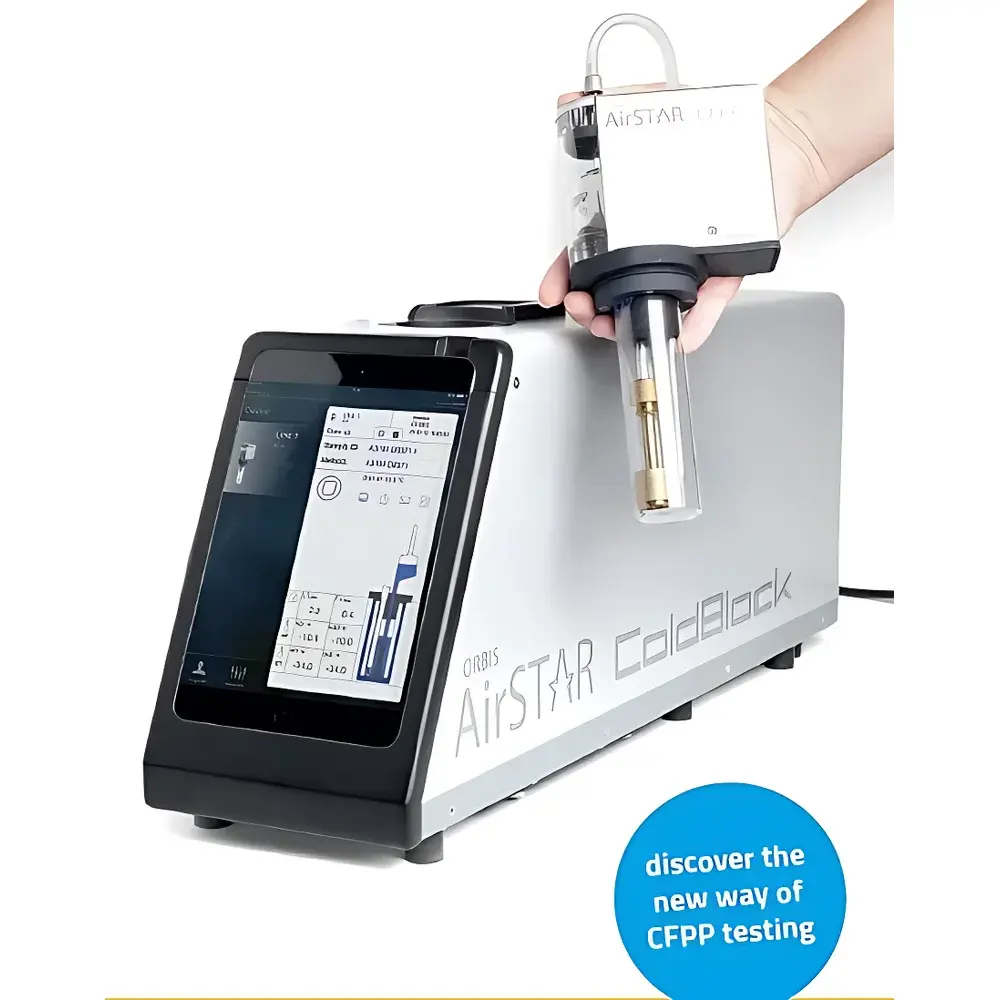
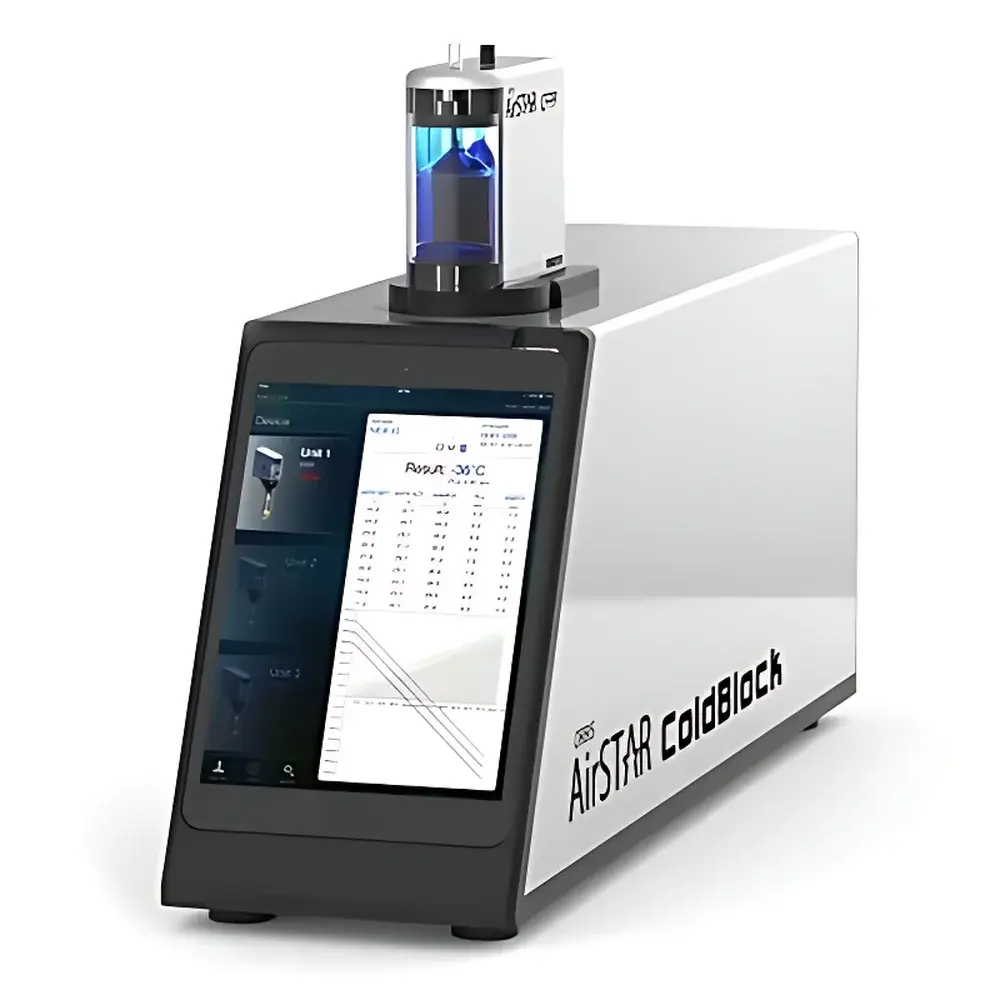
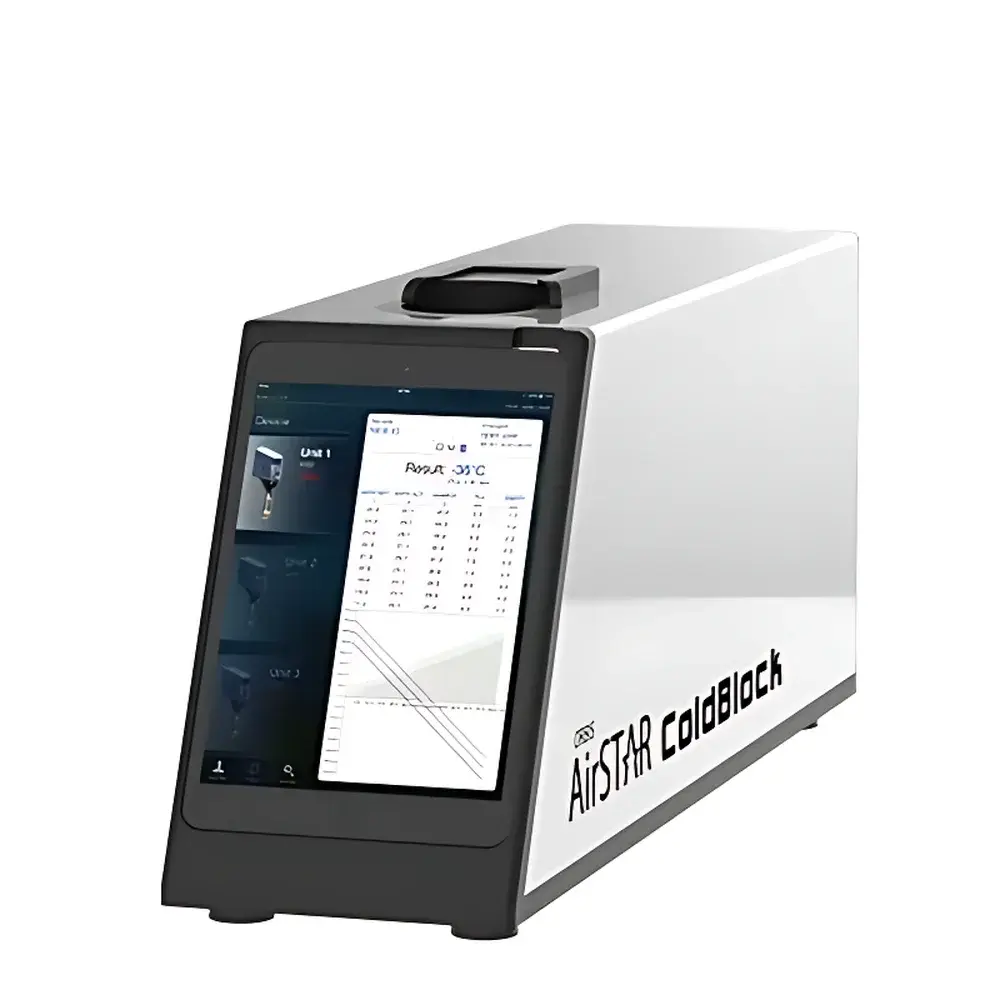
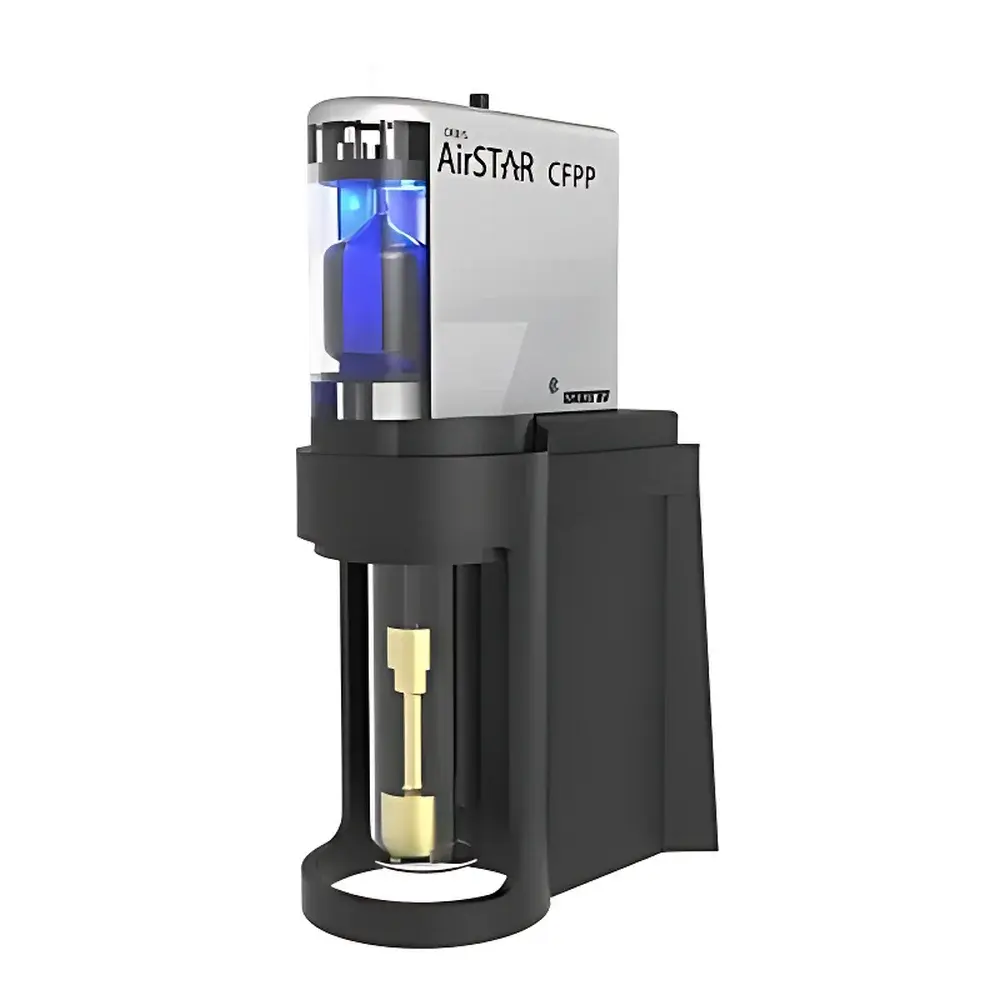
ORBIS BV CFPP Automated Cold Filter Plugging Point Tester
| Brand | ORBIS BV |
|---|---|
| Origin | Netherlands |
| Manufacturer Type | Authorized Distributor |
| Origin Category | Imported Instrument |
| Model | CFPP |
| Price Range | USD 13,500 – 67,500 (FOB Rotterdam) |
| Test Range | −105 °C to +65 °C |
| Temperature Accuracy | ±0.1 °C |
| Temperature Sensor | PT100 Class A |
| Temperature Resolution | 0.1 °C |
| Vacuum Control | Microprocessor-controlled, programmable fixed/dynamic vacuum (2.0 ± 0.1 kPa) |
| Cooling System | Integrated solid-state thermoelectric bath (no external chiller required), min. temp. −105 °C |
| Cooling Profile | Programmable linear and stepwise ramping |
| Sample Detection | Triple-point laser level sensor |
| Filtration Mesh | 45 µm stainless steel |
| Pipette Volume | 20 mL |
| Timing Resolution | >0.1 s (digital display) |
| Data Storage Capacity | 200 test records |
| Cleaning Protocol | Fully automated dual-solvent wash cycle |
| Power Supply | 100–240 VAC, 50/60 Hz |
| Power Consumption | 150 W |
| Dimensions (W×D×H) | 16 cm × 59 cm × 35 cm |
| Weight | 25 kg |
Overview
The ORBIS BV CFPP Automated Cold Filter Plugging Point Tester is a fully integrated, benchtop instrument engineered for precise, repeatable determination of the Cold Filter Plugging Point (CFPP) of middle distillate fuels—primarily diesel, biodiesel blends (B5–B20), and kerosene-based aviation turbine fuels. It operates in strict accordance with internationally recognized standard test methods, including ASTM D6371, EN 116, IP 309, IP 419, JIS K 2288, EN 16329, and SH/T 0248. The CFPP is defined as the lowest temperature at which a specified volume of fuel can pass through a standardized 45 µm wire mesh filter under controlled vacuum conditions within 60 seconds—a critical low-temperature performance parameter directly linked to operability in cold climates and fuel system reliability.
Key Features
- Integrated solid-state thermoelectric cooling bath—eliminates dependency on external refrigerants, liquid nitrogen, or recirculating chillers; achieves stable operation down to −105 °C with rapid thermal response and no maintenance-intensive compressors.
- Triple-point laser level detection system ensures unambiguous, non-contact identification of sample meniscus position during filtration, minimizing operator bias and enhancing measurement reproducibility across batches.
- Onboard microprocessor-controlled vacuum system delivers precise, programmable vacuum profiles—including fixed-vacuum mode (2.0 ± 0.1 kPa) and dynamic vacuum ramping—to replicate real-world fuel pump suction dynamics and comply with method-specific pressure tolerances.
- Intuitive iPad-based HMI with multi-language UI (English, German, French, Spanish, Chinese) supports full touchscreen workflow navigation, real-time graphing of temperature/vacuum/time curves, and one-touch method selection per ASTM/EN/IP standards.
- Modular architecture enables seamless future upgrades—including optional barcode sample ID integration, LIMS connectivity via Ethernet/RS232, and GLP-compliant electronic signature modules.
- Automated dual-solvent cleaning cycle (e.g., n-heptane followed by toluene) reduces carryover risk between tests and complies with method-defined solvent recovery and disposal protocols.
Sample Compatibility & Compliance
The CFPP tester accommodates standard 20 mL fuel samples in ASTM D6371-compliant glass pipettes. It supports all common diesel formulations—including ultra-low-sulfur diesel (ULSD), FAME biodiesel blends, hydrotreated vegetable oil (HVO), and synthetic paraffinic kerosene (SPK)—without modification. All thermal, vacuum, and timing parameters are traceable to NIST-calibrated references. The system’s firmware and data handling architecture support audit-ready compliance with ISO/IEC 17025:2017 (for testing laboratories), FDA 21 CFR Part 11 (electronic records/signatures), and EU Annex 11 (computerized systems validation). Full method validation reports and IQ/OQ documentation packages are available upon request.
Software & Data Management
Embedded firmware provides local storage of up to 200 complete test records—including raw temperature logs, vacuum profiles, filtration start/stop timestamps, and operator annotations—with automatic date/time stamping and user authentication. Export options include CSV and PDF formats via USB or network interface. Optional ORBIS LabLink™ software enables centralized fleet management, statistical process control (SPC) charting, trend analysis across multiple instruments, and automated report generation compliant with internal QA templates or third-party regulatory submissions (e.g., EN 590 conformity declarations).
Applications
- Quality control laboratories in refineries and fuel blending terminals verifying CFPP compliance prior to shipment.
- R&D teams evaluating cold flow improver (CFI) additive efficacy and dose-response relationships under standardized conditions.
- Third-party certification bodies performing independent verification for EN 590, ASTM D975, or GB 19147 specifications.
- Aviation fuel testing labs assessing Jet A-1 and Jet A stability under low-temperature operational envelopes per DEF STAN 91-91 and ASTM D1655 Annex A2.
- Academic and government research institutes studying wax crystallization kinetics and phase separation behavior in biofuel blends using high-resolution thermal profiling.
FAQ
Does the instrument require external cooling water or compressed air?
No. The integrated solid-state thermoelectric cooling system operates independently—no external chillers, dry ice, or LN₂ are needed.
Can the system be validated for GMP/GLP environments?
Yes. With optional 21 CFR Part 11 add-on module and full IQ/OQ documentation, it meets requirements for regulated pharmaceutical and fuel certification workflows.
What maintenance is required for the vacuum pump?
The diaphragm-type vacuum pump is sealed and maintenance-free for ≥10,000 operating hours; no oil changes or filter replacements are necessary.
Is remote monitoring or troubleshooting supported?
Yes. Via optional Ethernet interface and ORBIS Remote Diagnostics (ORD) protocol, certified service engineers can perform secure firmware updates and diagnostic logging without on-site visits.
How is calibration verified between accredited calibrations?
The system includes built-in self-diagnostic routines for temperature sensor linearity, vacuum transducer drift, and timer accuracy—generating daily verification logs exportable for internal QA review.





