
Heidolph Hei-TORQUE Core Overhead Stirrer System
| Brand | Heidolph |
|---|---|
| Origin | Germany |
| Model | Hei-TORQUE Core |
| Instrument Type | Electric Overhead Stirrer |
| Maximum Mixing Volume | 25 L |
| Speed Range | 20–2000 rpm |
| Torque Output | 40 N·cm |
| Power Input | 105 W |
| Viscosity Handling | up to 10,000 mPa·s |
| Shaft Diameter Compatibility | up to 10.5 mm |
| Protection Rating | IP42 |
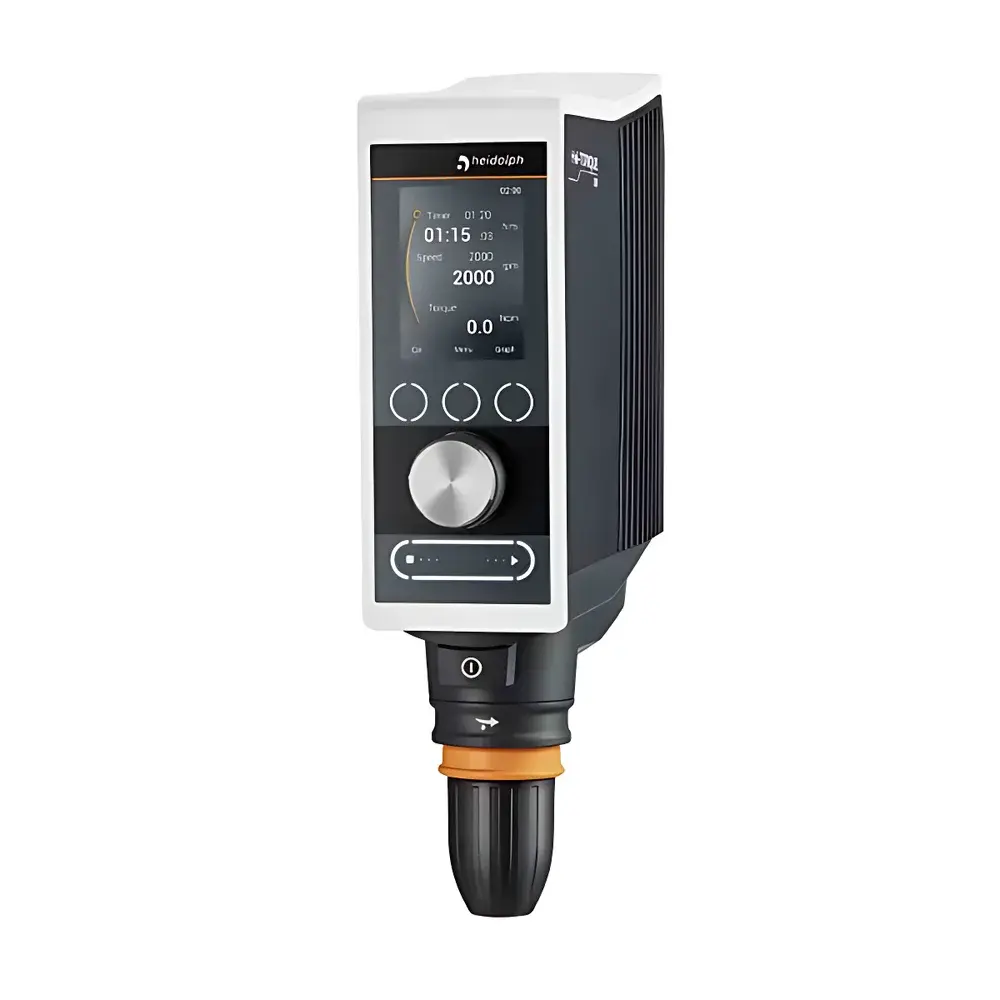
| Display | Digital LCD with Real-Time Torque Trend Graph |
| Control | Microprocessor-Based Speed Regulation |
| Operating Modes | Continuous or Timer-Programmed |
| Safety Features | Overload Protection, Thermal Cut-Off, Audible Mounting Confirmation, Corrosion-Resistant Polymer Chuck |
| Maintenance | Brushless Motor, Sealed Housing, No Routine Lubrication Required |
Overview
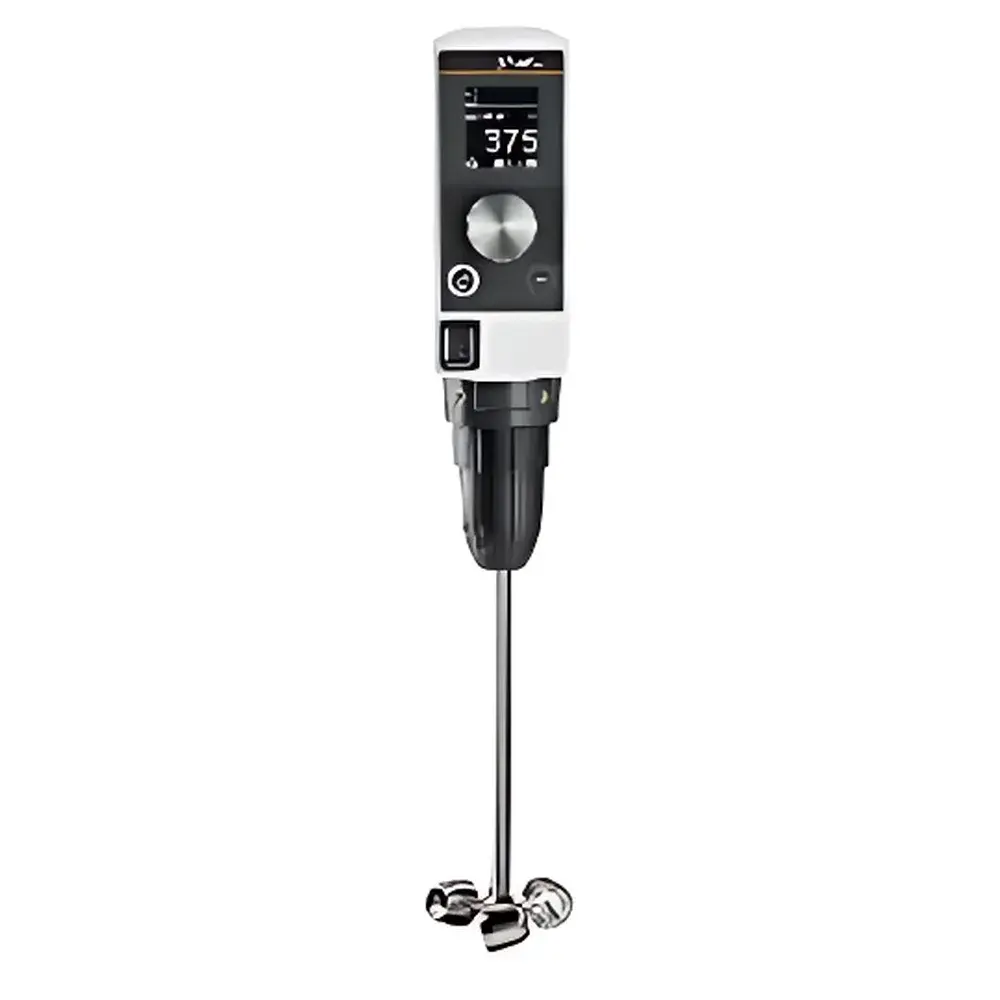
The Heidolph Hei-TORQUE Core Overhead Stirrer System is a precision-engineered laboratory instrument designed for reproducible, high-torque mixing in demanding R&D, quality control, and production-scale development environments. Built on Heidolph’s decades-long heritage in German mechanical engineering, the Hei-TORQUE Core employs Couette-type shear principle via overhead drive transmission—ensuring consistent torque delivery independent of fluid viscosity changes. Unlike magnetic stirrers limited by vessel geometry and heat sensitivity, this system delivers direct mechanical agitation through interchangeable shafts and impellers, enabling scalable mixing from small-volume viscous polymer solutions to large-batch aqueous suspensions (up to 25 L water-equivalent volume). Its sealed, corrosion-resistant housing and IP42-rated enclosure meet fundamental requirements for operation in fume hoods, cleanrooms, and multi-chemical laboratories where exposure to organic solvents, acids, or vapors is routine.
Key Features
- High-fidelity microprocessor-controlled speed regulation maintains setpoint accuracy ±1% across the full 20–2000 rpm range—even under variable load conditions caused by rising viscosity or particle suspension.
- Dual-mode operation: continuous run or programmable timer (0.1–999 min), supporting unattended batch processing and standardized protocol execution.
- Real-time digital torque trend display visualizes dynamic resistance changes during mixing—critical for detecting phase transitions, gelation onset, or agglomeration events in colloidal systems.
- Patented quick-fit chuck system accepts shaft diameters up to 10.5 mm; tool-free installation with audible click confirmation ensures correct axial alignment and eliminates risk of eccentric rotation or chuck slippage.
- Brushless DC motor architecture provides maintenance-free operation over >20,000 hours MTBF, eliminating carbon brush wear, sparking, or periodic commutator servicing.
- Integrated thermal cut-off and electronic overload protection automatically halt operation upon exceeding safe torque or temperature thresholds—preserving both equipment integrity and sample stability.
- Low-noise motor and optimized airflow design achieve <55 dB(A) at 1 m distance, complying with ISO 7779 for laboratory acoustic comfort and long-term operator safety.
Sample Compatibility & Compliance
The Hei-TORQUE Core accommodates a broad spectrum of sample types—including Newtonian and non-Newtonian fluids, shear-thinning gels, abrasive slurries, and temperature-sensitive biopolymer solutions—when paired with chemically resistant impellers (e.g., PTFE-coated, glass, or Hastelloy variants). Its sealed front panel and IP42-rated construction satisfy basic environmental protection requirements per IEC 60529, while the solvent-resistant polymer chuck resists degradation from common organics (e.g., acetone, THF, chloroform, ethanol). Though not intrinsically rated for hazardous area use, the unit complies with EN 61010-1:2019 for electrical safety in laboratory equipment and supports GLP-aligned documentation workflows when integrated with validated timer logs and torque trace exports.
Software & Data Management
While the Hei-TORQUE Core operates as a standalone instrument with local digital interface, its real-time torque trend graph and programmable timer output timestamped operational data suitable for manual transcription into lab notebooks or LIMS. For regulated environments requiring audit trails, optional RS232/USB connectivity (via Heidolph’s Hei-CON software suite, sold separately) enables automated data logging compliant with FDA 21 CFR Part 11 principles—including user authentication, electronic signatures, and immutable record retention. Export formats include CSV and PDF, facilitating integration into SOP-driven QA/QC reporting frameworks aligned with ISO/IEC 17025 and ASTM E2500.
Applications
- Formulation development of pharmaceutical suspensions, ointments, and injectables requiring precise shear history control.
- Chemical synthesis involving exothermic reactions or heterogeneous catalysis where temperature-stable agitation prevents localized hot spots.
- Materials science research on nanocomposite dispersions, battery electrode slurries, and ceramic pastes demanding uniform particle distribution without deagglomeration loss.
- Food & beverage R&D for emulsion stabilization studies, dairy product homogenization trials, and viscosity profiling of plant-based alternatives.
- Environmental testing labs performing standardized sediment resuspension protocols per EPA Method 1669 or ASTM D3978.
FAQ
What is the maximum recommended viscosity for continuous operation?
The Hei-TORQUE Core is rated for viscosities up to 10,000 mPa·s at mid-range speeds (e.g., 500 rpm); sustained operation above 8,000 mPa·s is advised at ≤300 rpm to ensure thermal stability and bearing longevity.
Can the unit be mounted on a standard lab frame or custom reactor setup?
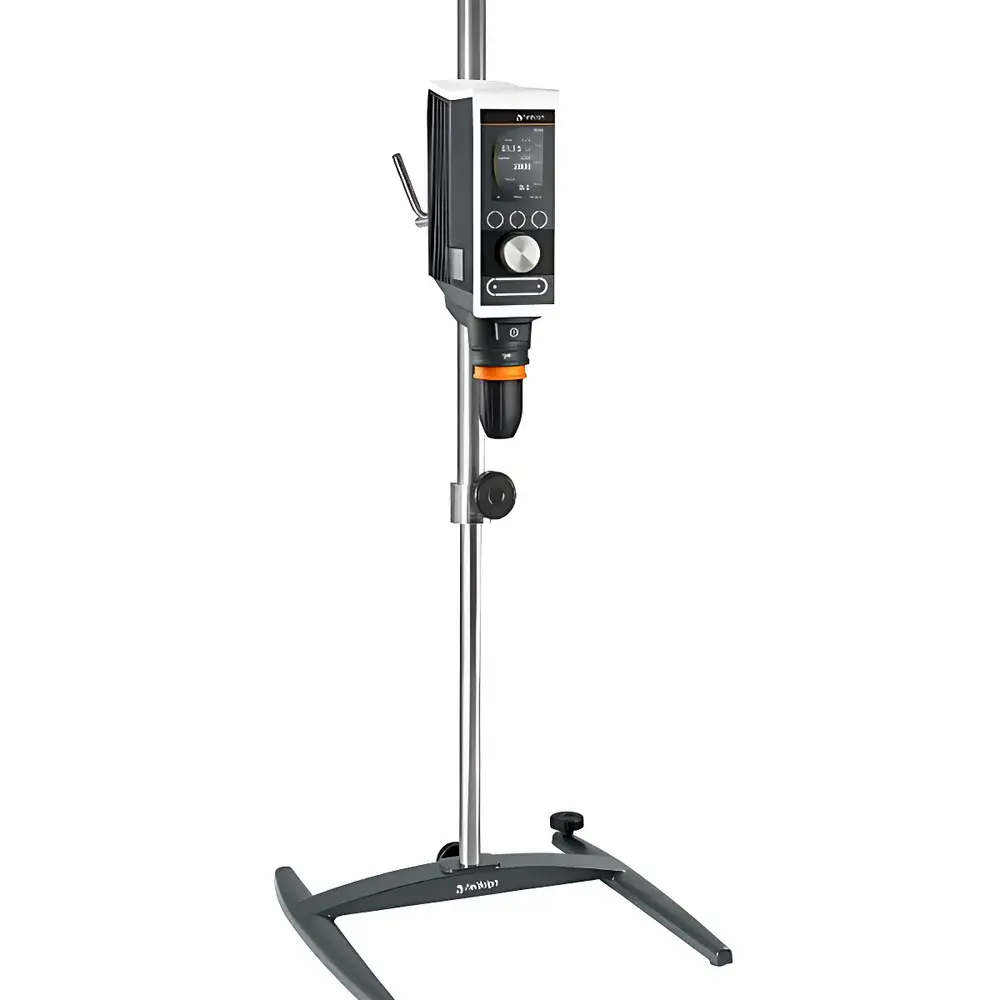
Yes—it features standardized M6 threaded mounting holes compatible with Heidolph’s Hei-MIX clamping system and third-party universal lab stands meeting ISO 8513 dimensional specifications.
Is the torque display calibrated and traceable to national standards?
Torque indication is factory-calibrated using DIN 51399-compliant reference loads; calibration certificates (traceable to PTB) are available upon request for GMP/GLP applications.
Does the “Max” function override all safety limits?
No—the “Max” button temporarily increases speed to the upper limit (2000 rpm) but remains subject to real-time thermal and torque cutoff logic; it does not disable protective firmware.
What maintenance intervals are specified under normal usage?
Zero scheduled maintenance is required due to the brushless motor and sealed gear train; users should inspect chuck integrity and shaft concentricity quarterly per internal SOP, with no lubrication or adjustment needed.



