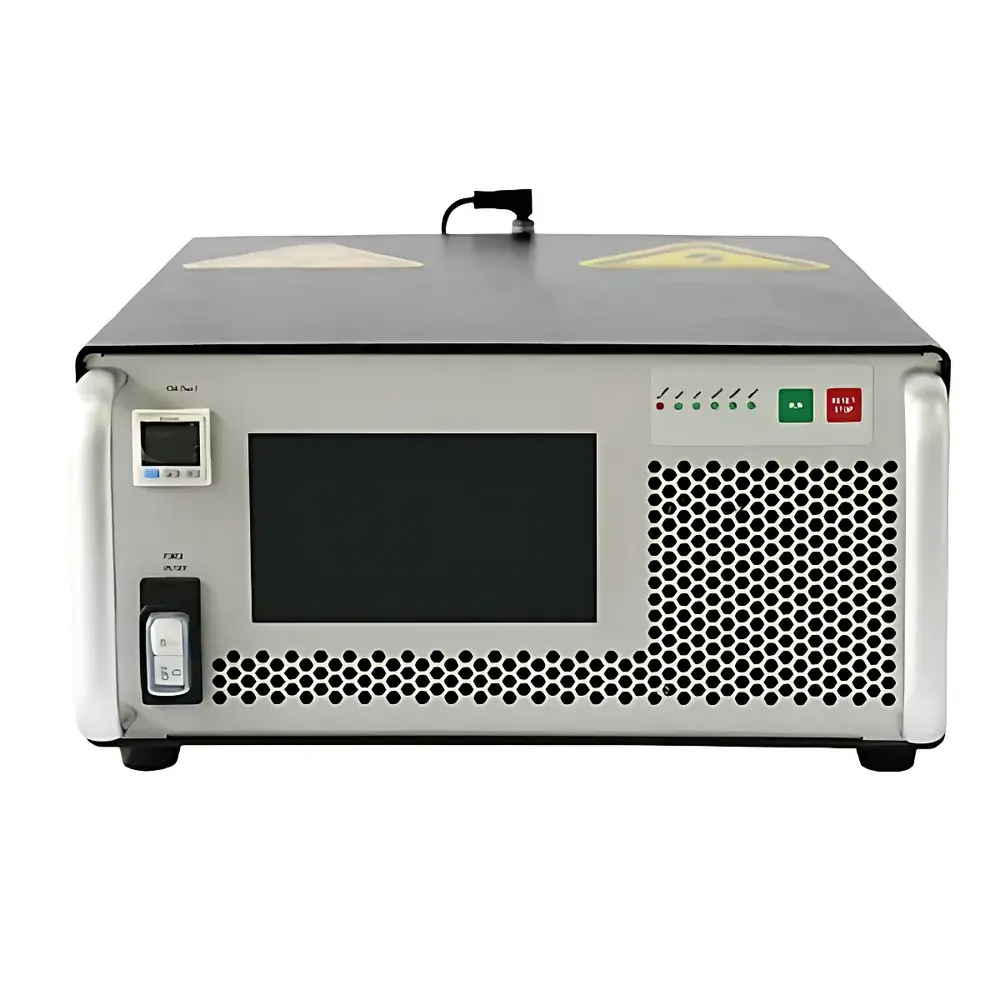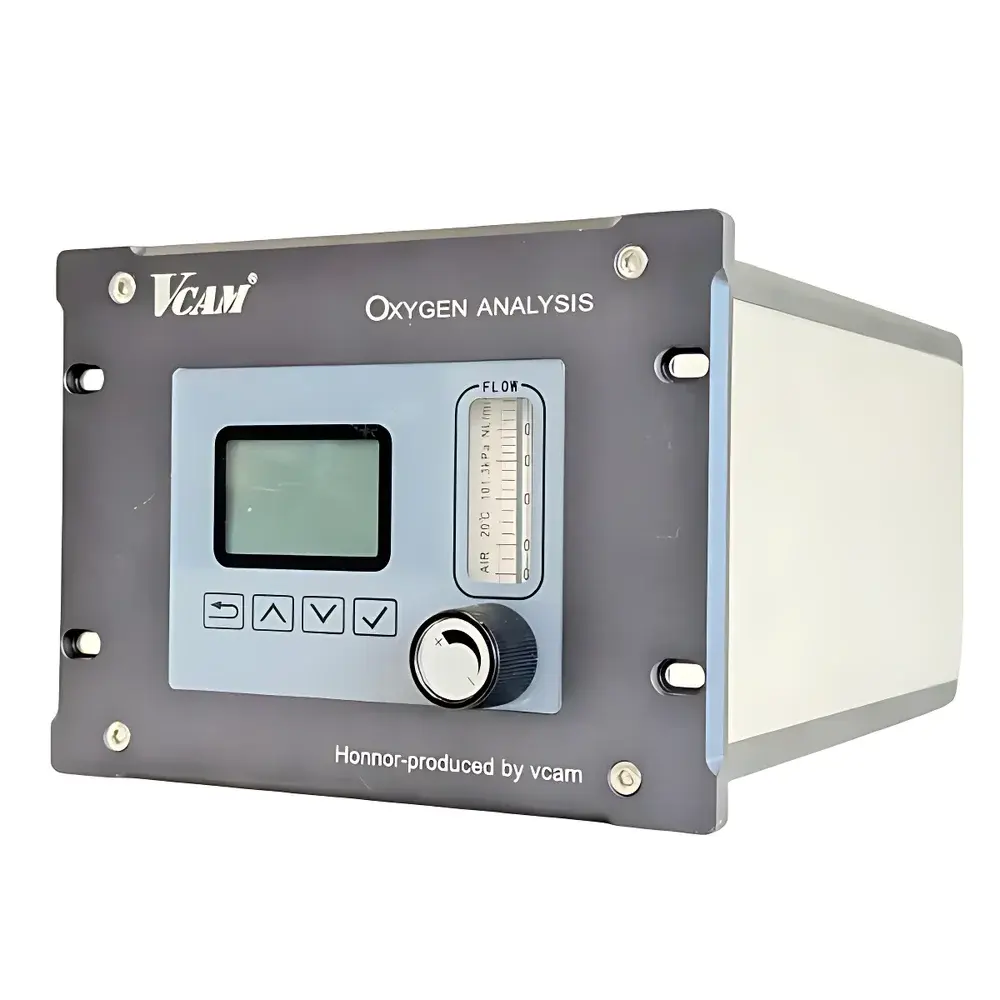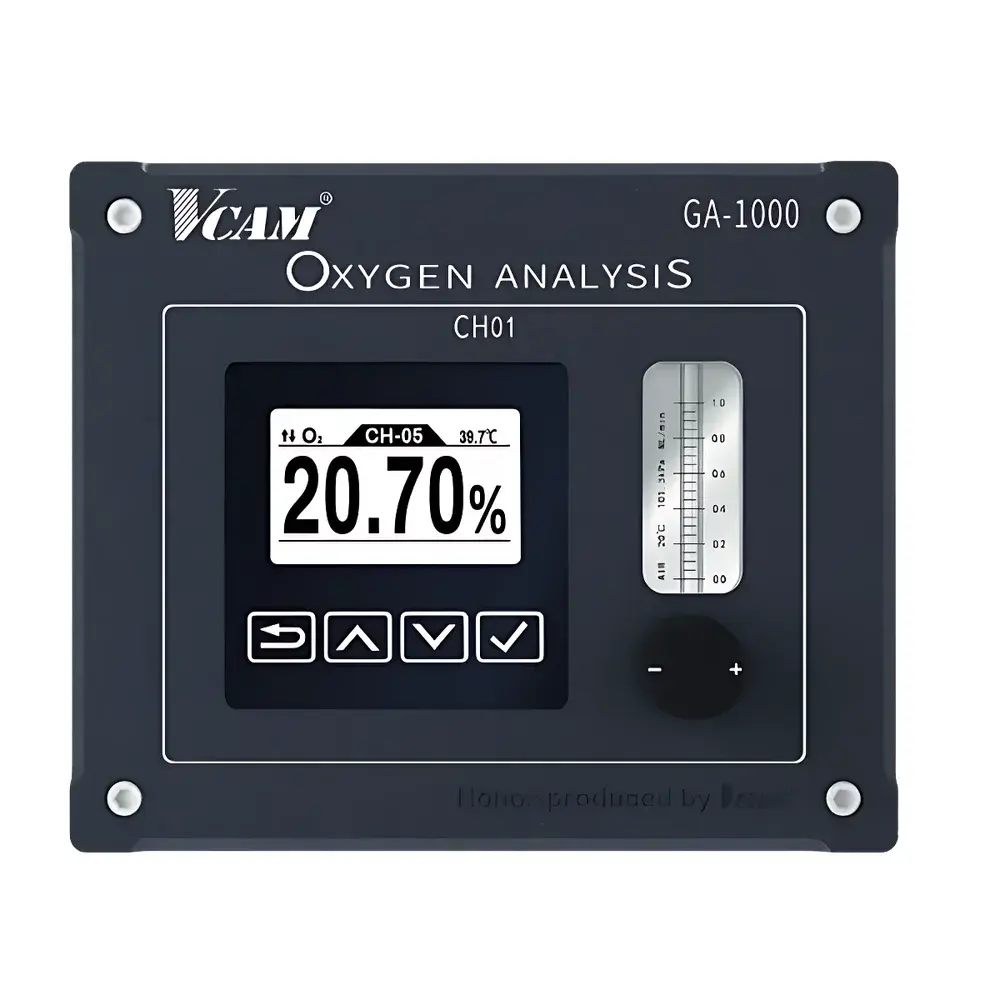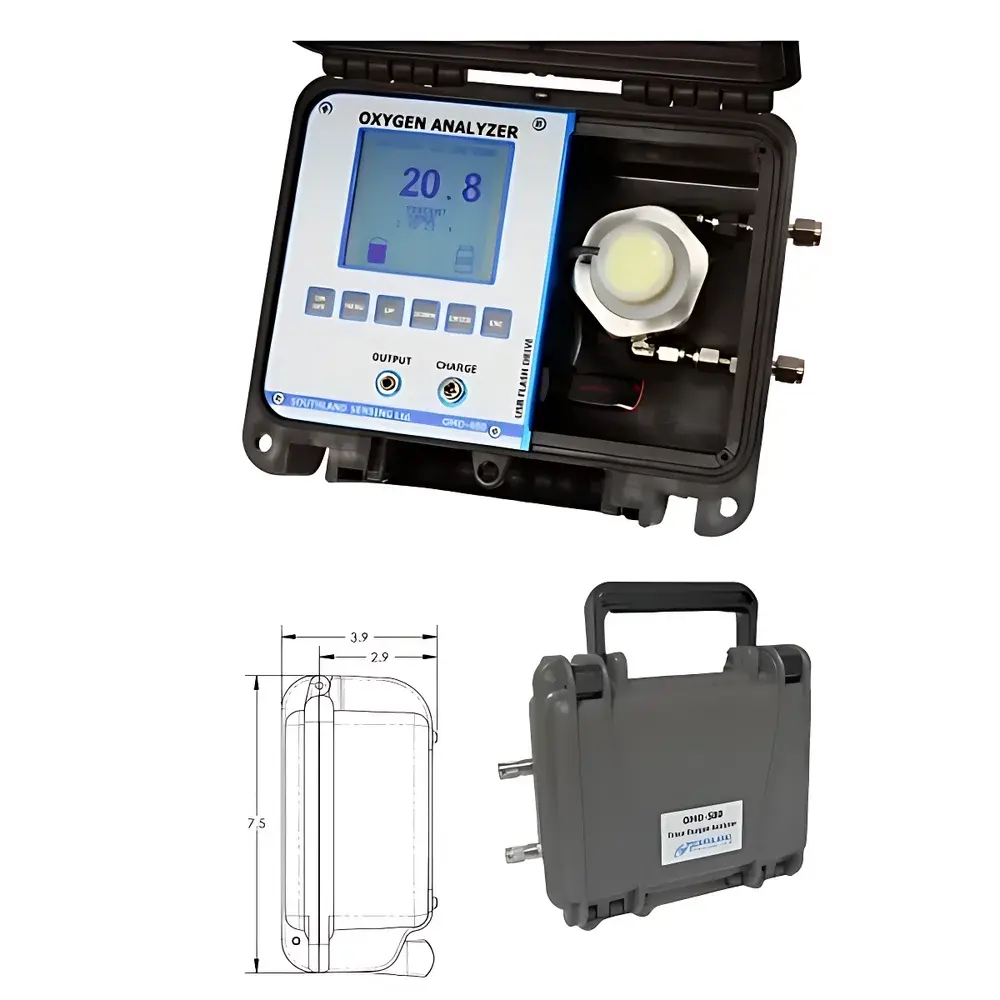
Southland Sensing OMD-480P Portable Pump-Suction Percent Oxygen Analyzer
| Origin | USA |
|---|---|
| Manufacturer Type | Authorized Distributor |
| Origin Category | Imported |
| Model | OMD-480P |
| Price Range | USD 1,400 – 4,200 (FOB) |
| Measurement Principle | Electrochemical Fuel Cell (Micro-Fuel Cell) |
| Range Options | 0–1%, 0–5%, 0–10%, 0–25%, 0–100% O₂ (selectable) |
| Accuracy | < ±1% FS |
| Resolution | 0.01% (full-scale dependent) |
| Display | Backlit LCD with auto-ranging |
| Operating Temperature | –10 to +50 °C |
| Temperature Compensation | Built-in, automatic |
| Sensor Lifetime | Typically >24 months (air ambient) |
| Power Supply | 12–24 VDC, 25 mA max |
| Analog Outputs | 4–20 mA (isolated), 0–10 VDC |
| Digital Interface | MODBUS RTU over RS485 (ASCII protocol, bi-directional) |
| Sample Flow Rate | 230–2500 mL/min (pump-suction driven) |
| Enclosure Dimensions | 241 × 165 × 96 mm |
| IP Rating | IP65 (front panel) |
| Certifications | CE, RoHS |
| Sensor Compatibility | Standard fuel cell (for N₂, Ar, He, H₂, hydrocarbons) |
| Gas Compatibility | Inert gases (N₂, Ar, He), reducing gases (H₂), non-corrosive process streams |
| Warranty | 12 months from shipment |
Overview
The Southland Sensing OMD-480P is a portable, pump-suction oxygen analyzer engineered for precise, real-time measurement of oxygen concentration across a broad dynamic range—from trace-level detection at 0.01 ppm (in optional low-range configurations) up to full-scale 100% O₂—using a solid-state electrochemical fuel cell sensor. Unlike paramagnetic or zirconia-based analyzers, the OMD-480P leverages galvanic fuel cell technology, delivering stable, drift-free output without external power required at the sensor element. Its micro-fuel cell architecture operates via spontaneous electrochemical oxidation of oxygen in the sample stream, generating a current linearly proportional to partial pressure—enabling high reproducibility and long-term baseline stability under continuous operation. Designed specifically for industrial process monitoring and controlled-atmosphere environments, the instrument integrates an internal sampling pump, intelligent auto-ranging circuitry, and embedded temperature compensation to maintain accuracy across ambient fluctuations. The device meets fundamental requirements for safety-critical applications where rapid response, low maintenance, and intrinsic reliability are essential—particularly in nitrogen generation systems, glovebox inerting, semiconductor purge validation, and hydrogen production purity assurance.
Key Features
- True portable form factor with integrated suction pump and ergonomic carry handle—no external vacuum source required
- Selectably configurable measurement ranges: 0–1%, 0–5%, 0–10%, 0–25%, or 0–100% O₂—field-switchable via software or DIP switch
- Electrochemical fuel cell sensor with >24-month typical service life in ambient air; extended calibration intervals (6–12 months recommended under stable conditions)
- Auto-ranging backlit LCD display with real-time %O₂ readout, status indicators, and alarm flags
- Dual programmable SPDT relay outputs (250 VAC/3 A resistive) for local alarm activation or process interlock signaling
- Simultaneous analog outputs: isolated 4–20 mA (HART-compatible passive mode) and 0–10 VDC, both fully scalable to selected range
- Bi-directional MODBUS RTU communication over RS485 (ASCII protocol) for integration into PLCs, SCADA, or DCS platforms
- Optional acid-resistant sensor variant certified for use in streams containing CO₂, H₂S, or SO₂—critical for natural gas conditioning or syngas monitoring
- Compliant with IEC 61000-6-2 (immunity) and IEC 61000-6-4 (emissions); CE-marked per EMC and LVD directives
Sample Compatibility & Compliance
The OMD-480P is validated for use with non-corrosive, non-condensing gas matrices including nitrogen, argon, helium, hydrogen, methane, ethane, and other saturated hydrocarbons. It is routinely deployed in ISO Class 5–8 cleanrooms, GMP-compliant nitrogen blanketing systems, and MIL-STD-883-certified semiconductor fabrication tool purges. When equipped with the acid-resistant sensor option, it supports compliance with ASTM D7447 (oxygen in liquefied petroleum gas) and ISO 8573-3 (compressed air purity classes). The analyzer’s design conforms to general requirements for field-deployable instrumentation per IEC 61511 (functional safety for SIS) when used in SIL-1-rated monitoring loops. All firmware and configuration data retain audit-trail capability per FDA 21 CFR Part 11 when connected to validated MODBUS master systems supporting electronic signature logging.
Software & Data Management
No proprietary PC software is required for basic operation; however, Southland Sensing provides a free Windows-based configuration utility (OMD-ConfigTool v3.2+) supporting remote setup, calibration logging, relay threshold definition, and MODBUS register mapping. All calibration events—including zero/span date, operator ID, and reference gas certificate number—are stored in non-volatile memory with time-stamped records. Analog outputs support 4–20 mA linear scaling with user-defined engineering units (e.g., %O₂, ppmO₂), while MODBUS registers expose live measurements, diagnostics (sensor voltage, temperature, pump status), and alarm states (ALM1_ACTIVE, ALM2_ACTIVE). Data export is compatible with CSV and Modbus TCP gateway bridging for cloud historian ingestion (e.g., Ignition SCADA, Siemens Desigo CC).
Applications
- On-site verification of nitrogen generator outlet purity (ISO 8573-1 Class 1–3) in pharmaceutical packaging lines
- Real-time oxygen ingress monitoring inside argon-purged welding chambers and titanium heat-treatment furnaces
- Glovebox atmosphere qualification per SEMI F21-02 (oxygen & moisture control in microelectronics handling)
- Hydrogen purity certification per ISO 8573-8 (Class 2, ≤5 ppm O₂) prior to PEM electrolyzer feed
- Leak detection in cryogenic liquid storage vessels using residual O₂ rise rate analysis
- Process gas quality assurance in ethylene oxide sterilization tunnels (EN ISO 11135)
- Field validation of inert gas blankets in offshore oil & gas pipeline commissioning (API RP 14C)
FAQ
What is the recommended calibration frequency for the OMD-480P in continuous operation?
Calibration is advised every 6 months under stable environmental conditions; quarterly if exposed to fluctuating temperature/humidity or aggressive gas matrices. Zero calibration requires certified nitrogen (<1 ppm O₂); span calibration uses certified O₂/N₂ mixtures traceable to NIST SRMs.
Can the OMD-480P measure oxygen in 100% hydrogen without sensor poisoning?
Yes—the standard micro-fuel cell is rated for continuous exposure to H₂. However, presence of H₂S >1 ppm necessitates the optional acid-resistant sensor to prevent irreversible sulfide poisoning.
Is the analog output intrinsically safe for Zone 1 hazardous areas?
No—the OMD-480P is not IS-certified. For hazardous locations, it must be installed in a purged enclosure or used with a safety barrier (e.g., Pepperl+Fuchs KFD2-STC4-Ex1) compliant with ATEX/IECEx requirements.
Does the unit support automatic temperature compensation across its full operating range?
Yes—integrated Pt1000 RTD and digital compensation algorithm correct for thermal drift from –10 to +50 °C, maintaining stated accuracy without manual adjustment.
How is sensor replacement performed in the field?
The fuel cell module is user-replaceable via four M3 screws; no soldering or firmware reconfiguration is needed. Each replacement sensor ships pre-aged and factory-calibrated with unique serial-matched coefficients loaded automatically upon insertion.