
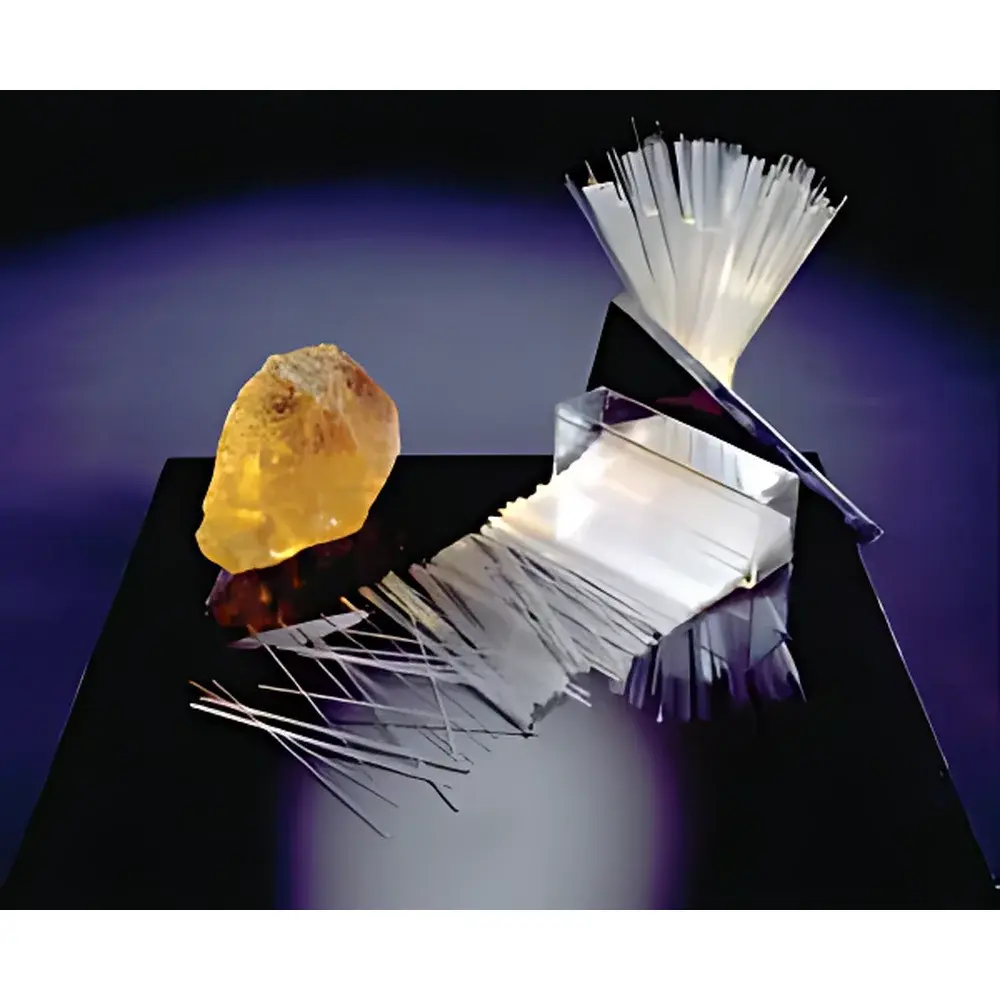
Sutter Capillary Glass Tubing & Filaments for Patch-Clamp Electrode Fabrication
| Brand | Sutter Instrument |
|---|---|
| Origin | USA |
| Product Line | Capillary Glass & Filaments |
| Wall Type Options | Standard Wall, Thin Wall, Multibarrel, Quartz |
| Material | Borosilicate Glass (e.g., 7052, 7740) and Fused Quartz |
| Outer Diameter Range | 1.00–2.00 mm |
| Inner Diameter Range | 0.30–1.56 mm |
| Length Options | 7.5 cm, 10 cm, 15 cm |
| Packaging Quantities | 75–250 units per pack |
| Filament Availability | With or Without Internal Filament |
Overview
Sutter capillary glass tubing and filaments are precision-engineered consumables designed specifically for the fabrication of high-performance microelectrodes used in electrophysiological techniques—primarily patch-clamp recording. These borosilicate and fused quartz capillaries serve as the foundational substrate for pullers such as the Sutter P-97, P-1000, or other programmable micropipette pullers. Their dimensional consistency, thermal stability, and controlled coefficient of expansion ensure reproducible electrode geometry—including tip diameter, taper angle, and shank profile—critical for achieving high-resistance seals (>1 GΩ) and low-noise intracellular or extracellular recordings. Borosilicate glass (e.g., type 7052 or equivalent) is the standard material for most whole-cell, cell-attached, and outside-out configurations due to its optimal balance of mechanical strength, electrical insulation, and compatibility with common electrode filling solutions. Fused quartz variants are selected for applications requiring ultra-low capacitance, enhanced chemical resistance (e.g., in organic solvent-based internal solutions), or UV transparency for optogenetic co-recordings.
Key Features
- Precision-drawn borosilicate glass tubing with certified outer and inner diameter tolerances (±0.01 mm), ensuring batch-to-batch reproducibility in pipette fabrication.
- Two wall thickness categories: Standard Wall (e.g., BF120-69-10) for robustness and thermal stability during pulling; Thin Wall (e.g., BF150-117-10) for reduced series resistance and faster solution exchange in high-resolution single-channel recordings.
- Integrated platinum-iridium or nickel-chromium filament options (denoted by “F” suffix, e.g., BF100-50-10) enabling rapid, uniform heating during laser-assisted or resistive puller protocols—particularly advantageous for symmetric double-pull configurations.
- Multibarrel configurations (2-barrel and 3-barrel) support simultaneous delivery of multiple pharmacological agents or ion solutions during juxtacellular or iontophoretic experiments.
- Fused quartz capillaries (Q-series) provide superior chemical inertness, minimal autofluorescence, and extended UV transmission—ideal for combined patch-clamp and fluorescence imaging or photolysis experiments.
- All tubing is supplied in sterile, dust-free packaging with traceable lot numbers and full dimensional certification per Sutter’s ISO 9001-compliant manufacturing protocol.
Sample Compatibility & Compliance
Sutter capillary glass products are validated for use across a broad spectrum of primary and cultured mammalian neurons, cardiomyocytes, oocytes, and adherent cell lines. They meet ASTM F2081-21 specifications for biomedical glass tubing intended for electrophysiological device fabrication. While not medical devices themselves, these consumables are routinely employed in GLP- and GMP-aligned preclinical neuropharmacology studies. Documentation supports compliance with FDA 21 CFR Part 11 requirements when integrated into validated electrode fabrication workflows using Sutter pullers with audit-trail-enabled software (e.g., SutterPatch v3.2+). No endotoxin or heavy metal contamination is detectable at levels exceeding USP and thresholds.
Software & Data Management
Although the capillaries themselves are passive components, their dimensional parameters are directly imported into SutterPull software (v4.0+) for automated puller program optimization. Users may define custom OD/ID ratios, filament resistance profiles, and heat zone geometries to fine-tune pull protocols for specific recording modalities (e.g., loose-patch vs. tight-seal). All lot-specific dimensional data are exportable as CSV or XML for integration into laboratory information management systems (LIMS) and electronic lab notebooks (ELN), supporting full traceability from raw material to functional electrode.
Applications
- Whole-cell, cell-attached, inside-out, and outside-out patch-clamp recordings in acute brain slices, dissociated neurons, and HEK293 expression systems.
- Intracellular sharp-electrode recording and current injection in invertebrate preparations (e.g., Aplysia, Drosophila larval motor neurons).
- Iontophoretic drug application via multibarrel pipettes coupled with DC or pulsed current sources.
- Combined patch-clamp and two-photon Ca²⁺ imaging using quartz-based electrodes to minimize optical scattering and background fluorescence.
- High-speed voltage-clamp fluorometry (VCF) where low-capacitance quartz electrodes enable sub-millisecond signal fidelity.
- Microfluidic interfacing and nanoliter-scale solution exchange in microphysiological systems.
FAQ
What distinguishes standard-wall from thin-wall borosilicate capillaries?
Standard-wall tubing provides greater mechanical rigidity during pulling and handling, making it preferred for whole-cell and perforated-patch configurations. Thin-wall variants reduce pipette resistance and improve solution exchange kinetics—essential for high-bandwidth single-channel analysis.
When should I choose quartz over borosilicate glass?
Select fused quartz when working with aggressive solvents (e.g., DMSO, ethanol), performing UV photolysis, or conducting simultaneous fluorescence imaging where glass autofluorescence or UV absorption would compromise signal integrity.
Do filament-containing capillaries require special puller settings?
Yes—filament-equipped tubing demands precise filament resistance calibration and adjusted heat duration in resistive pullers. SutterPull software includes preset profiles for all BF- and QF-series lots.
Are these capillaries compatible with non-Sutter pullers?
They are dimensionally compatible with most commercial micropipette pullers (e.g., Narishige PC-10, Zeiss Flaming/Brown), though optimal results require validation of heat zone alignment and ramp timing against Sutter’s published protocols.
How are lot-specific dimensional certificates provided?
Each box includes a printed Certificate of Conformance listing measured OD, ID, length, and filament resistance (if applicable), traceable to NIST-calibrated metrology instruments used in Sutter’s Rochester, NY facility.





