
English Product Name
| Brand | OK Instruments |
|---|---|
| Origin | Imported |
| Manufacturer Type | Authorized Distributor |
| Price | USD 14,000–42,000 (based on model) |
| Load Capacity | 10–100 kg |
| Table Dimensions | 20×20 to 80×65 cm |
| Acceleration Range | 150–15,000 m/s² |
| Pulse Duration | 0.5–30 ms |
| Waveform Options | Half-sine, Trapezoidal, Post-peak Sawtooth |
| Power Supply | AC 380 V ±5%, 50/60 Hz, 3-phase 5-wire |
Overview
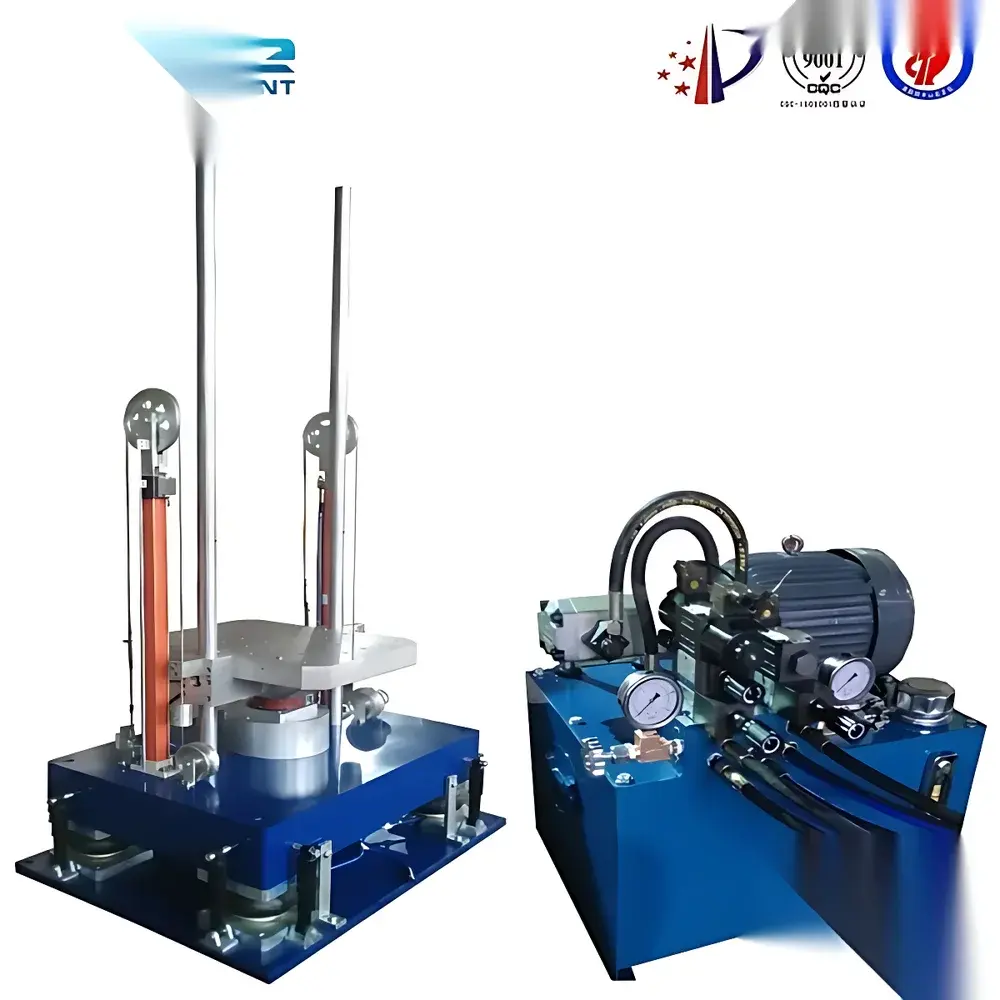
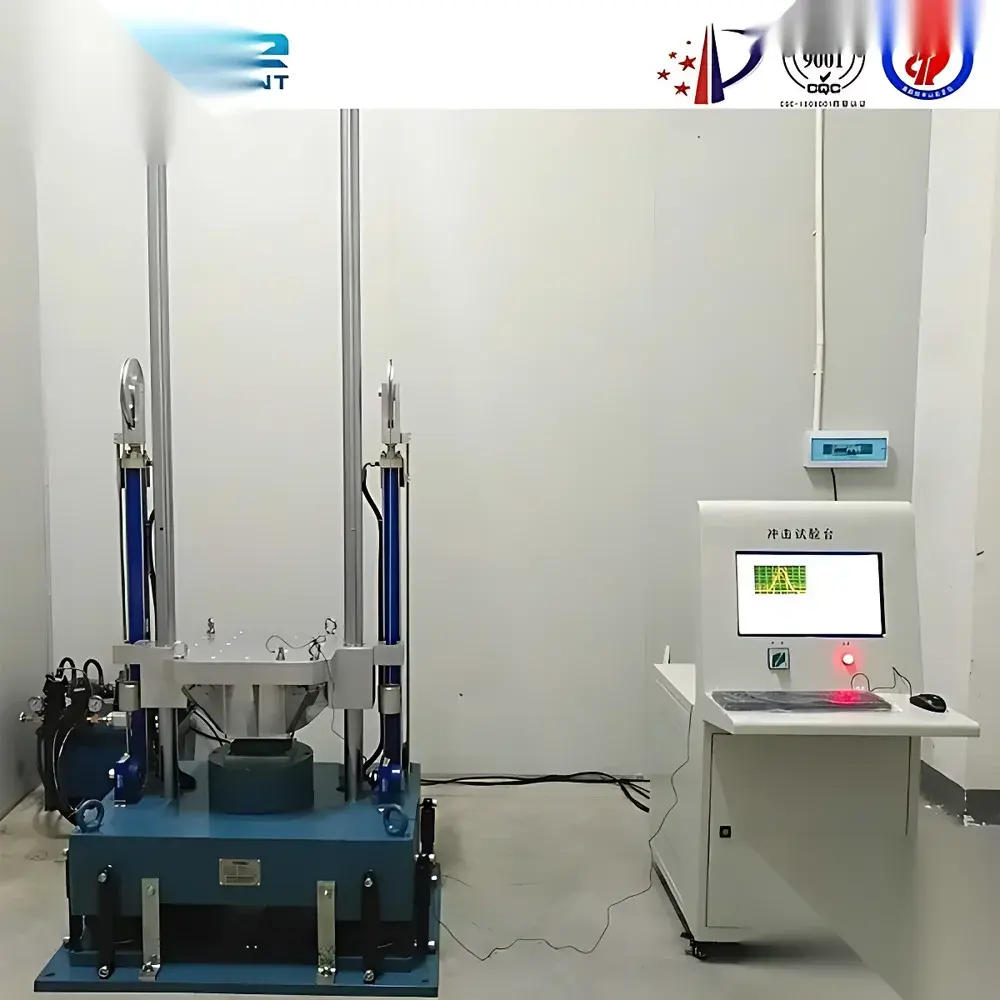
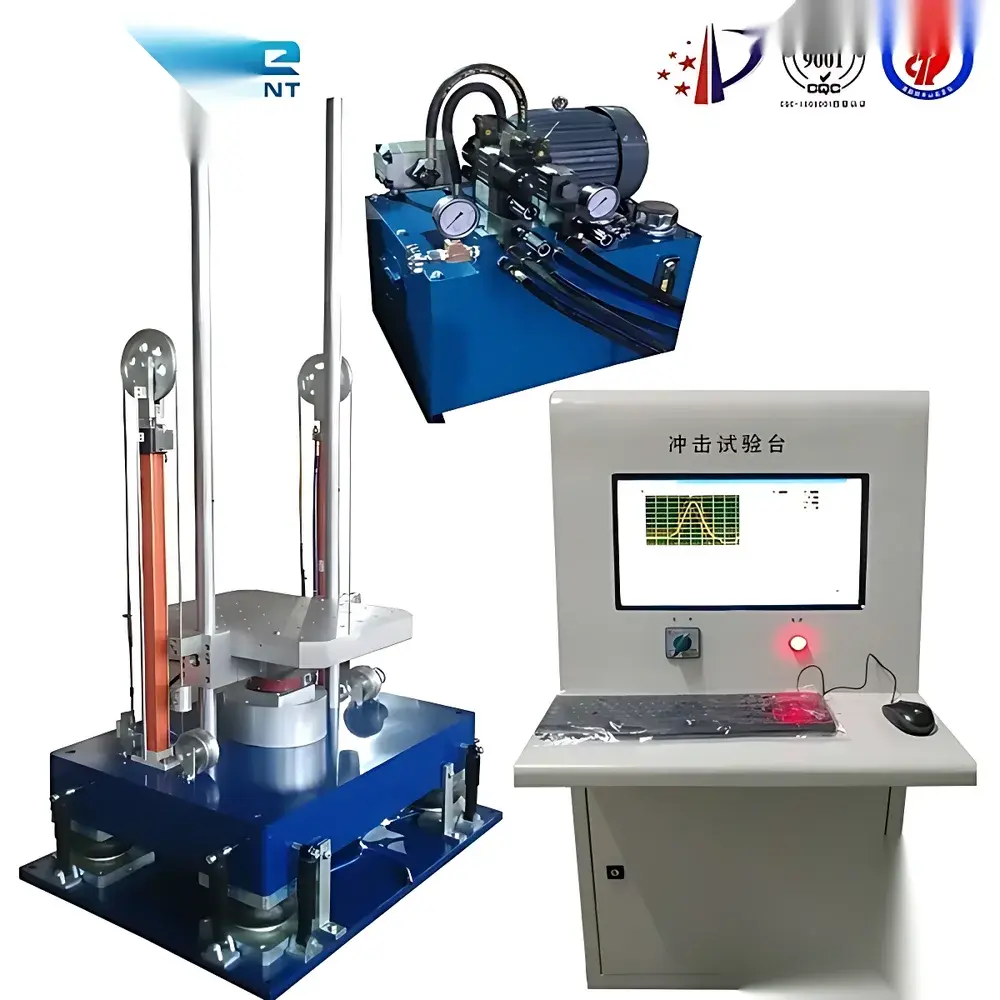
The OK-S Series Electromechanical Shock Testing Machine is a precision-engineered system designed for controlled, repeatable mechanical shock simulation in compliance with international environmental stress testing standards. It operates on the principle of electromechanically driven free-fall impact—utilizing a DC motor coupled with a geared lifting mechanism to elevate the test table to a defined height, followed by controlled release onto a calibrated elastomeric buffer. This generates highly reproducible half-sine, trapezoidal, or post-peak sawtooth acceleration pulses, each characterized by tightly bounded peak amplitude (g-level), pulse duration (ms), and rise/fall time profiles. Unlike pneumatic or hydraulic shock systems, the OK-S series eliminates compressed air dependency and fluid maintenance while delivering superior waveform fidelity and long-term calibration stability. Its rigid base frame incorporates passive damping elements to isolate operational vibrations from the laboratory floor—ensuring minimal cross-contamination of adjacent instrumentation and meeting ISO 2041:2022 vibration isolation requirements for test laboratories.
Key Features
- Electromechanical actuation with brushless DC motor and precision planetary gearbox ensures consistent lift velocity and zero backlash during table ascent.
- Adjustable impact height and programmable buffer thickness/material selection enable independent control over acceleration magnitude and pulse width—critical for replicating field-relevant shock environments per MIL-STD-810H Method 516.7, IEC 60068-2-27, and ASTM D999.
- Integrated safety interlocks include emergency stop circuitry, position-limit switches, door-mounted microswitches, and uninterruptible power monitoring—preventing unintended operation during power fluctuation or operator error.
- Modular waveform generator supports user-defined pulse shapes; factory-calibrated transducers provide traceable acceleration data output via analog (±10 V) and digital (RS-485/Ethernet) interfaces.
- Robust welded steel chassis with reinforced load-bearing columns and vibration-damped mounting feet minimizes structural resonance across the full operational frequency range (0.1–5 kHz).
Sample Compatibility & Compliance
The OK-S platform accommodates packaged goods, electronic enclosures, automotive ECUs, aerospace avionics modules, and medical device housings up to 100 kg. Test specimens are secured using standard T-slot table configurations (M6/M8 threaded inserts) compatible with industry-standard fixturing kits. All models comply with electromagnetic compatibility (EMC) directives (IEC 61000-6-3/6-4), electrical safety standards (IEC 61010-1), and mechanical shock test protocol requirements outlined in GJB 150.18A, JIS C 0041, and US Department of Defense Standard Practice DoD-STD-3017. Calibration certificates are issued per ISO/IEC 17025-accredited procedures, with optional NIST-traceable accelerometer verification available upon request.
Software & Data Management
The system integrates with OK-Control Suite v3.2—a Windows-based application supporting real-time waveform preview, pre-test parameter validation, automated pass/fail evaluation against user-defined tolerance bands, and export of time-acceleration datasets in CSV, MATLAB (.mat), and universal HDF5 formats. Audit trails record all operator actions, parameter changes, and calibration events in accordance with FDA 21 CFR Part 11 requirements when configured with electronic signatures and role-based access control. Raw sensor data streams support third-party analysis tools including MATLAB Signal Processing Toolbox and Python-based SciPy workflows.
Applications
This shock tester serves critical qualification functions across regulated industries: validating drop performance of consumer electronics packaging per ISTA 3A; assessing structural integrity of battery modules under crash-simulated loads; verifying solder joint reliability in PCB assemblies subjected to transport shock; evaluating latch retention strength in medical cart systems; and performing pre-shipment durability screening for industrial IoT gateways deployed in rail or maritime environments. Its programmable pulse repetition rate (0.1–60 Hz) further enables fatigue assessment through sequential shock exposure protocols.
FAQ
What shock standards does the OK-S series support?
It fully implements test profiles specified in MIL-STD-810H Method 516.7 (Shock), IEC 60068-2-27 (Ed. 4.0), ASTM D999 (Shipping Container Shock), and GJB 150.18A.
Can the system generate non-standard waveforms?
Yes—custom pulse definitions can be imported via CSV files and executed with sub-millisecond timing resolution using the built-in arbitrary waveform mode.
Is remote diagnostics supported?
All models include embedded Ethernet connectivity enabling secure remote firmware updates, diagnostic log retrieval, and live sensor health monitoring via HTTPS-based web interface.
What is the recommended calibration interval?
Annual calibration is advised per ISO 17025 guidelines; however, internal self-check routines verify motor encoder accuracy and buffer compression linearity before every test sequence.
Are spare buffers and calibration kits available?
Standard elastomer buffer sets (silicone rubber, neoprene, polyurethane) and certified reference accelerometers are stocked globally with lead times under 5 business days.



