
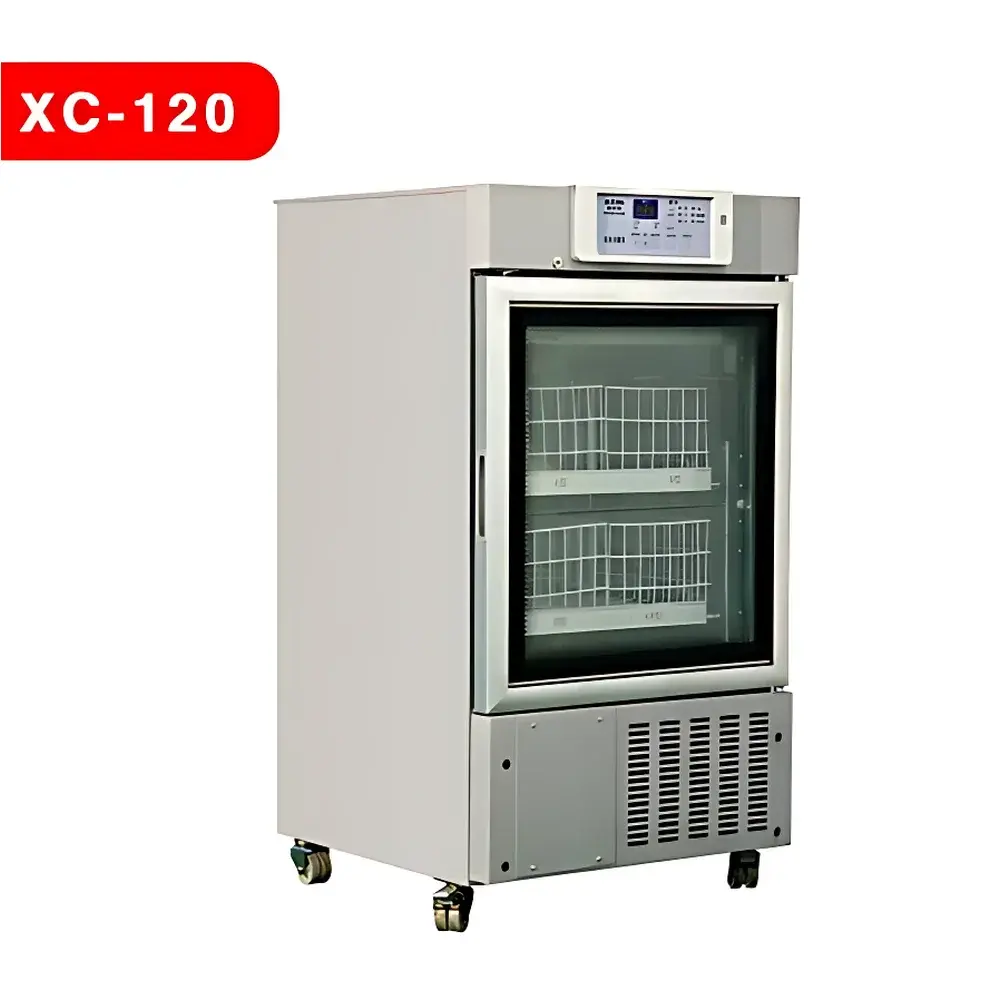
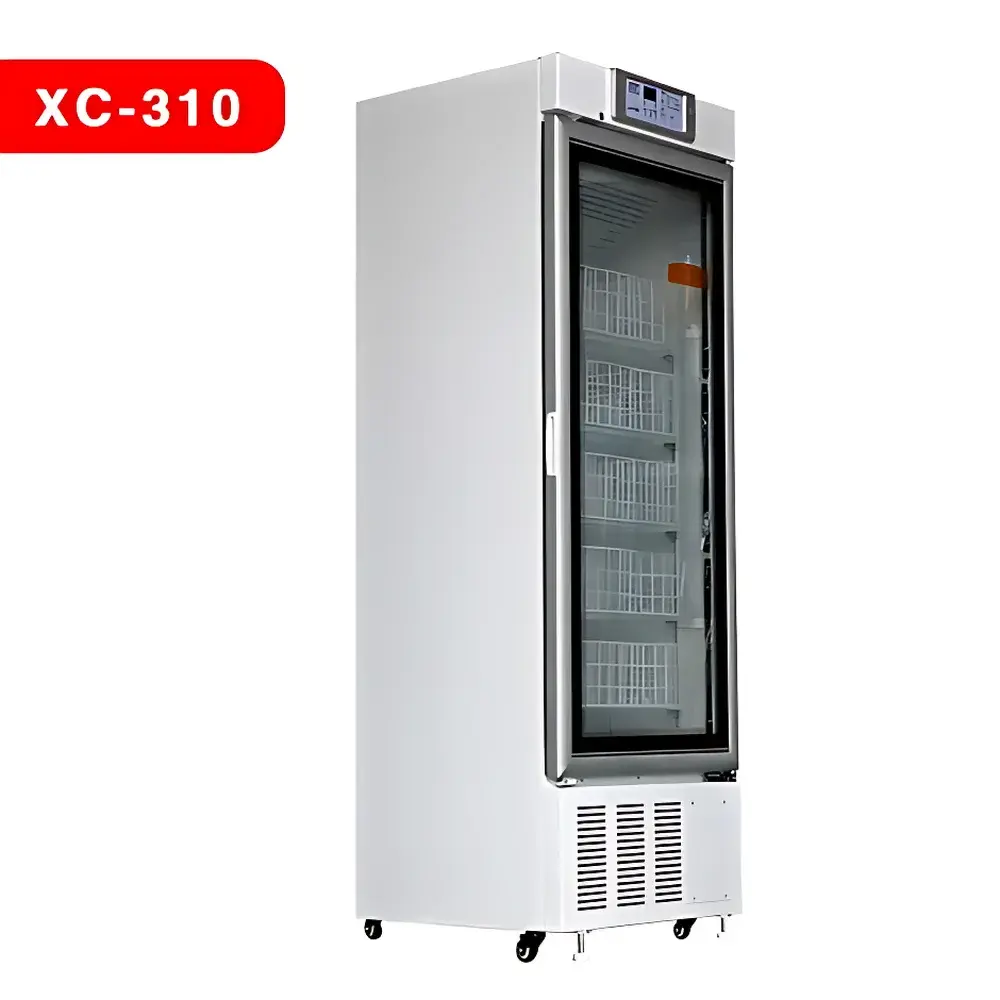
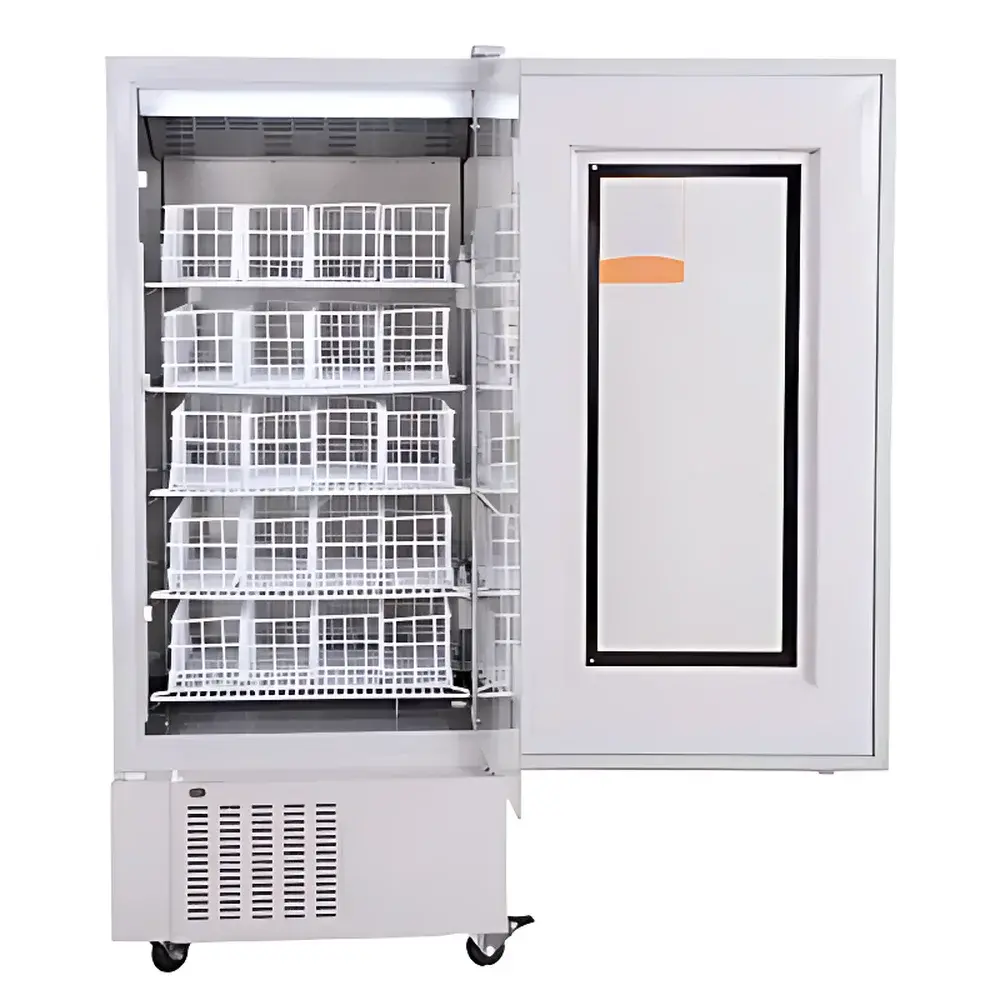
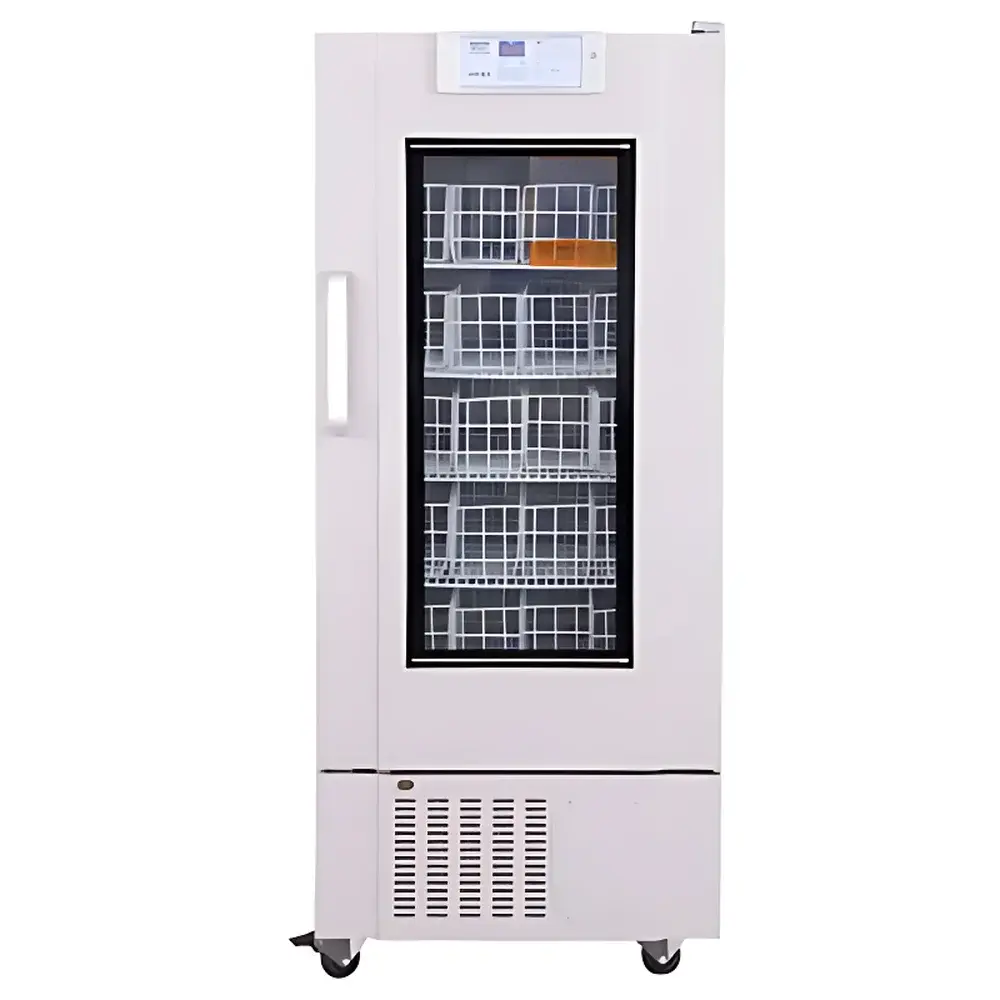
AUCMA XC-120 Blood Refrigerator (4°C)
| Brand | AUCMA |
|---|---|
| Model | XC-120 |
| Temperature Range | 4°C ±1°C |
| Effective Volume | 120 L |
| Internal Dimensions (W×D×H) | 485×449×550 mm |
| External Dimensions (W×D×H) | 598×618×1110 mm |
| Power Supply | ~220 V / 50 Hz |
| Shelving Configuration | 2 stainless steel shelves + 4 plastic blood baskets |
| Sensor Count | 6 high-precision NTC sensors (including dual simulated-blood core temperature probes) |
| Alarm Types | Audible buzzer, visual LED flash, remote alarm output |
| Optional | Integrated temperature data logger with print capability |
Overview
The AUCMA XC-120 Blood Refrigerator is a purpose-engineered, medical-grade refrigerated storage system designed exclusively for the safe, compliant, and thermally stable preservation of whole blood, packed red blood cells, platelet concentrates (short-term), plasma derivatives, vaccines, and other temperature-sensitive biologics at +4°C. It operates on a forced-air circulation principle with dual evaporator-assisted microclimate control, ensuring uniform temperature distribution (±0.5°C spatial uniformity across all load zones per ISO 13485-aligned validation protocols) and minimizing thermal gradients that could compromise hematological integrity. Unlike general-purpose laboratory refrigerators, the XC-120 integrates blood-specific thermal simulation logic—two dedicated NTC sensors embedded in glycol-filled reference bottles mimic the thermal mass and response kinetics of actual blood units, enabling real-time core-equivalent temperature monitoring. This architecture meets the fundamental requirements of AABB Standard 2.12.1 (Blood Bank Refrigeration), CLSI GP44-A4 (Temperature Monitoring in Blood Banks), and supports compliance with FDA 21 CFR Part 211 (for pharmacy compounding environments) and EU Annex 1 (for aseptic processing support storage).
Key Features
- Medical-grade temperature stability: Maintains 4°C ±1°C across full operational load (ASTM F2697-22 verified), validated under ICH Q5C accelerated stability test conditions
- Six-point precision sensing network: Includes two simulated-blood core probes, two ambient air sensors, one evaporator inlet sensor, and one condensate pan sensor for fault-tolerant redundancy
- Dual-door thermal barrier design: Tempered low-emissivity double-glazed outer door with integrated anti-fog heating film (12 V DC, auto-activated above 75% RH); inner door constructed from food-grade transparent polycarbonate with silicone gasket sealing
- Corrosion-resistant interior: 304 stainless steel cabinet walls, floor, and shelving; seamless welded corners to prevent microbial harborage and facilitate CIP-compatible cleaning
- Intelligent safety architecture: Multi-level alarm hierarchy (priority-coded audible/visual alerts), configurable remote contact closure output (dry relay, 250 V AC/2 A), battery-backed memory for 72-hour power-loss event logging
- Ergonomic serviceability: Front-accessible condenser coil, tool-free shelf rail adjustment, castor-mounted chassis with locking brakes (load-rated to 150 kg)
Sample Compatibility & Compliance
The XC-120 accommodates standard blood container formats—including 300–500 mL CPDA-1 or additive solution bags (e.g., AS-1, AS-3), 5–10 mL EDTA tubes, and 2–50 mL cryovials—via adjustable stainless steel shelves and optional autoclavable polypropylene blood baskets (ISO 8573-1 Class 3 cleanroom compatible). Its thermal performance has been verified per EN 61000-6-3 (EMC immunity) and EN 61000-6-4 (emission limits) for clinical infrastructure integration. The unit supports GLP/GMP audit readiness through traceable calibration certificates (NIST-traceable reference probes), configurable alarm acknowledgment logs, and optional 21 CFR Part 11-compliant data logger modules (with electronic signature, audit trail, and user role-based access control).
Software & Data Management
While the base XC-120 features an embedded 4.3-inch TFT-LCD interface with real-time temperature graphing (1-minute sampling interval, 30-day local history buffer), optional firmware upgrades enable Ethernet/Wi-Fi connectivity for integration into centralized environmental monitoring systems (EMS) such as Sensitech Monnit, DicksonOne, or custom BMS platforms via Modbus TCP or HTTP REST API. All recorded temperature data are timestamped with UTC synchronization, include sensor ID tagging, and support CSV export for statistical process control (SPC) analysis using JMP or Minitab. Audit trails record operator login/logout events, parameter changes, alarm acknowledgments, and calibration actions—retained for ≥18 months per ISO 13485:2016 clause 7.5.10.
Applications
- Hospital blood banks: Primary storage for ABO/Rh-typed RBC units prior to crossmatch and transfusion
- Regional blood centers: Intermediate holding for donor screening samples and serology reagents requiring +4°C stabilization
- Public health laboratories: Cold chain maintenance for infectious disease specimens (e.g., dengue NS1 antigen, influenza PCR swabs) during transport staging
- Vaccine distribution hubs: Short-term buffering of mRNA and viral vector vaccines requiring strict +2°C to +8°C excursion limits (per WHO PQS specifications)
- Research core facilities: Controlled storage of primary human PBMCs, serum panels, and ELISA standards where freeze-thaw cycling must be avoided
FAQ
What regulatory standards does the XC-120 comply with for blood storage?
It fulfills AABB Standard 2.12.1, CLSI GP44-A4, and supports adherence to FDA 21 CFR Part 606 (Blood Banks) and EU Directive 2004/33/EC when operated within validated parameters.
Can the temperature logger be validated for GxP environments?
Yes—the optional logger module includes IQ/OQ documentation templates, NIST-traceable calibration reports, and 21 CFR Part 11 configuration files for electronic record validation.
Is the interior lighting UV-safe for prolonged sample exposure?
The warm-white LED array (2700K CCT, <2 μW/cm² UV emission at 30 cm) complies with ISO 15223-1 Annex B for photostable biological storage.
How is thermal uniformity verified during installation qualification?
A 9-point mapping protocol (per ISO 14644-3) is recommended using calibrated thermistors at defined grid locations, with acceptance criteria of ≤±1.0°C deviation from setpoint under static and dynamic (door-open) conditions.
Does the unit support remote monitoring via hospital IT networks?
With the Ethernet-enabled firmware option, it transmits real-time sensor values, alarm states, and event logs to existing SNMP or HL7-compatible infrastructure without requiring proprietary middleware.




