
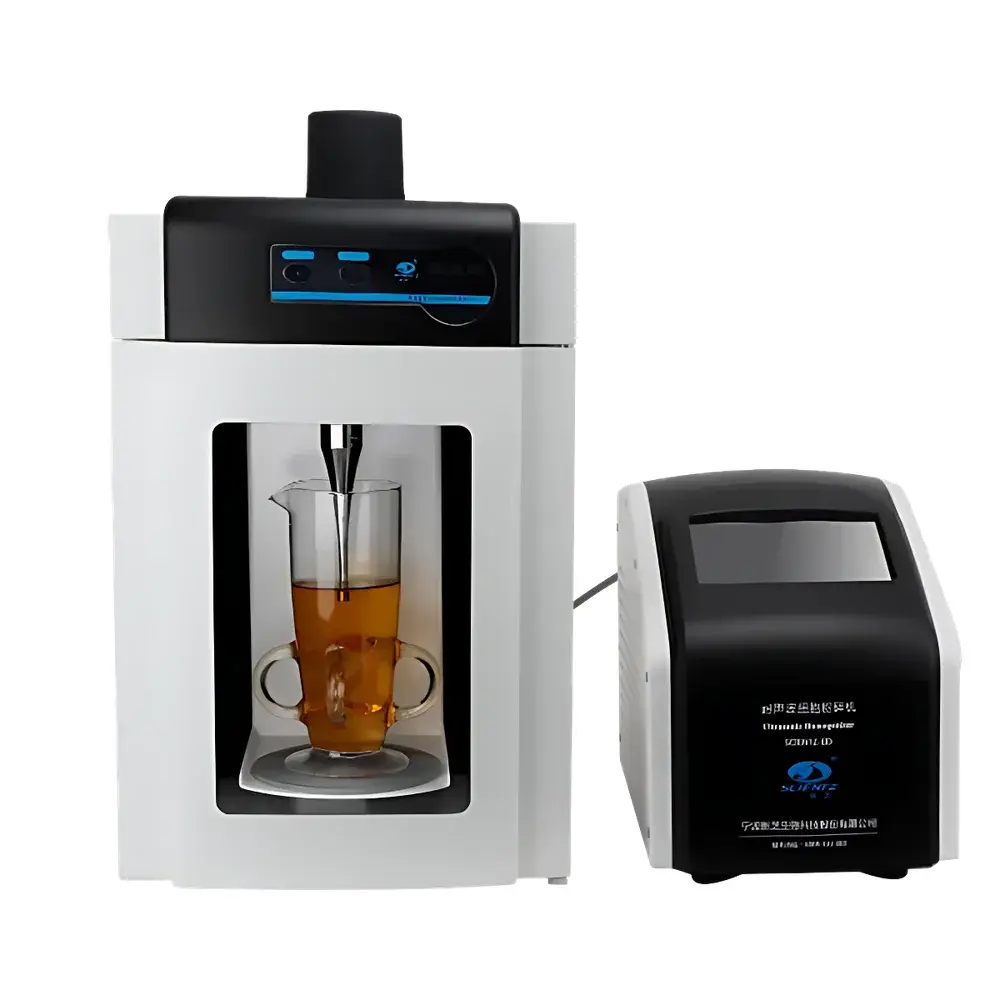
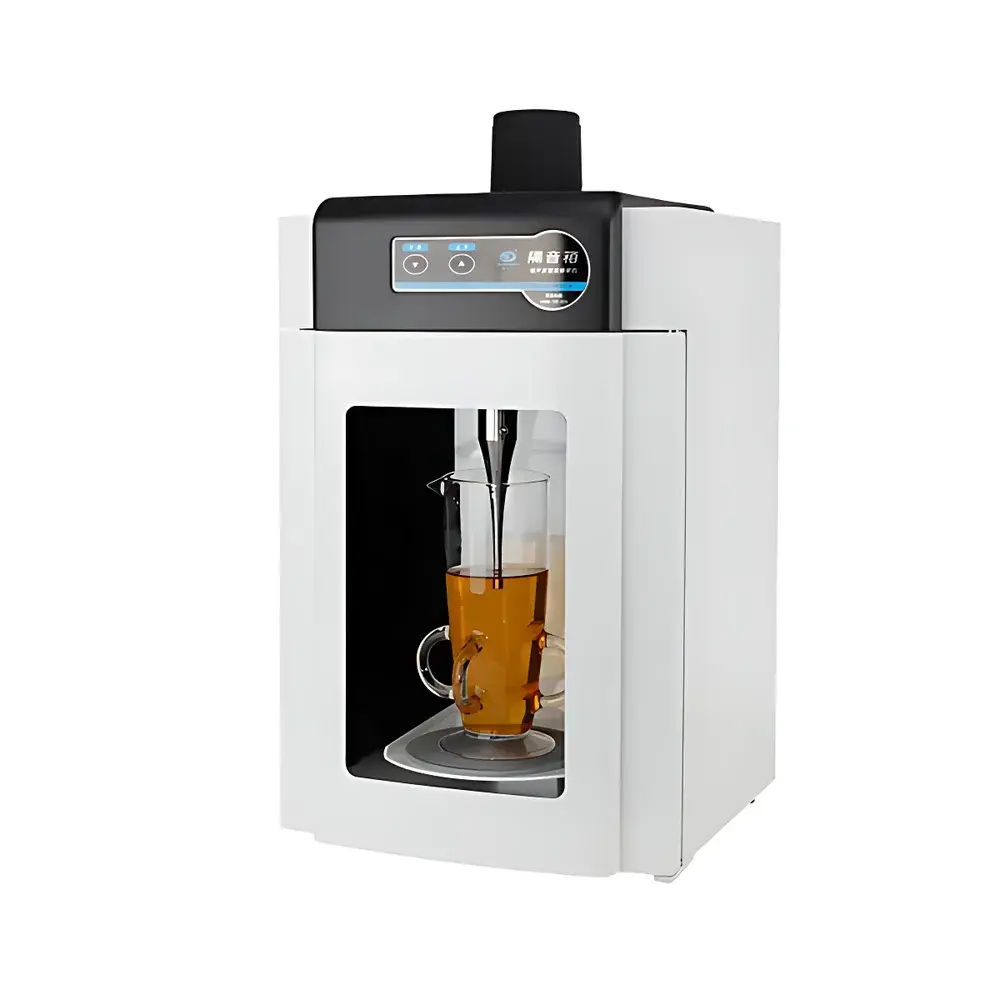
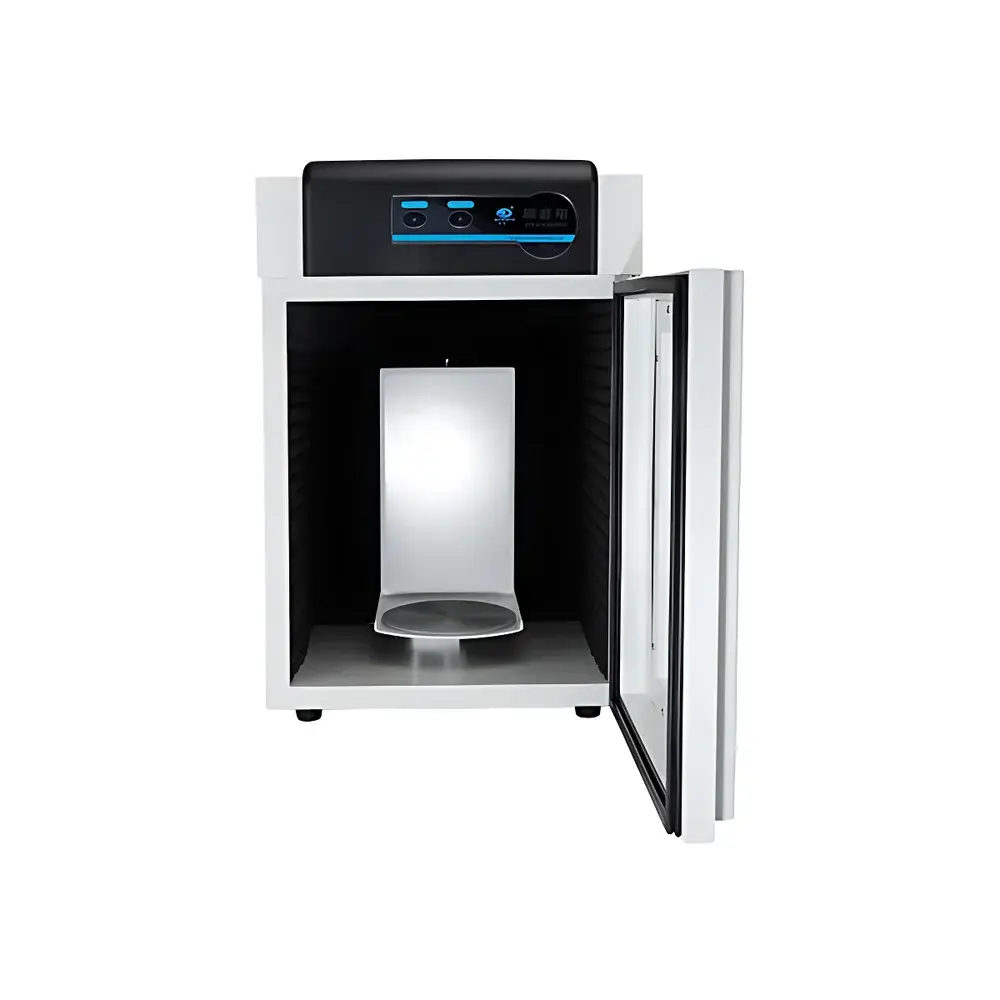
Scientz JY96-IIN Ultrasonic Cell Disruptor
| Brand | Scientz |
|---|---|
| Origin | Zhejiang, China |
| Manufacturer Type | Direct Manufacturer |
| Instrument Type | Ultrasonic Cell Disruptor |
| Ultrasonic Power | 150 W |
| Operating Frequency | 20–25 kHz |
| Temperature Control Range | 0–99.9 °C |
| Sample Volume Capacity | 10–100 mL |
| Sample Throughput | Single-sample processing |
| Compliance | CE-marked design |
Overview
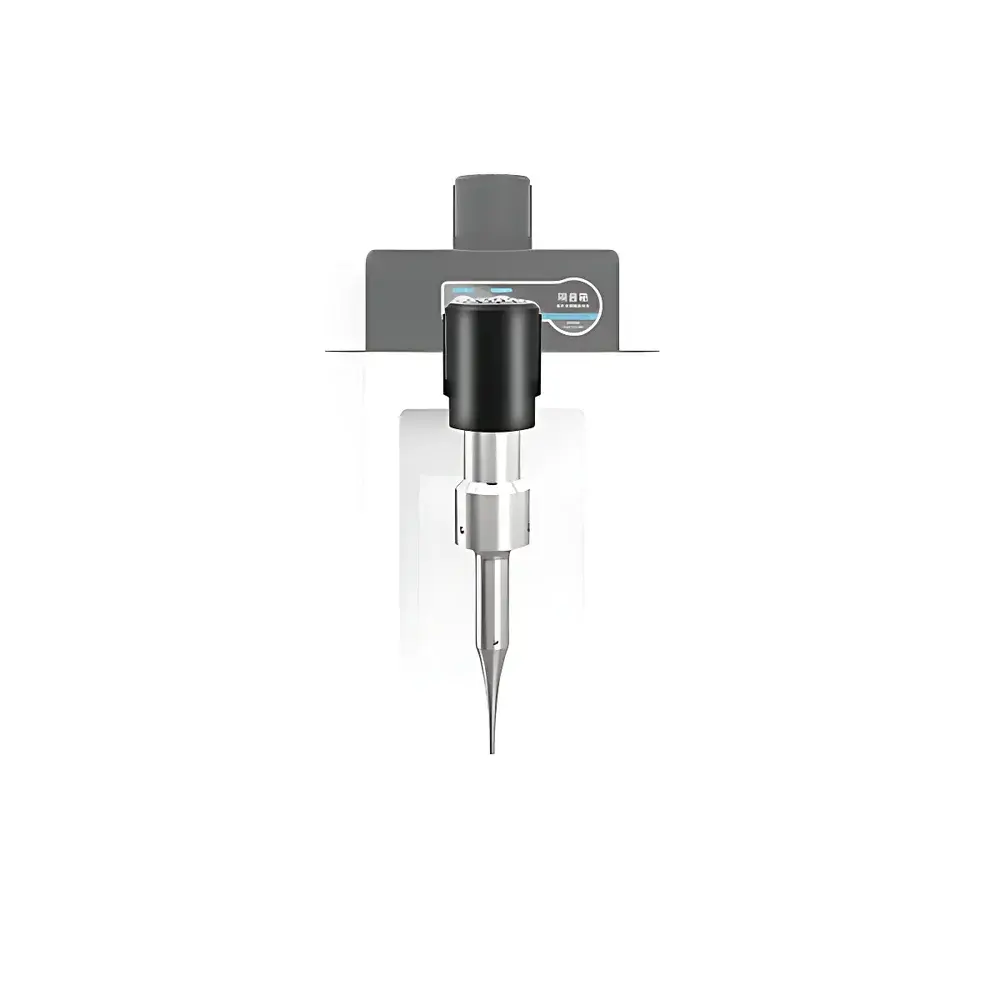
The Scientz JY96-IIN Ultrasonic Cell Disruptor is an engineered benchtop system designed for controlled mechanical lysis of biological materials via high-intensity ultrasonic cavitation. It operates on the physical principle of acoustic cavitation—where rapid pressure fluctuations generated by 20–25 kHz ultrasonic waves induce transient microbubble formation, growth, and violent collapse within a liquid medium. This implosive event produces localized shockwaves, microstreaming, and shear forces exceeding 10⁴ Pa, sufficient to disrupt cell membranes, organelles, and microbial envelopes without significant thermal denaturation when temperature is actively regulated. Unlike rotor-stator or bead-beating methods, this non-contact, solution-phase technique preserves macromolecular integrity—particularly critical for downstream applications such as chromatin immunoprecipitation (ChIP), RNA-seq library preparation, and native protein extraction. The instrument integrates a titanium alloy transducer and horn assembly, selected for its high electromechanical coupling efficiency (>92%), corrosion resistance in aqueous and mildly acidic/alkaline buffers, and fatigue resistance under sustained duty cycles.
Key Features
- 150 W adjustable ultrasonic output power with fine-resolution digital control (1 W increments), enabling reproducible energy delivery across diverse sample viscosities and densities.
- Precise temperature regulation from 0 to 99.9 °C using integrated Peltier-based cooling/heating and real-time PT100 sensor feedback—critical for heat-sensitive targets including membrane proteins and enzymatic complexes.
- Dual operating modes: continuous emission and programmable pulse mode (on/off duration adjustable from 0.1 to 99.9 s), minimizing cumulative thermal load while maintaining lysis efficiency.
- Titanium alloy probe (standard configuration) with optimized tip geometry for uniform energy distribution and reduced tip erosion during extended operation.
- Microprocessor-controlled timer with auto-shutdown and safety interlocks for over-temperature, over-current, and over-time conditions—fully compliant with IEC 61010-1 safety standards.
- 20-user-programmable protocols stored in non-volatile memory, supporting method transfer between instruments and audit-ready parameter logging.
Sample Compatibility & Compliance
The JY96-IIN accommodates volumes from 10 to 100 mL in standard cylindrical vessels (e.g., 15–50 mL conical tubes or jacketed beakers). It effectively processes mammalian cells (HEK293, CHO), bacterial cultures (E. coli, B. subtilis), yeast, plant tissues, and viral lysates. For ChIP-grade DNA fragmentation, the instrument supports indirect (bath-style) sonication protocols when used with optional rack adapters—ensuring minimal cross-contamination and adherence to EN ISO 15190:2022 laboratory safety requirements. All electronic controls meet EMC Directive 2014/30/EU, and firmware architecture supports traceable parameter recording aligned with FDA 21 CFR Part 11 principles (when paired with validated LIMS integration).
Software & Data Management
While the JY96-IIN operates via an embedded LCD interface, its RS-232 port enables bidirectional communication with external PCs running custom LabVIEW or Python-based automation scripts. Parameter logs—including actual power delivered (W), real-time temperature (°C), elapsed time (s), and cycle count—are timestamped and exportable as CSV files. Audit trails include operator ID (via optional USB keyboard input), protocol name, start/stop timestamps, and deviation alerts (e.g., temperature excursion > ±0.5 °C). Data retention complies with ISO/IEC 17025:2017 clause 7.5.2 for result reporting integrity.
Applications
- Nuclear extraction and chromatin shearing for epigenetic studies (ChIP-seq, ATAC-seq)
- Preparation of soluble antigen extracts for immunoassay development
- Cellular fractionation workflows requiring intact mitochondria or nuclei
- Dispersion and deagglomeration of nanomaterials (e.g., graphene oxide, metal-organic frameworks) in aqueous suspensions
- Accelerated solvent extraction of phytochemicals from botanical matrices under mild thermal conditions
- Homogenization of environmental samples (soil slurries, sediment cores) for metagenomic DNA isolation
- Controlled liposome disruption and reconstitution studies in pharmaceutical formulation R&D
FAQ
What is the maximum recommended sample volume for optimal cavitation efficiency?
For consistent energy distribution and minimal standing-wave interference, the manufacturer specifies 10–100 mL in vessels with aspect ratios ≥ 2:1 (height:diameter); volumes below 20 mL require reduced amplitude settings to prevent probe overheating.
Can the JY96-IIN be used for cryogenic sonication?
No—it lacks integrated cryo-cooling capability; however, pre-chilled samples and external ice-water baths are compatible within the 0–99.9 °C operational envelope.
Is the titanium horn autoclavable?
Yes—the Grade 5 (Ti-6Al-4V) horn is sterilizable via steam autoclaving (121 °C, 20 min), though repeated cycles may accelerate surface oxidation; routine cleaning with 70% ethanol is recommended between uses.
Does the device support remote monitoring via Ethernet or Wi-Fi?
No—only RS-232 serial connectivity is provided; network-enabled variants (e.g., JY96-IIN-Net) require separate quotation and firmware validation for GxP environments.




