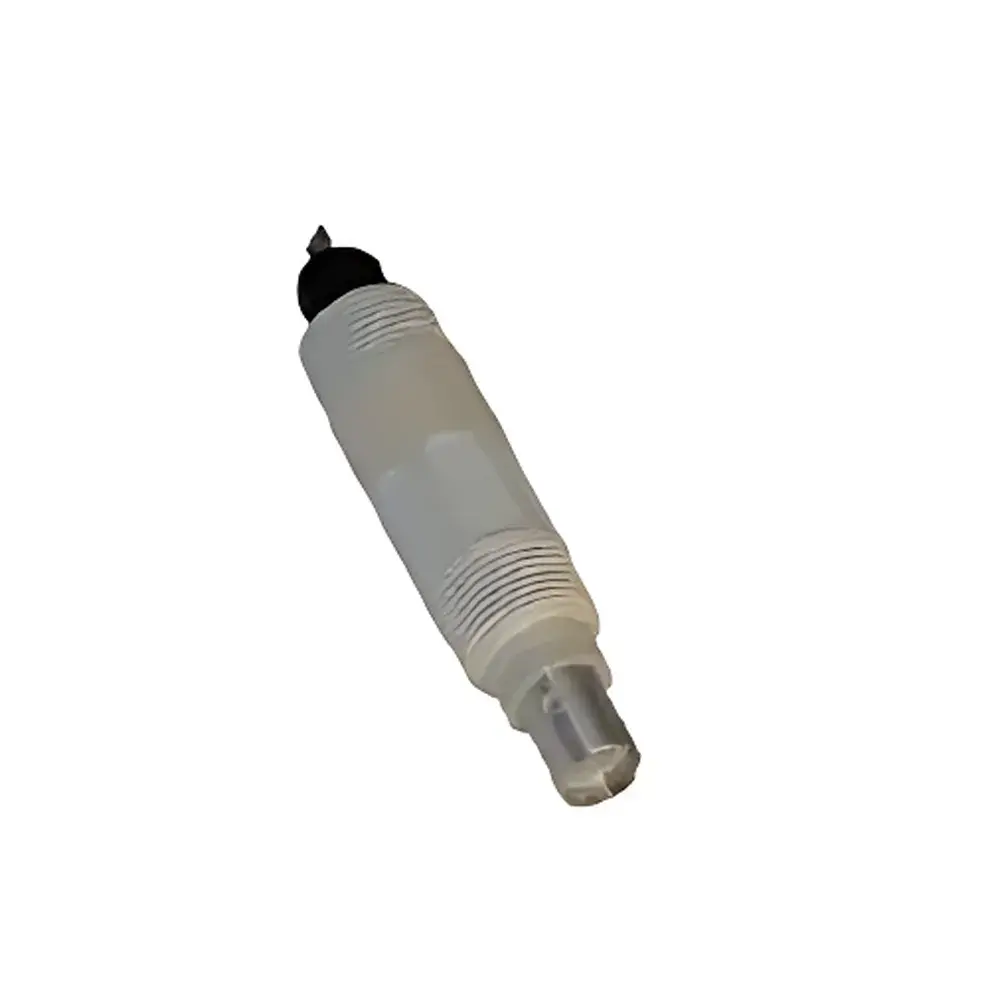
AnalogPlus Differential pH/ORP Electrode by Thermo Fisher Scientific
| Brand | Thermo Fisher |
|---|---|
| Origin | USA |
| Manufacturer | Thermo Fisher Scientific |
| Product Type | Imported Industrial Online pH/ORP Sensor |
| Model | AnalogPlus pH/ORP |
| Pricing | Upon Request |
Overview
The AnalogPlus Differential pH/ORP Electrode is an industrial-grade, three-electrode potentiometric sensor engineered for high-stability, long-term online monitoring of hydrogen ion activity (pH) and oxidation-reduction potential (ORP) in demanding process environments. Unlike conventional two-electrode configurations, this electrode implements a true differential measurement architecture—comprising a measuring electrode, a reference electrode, and a dedicated guard (or shield) electrode—that actively compensates for liquid junction potential drift, capacitive coupling interference, and ground-loop noise. This design eliminates common-mode voltage errors induced by stray currents, pipeline potentials, or variable conductivity media, thereby delivering superior baseline stability and measurement reproducibility under fluctuating process conditions. The electrode operates on the Nernst principle for pH (−59.16 mV/pH at 25 °C) and mixed-potential theory for ORP, with inherent immunity to electromagnetic interference (EMI) and electrochemical polarization effects typical in conductive or aerated wastewater streams.
Key Features
- Differential three-electrode configuration with active guard electrode to suppress junction potential drift and eliminate capacitive coupling artifacts
- Modular, field-replaceable salt bridge assembly—enabling maintenance without full sensor replacement and extending service life in aggressive media (e.g., sulfide-rich wastewater, chlorinated effluents)
- Refillable electrolyte reservoir with low-resistance, high-stability KCl-based gel or liquid electrolyte compatible with ISO 8466-1 and ASTM D1293 compliance protocols
- Integrated temperature sensing options: NTC300 (3000 Ω at 25 °C) or PT1000 (1000 Ω at 0 °C), calibrated per IEC 60751, supporting automatic temperature compensation (ATC) in accordance with USP and ISO 3696 Grade 2 water specifications
- Chemically resistant housing materials—including PPS (polyphenylsulfone), Ryton®, and Hastelloy C-22—certified for use in FDA-regulated pharmaceutical clean-in-place (CIP) and steam-in-place (SIP) cycles
- Optional ruggedized mechanical protection: stainless steel armored sleeve (316L SS) or ceramic abrasion shield for slurry, pulp, or high-velocity flow applications
Sample Compatibility & Compliance
The AnalogPlus electrode demonstrates robust performance across heterogeneous aqueous matrices, including municipal and industrial wastewater (COD > 500 mg/L), biopharmaceutical fermentation broths, hydrocarbon-contaminated cooling water, food-grade acid/alkali cleaning solutions (pH 0–14), and ultrapure water systems (resistivity ≥ 18.2 MΩ·cm). It complies with key international standards for process analytical technology (PAT), including ASTM D1293 (pH of water), ASTM D3223 (ORP of water), ISO 10523 (water quality—pH determination), and meets functional safety requirements per IEC 61508 SIL 2 for integration into safety instrumented systems (SIS). All wetted parts conform to USP Class VI biocompatibility testing and 3-A Sanitary Standards for dairy and beverage processing.
Software & Data Management
Designed for seamless integration with Thermo Fisher’s Orion Star™ T Series transmitters and third-party DCS/SCADA platforms (via 4–20 mA HART® v7 or Modbus RTU), the electrode supports audit-trail-enabled calibration logging compliant with FDA 21 CFR Part 11 and EU Annex 11. Calibration data—including slope, offset, response time (t90), and temperature coefficient—are timestamped, user-identified, and exportable in CSV or PDF formats. Firmware-upgradable transmitter firmware enables automated diagnostic routines (e.g., reference electrode impedance monitoring, junction resistance trending) aligned with ISA-84.01 and GAMP 5 validation frameworks.
Applications
- Real-time pH/ORP control in activated sludge basins, anaerobic digesters, and tertiary denitrification reactors
- In-line monitoring of buffer titration endpoints during bioreactor pH-stat feeding in monoclonal antibody manufacturing
- Corrosion potential tracking in refinery sour water strippers and amine gas treating units
- Sanitization cycle verification in CIP systems for breweries and aseptic filling lines
- High-purity steam condensate monitoring in semiconductor fab UPW distribution networks
- Electroplating bath redox control for chromium and nickel deposition processes
FAQ
What distinguishes the AnalogPlus differential design from conventional pH electrodes?
It employs a three-electrode architecture with a dedicated guard electrode that actively nullifies common-mode interference—significantly reducing drift caused by reference electrode contamination, ground loops, and dielectric charging effects.
Can the salt bridge be replaced in-situ without removing the electrode from the process?
Yes—the modular salt bridge cartridge is accessible via a top-service port, enabling field replacement under pressure up to 10 bar (145 psi) without process shutdown.
Is the electrode suitable for sterilizable applications in pharmaceutical manufacturing?
Absolutely—models with PPS housing and integrated PT1000 meet ASME BPE 2023 surface finish (Ra ≤ 0.4 µm) and withstand repeated SIP cycles at 121 °C for 30 minutes.
Does it support dual-parameter output (pH + ORP) simultaneously?
No—each AnalogPlus sensor is configured exclusively for either pH or ORP measurement; however, co-located installation with matched thermal compensation ensures synchronized process insight.
What is the recommended calibration frequency in continuous operation?
Per ASTM D1293 guidance, daily single-point verification is advised for critical applications; full two-point calibration every 7–14 days depending on process fouling rate and regulatory classification (e.g., GMP vs. non-GMP).