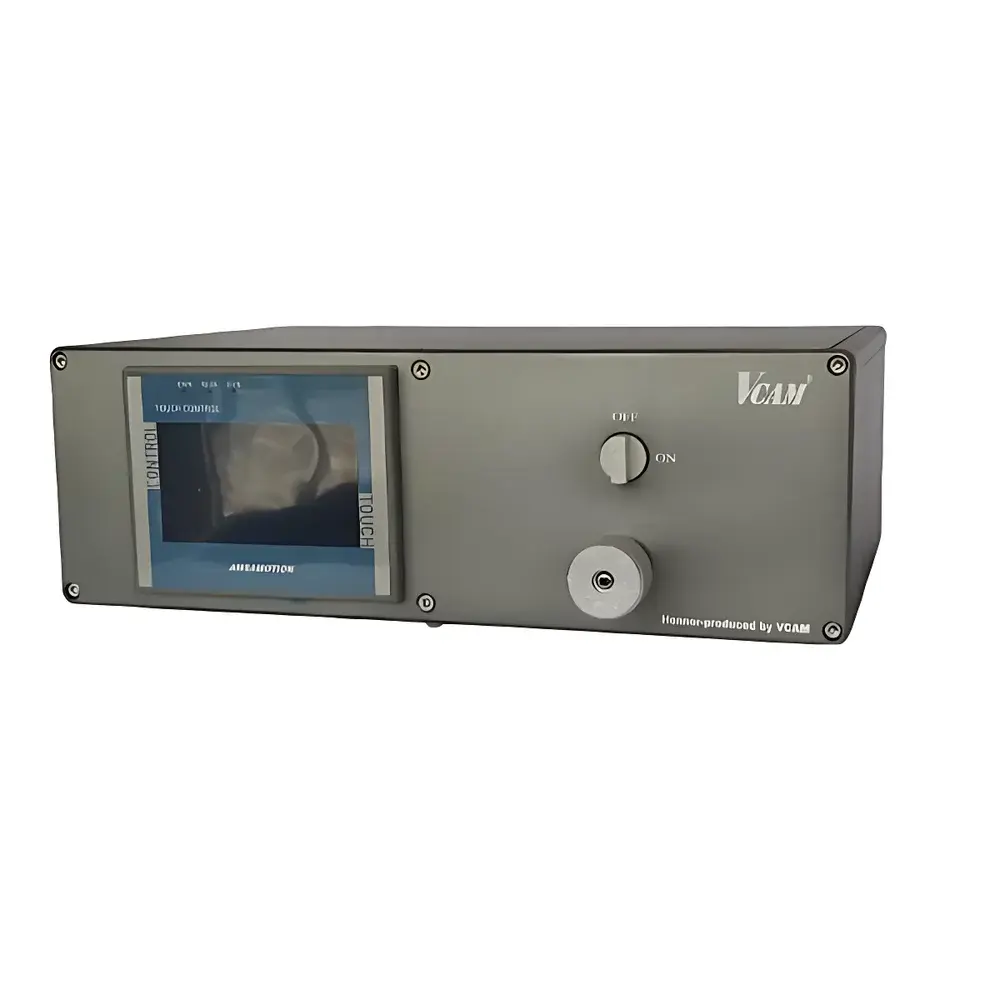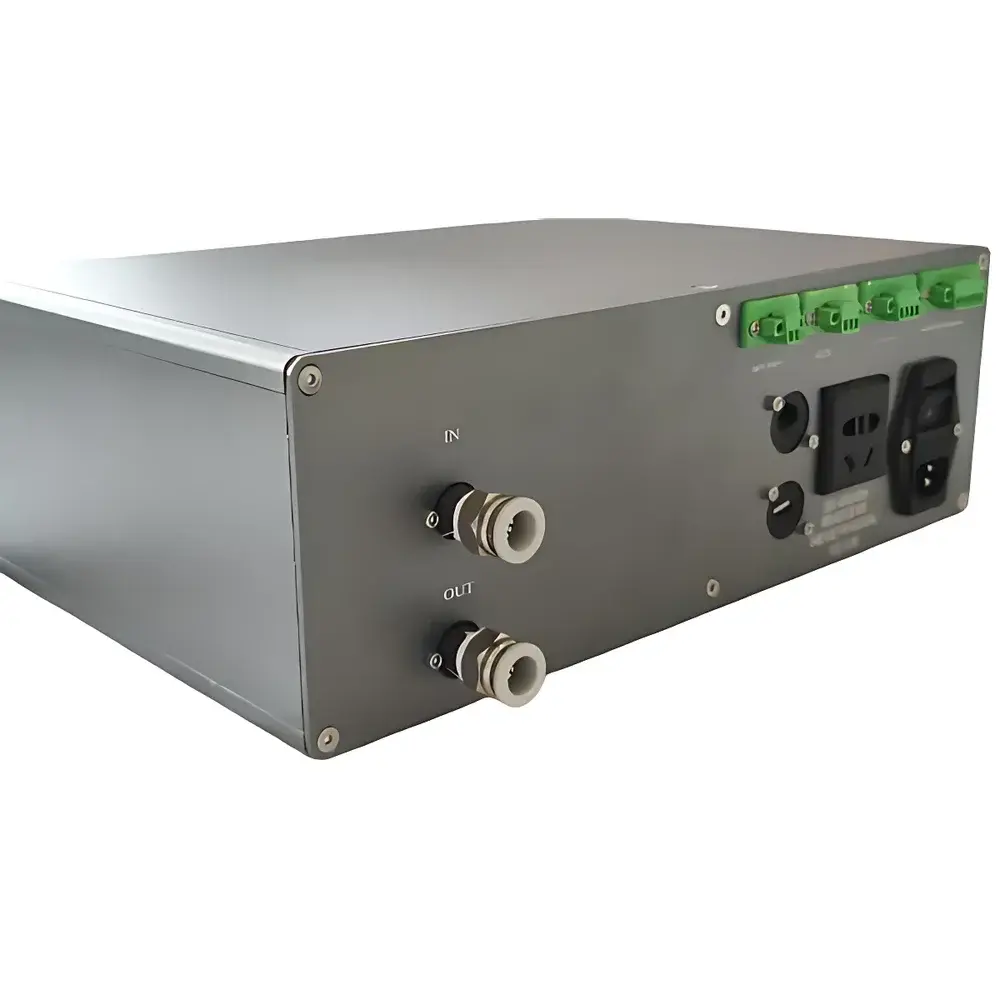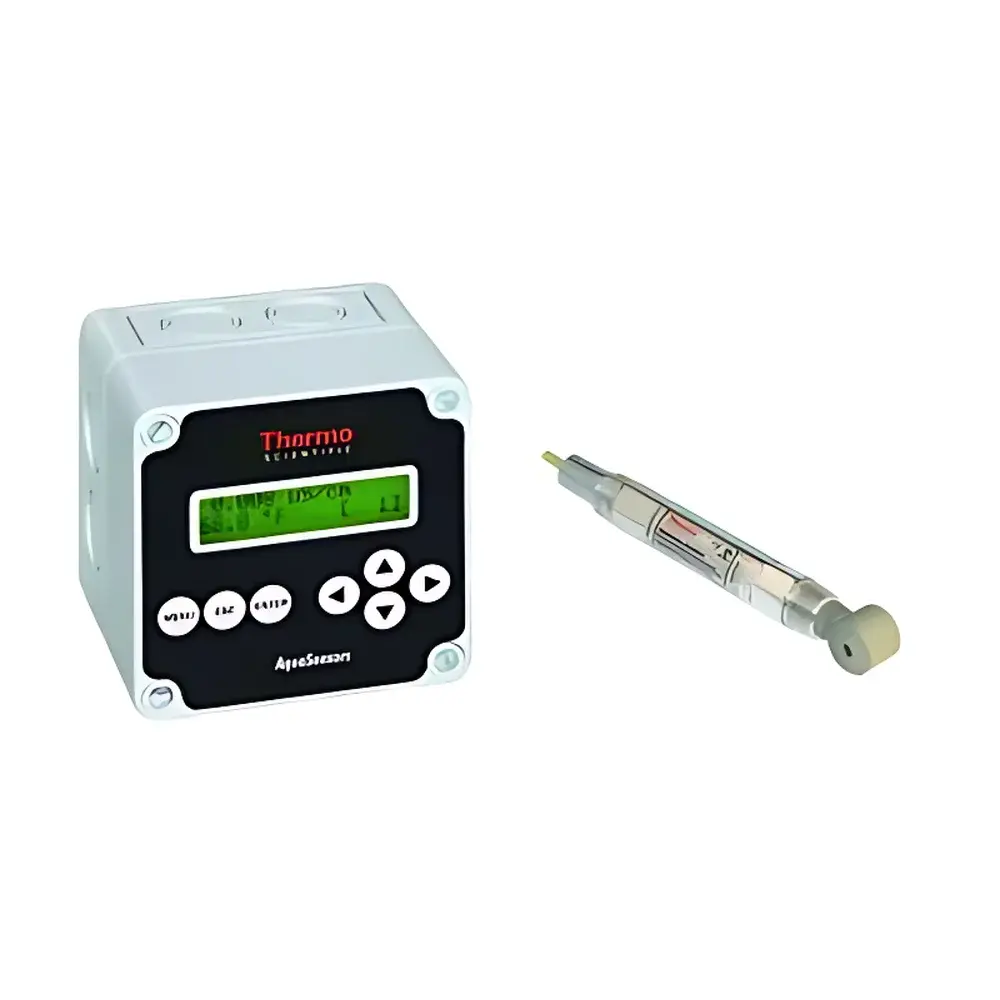
Thermo Fisher AquaSensors Online Conductivity Analyzer
| Brand | Thermo Fisher |
|---|---|
| Origin | USA |
| Manufacturer Type | Original Equipment Manufacturer (OEM) |
| Product Origin | Imported |
| Model | AquaSensors |
| Pricing | Available Upon Request |
| Measurement Principle | Inductive (Toroidal) Conductivity Sensing |
| Range | 0–2,000,000 µS/cm (0–2 S/cm) |
| Resolution | 5-digit display |
| Accuracy | ±0.1% of reading |
| Response Time | t₉₀ ≤ 30 s |
| Units | µS/cm, mS/cm, S/cm, TDS (ppm), % concentration |
| Temperature Range | –5 to 95 °C (PEEK® electrode) |
| Max Pressure | 200 PSIG (13.8 bar) @ 95 °C / 85 PSIG (5.9 bar) @ 75 °C |
| Max Flow Rate | 300 cm/s |
| Electrode Materials | PEEK® or CPVC |
| Body Materials | PEEK or CPVC |
| Temperature Compensation | Automatic, pre-calibrated, high-accuracy NTC/RTD-based |
| Fouling Resistance | Immune to electrode polarization, oil fouling, and extreme pH (strong acid/alkali) environments |
| Calibration | Factory pre-calibrated for conductivity and temperature |
Overview
The Thermo Fisher AquaSensors Online Conductivity Analyzer is an inductive (toroidal) conductivity measurement system engineered for continuous, high-reliability operation in demanding industrial process environments. Unlike contacting conductivity sensors—whose electrodes are prone to coating, corrosion, polarization, and drift—the AquaSensors employs a non-invasive toroidal sensing principle: a primary coil energized with alternating current induces eddy currents in the conductive medium flowing through the sensor body; a secondary coil detects the magnitude of this induced current, which is directly proportional to the solution’s conductivity. This galvanically isolated architecture eliminates direct electrode–medium contact, ensuring stable performance across aggressive chemistries—including concentrated acids (e.g., H₂SO₄, HCl), caustic solutions (e.g., NaOH, KOH), brines, and hydrocarbon-contaminated streams—where traditional electrode-based analyzers fail.
Key Features
- Toroidal (inductive) sensing technology: No electrode polarization, no surface fouling, no electrolyte leakage risk—ideal for wastewater, chemical dosing, CIP/SIP validation, and semiconductor ultrapure water recirculation loops.
- Wide dynamic range: Seamless measurement from ultra-pure water (0 µS/cm) up to saturated brine or molten salt simulants (2 S/cm), eliminating the need for range-switching or multiple sensor installations.
- High-resolution digital output: 5-digit display resolution with ±0.1% of reading accuracy—traceable to NIST-traceable conductivity standards and compliant with ASTM D1125 and ISO 7888 requirements for conductivity calibration verification.
- Integrated dual-parameter compensation: Factory-matched, NTC or Pt1000-based temperature sensor embedded within the flow cell enables real-time, algorithmic temperature compensation per IEC 60746-3, minimizing thermal lag and improving long-term stability.
- Chemically inert wetted materials: Selectable PEEK® (polyether ether ketone) or CPVC (chlorinated polyvinyl chloride) construction ensures compatibility with oxidizing agents, halogens, and high-temperature process streams up to 95 °C at 13.8 bar.
- Plug-and-play sensor interface: Digital HART® or Modbus RTU/ASCII output with auto-configuration support; no manual zero/span adjustment required during commissioning or replacement.
Sample Compatibility & Compliance
The AquaSensors is validated for use with aqueous and semi-aqueous media exhibiting electrical conductivity between 0.001 µS/cm and 2 S/cm—covering applications from pharmaceutical purified water (PW/UPW) monitoring per USP and EP 2.2.36, to industrial boiler feedwater, desalination reject streams, and electroplating bath control. Its toroidal design inherently complies with intrinsic safety requirements for Zone 1/21 hazardous locations when paired with approved barriers. The analyzer meets CE marking directives (EMC 2014/30/EU, LVD 2014/35/EU), RoHS 2011/65/EU, and carries ATEX II 2G Ex db IIB T4 Gb certification (optional). For regulated industries, audit-ready data logging supports 21 CFR Part 11-compliant electronic records when integrated with Thermo Fisher’s Orion Star™ SCADA-compatible software suite.
Software & Data Management
Configuration, diagnostics, and historical trending are managed via Thermo Fisher’s Orion StarCom™ desktop application or cloud-enabled Orion Connect™ platform. Both tools provide full access to raw sensor outputs, temperature-compensated conductivity values, diagnostic flags (e.g., flow alarm, temperature out-of-range, signal noise detection), and calibration history logs with user ID, timestamp, and reference standard traceability. Data export supports CSV, PDF report generation, and OPC UA integration for MES/DCS synchronization. Firmware updates are delivered over secure HTTPS with SHA-256 signature verification—ensuring integrity and compliance with IEC 62443-3-3 cybersecurity requirements for industrial control systems.
Applications
- Real-time monitoring of acid/alkali concentration in chemical manufacturing (e.g., HNO₃, H₂SO₄, NaOH titration control)
- Conductivity surveillance in pharmaceutical water-for-injection (WFI) and pure steam distribution systems
- Leak detection in double-tube heat exchangers via conductivity spike analysis
- Desalination plant pretreatment and post-reverse-osmosis quality assurance
- Electrolyte concentration control in battery material synthesis (LiCoO₂, Ni-rich cathodes)
- Continuous verification of cleaning-in-place (CIP) rinse endpoints in food & beverage and biopharma facilities
FAQ
How does the toroidal design prevent fouling in high-solids or oily streams?
The absence of exposed electrodes eliminates surface deposition mechanisms; conductivity is measured volumetrically via magnetic induction, making it insensitive to particulate buildup, biofilm, or hydrocarbon film formation.
Is temperature compensation performed automatically—and is it configurable?
Yes: temperature is measured via a co-located, factory-matched sensor and compensated using the nonlinear Cauchy equation per IEC 60746-3; coefficients are user-adjustable for non-standard electrolytes (e.g., KCl, NaCl, H₂SO₄).
Can the AquaSensors be validated per IQ/OQ protocols for GMP environments?
Yes: Thermo Fisher provides vendor-qualified IQ/OQ documentation packages, including as-found/as-left calibration reports, material certifications (3.1), and FAT/SAT test scripts aligned with ASTM E2500 and Annex 15.
What flow velocity range ensures optimal measurement stability?
Stable readings are maintained at flow rates from 0.1 m/s to 3 m/s (300 cm/s); below 0.1 m/s, optional flow switches or low-flow compensation algorithms may be enabled.
Does the analyzer support redundant sensor inputs or analog backup outputs?
Standard configuration includes one toroidal sensor input with 4–20 mA + HART®; optional dual-sensor redundancy (main + standby) and isolated 0–10 V analog backup are available under custom firmware build.