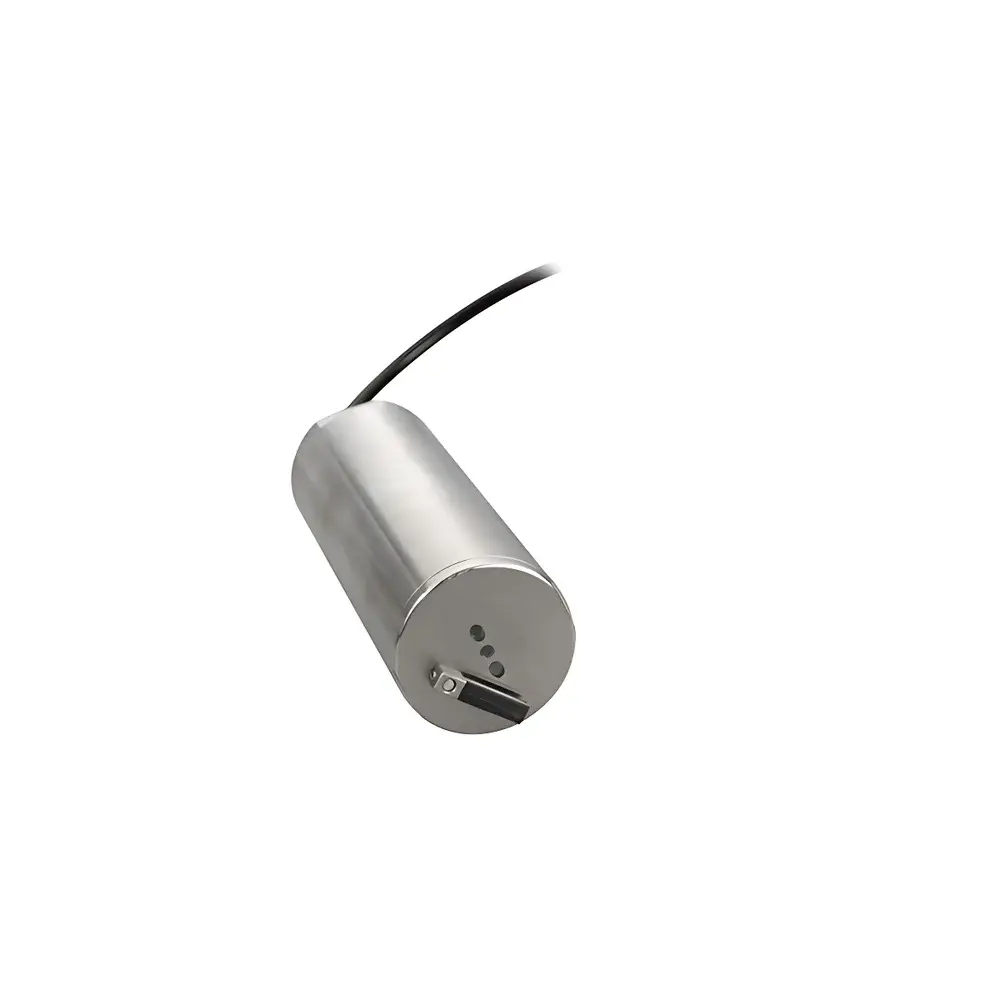
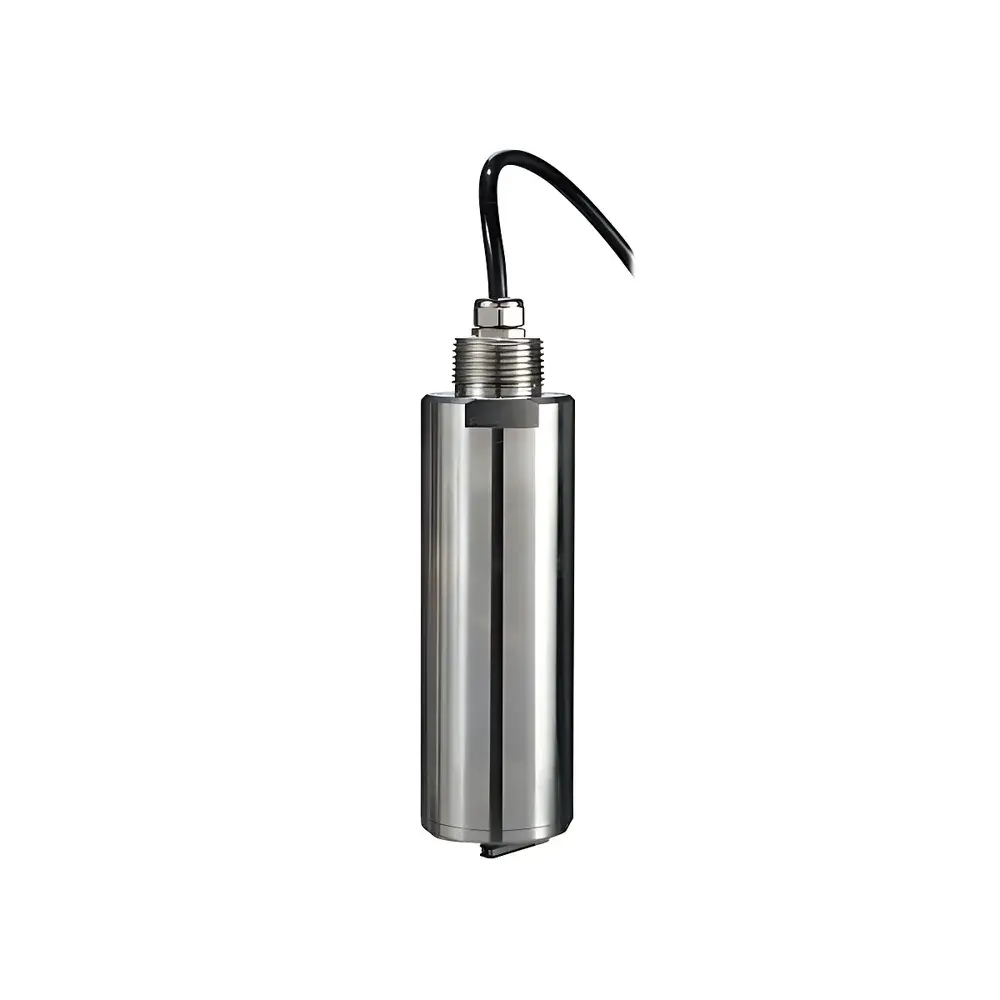
Thermo Scientific Orion CFSS12 Turbidity & Suspended Solids Dual-Parameter Sensor
| Brand | Thermo Fisher |
|---|---|
| Origin | Jiangsu, China |
| Manufacturer Type | Manufacturer |
| Origin Category | Domestic |
| Model | CFSS12 |
| Pricing | Upon Request |
Overview
The Thermo Scientific Orion CFSS12 is a digital, dual-parameter in-line sensor engineered for continuous, high-stability measurement of turbidity and suspended solids (SS) in industrial process and environmental water applications. It operates on the principle of combined infrared (IR) absorption and scattering photometry—fully compliant with ISO 7027:2016, which specifies the use of an 860 nm ± 30 nm near-infrared light source and a 90° scatter detection geometry. This optical architecture eliminates interference from sample coloration, chromophores, and dissolved organic matter—critical for accurate measurements in colored wastewater, surface water, or treated effluent where traditional white-light turbidimeters suffer spectral bias. The sensor employs a dual-beam optical design: one beam measures scattered intensity (turbidity), while the second quantifies transmitted IR intensity (absorption), enabling simultaneous calculation of both turbidity (NTU or FNU) and suspended solids concentration (mg/L or g/L) via factory-calibrated, application-specific algorithms. Its robust stainless steel housing (IP68 rated) and sapphire optical window ensure long-term mechanical integrity and optical stability under abrasive or scaling conditions.
Key Features
- Dual-parameter output: Simultaneous real-time measurement of turbidity and suspended solids concentration
- ISO 7027-compliant infrared scatter photometry (860 nm LED) with 90° detection geometry
- Sapphire optical window—Vickers hardness >2000 HV—resistant to scratching, fouling, and chemical erosion
- Integrated automatic cleaning brush system (standard)—reduces maintenance frequency and improves data continuity
- Onboard self-diagnostic routines: continuous monitoring of LED intensity, detector responsivity, window contamination, and thermal drift
- Temperature-compensated optics: active LED drive current adjustment and reference photodiode feedback mitigate thermal drift across 0–50 °C operating range
- Fast response time: T90 ≤ 10 seconds for dynamic process monitoring
- Multi-point calibration support: up to 7-point turbidity and SS calibration using traceable standards (e.g., Formazin, AMCO AEPA, or site-specific slurries)
- Digital RS-485 Modbus RTU output—noise-immune transmission over distances up to 1,000 m without signal degradation
Sample Compatibility & Compliance
The CFSS12 is validated for use in municipal drinking water distribution systems, wastewater treatment plants (primary/secondary/tertiary stages), industrial process streams (e.g., pulp & paper, food & beverage, pharmaceutical cooling loops), and groundwater monitoring wells. It meets the optical performance requirements of ISO 7027 and supports compliance with regulatory frameworks including EPA Method 180.1 (turbidity), ASTM D6695 (suspended solids estimation), and EU Drinking Water Directive (2020/2184) Annex I parameters. Its digital architecture supports audit-trail-capable data logging when integrated with compatible Thermo Scientific Orion controllers (e.g., AQ4500, 4-Star Plus) configured for GLP/GMP environments per FDA 21 CFR Part 11 requirements.
Software & Data Management
The sensor interfaces natively with Thermo Scientific Orion Process Analytics software suite and third-party SCADA/DCS platforms via Modbus RTU. Configuration, calibration history, diagnostic logs, and real-time trend visualization are accessible through web-based dashboards or local HMI terminals. All calibration events—including date, operator ID, standard values used, and residual error—are timestamped and stored onboard with non-volatile memory retention (>10 years). Firmware updates are performed remotely via secure OTA protocols, ensuring alignment with evolving metrological best practices and cybersecurity standards (IEC 62443-3-3 Level 1).
Applications
- Real-time turbidity control in rapid sand filtration and membrane bioreactor (MBR) effluent lines
- Sludge blanket level estimation in clarifiers via suspended solids gradient profiling
- Process optimization in activated sludge systems—correlating SS trends with MLSS and F/M ratios
- Early warning detection of filter breakthrough or coagulant dosing failure
- Compliance reporting for discharge permits (e.g., NPDES) requiring continuous turbidity/SS monitoring
- Groundwater remediation monitoring—tracking colloidal iron or clay mobilization during pump-and-treat operations
FAQ
Does the CFSS12 require periodic lamp replacement?
No—the 860 nm infrared LED has a rated lifetime exceeding 100,000 hours (>11 years at continuous operation) and is thermally stabilized to maintain consistent output intensity.
Can it be calibrated using user-prepared standards?
Yes—up to seven custom calibration points may be entered using NIST-traceable Formazin, AMCO AEPA, or site-specific suspended solids reference suspensions.
Is the automatic cleaning brush compatible with aggressive chemical cleaning agents?
The brush mechanism is constructed from PEEK and PTFE components and is rated for intermittent exposure to low-concentration sodium hypochlorite (≤200 ppm) and citric acid (≤5% w/w) solutions.
What is the minimum detectable turbidity level?
The sensor achieves a lower limit of quantification (LLOQ) of 0.05 NTU in clean water matrices, with a full scale range of 0–4000 NTU and 0–20 g/L SS.
How does the sensor handle air bubbles or foam in the sample stream?
The dual-beam ratio metric and high-frequency signal averaging (10 Hz sampling) minimize transient artifacts; optional flow cell mounting with bubble trap integration is recommended for aerated or foaming applications.
Related Products