
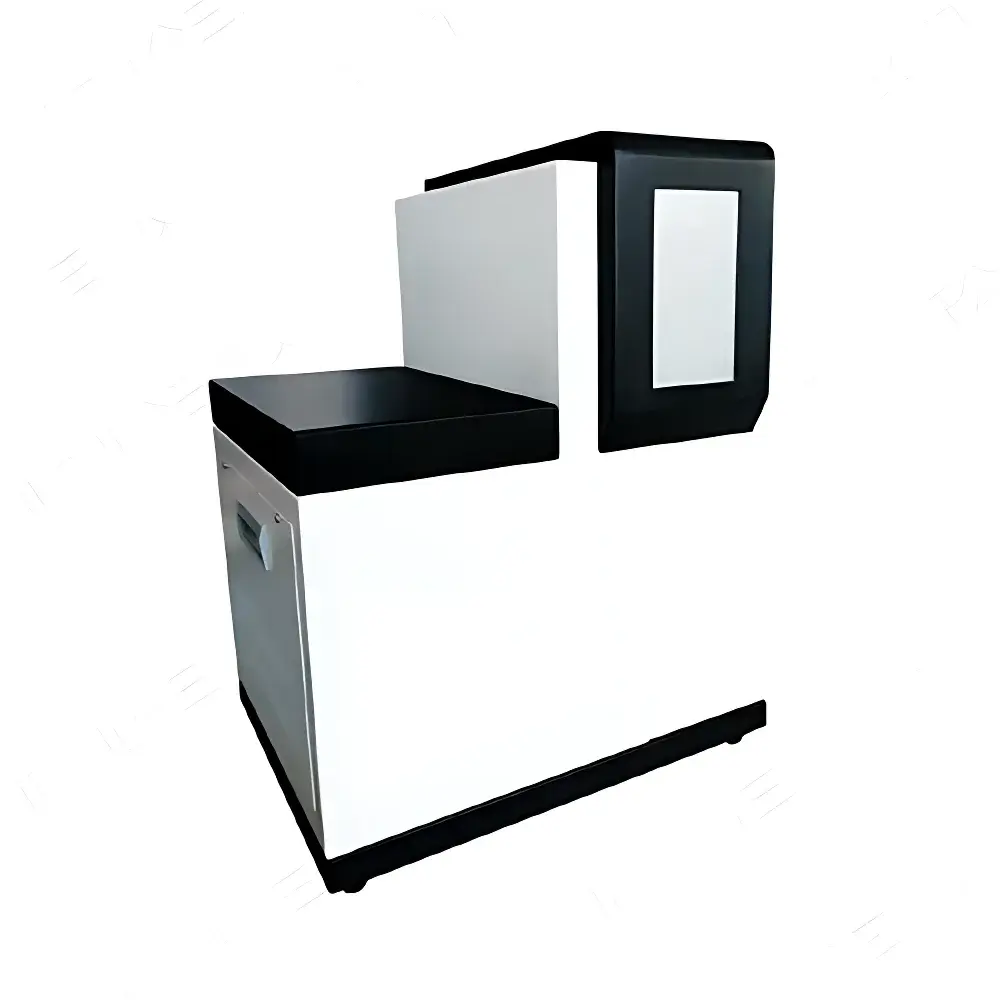
Beifen Sanpu ATDS-20A Fully Automated Ambient-Temperature Two-Stage Thermal Desorber
| Brand | Beifen Sanpu |
|---|---|
| Origin | Hebei, China |
| Manufacturer Type | OEM Manufacturer |
| Instrument Type | Two-Stage Thermal Desorber / Thermal Desorption Unit |
| Desorption Temperature Range | Ambient to 450 °C |
| Cold Trap Temperature Range | −35 °C to Ambient |
| Desorption Recovery Rate | >99% |
| Sample Positions | 20 |
| Temperature Control Precision | < ±0.5 °C |
| RSD | ≤2.5% (for 0.05 μg benzene in methanol) |
| Repeatability | High reproducibility across sequential runs |
| Compliance | Designed for ASTM D6196, ISO 16017-1, US EPA TO-17, HJ 644–2013, HJ 583–2010, HJ 734–2014, GB/T 18883–2002, GB 50325–2010 |
Overview
The Beifen Sanpu ATDS-20A is a fully automated, ambient-temperature two-stage thermal desorption system engineered for high-fidelity volatile organic compound (VOC) and semi-volatile organic compound (SVOC) analysis in environmental, occupational health, and indoor air quality laboratories. It operates on the principle of quantitative thermal desorption—where analytes pre-concentrated on sorbent tubes (e.g., Tenax TA, Carbopack B/C, or multi-bed configurations) are sequentially released via controlled heating, cryogenically focused in a low-temperature trap, and then rapidly injected into a gas chromatograph (GC) or GC–MS system as a narrow, solvent-free band. Unlike static headspace or purge-and-trap techniques, thermal desorption delivers superior sensitivity (sub-pg level detection), minimal matrix interference, and compatibility with standardized sorbent tube sampling protocols required by regulatory methods including US EPA TO-17, ISO 16017-1, and China’s HJ 644–2013 and HJ 734–2014.
Key Features
- Fully automated 20-position sample carousel with motorized tray indexing and self-calibrating positional alignment—enabling unattended overnight operation without manual intervention.
- Independent four-zone temperature control: primary desorption furnace (ambient–450 °C), secondary desorption zone (ambient–450 °C), valve oven (ambient–300 °C), and transfer line (ambient–300 °C), all adjustable in 1 °C increments and stabilized to ±0.5 °C.
- Integrated electronic Peltier cold trap capable of reaching −35 °C, enabling efficient analyte focusing and sharp, symmetrical peak shapes—even for light VOCs such as formaldehyde, acetaldehyde, and benzene.
- Programmable two-stage desorption sequence: includes primary desorption, cold trap trapping, secondary flash desorption (>3000 °C/min ramp), and precise GC injection timing—all synchronized via embedded microcontroller logic.
- Dual-flow capability: independent, continuously adjustable flows for sample tube purging (0–100 mL/min) and simulated sampling (0–160 mL/min), supporting method development per ISO 16017-2 and US EPA Method TO-17 validation requirements.
- Automatic post-run tube reconditioning cycle—integrated tube activation protocol heats spent tubes under inert gas flow to restore sorbent integrity prior to reuse.
- Valve-driven six-port switching with low-dead-volume design; compatible with all major GC inlet types (split/splitless, PTV, cold-on-column) via standardized 1/4″ OD stainless-steel or optional fused-silica transfer lines.
- Touchscreen HMI with real-time graphical workflow animation, method storage, and audit-ready event logging—including power-on self-test, error flagging, and hardware status monitoring.
Sample Compatibility & Compliance
The ATDS-20A accepts standard 1/4″ × 3.5″ (OD × length) sorbent tubes compliant with ASTM D6196 and US EPA TO-17 specifications. It supports single- and multi-bed sorbents (e.g., Tenax GR + Carbopack B + Carbopack C) for broad volatility coverage (C2–C20). The system meets performance criteria outlined in HJ 644–2013 (ambient air VOCs), HJ 734–2014 (stationary source emissions), GB/T 18883–2002 (indoor air), and GB 50325–2010 (civil building materials). All thermal zones are traceably calibrated; temperature profiles are logged with timestamps for GLP/GMP-aligned data integrity. While not inherently 21 CFR Part 11 compliant, the system supports integration with validated LIMS or chromatography data systems (CDS) that provide electronic signatures, audit trails, and user access controls.
Software & Data Management
Control firmware is embedded and operated via a 7-inch capacitive touchscreen interface. Methods—including temperature ramps, flow rates, valve timings, and GC synchronization triggers—are saved as encrypted .tdm files with version stamping and user ID tagging. Event logs record every hardware state change (e.g., heater activation, valve actuation, cold trap cooldown) with millisecond resolution. Raw method files can be exported via USB for backup or cross-laboratory method transfer. For enterprise integration, RS-232 and Ethernet ports support external triggering from GC start signals or LIMS-based job dispatch. Optional API documentation enables custom script integration (e.g., Python-based batch method deployment).
Applications
- Environmental monitoring: quantification of BTEX, aldehydes, halogenated VOCs, and SVOCs in ambient air, soil vapor, and stack emissions per HJ 583–2010 and HJ 734–2014.
- Indoor air quality (IAQ): compliance testing against GB/T 18883–2002 and ISO 16000-6 for TVOC, formaldehyde, and terpenes in residential/commercial buildings.
- Occupational hygiene: personal and area sampling for OSHA/ACGIH-regulated compounds in manufacturing, printing, and coating facilities.
- Building material emission testing: determination of VOC off-gassing from carpets, adhesives, and composite wood products per GB 50325–2010 Annex E.
- Automotive cabin air analysis: evaluation of interior trim emissions per HJ/T 400–2007 using validated multi-sorbent tubes.
- Method development labs: flexible platform for optimizing desorption parameters, cold trap conditions, and GC interface settings across diverse analyte classes.
FAQ
How does two-stage thermal desorption differ from single-stage desorption?
Two-stage desorption uses an intermediate cryofocusing step to refocus analytes eluting from the primary desorption zone. This eliminates band broadening, improves chromatographic resolution, and enhances detection sensitivity—especially for early-eluting, highly volatile compounds.
Can the ATDS-20A be used with GC–MS systems?
Yes. Its low-dead-volume valve architecture and precise timing synchronization ensure optimal transfer efficiency to both quadrupole and time-of-flight GC–MS platforms without peak distortion or carryover.
What sorbent tubes are supported?
Standard 1/4″ OD × 3.5″ US EPA TO-17-compliant tubes—including single-bed (Tenax TA), dual-bed (Tenax TA + Carbopack B), and triple-bed (Carbopack B/C + Carbosieve SIII) configurations.
Is method validation support available?
The instrument includes built-in calibration verification tools: integrated blank runs, recovery spiking via simulated sampling mode, and RSD assessment using certified reference standards (e.g., benzene in methanol). Full validation documentation templates align with ISO/IEC 17025 requirements.
Does it support remote monitoring or networked operation?
Ethernet connectivity enables remote status viewing and method upload via secure HTTP; however, real-time remote control requires integration with a validated third-party laboratory automation system.
Related Products




