
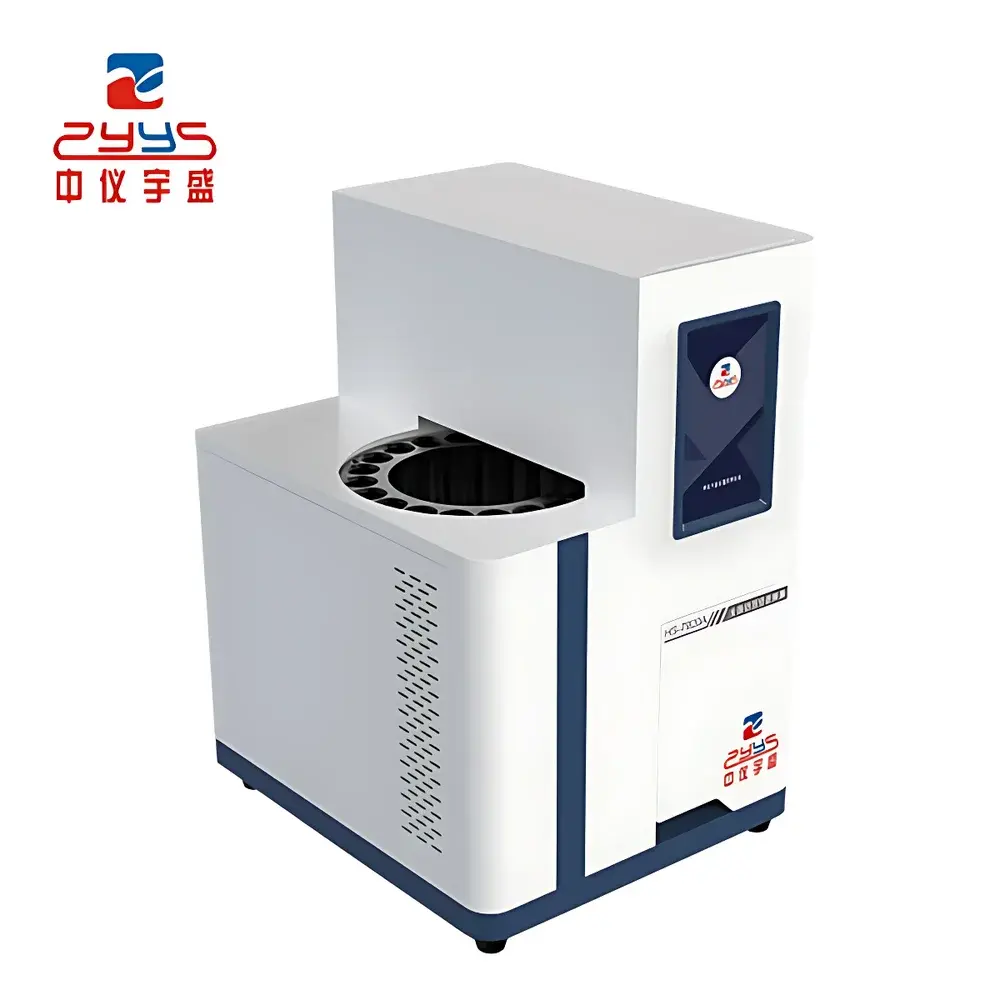
Zhongyi Yusheng HS-7920A Fully Automated Static Headspace Sampler
| Brand | Zhongyi Yusheng |
|---|---|
| Origin | Beijing, China |
| Manufacturer Type | OEM Manufacturer |
| Instrument Type | Static Headspace Sampler |
| Automation Level | Fully Automated |
| Sample Tray Capacity | 20 positions |
| Vial Size | 20 mL |
| Compliance | ASTM D6866, ISO 17025 (method validation support), USP <467>, EPA Method 502.2/8260D/8270D compatible |
Overview
The Zhongyi Yusheng HS-7920A is a fully automated static headspace sampler engineered for precise, reproducible volatile organic compound (VOC) and residual solvent analysis in environmental, pharmaceutical, clinical, and industrial laboratories. It operates on the principle of equilibrium-based static headspace sampling: sealed sample vials are thermostatically heated to promote analyte partitioning into the vapor phase above the matrix; after equilibration, a pressurized, inert carrier gas transfers the headspace vapor—via pressure-balanced injection—directly into the gas chromatograph (GC) or GC-MS inlet. This method eliminates liquid-phase injection variability, minimizes matrix interference, and delivers sharp, symmetric chromatographic peaks essential for accurate quantitation under regulated workflows. Designed for unattended operation, the HS-7920A integrates seamlessly with both domestic and international GC platforms without hardware modification, supporting routine compliance with pharmacopeial and environmental testing standards.
Key Features
- Fully automated 20-position sample carousel with auto-initialization, self-diagnostic startup, and intelligent tray positioning for error-free sequencing.
- 7-inch high-resolution capacitive touchscreen interface enabling intuitive method setup, real-time status monitoring, and parameter adjustment without external PC dependency.
- Independent carrier gas regulation system—compatible with either instrument-supplied or externally supplied helium, nitrogen, or hydrogen—ensuring method flexibility and GC compatibility across vendor platforms.
- Pressure-balanced injection mechanism ensures consistent transfer volume and optimal peak shape by equalizing vial and GC inlet pressures prior to sampling.
- Integrated automatic backflush functionality for both the sample transfer line and injection valve, effectively preventing carryover between samples and maintaining long-term analytical integrity.
- Optional fused silica capillary transfer line available for enhanced inertness during analysis of reactive or adsorptive compounds (e.g., aldehydes, amines, acidic volatiles).
- Adjustable injection volume control via programmable vial pressurization time and duration, enabling dynamic range optimization for trace-level or high-concentration analytes.
- Modular needle interface supports rapid replacement and direct coupling to all standard GC split/splitless inlets—including Agilent, Thermo Fisher, Shimadzu, PerkinElmer, and domestic GC systems—without adapters.
Sample Compatibility & Compliance
The HS-7920A accommodates standard 20 mL crimp-top headspace vials with silicone/PTFE septa, supporting aqueous, solid, semi-solid, and polymer matrices including drinking water, soil, sediment, wastewater, blood, pharmaceutical excipients, medical device packaging, and food simulants. Its operational parameters align with internationally recognized regulatory frameworks: it facilitates full implementation of USP residual solvents testing, EP 2.4.24, ICH Q3C(R8), and ISO 17025-accredited method validation protocols. The instrument’s deterministic thermal control, pressure stability, and injection repeatability support data integrity requirements under FDA 21 CFR Part 11 when paired with compliant LIMS or chromatography data systems (CDS). It is routinely deployed in laboratories performing analyses referenced in HJ 620–643, HJ 736–742, HJ 810, HJ 959, GB/T 5750.8, and GA/T 842—covering VOCs, halogenated hydrocarbons, benzene homologues, ketones, ethers, acrylonitrile, pyridine, and tetraethyllead.
Software & Data Management
The HS-7920A operates via embedded firmware with no proprietary software installation required. All method parameters—including oven temperature, equilibration time, vial pressurization pressure, loop fill time, injection time, and backflush duration—are configurable through the onboard touchscreen and stored in non-volatile memory with timestamped version history. Audit trail functionality logs operator actions, system errors, and calibration events, satisfying GLP/GMP documentation expectations. When interfaced with third-party CDS (e.g., OpenLab CDS, Chromeleon, GCMSsolution), the sampler accepts standard ASCII command protocols for synchronized run initiation and status reporting. Raw method files are exportable in CSV format for external review, and system logs support root-cause analysis during regulatory audits.
Applications
Typical use cases include quantitative determination of residual ethylene oxide in sterilized medical devices (per GB/T 16886.7); ethanol in forensic blood specimens (GA/T 842); VOCs in municipal drinking water (GB/T 5750.8); chlorinated solvents in soil per EPA 8260D; benzene series in packaging materials (SN/T 4148); and volatile impurities in active pharmaceutical ingredients (USP ). Its robust thermal management and inert flow path also enable reliable analysis of thermally labile or polar volatiles such as formaldehyde, acetaldehyde, and methyl ethyl ketone—common challenges in environmental and toxicology labs.
FAQ
Does the HS-7920A require modifications to my existing GC system?
No. Its independent carrier gas control and pressure-balanced injection design eliminate the need for GC hardware alterations.
Can the instrument be validated for GxP environments?
Yes—when used with compliant CDS and documented SOPs, it meets core requirements for IQ/OQ/PQ and supports 21 CFR Part 11 audit trails.
Is method transfer possible between different GC vendors?
Absolutely. Its standardized pneumatic interface and ASCII command set ensure seamless integration with Agilent, Thermo, Shimadzu, and domestic GC platforms.
What maintenance is required for long-term reliability?
Routine tasks include septum replacement every 100 injections, transfer line bake-out weekly, and annual verification of thermal accuracy and pressure calibration.
How is cross-contamination prevented between high- and low-concentration samples?
Through dual-stage automatic backflush of both the transfer line and injection valve, plus optional fused silica tubing for reactive analytes.




