
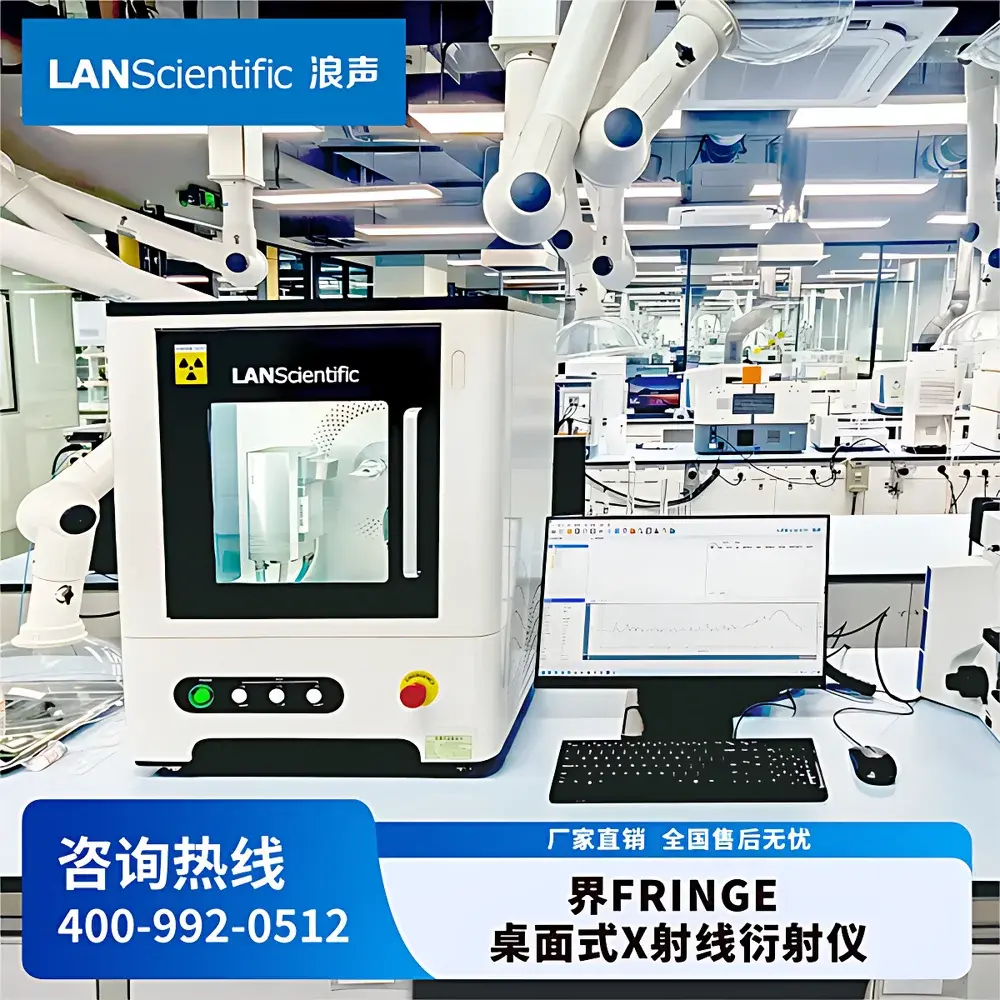
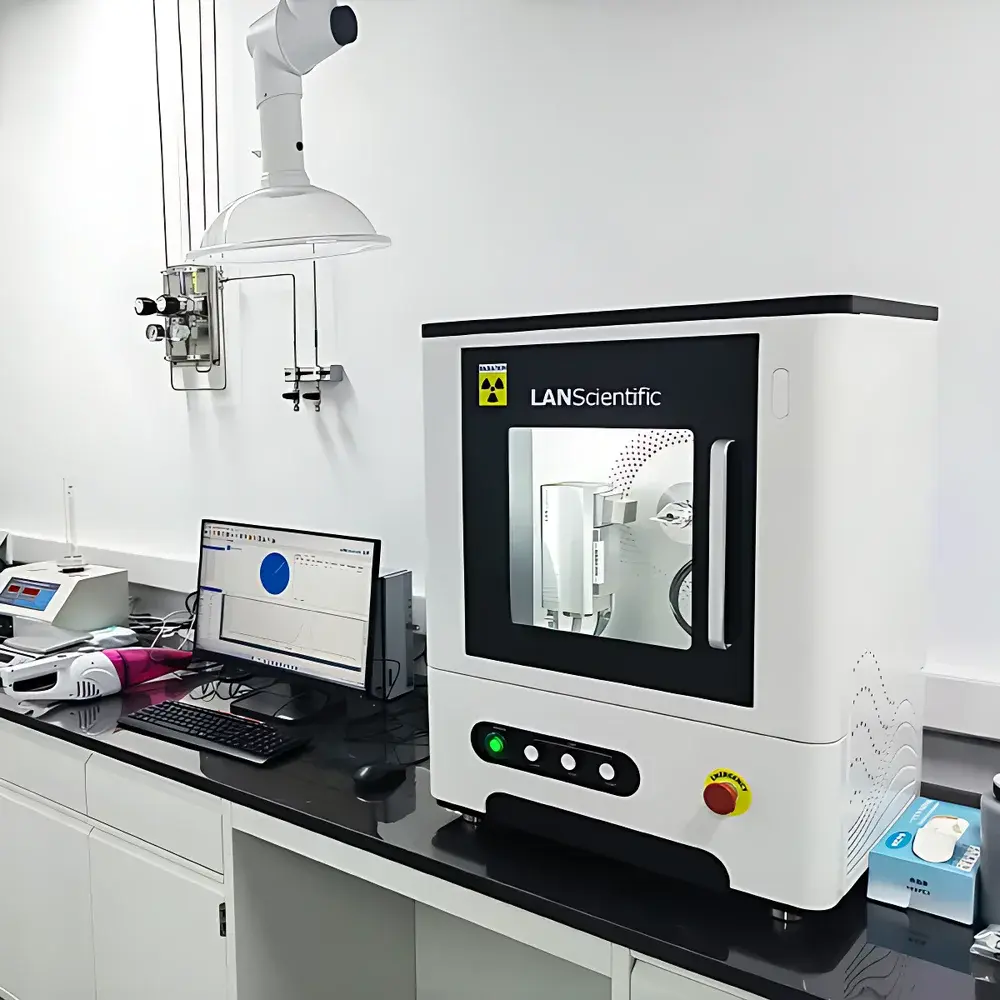
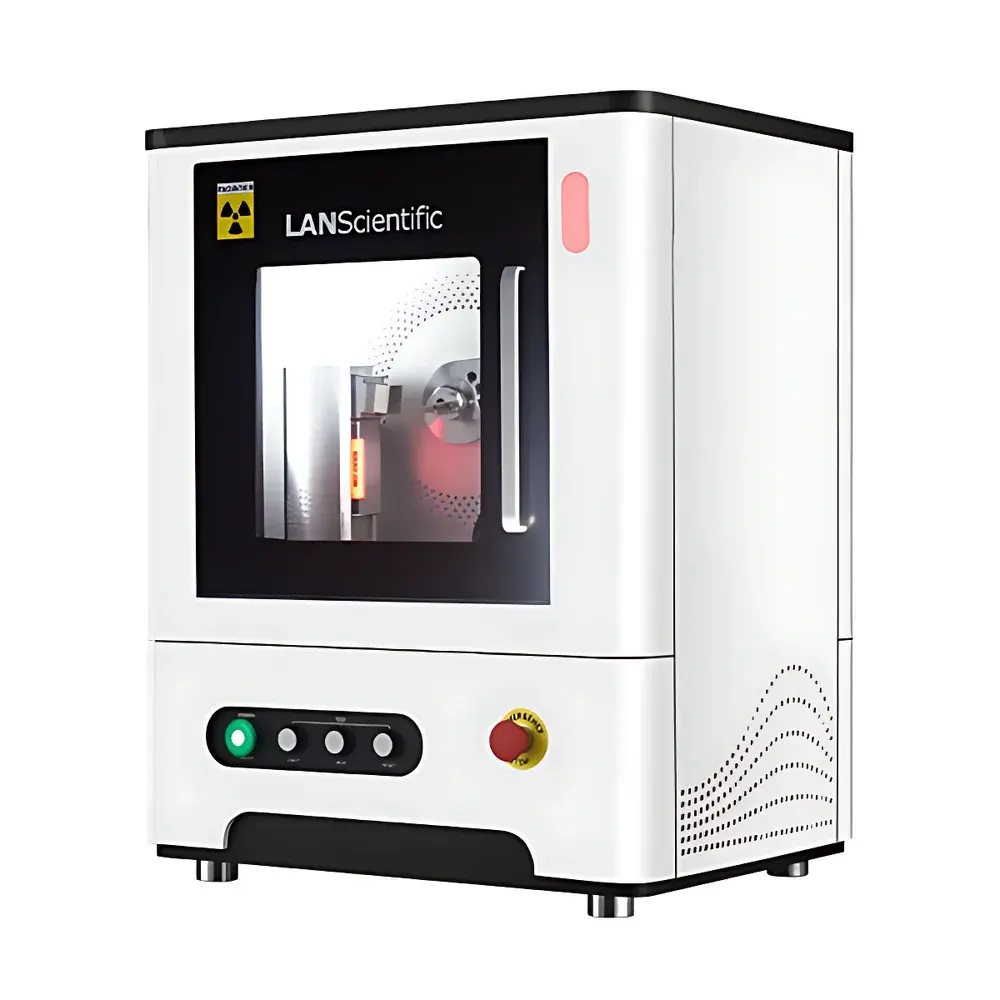
LANScientific FRINGE EV Desktop X-ray Diffractometer for Titanium Dioxide (TiO₂) Phase Analysis
| Brand | LANScientific |
|---|---|
| Origin | Jiangsu, China |
| Manufacturer Type | Direct Manufacturer |
| Instrument Type | Powder X-ray Diffractometer |
| Geometry | Bragg-Brentano θ–2θ reflection mode |
| Power Supply | kW-class integrated X-ray source (rated output ≥ 1.2 kW) |
| Detector | Digital Pulse Processing Counter (DPPC), count rate ≥ 1×10⁷ cps |
| Sample Stage | Precision goniometer with fixed θs–θd alignment |
| Optical Path | Integrated Soller slits (no moving adjustment parts), anti-scatter slit, receiving slit |
| Software | CrystalX™ v3.2 — automated phase identification, Rietveld quantitative analysis, crystallinity index calculation, PDF-4+ database integration |
| Compliance | Designed to meet ISO 17025 laboratory requirements |
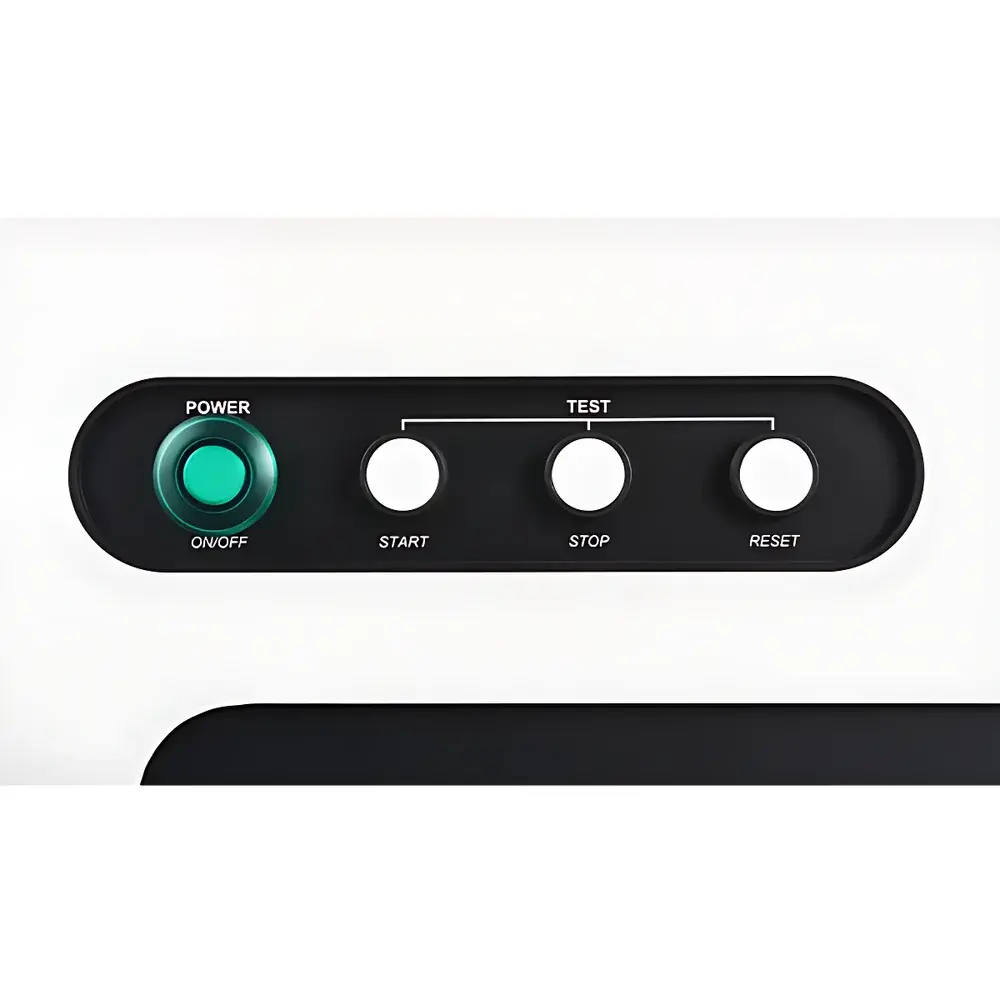
| Safety | Interlocked full-enclosure sample chamber with auto-shutdown on door opening, real-time status feedback on HMI |
Overview
The LANScientific FRINGE EV is a benchtop X-ray diffractometer engineered specifically for high-fidelity phase characterization of titanium dioxide (TiO₂) polymorphs—including anatase, rutile, and brookite—as well as other inorganic crystalline powders, thin films, and solid-state materials. Operating on the Bragg-Brentano θ–2θ reflection geometry, the system utilizes monochromatic Cu-Kα radiation generated by a sealed-tube kW-class X-ray source. Incident X-rays pass through a fixed Soller collimator and divergence slit, strike the sample mounted at the center of a precision goniometer, and produce diffraction peaks when satisfying Bragg’s law (nλ = 2d sinθ). The diffracted beam is filtered via anti-scatter and receiving slits before detection by a high-throughput Digital Pulse Processing Counter (DPPC), enabling simultaneous acquisition of diffraction intensity data and energy-dispersive spectral information—eliminating the need for secondary monochromators or separate EDX hardware.
Key Features
- kW-class X-ray source with stable thermal management, delivering consistent photon flux over extended acquisition periods without active cooling interruptions
- Integrated Soller slit assembly with zero-movement design—enhancing long-term angular reproducibility and reducing mechanical drift during multi-hour scans
- DPPC detector offering ≥1×10⁷ counts per second (cps) linear dynamic range, optimized for rapid data collection while preserving peak shape fidelity and low-background signal-to-noise ratios
- Air-spring assisted full-window lift door: minimizes footprint impact and enables seamless integration into constrained lab spaces, including mobile or field-deployable platforms
- Full-interlock safety architecture: automatic X-ray shutdown upon chamber door actuation; real-time HMI confirmation of closed status prior to exposure initiation
- Goniometer-based sample stage calibrated to ±0.005° 2θ angular accuracy, traceable to NIST-traceable reference standards
Sample Compatibility & Compliance
The FRINGE EV accommodates standard powder holders (13 mm Ø), flat-plate specimens up to 50 × 50 mm, and thin-film substrates with minimal preparation. Its compact optical train ensures compatibility with air-sensitive or hygroscopic samples when used with optional inert-gas purge kits. The instrument meets essential functional requirements outlined in ASTM E975 (Standard Practice for X-ray Diffraction Analysis of Metals), ISO 13126-1 (XRD for crystalline phase identification), and USP (XRD for pharmaceutical polymorph assessment). For GLP/GMP-regulated workflows, CrystalX™ software provides full 21 CFR Part 11 compliance—including user authentication, role-based access control, immutable audit logs, and electronic signature support.
Software & Data Management
CrystalX™ v3.2 is a modular, Windows-based analytical suite built on a deterministic processing engine. Upon completion of data acquisition, it executes automated search-match against the ICDD PDF-4+ database (2023 release), reporting identified phases with confidence index scores and weight fraction estimates derived from Rietveld refinement (TOPAS-compatible output format). Additional modules support crystallinity quantification via amorphous halo subtraction, lattice parameter optimization, microstrain and crystallite size analysis using Williamson-Hall and Scherrer methods, and batch-processing for quality control laboratories. Raw data (.raw, .xye) and processed reports (.pdf, .xlsx) are stored in a structured project directory with embedded metadata (operator ID, timestamp, instrument serial, calibration history).
Applications
This diffractometer serves critical analytical roles across industrial R&D and QC laboratories: verification of TiO₂ crystal phase purity in pigment manufacturing; quantification of anatase-to-rutile transformation kinetics under thermal treatment; structural validation of doped metal oxide catalysts; phase stability assessment of battery cathode materials (e.g., LiCoO₂, NMC); polymorphic screening of active pharmaceutical ingredients (APIs); and mineralogical fingerprinting in construction aggregates and geological survey samples. Its robustness and standardized geometry also support method transfer between benchtop and floor-standing XRD platforms within multi-site organizations.
FAQ
Does the FRINGE EV require external water cooling or chiller systems?
No—the kW-class X-ray tube incorporates a self-contained thermosiphon cooling loop and passive heat sink array, eliminating dependency on external chillers.
Can CrystalX™ perform quantitative phase analysis without external reference standards?
Yes—Rietveld refinement uses internal intensity normalization and scale factor optimization; however, certified reference materials (e.g., NIST SRM 660c LaB₆) are recommended for absolute intensity calibration.
Is the instrument suitable for in-situ or time-resolved measurements?
While not designed for high-speed dynamic experiments, the system supports step-scan acquisition down to 0.01° 2θ increments with dwell times configurable from 0.1 s to 300 s per step—enabling quasi-in-situ thermal or humidity-controlled studies with external stages.
What maintenance intervals are specified for the X-ray tube and detector?
The sealed X-ray tube has a rated lifetime of ≥2,000 hours at nominal power; DPPC detector requires no routine recalibration but benefits from annual energy calibration using Mn-Kα reference sources.
How is data integrity ensured during networked deployment?
CrystalX™ implements AES-256 encryption for data-at-rest and TLS 1.2+ for data-in-transit; all raw datasets include SHA-256 checksums embedded in header metadata.
Related Products






