
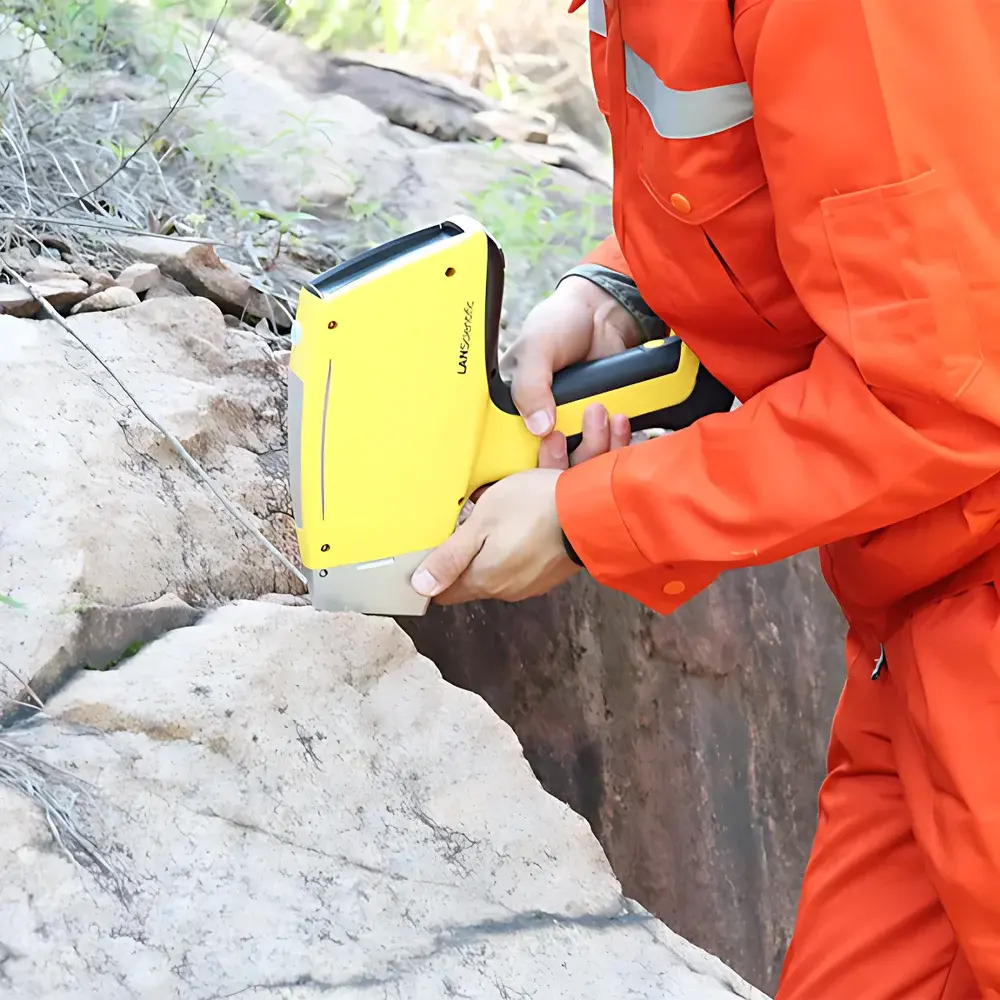
Brookfield LANScientific TrueX 900 Portable Energy Dispersive X-Ray Fluorescence (EDXRF) Spectrometer for Ore and Geological Materials
| Brand | LANScientific |
|---|---|
| Origin | Jiangsu, China |
| Manufacturer Type | Manufacturer |
| Regional Classification | Domestic |
| Model | TrueX 900 |
| Price Range | USD $14,000–$42,000 |
| Application | Handheld/Portable |
| Instrument Type | Conventional EDXRF |
| Industry-Specific Use | Geological & Mineral Exploration |
| Elemental Range | Mg (12) to U (92) |
| Detection Limit | ppm-level quantification |
Overview
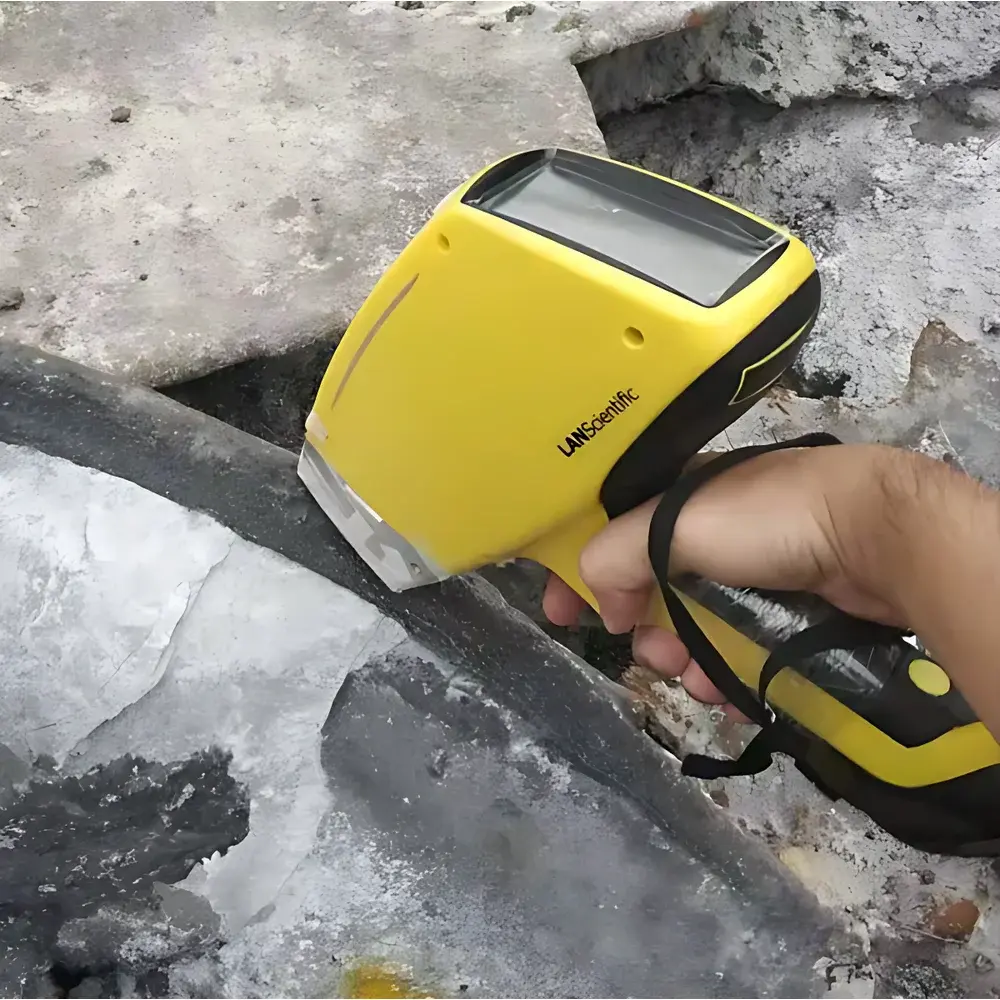
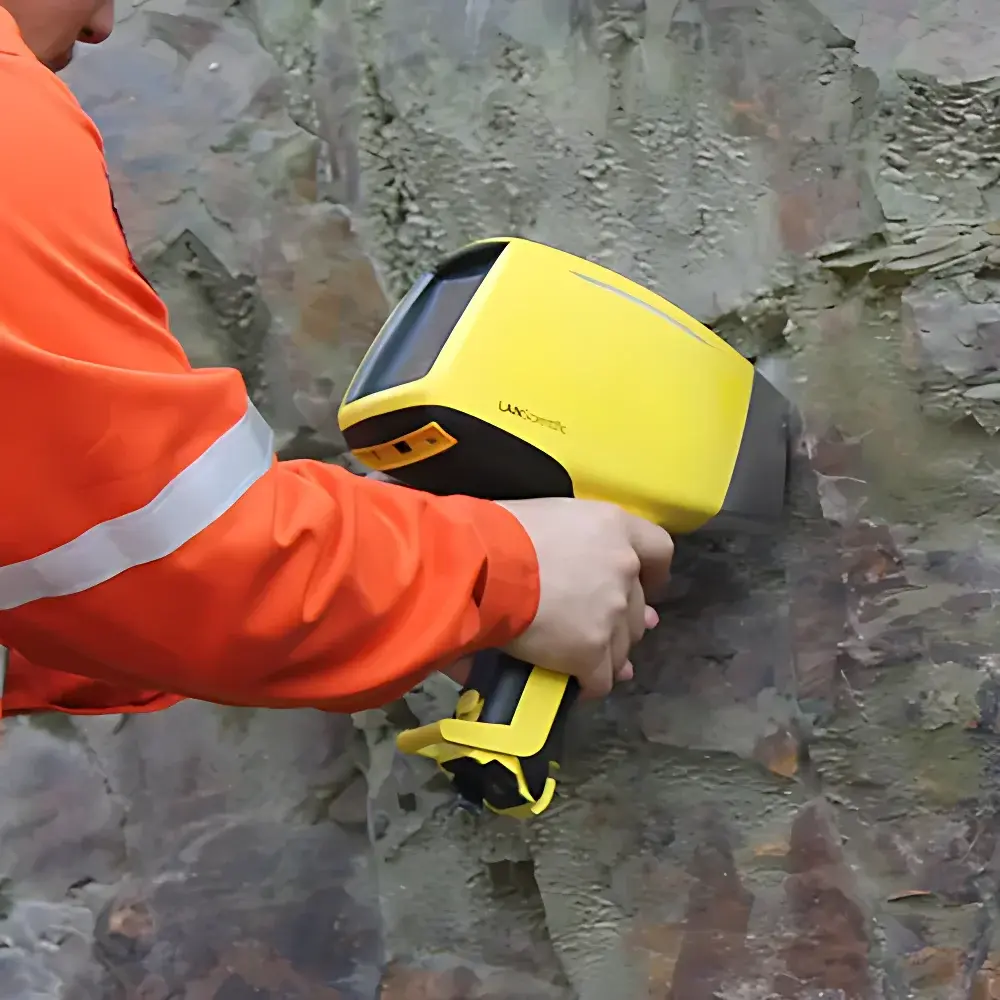
The Brookfield LANScientific TrueX 900 is a field-deployable, handheld energy dispersive X-ray fluorescence (EDXRF) spectrometer engineered for rapid, non-destructive elemental analysis of geological materials in situ. Based on the fundamental principle of X-ray fluorescence—where primary X-rays excite atoms in a sample, causing emission of characteristic secondary (fluorescent) X-rays—the TrueX 900 delivers quantitative and semi-quantitative data across 71 elements from magnesium (Mg, Z=12) to uranium (U, Z=92). Its compact architecture integrates a high-stability micro-focus X-ray tube, a large-area silicon drift detector (SDD), and real-time digital pulse processing to ensure robust spectral resolution and counting efficiency under variable ambient conditions. Designed specifically for geoscience workflows, it eliminates the need for extensive sample preparation, enabling direct measurement of unprocessed drill cores, outcrops, bulk ore fragments, and tailings—thereby accelerating decision-making from early-stage reconnaissance to grade control and environmental site assessment.
Key Features
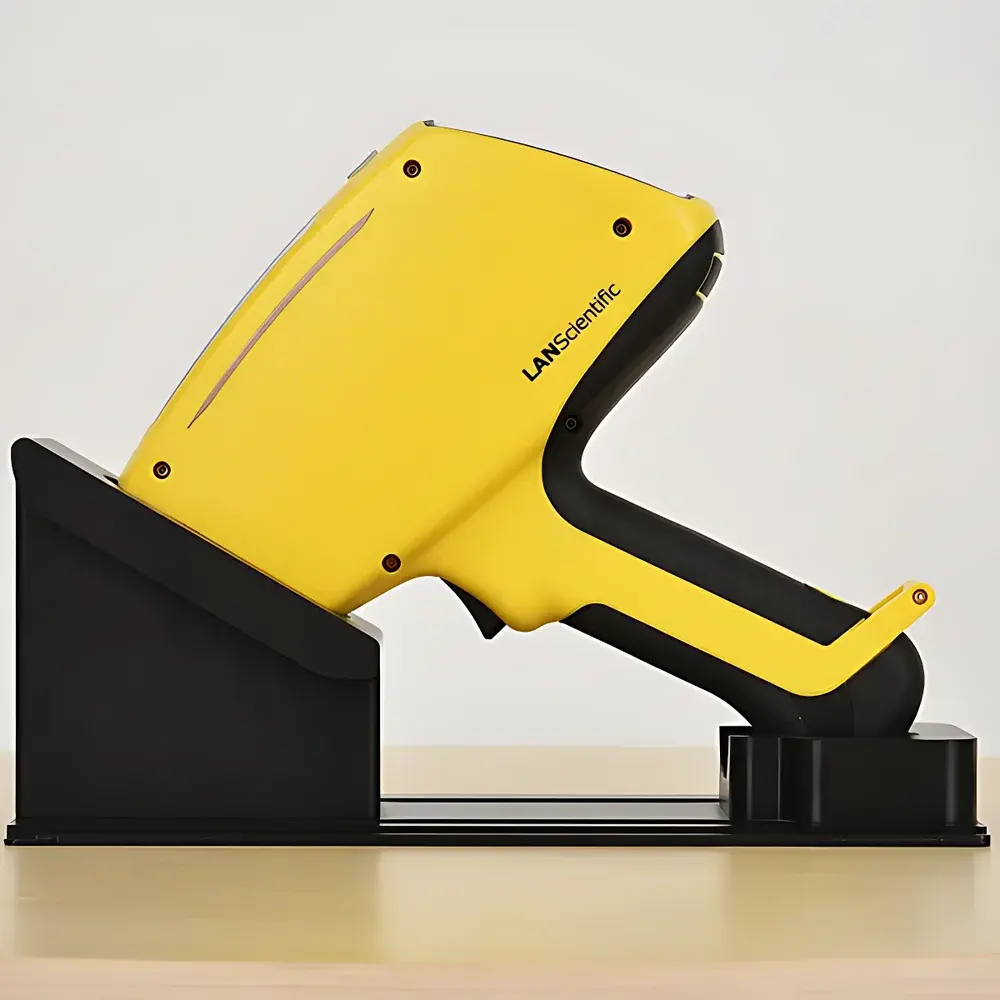
- Lightweight ergonomic design (≤1.5 kg) with balanced center-of-gravity for extended operation during field surveys
- 4.3-inch industrial-grade resistive touchscreen display with high-luminance backlighting (≥800 cd/m²), optimized for visibility under direct sunlight and glove-compatible operation
- Dual-mode excitation: selectable voltage/current settings (up to 50 kV / 100 µA) to optimize sensitivity for light elements (e.g., Mg, Al, Si) or heavy metals (e.g., Pb, U, rare earth elements)
- Onboard GPS module recording latitude, longitude, and altitude metadata synchronized with each spectrum acquisition
- User-configurable reporting engine supporting custom branding, sample descriptors (e.g., lithology code, drill hole ID, depth), spectral overlays, and multi-element calibration curves
- Ruggedized IP54-rated housing with MIL-STD-810G compliance for shock, dust, and humidity resistance
Sample Compatibility & Compliance
The TrueX 900 accommodates heterogeneous solid matrices without grinding or pelletization, including weathered rock surfaces, crushed ore, slag heaps, soil samples, and mine waste piles. It adheres to ASTM D6440–22 (Standard Guide for Field Screening of Soils Using Portable XRF) and supports method validation per ISO 12847:2018 (Soil quality — Determination of elemental composition by portable XRF). While not certified for regulatory compliance under EPA Method 6200 or USP /, its analytical performance meets GLP-aligned documentation requirements—including audit-trail-enabled instrument logs, user authentication, and timestamped spectral archives—making it suitable for pre-screening prior to accredited lab verification. All firmware and calibration files are traceable to NIST-traceable reference materials (e.g., SRM 2710a, 2711a).
Software & Data Management
Data acquisition and interpretation are managed via TrueX Connect™ software (v4.2+), compatible with Windows 10/11 and macOS 12+. The platform enables batch spectral processing, matrix-matched calibration curve generation, interference correction (e.g., spectral overlap between Pb Lα and As Kα), and statistical outlier detection. Export formats include CSV, PDF reports, and .EDXRF native files compatible with third-party GIS tools (e.g., ArcGIS Pro, QGIS). Integrated cloud synchronization allows secure remote access to project databases, while local encryption (AES-256) ensures confidentiality of geological survey data. Software updates maintain alignment with evolving IUPAC nomenclature and IAEA guidance on radiation safety for portable XRF devices.
Applications
- Geological exploration: Real-time mapping of pathfinder elements (e.g., Cu, Zn, As, Sb) during grid-based prospecting
- Ore grade control: On-belt or stockpile analysis for Cu, Fe, Ni, Mo, and REEs to inform blending and processing decisions
- Tailings characterization: Quantification of residual metals (e.g., Cd, Cr, Hg) and leachable fractions for environmental risk assessment
- Mineralogical research: Discrimination of alteration assemblages (e.g., K/Na ratio in feldspars; Mg/Fe in mafic minerals)
- Recycling & resource recovery: Identification of valuable constituents in mine waste and slag for circular economy initiatives
- Regulatory screening: Preliminary assessment of contaminated sites against national soil screening levels (e.g., China GB 15618–2018, EU Soil Thematic Strategy thresholds)
FAQ
What radiation safety certifications does the TrueX 900 hold?
The instrument complies with IEC 62495:2010 for handheld XRF devices and carries CE marking under the EU Radio Equipment Directive (RED) and RoHS 2011/65/EU. It operates in “safe mode” with automatic beam shut-off upon loss of contact with the sample surface.
Can the TrueX 900 quantify light elements such as carbon or oxygen?
No. Due to atmospheric absorption and detector window limitations, reliable quantification begins at magnesium (Mg, Z=12); elements below this atomic number require vacuum or helium purge configurations not supported in this handheld variant.
Is calibration transfer possible between different TrueX units?
Yes—via standardized calibration transfer protocols using common reference standards (e.g., NIST SRMs) and cross-instrument spectral matching algorithms embedded in TrueX Connect™ software.
How frequently must the instrument be recalibrated?
Field recalibration is recommended before each survey day using a certified check standard; full factory recalibration is advised annually or after 1,000 operating hours, whichever occurs first.
Does the device support multivariate analysis or chemometrics?
Basic PCA and clustering functions are available in TrueX Connect™ for exploratory data analysis; advanced PLS-R or machine learning models require export to MATLAB or Python-based platforms.



