
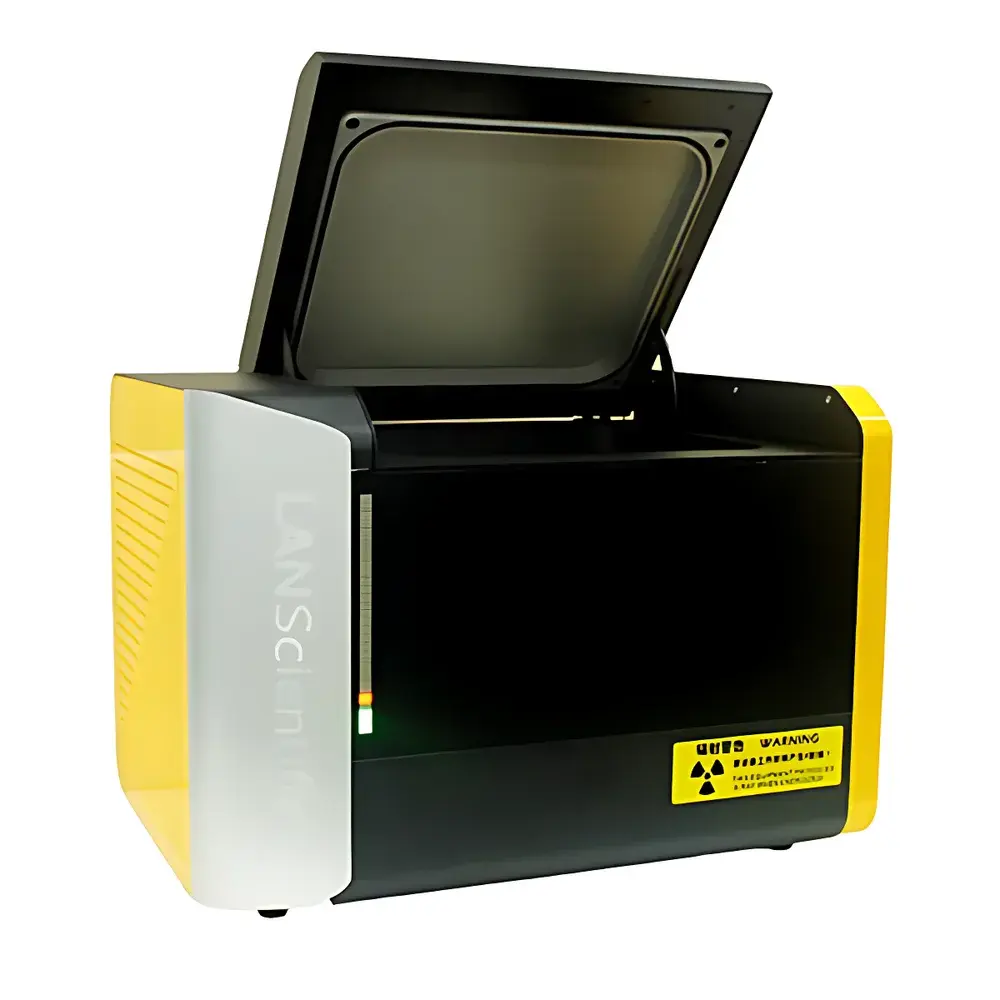
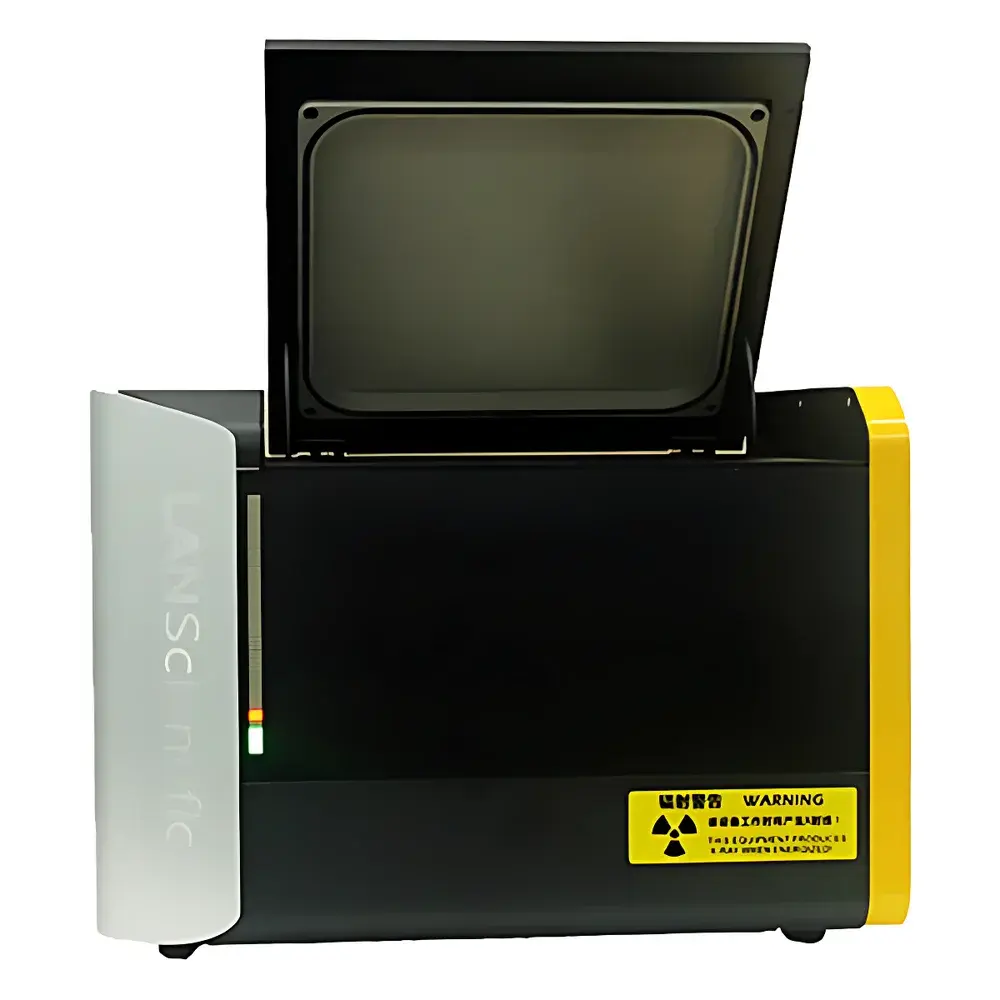
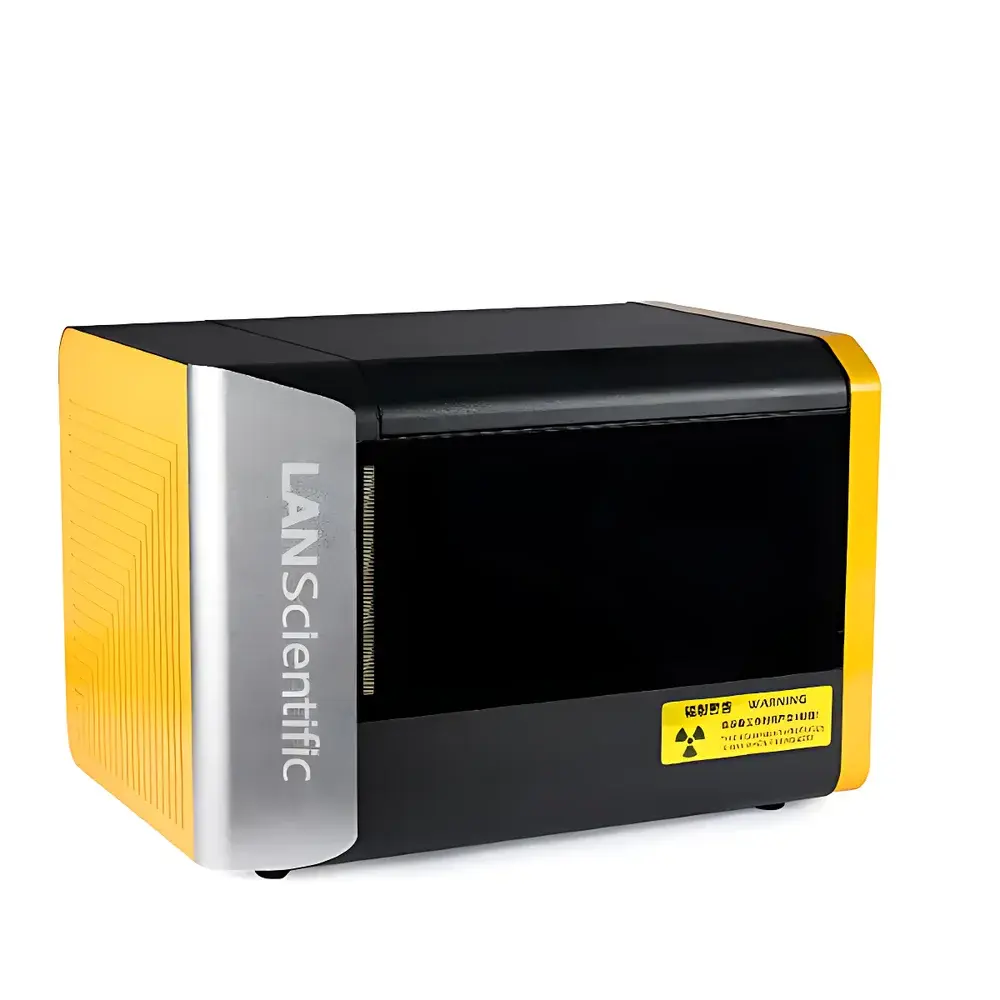
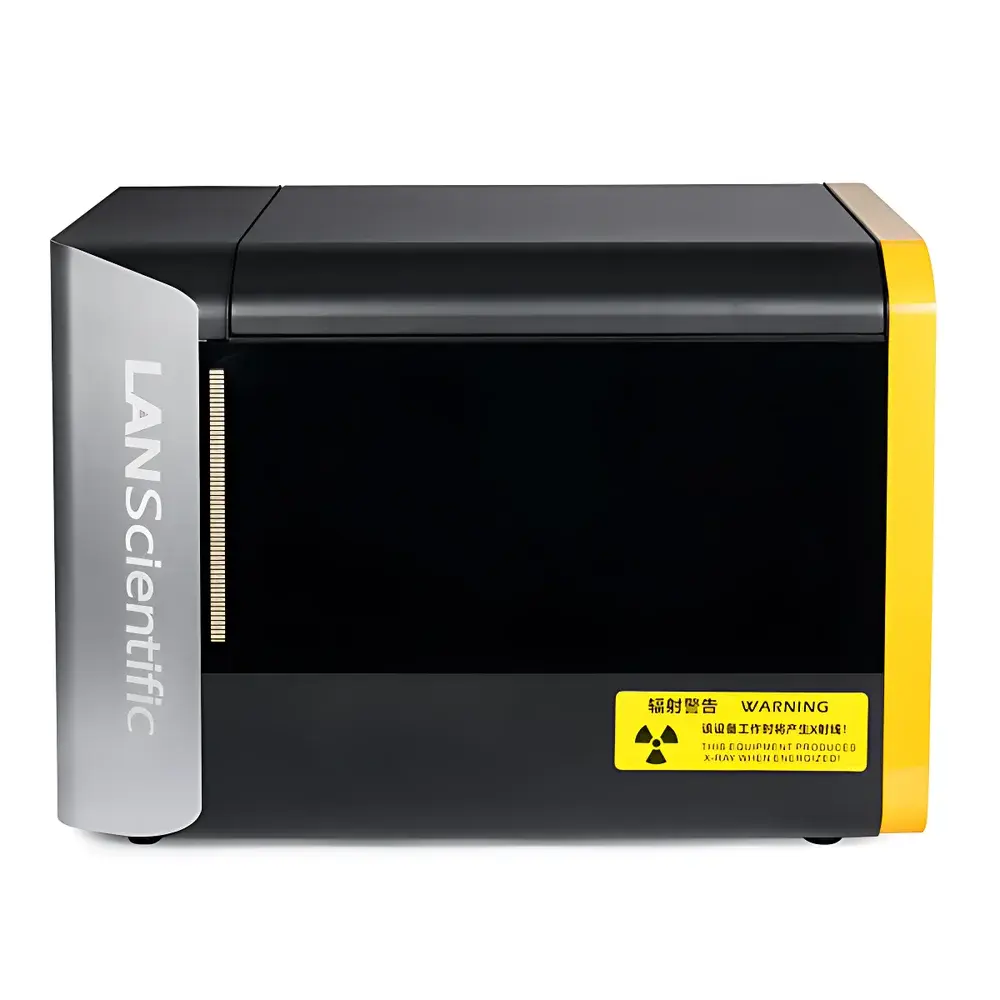
LANScientific ScopeX Desktop Energy Dispersive X-Ray Fluorescence Spectrometer for Iron Ore Analysis
| Brand | LANScientific |
|---|---|
| Origin | Jiangsu, China |
| Manufacturer Type | Direct Manufacturer |
| Origin Category | Domestic (China) |
| Model | ScopeX Iron Ore Analyzer |
| Form Factor | Benchtop |
| Instrument Type | Conventional ED-XRF |
| Application Scope | General-Purpose |
| Elemental Range | Na (11) to U (92) |
| Detection Limit | 1 ppm (typical, matrix-dependent) |
| Energy Resolution | <125 eV at Mn Kα |
| Repeatability | ≤0.1% RSD (for major elements under controlled conditions) |
| Detector | Peltier-cooled Silicon Drift Detector (SDD) |
Overview
The LANScientific ScopeX Desktop Energy Dispersive X-Ray Fluorescence (ED-XRF) Spectrometer is an industrial-grade benchtop analyzer engineered for rapid, non-destructive elemental quantification in iron ore and related geological, metallurgical, and industrial materials. Based on fundamental XRF physics, the instrument irradiates solid or pressed-pellet samples with a focused primary X-ray beam, inducing characteristic secondary fluorescence emission from atoms across the periodic table (Na to U). Each element emits photons at discrete energies—its unique spectral “fingerprint”—independent of chemical bonding state. Intensity of these peaks correlates linearly with elemental concentration under defined matrix and geometry conditions. The ScopeX system integrates a high-stability microfocus X-ray tube, a high-resolution Peltier-cooled silicon drift detector (SDD), and intelligent vacuum control to optimize sensitivity for light elements (e.g., Si, P, S, Al, Mg) critical in iron ore grade assessment and gangue mineral characterization.
Key Features
- Benchtop form factor with compact footprint and enlarged sample chamber (up to Ø100 mm × 40 mm depth), accommodating irregular solids, powders, fused beads, and coated substrates without repositioning.
- Automated collimator selection: Four precision apertures (5.0, 3.0, 1.0, and 0.5 mm) switch under software control to balance spatial resolution and counting statistics per analysis zone.
- Programmable filter wheel with multiple attenuation options—including no-filter mode—enabling dynamic optimization of excitation conditions for high-Z (e.g., Fe, Cr, Ni, Mo) and low-Z elements within a single run.
- Peltier-based thermoelectric cooling eliminates liquid nitrogen dependency, ensuring stable detector performance (<125 eV Mn Kα resolution), long-term calibration retention, and reduced operational overhead.
- Integrated vacuum/purge system (software-selectable) enhances signal-to-background ratio for elements below calcium (Z < 20), essential for accurate SiO₂, Al₂O₃, P₂O₅, and S determination in hematite, magnetite, and taconite ores.
- Full radiation safety compliance: Fully shielded metal enclosure with interlocked door switch and real-time dose monitoring; certified to GB18871-2002 (Basic Safety Standards for Ionizing Radiation) and GBZ115-2002 (Radiation Protection for X-ray Fluorescence Analyzers).
Sample Compatibility & Compliance
The ScopeX supports heterogeneous sample forms common in mining QA/QC and process laboratories: bulk drill cores (cut or slabbed), pulverized rock powders (≤75 µm), pressed borate-fused discs, and polished metallographic sections. No digestion or dissolution is required. Its design adheres to internationally recognized analytical frameworks: method development aligns with ASTM E1621 (Standard Guide for XRF Analysis of Metals), ISO 21043 (XRF in cement and building materials), and ISO 12885 (Sampling and preparation of ores). While not pre-certified for GLP or 21 CFR Part 11 out-of-the-box, the firmware architecture supports audit-trail logging, user access levels, and electronic signature integration—enabling qualification for regulated environments upon site-specific validation.
Software & Data Management
The proprietary ScopeX Analysis Suite provides full workflow control—from method setup and calibration curve generation to real-time spectrum visualization and quantitative reporting. It supports empirical and fundamental parameter (FP) quantification models, including matrix correction algorithms validated for iron-rich silicate and oxide matrices. Data export is natively compatible with industry-standard formats: CSV, Excel (.xlsx), PDF (with embedded spectra, calibration plots, and customizable company branding), and XML for LIMS integration. Connectivity options include USB 3.0, Wi-Fi 5 (802.11ac), and Bluetooth 5.0—facilitating secure transfer to laboratory networks or mobile devices. All spectral raw data (including live count rates, dead time, and detector temperature logs) are retained with timestamped metadata for traceability.
Applications
- Iron ore grade verification: Quantitative determination of Fe, Si, Al, P, S, Ca, Mg, Mn, Ti, and trace heavy metals (e.g., As, Pb, V) in exploration samples, stockpiles, and shipment lots.
- Process control in beneficiation plants: Real-time monitoring of concentrate/discard ratios, silica rejection efficiency, and phosphorus removal during flotation or magnetic separation.
- Quality assurance in pelletizing and sintering: Analysis of binder composition, flux additives (limestone, dolomite), and contaminant ingress in green pellets and finished sinters.
- Environmental compliance testing: Screening for hazardous elements (Cr⁶⁺ precursors, Pb, Cd, Hg) in tailings and waste rock per ISO 17294-2 and EPA Method 6200.
- Research applications: Multi-element mapping of mineralogical zonation in thin sections using optional motorized XYZ stage (add-on).
FAQ
What sample preparation is required for iron ore analysis?
Minimal preparation is needed: dry, homogenized powders should be pressed into 40 mm diameter pellets using cellulose or boric acid binder; solid chips or cores may be analyzed directly if flat and ≥10 mm thick.
Can the ScopeX distinguish between Fe²⁺ and Fe³⁺ oxidation states?
No—XRF is element-specific, not chemically speciated. Oxidation state determination requires complementary techniques such as Mössbauer spectroscopy or XANES.
Is vacuum operation mandatory for analyzing sulfur in iron ore?
Vacuum or helium purge is strongly recommended for S (Z=16) quantification at sub-0.1 wt% levels to minimize air absorption of low-energy S Kα photons (2.307 keV).
How often does the instrument require recalibration?
Calibration stability is verified daily using a check standard; full multi-point calibration is typically performed weekly or after maintenance, following ISO/IEC 17025 guidelines.
Does the system support regulatory audit trails for pharmaceutical or food-grade mineral testing?
Yes—the software architecture supports configurable user roles, electronic signatures, and immutable audit logs; formal 21 CFR Part 11 compliance requires documented site validation and procedural controls.



