
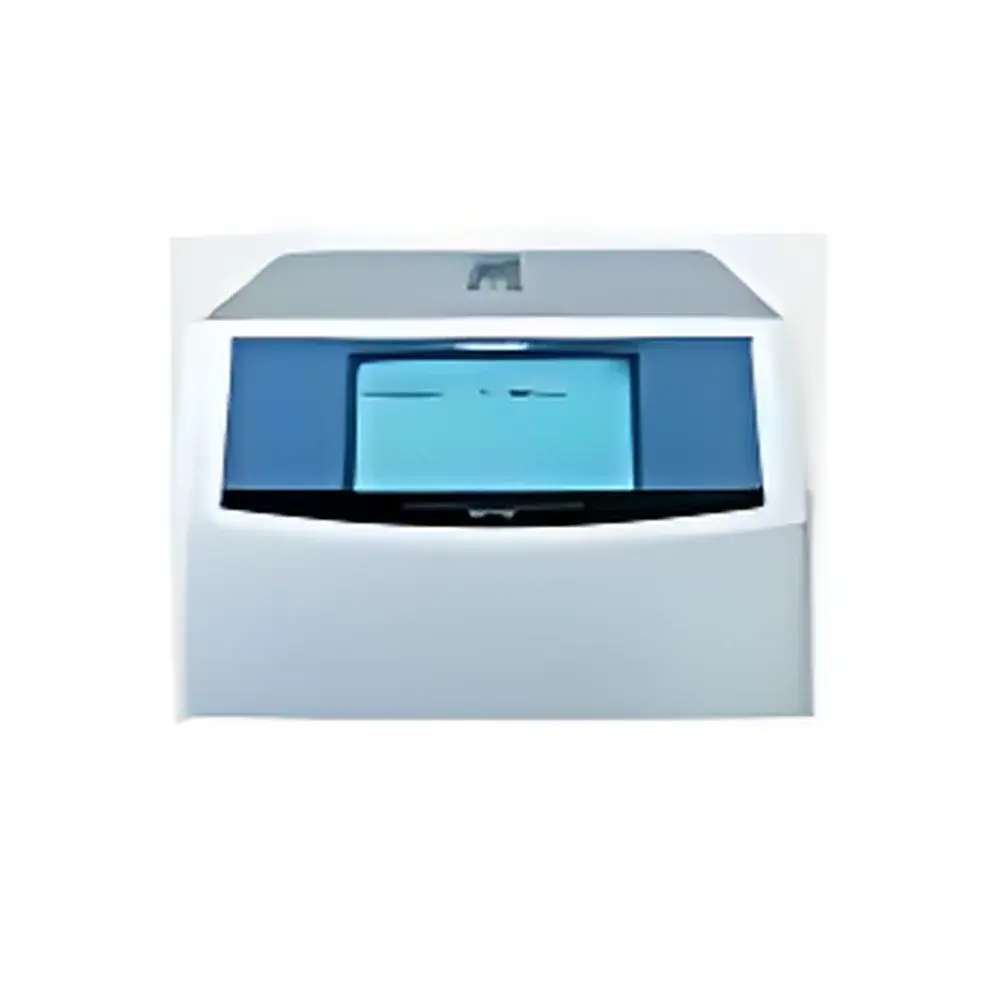
HORIBA FV-250 Portable Total Volatile Organic Compounds (TVOC) Analyzer
| Brand | HORIBA |
|---|---|
| Origin | Japan |
| Model | FV-250 |
| Instrument Type | Portable |
| Detection Principle | Flame Ionization Detection (FID) |
| Measurement Range | 0–10 / 20 / 50 / 100 / 200 / 500 / 1,000 / 2,000 / 5,000 / 10,000 ppmC |
| Resolution | ±1.0% FS |
| Accuracy | ±1.0% FS |
| Response Time (T90) | < 2.0 seconds |
| Drift | ±1.0% FS / 8 hours |
| Linearity | ±1.0% FS |
| Sampling Flow Rate | ~600 mL/min |
| Warm-up Time | ~1 hour |
| Operating Temperature | 5–35 °C |
| Operating Humidity | < 85% RH |
| Power Supply | AC 100 V, 50/60 Hz |
| Power Consumption | 50 VA |
| Dimensions | 260(W) × 260(H) × 510(D) mm |
| Output Signals | DC 0–1 V, RS-232C |
| Data Storage | CF card |
Overview
The HORIBA FV-250 is a portable, laboratory-grade total volatile organic compounds (TVOC) analyzer engineered for high-fidelity, real-time quantification of hydrocarbon-based emissions in ambient air, industrial workspaces, and indoor environments. It employs flame ionization detection (FID), a well-established, highly sensitive, and linear analytical technique widely recognized in regulatory and industrial hygiene applications. Unlike photoionization detectors (PID) or metal oxide semiconductor (MOS) sensors, FID provides consistent, compound-independent response to virtually all organic molecules containing C–H bonds — making it the reference method for TVOC compliance monitoring under ISO 16000-29, EPA Method 25A, and ASTM D6348. The FV-250 delivers sub-second T90 response (<2.0 s), enabling dynamic process monitoring and rapid leak detection. Its robust FID architecture ensures long-term stability with minimal baseline drift (±1.0% FS over 8 hours), while its auto-ranging capability and built-in auto-calibration routine reduce operator dependency and enhance measurement continuity across wide concentration spans (0–10,000 ppmC as carbon equivalent).
Key Features
- True FID-based detection with proven linearity (±1.0% FS) and low power consumption (50 VA), optimized for field deployment without compromising laboratory-grade performance.
- Intelligent auto-ranging system that dynamically selects optimal measurement span based on real-time concentration — eliminating manual range switching and minimizing saturation risk.
- Integrated auto-calibration function with programmable schedule, supporting traceable verification using certified calibration gases (e.g., propane or methane standards).
- High-resolution capacitive touchscreen interface with intuitive navigation, real-time trend graphing, and on-device data visualization — designed for operation in PPE-restricted environments.
- Dual safety architecture: automatic hydrogen supply cutoff and audible/visual alarm upon flame-out detection, compliant with IEC 61010-1 safety requirements for gas analyzers.
- Compact form factor (260 × 260 × 510 mm) and lightweight construction enable single-operator portability; ideal for walk-through surveys, stack testing, and confined-space entry protocols.
Sample Compatibility & Compliance
The FV-250 is validated for direct analysis of ambient air, ducted exhaust streams, and headspace vapors without pre-concentration or derivatization. Its FID response is proportional to the number of carbon atoms ionized — enabling reliable quantification of total hydrocarbons (THC) and TVOC expressed as ppmC (parts per million carbon equivalent), consistent with ISO 16000-29 Annex A and EN 13725:2003 reporting conventions. The instrument meets electromagnetic compatibility (EMC) requirements per EN 61326-1 and carries CE marking for use within EU occupational health frameworks. While not intrinsically safe, it is suitable for non-hazardous area applications (Zone 2/Class I, Division 2 when used with external sampling probes). Data integrity complies with ALCOA+ principles; audit trails, user access logs, and time-stamped CF card storage support GLP-aligned documentation.
Software & Data Management
Raw and processed data are stored on removable industrial-grade CF cards with timestamped records (date/time, concentration, range, status flags). RS-232C serial output enables bidirectional communication with host PCs running HORIBA’s optional FV-Series Configuration & Analysis Software — supporting real-time streaming, batch export (CSV/Excel), trend overlay, and report generation per ISO/IEC 17025 documentation templates. All data fields include metadata (instrument ID, operator ID, calibration due date), satisfying traceability requirements for internal QA audits and third-party accreditation (e.g., UKAS, A2LA). No cloud connectivity or proprietary drivers required; native Windows/Linux terminal emulation compatibility ensures long-term software maintainability.
Applications
- Indoor air quality (IAQ) assessment in offices, schools, and healthcare facilities per ASHRAE Standard 62.1 and WHO guidelines.
- Workplace exposure monitoring for VOCs in printing, coating, adhesive application, and chemical handling areas — aligned with OSHA PEL and ACGIH TLV® thresholds.
- Leak detection and repair (LDAR) programs in petrochemical, pharmaceutical, and semiconductor manufacturing plants.
- Verification of activated carbon filter efficiency and abatement system performance (e.g., thermal oxidizers, biofilters).
- Field validation of sorbent tube GC-MS results during environmental site assessments (ESAs) and Phase I/II investigations.
FAQ
What calibration gases are recommended for the FV-250?
Propane (C₃H₈) or methane (CH₄) certified reference materials (CRM) traceable to NIST or JCSS are recommended for span calibration; zero air (hydrocarbon-free, <0.1 ppmC) is required for baseline verification.
Does the FV-250 require routine maintenance beyond calibration?
Yes — quarterly FID nozzle cleaning and annual burner alignment verification are advised per HORIBA’s Maintenance Schedule MS-FV250-REV3 to sustain sensitivity and linearity.
Can the FV-250 measure individual VOC species?
No — it reports total ionizable carbon (ppmC); speciation requires coupling with gas chromatography (e.g., GC-FID), which the FV-250 does not integrate.
Is the instrument compatible with data logging software other than HORIBA’s proprietary suite?
Yes — its ASCII-based RS-232 protocol supports custom Python, LabVIEW, or MATLAB scripts via standard serial communication libraries.
What is the warm-up time required before achieving full specification accuracy?
Approximately 60 minutes at stable ambient temperature (23 ± 2 °C); extended warm-up may be needed below 15 °C or above 30 °C.







