
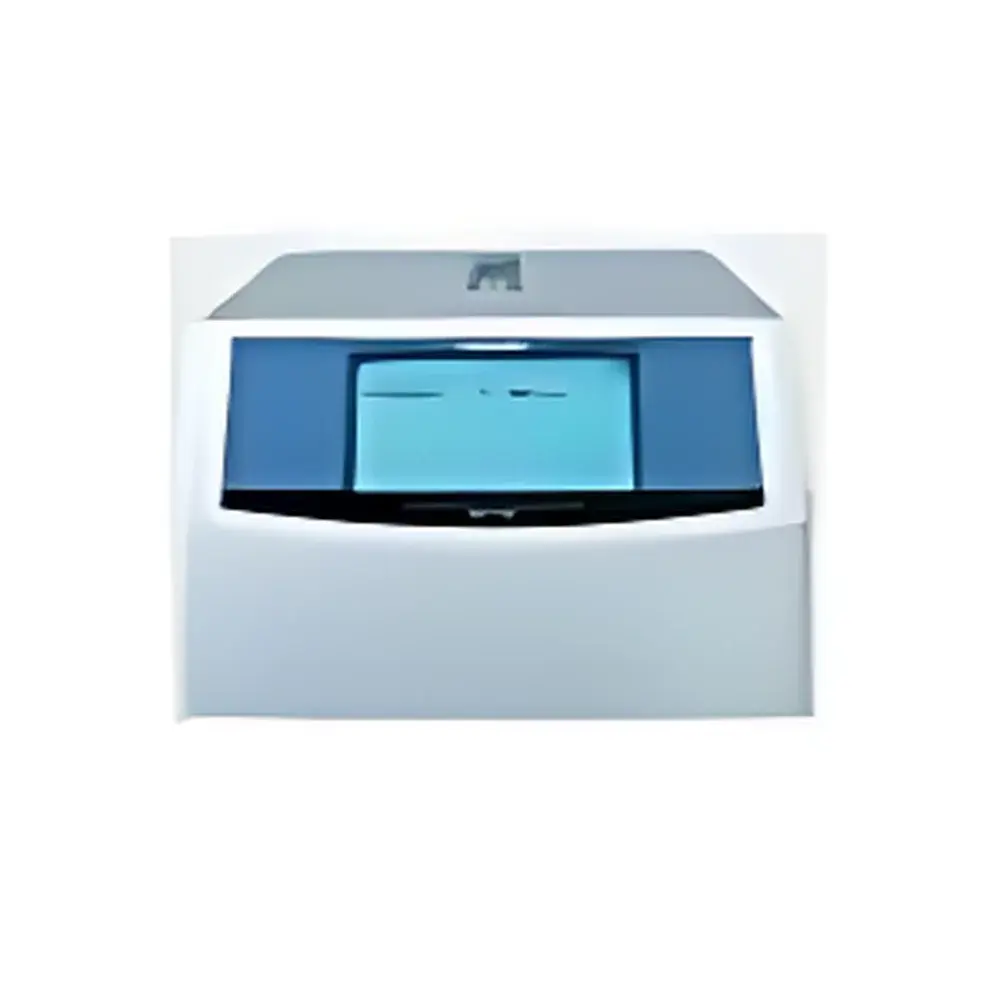
HORIBA FV-250 Portable Total Volatile Organic Compounds (TVOC) Analyzer with Flame Ionization Detection
| Brand | HORIBA |
|---|---|
| Origin | Japan |
| Model | FV-250 |
| Instrument Type | Portable |
| Detection Principle | Flame Ionization Detection (FID) |
| Measurement Range | 0–10 / 20 / 50 / 100 / 200 / 500 / 1,000 / 2,000 / 5,000 / 10,000 ppmC |
| Resolution | ±1.0% FS |
| Accuracy | ±1.0% FS |
| Response Time (T90) | < 2.0 s |
| Drift | ±1.0% FS / 8 h |
| Linearity | ±1.0% FS |
| Sampling Flow Rate | ~600 mL/min |
| Warm-up Time | ~1 h |
| Operating Temperature | 5–35 °C |
| Operating Humidity | < 85% RH |
| Output Signals | DC 0–1 V, RS-232C |
| Power Supply | AC 100 V, 50/60 Hz |
| Power Consumption | 50 VA |
| Dimensions | 260(W) × 260(H) × 510(D) mm |
| Data Storage | CF card |
| Safety Features | Automatic H₂ shutoff and alarm upon flame extinction |
Overview
The HORIBA FV-250 is a field-deployable, portable total volatile organic compounds (TVOC) analyzer engineered for real-time, quantitative measurement of hydrocarbon-based VOCs in ambient air, industrial exhaust streams, indoor environments, and occupational safety monitoring applications. It employs flame ionization detection (FID), a well-established, highly sensitive, and linear analytical technique standardized in EPA Method 25A and ASTM D6348. Unlike photoionization detectors (PID), the FID principle provides consistent response across a broad spectrum of aliphatic, aromatic, and chlorinated hydrocarbons—without compound-specific calibration—making it ideal for regulatory-compliant total hydrocarbon quantification. The instrument delivers high reproducibility and minimal baseline drift, supported by an optimized burner design, precision gas flow control, and thermally stabilized detector electronics. Its compact footprint and low power draw (50 VA) enable extended battery-assisted operation in mobile or remote deployments, while maintaining laboratory-grade metrological performance.
Key Features
- Real-time continuous monitoring with T90 response time under 2 seconds—enabling rapid detection of transient VOC releases or fugitive emissions.
- Auto-ranging functionality: dynamically selects optimal measurement span based on instantaneous concentration, eliminating manual range switching and minimizing saturation risk.
- Integrated automatic zero and span calibration routine—reducing operator dependency and ensuring long-term measurement integrity between scheduled maintenance intervals.
- Intuitive 7-inch resistive touchscreen interface with multilingual support (English, Japanese, Chinese), enabling direct configuration of sampling duration, alarm thresholds, data logging intervals, and unit display (ppmC, mg/m³).
- Dual-output architecture: analog DC 0–1 V signal for PLC/SCADA integration and full-duplex RS-232C serial interface for bidirectional communication with PCs or data acquisition systems.
- Onboard CF card storage (up to 32 GB) supports timestamped, CSV-formatted data logs—including raw signal, calibrated concentration, temperature, humidity, and operational status—with configurable sampling intervals from 1 second to 60 minutes.
- Fail-safe hydrogen management system: monitors flame status continuously; triggers audible/visual alarm and electronically isolates the H₂ supply line within 500 ms of flameout—meeting IEC 61000-6-4 and UL 61010-1 safety requirements.
Sample Compatibility & Compliance
The FV-250 is validated for gaseous samples with particulate loading < 1 mg/m³ and dew point ≤ 5 °C. It accommodates standard 1/4" OD PTFE or stainless-steel sample lines and integrates seamlessly with optional heated sample probes (e.g., HORIBA HSP-100) for high-humidity or condensable VOC applications. The analyzer conforms to ISO 16000-6 for indoor air TVOC assessment and supports compliance with OSHA PELs, ACGIH TLVs®, and EU Directive 2004/101/EC. Its firmware includes audit-trail-enabled calibration logging and user-access-level controls (Operator/Engineer/Admin), facilitating adherence to GLP and ISO/IEC 17025 quality management frameworks. While not FDA 21 CFR Part 11 certified out-of-the-box, its data export protocol enables traceable post-processing in validated LIMS environments.
Software & Data Management
HORIBA’s proprietary FV-Link PC software (Windows 10/11 compatible) provides comprehensive instrument control, live trend visualization, spectral overlay, and report generation. Users can plot time-series concentration curves, apply moving-average smoothing, export data with metadata (GPS coordinates when paired with external modules), and generate PDF reports compliant with ISO 14001 environmental audit documentation. All calibration events, parameter changes, and alarm logs are time-stamped and digitally signed. Data files include embedded CRC-32 checksums to ensure file integrity during transfer or archival. Optional cloud synchronization via secure HTTPS API allows centralized fleet monitoring for multi-site EHS programs.
Applications
- Indoor air quality (IAQ) assessments in offices, schools, hospitals, and residential buildings per ISO 16000-29.
- Fugitive emission monitoring at petrochemical facilities, refineries, and solvent-handling operations per EPA OOOOa and LDAR protocols.
- Process validation and stack testing in pharmaceutical cleanrooms and coating facilities requiring VOC mass balance verification.
- Emergency response and hazmat incident characterization—providing immediate feedback on hydrocarbon exposure risks.
- Research applications including atmospheric chemistry studies, catalyst efficiency evaluation, and sorbent breakthrough testing.
FAQ
What compounds does the FV-250 detect?
It responds quantitatively to most organic compounds containing C–H bonds—including alkanes, alkenes, aromatics, ketones, and esters—calibrated as propane-equivalent carbon (ppmC). Non-hydrocarbon species (e.g., CO, CO₂, H₂O, NOₓ, SO₂) produce negligible signal.
Is hydrogen gas supplied internally or externally?
Hydrogen must be provided externally via a certified compressed gas cylinder (99.999% purity) or electrolytic generator; the FV-250 includes integrated pressure regulation and leak detection but no onboard H₂ generation.
Can the instrument operate unattended for extended periods?
Yes—when connected to stable AC power and configured with 1-minute logging intervals, it supports >30 days of continuous operation with automatic CF card rollover and low-memory alerts.
Does the FV-250 require periodic certification by an accredited lab?
While factory calibration is traceable to NIST standards, users should perform annual performance verification using certified gas standards per ISO/IEC 17025 Clause 6.6.3; HORIBA offers certified calibration services with uncertainty budgets.
How is sensor contamination mitigated during high-particulate sampling?
An optional heated filter module (HFM-250) maintains inlet temperature above dew point and traps particulates upstream of the FID chamber, extending maintenance intervals and preserving baseline stability.
Related Products







