
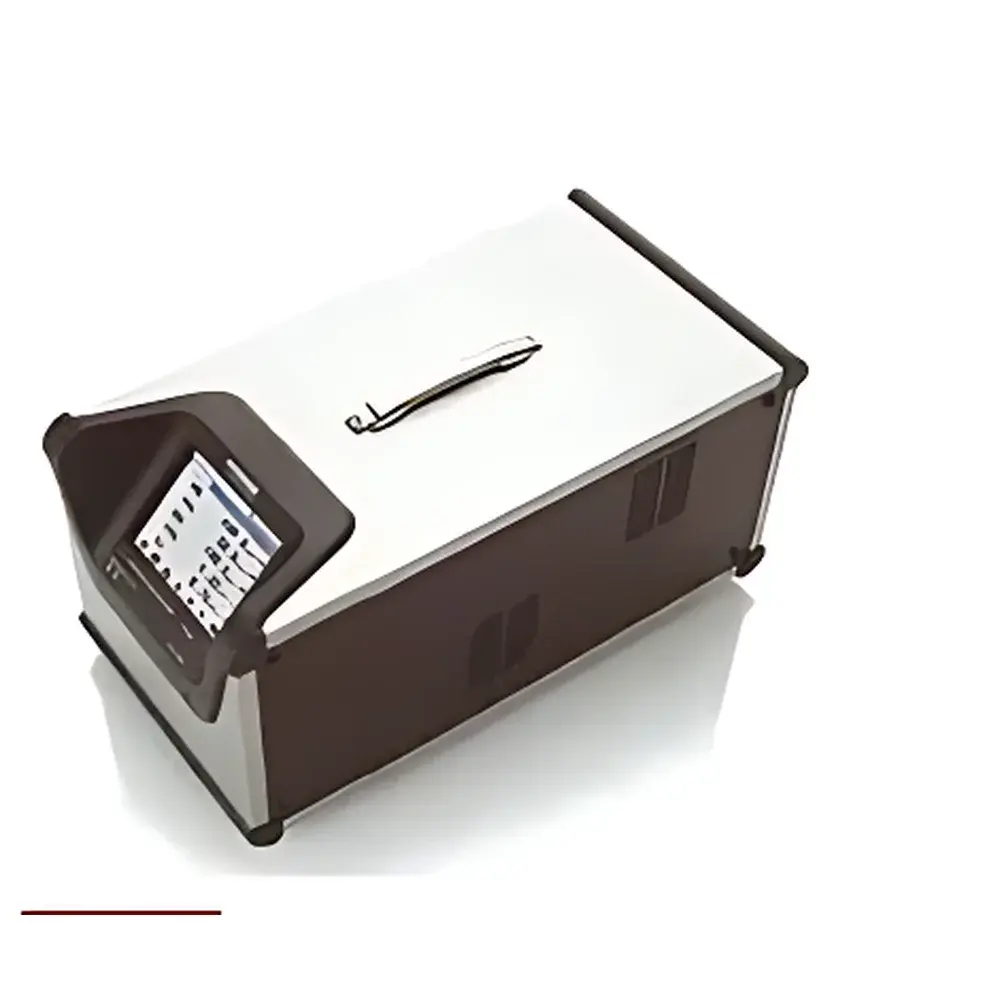
HORIBA PG-350 Portable Multi-Gas Analyzer
| Brand | HORIBA |
|---|---|
| Origin | Japan |
| Model | PG-350 |
| Instrument Type | Portable |
| Detection Targets | NOₓ, SO₂, CO, CO₂, O₂ |
| Measurement Principle | Pulsed Flow Modulation Chemiluminescence (NOₓ), Pulsed Flow Modulation NDIR (SO₂, CO, CH₄), Broadband NDIR (CO₂), Galvanic Cell (O₂) |
| Range Options | NOₓ: 0–25 to 2500 ppm (7 ranges) |
| SO₂ | 0–200 to 3000 ppm (4 ranges) |
| CO | 0–200 to 5000 ppm (5 ranges) |
| CO₂ | 0–10 to 30 vol% |
| O₂ | 0–5 to 25 vol% |
| CH₄ | 0–2000/5000 ppm |
| Repeatability | ±1.0% FS |
| Drift | ±1.0% FS/day (SO₂: ±2.0% FS/day) |
| Linearity | ±2.0% FS |
| Response Time (T₉₀) | ≤45 s (SO₂: ≤180 s) |
| Sample Flow Rate | ~0.5 L/min |
| Warm-up Time | 30 min |
| Operating Temperature | 5–40 °C |
| Relative Humidity | ≤85% RH |
| Dimensions | 226 × 265 × 510 mm (W×H×D) |
| Weight | ~14 kg |
| Certifications | TÜV (EU), MCERTS (UK), GOST-R (Russia), ETV (USA), China Metrology Certification (CMC), Korea KOLAS, Japan JIS/JCSS |
Overview
The HORIBA PG-350 is a high-performance portable multi-gas analyzer engineered for field-deployable, laboratory-grade quantification of flue gas and ambient combustion emissions. It employs a rigorously validated combination of measurement principles: pulsed flow modulation chemiluminescence (PFM-CL) for nitrogen oxides (NOₓ), pulsed flow modulation non-dispersive infrared (PFM-NDIR) for sulfur dioxide (SO₂), carbon monoxide (CO), and methane (CH₄), broadband non-dispersive infrared (NDIR) for carbon dioxide (CO₂), and electrochemical galvanic cell detection for oxygen (O₂). This hybrid optical–electrochemical architecture ensures high selectivity, minimal cross-sensitivity, and robust performance under variable sampling conditions—critical for compliance monitoring, catalyst evaluation, and engine/fuel cell R&D. Designed to meet the operational demands of continuous emission monitoring system (CEMS) backup, stack testing, and mobile source characterization, the PG-350 delivers trace-level resolution and metrological traceability aligned with international regulatory frameworks.
Key Features
- Integrated five-gas analysis (NOₓ, SO₂, CO, CO₂, O₂) in a single, self-contained portable unit—with optional CH₄ channel extension
- Pulsed flow modulation technology eliminates zero drift caused by thermal or pressure fluctuations, enhancing long-term stability during unattended field operation
- Full-system calibration capability—including sample conditioning module (e.g., heated line, electronic condensate trap, automatic purge)—validated against certified reference gases per ISO 12039 and EN 15267
- Color TFT-LCD touchscreen interface with real-time trend visualization, on-screen step-by-step guidance, and intuitive menu navigation
- Automated diagnostic logging: calibration history, alarm events, sensor health status, and fault codes—all timestamped and exportable via SD card
- Dual communication interfaces: isolated 4–20 mA analog outputs (per gas channel) and Ethernet (TCP/IP) for integration into SCADA, LIMS, or cloud-based data platforms
- Intelligent power management: programmable auto-start/sleep cycles, manual or scheduled purge/flush sequences, and temperature-compensated condensate drainage
- Ruggedized mechanical design: IP54-rated enclosure, shock- and vibration-damped internal optics, and modular sensor cartridges for rapid field replacement
Sample Compatibility & Compliance
The PG-350 is qualified for direct measurement of hot, humid, and particulate-laden sample streams from industrial stacks, boiler exhausts, and engine test benches—provided upstream conditioning meets manufacturer-specified inlet criteria (dew point < 4 °C, particulate < 1 µm, no corrosive aerosols). Its measurement uncertainty budget conforms to EN 14181 (QAL2/QAL3 requirements) and supports periodic verification per US EPA Methods 6C, 7E, 10, and 3A. Certified to TÜV Rheinland (EU), MCERTS (UK), GOST-R (Russia), ETV (US EPA), China CMC (JJG 968–2021), Korea KOLAS (KRISS-TR-2020-01), and Japanese JIS B 7982, the instrument satisfies audit readiness for GLP/GMP environments and regulatory submissions requiring 21 CFR Part 11–compliant electronic records (when paired with validated data acquisition software).
Software & Data Management
Data acquisition and reporting are managed through HORIBA’s proprietary PG-Link software suite, supporting configuration, real-time remote monitoring, and post-acquisition validation. All measurements include embedded metadata: timestamp (NTP-synced), ambient temperature/pressure, flow rate, calibration gas IDs, and operator ID. Raw data are stored on removable SD cards in CSV format with user-definable logging intervals (1 s to 60 min). Audit trails record every parameter change, calibration event, and system alert with immutable timestamps—enabling full forensic reconstruction for QA/QC review. Exported datasets comply with ASTM D6522 (gaseous emissions) and ISO 5167–4 (flow reporting) formatting conventions.
Applications
- CEMS redundancy and periodic verification in power plants, cement kilns, and waste incinerators
- In-situ combustion efficiency assessment and air–fuel ratio optimization in industrial boilers and furnaces
- Catalyst deactivation studies and SCR/SNCR performance mapping under transient load conditions
- Mobile emissions testing for diesel/gasoline engines, marine propulsion systems, and stationary generators
- Fuel cell stack exhaust characterization (H₂ crossover impact on CO/CO₂/O₂ balance)
- University and government lab research on low-carbon fuel combustion, biomass pyrolysis off-gas, and biogas upgrading validation
FAQ
What gas species does the PG-350 measure as standard, and can it be expanded?
The PG-350 measures NOₓ, SO₂, CO, CO₂, and O₂ simultaneously. A factory-configurable CH₄ channel is available as an option.
Is the instrument suitable for hot, wet stack gas without external conditioning?
No. While the PG-350 includes an integrated electronic condensate trap and heated sample line interface, upstream conditioning (e.g., particle filtration, thermoelectric cooling to ≤4 °C dew point) is required per ISO 16911 and EN 15267 specifications.
How is calibration traceability maintained across global regulatory jurisdictions?
All factory calibrations use NIST-, NPL-, or NMIJ-traceable reference gases. Certificate of Calibration includes uncertainty budgets compliant with ISO/IEC 17025 and EU Regulation (EC) No 715/2007 Annex I.
Does the PG-350 support automated zero/span checks during unattended operation?
Yes. Programmable auto-calibration sequences can be scheduled and logged, with results archived to SD card and flagged in the event log if tolerance thresholds are exceeded.
What is the minimum warm-up time before achieving specified accuracy?
30 minutes at ambient temperature (23 °C); full metrological specification (±2.0% FS over 2 hours) is guaranteed after this period under stable environmental conditions.
Related Products







