
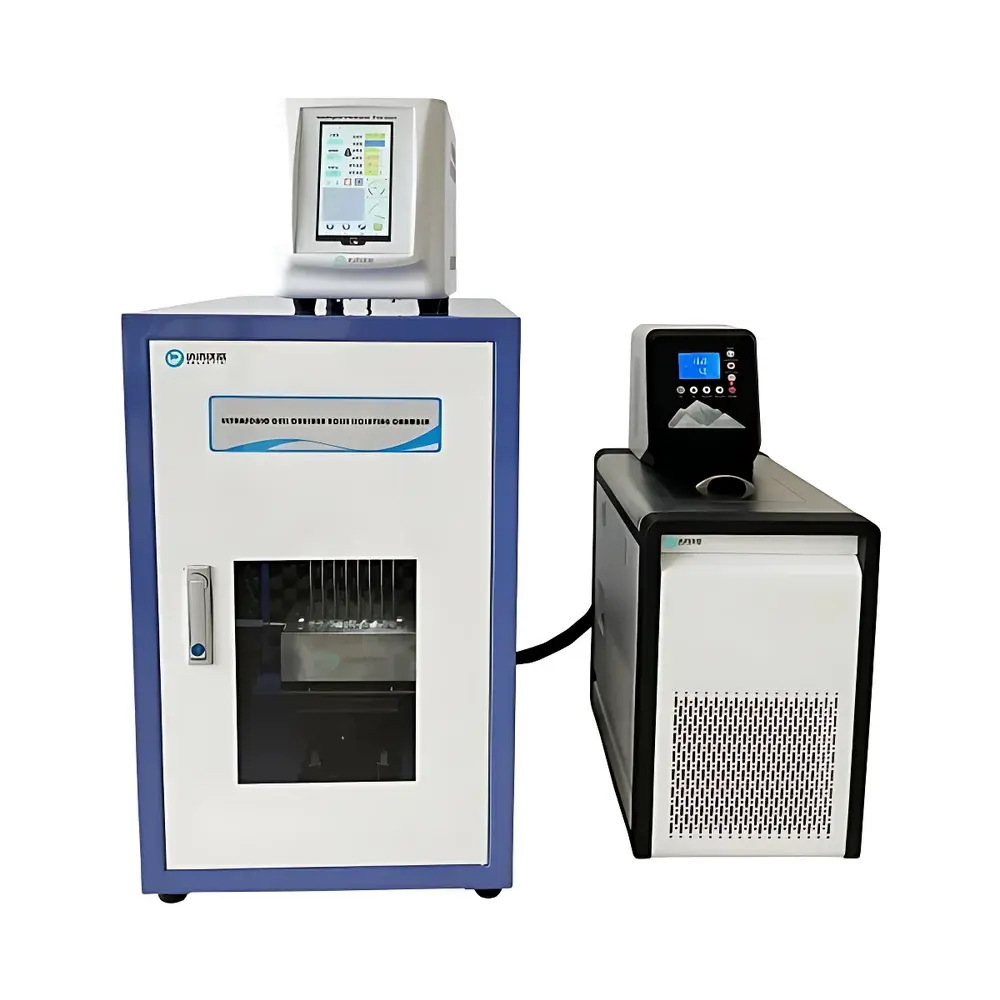
Daxluot Daxluot-24S 24-Channel High-Intensity Ultrasonic Cell Disruptor
| Brand | Daxluot |
|---|---|
| Origin | Shanghai, China |
| Manufacturer Type | Authorized Distributor |
| Product Category | Domestic |
| Model | Daxluot-24S |
| Instrument Type | Ultrasonic Cell Disruptor |
| Ultrasonic Power | 25–2500 W (adjustable) |
| Operating Frequency | 20–25 kHz (auto-tracking) |
| Temperature Range | −5 to 100 °C |
| Sample Volume per Channel | 0.1–5 mL |
| Number of Simultaneous Samples | 24 |
| Display | 7-inch TFT Touchscreen |
| Data Storage | 20 Preset Protocols |
| Amplitude Control | Auto-compensated |
| Probe Material | Titanium Alloy (Grade 5) |
| Safety Features | Overtemperature, Overpower, and Overtime Protection |
| Cooling Interface | Integrated Low-Temperature Circulating Rack (−5 to 100 °C) |
| Communication Option | RS-232/USB (optional) |
| Footswitch Support | Optional |
Overview
The Daxluot Daxluot-24S is a high-throughput, multi-channel ultrasonic cell disruptor engineered for reproducible, scalable lysis of biological samples under controlled thermal and mechanical conditions. It operates on the principle of high-intensity focused ultrasound (HIU), generating cavitation-induced shear forces within liquid media to mechanically fracture cellular membranes, organelles, and subcellular structures without chemical or enzymatic intervention. Unlike single-probe sonicators—where sequential processing introduces inter-sample variability—the Daxluot-24S employs 24 synchronized titanium alloy probes (Φ2 mm), each independently coupled to a high-efficiency piezoelectric transducer. This parallel architecture ensures identical acoustic energy delivery across all 24 channels, eliminating batch-to-batch drift and supporting statistically robust experimental design in genomics, proteomics, and bioprocessing workflows.
Key Features
- 24-channel parallel processing with independent amplitude compensation—maintains consistent cavitation intensity across variable sample viscosities and volumes (0.1–5 mL per tube).
- Auto-frequency tracking (20–25 kHz) dynamically locks onto resonant frequency during operation, preserving energy transfer efficiency as probe loading or temperature changes occur.
- Titanium alloy (Grade 5) probes resist corrosion from acidic, basic, and organic solvents—validated for repeated use in RIPA, TRIzol®, SDS-based, and chaotropic lysis buffers.
- Integrated low-temperature circulating rack (−5 to 100 °C) enables real-time thermal management; critical for preserving labile epitopes, native protein complexes, and chromatin integrity during sonication.
- Microprocessor-controlled protocol storage (20 user-defined methods) with timestamped parameter logging—including duty cycle (0.1–99.9 s ON/OFF), total duration (up to 99 h 59 min 59 s), and power ramping profiles.
- Comprehensive safety architecture: hardware-level overtemperature cutoff (±0.5 °C accuracy), instantaneous overpower shutdown (<10 ms response), and elapsed-time termination with audible/visual alarm.
- 7-inch capacitive touchscreen interface with intuitive icon-driven navigation—designed for glove-compatible operation in biosafety cabinets and cleanroom environments.
Sample Compatibility & Compliance
The Daxluot-24S accommodates standard 1.5 mL and 2.0 mL microcentrifuge tubes (including low-retention and skirted variants) via precision-machined aluminum racks. It supports diverse biological matrices: mammalian and insect cell suspensions, bacterial pellets (E. coli, Bacillus spp.), yeast spheroplasts, plant tissue homogenates, viral lysates, and environmental samples (e.g., soil slurries, biofilm digests). All operational parameters comply with ISO 13485-aligned manufacturing practices. While not FDA-cleared as a medical device, its programmable audit trail (via optional PC software) meets GLP/GMP documentation requirements for method validation under USP and ASTM E2500-22. Temperature calibration is traceable to NIST-certified reference thermistors.
Software & Data Management
The instrument supports optional RS-232 or USB communication for bidirectional data exchange with Windows-based control software. This software enables remote protocol deployment, real-time monitoring of power draw and junction temperature, and export of CSV-formatted logs compliant with 21 CFR Part 11 Annex 11 requirements—including electronic signatures, user access tiers, and immutable audit trails. All stored methods include metadata fields for SOP version, operator ID, and sample batch number—facilitating alignment with LIMS integration standards (e.g., LabWare, STARLIMS).
Applications
- Chromatin shearing for ChIP-seq and ATAC-seq library preparation—achieving narrow fragment size distributions (150–500 bp) with ≤5% CV across 24 replicates.
- High-yield extraction of membrane proteins and inclusion bodies from E. coli BL21(DE3) cultures without denaturant pre-treatment.
- Soil metagenomic DNA isolation—disruption of Gram-positive spores and fungal hyphae while minimizing humic acid co-extraction.
- Pre-analytical homogenization of botanical extracts (e.g., ginseng root, turmeric rhizomes) for HPLC-MS quantification of active alkaloids and curcuminoids.
- Accelerated transesterification in biodiesel synthesis—reducing reaction time by >70% versus conventional heating at equivalent catalyst loading.
- Nanomaterial dispersion: exfoliation of graphene oxide and stabilization of CeO₂ nanoparticles in aqueous suspension for catalytic screening assays.
FAQ
Is the Daxluot-24S compatible with cryogenic sample handling?
Yes—the integrated circulating rack accepts external chiller units (e.g., Huber Ministat) to maintain sub-zero temperatures (−5 °C) during sonication, essential for heat-sensitive targets such as RNA-binding proteins.
Can probe wear be monitored objectively?
Each titanium probe includes a laser-etched serial number and is qualified for ≥5,000 cycles at 2500 W; wear is assessed via post-use impedance spectroscopy using the optional diagnostic module.
Does the system support IQ/OQ/PQ documentation packages?
Daxluot provides vendor-validated IQ/OQ templates aligned with ISO/IEC 17025; PQ execution requires site-specific performance testing per your internal SOPs.
What maintenance intervals are recommended?
Transducer coolant replacement every 12 months; probe tip inspection and torque verification every 200 operating hours; annual calibration of temperature and power sensors by authorized service centers.
How is cross-contamination prevented between channels?
Probes are physically isolated with ≥8 mm center-to-center spacing; rack design prevents aerosol bridging; optional UV-C irradiation module (254 nm) is available for automated decontamination between runs.





