Hanuo HN-1000D Constant-Temperature Sealed Ultrasonic Reactor
| Brand | Hanuo |
|---|---|
| Origin | Shanghai, China |
| Model | HN-1000D |
| Instrument Type | Ultrasonic Cell Disruptor |
| Ultrasonic Power | 50–1000 W (continuously adjustable) |
| Operating Frequency | 20–30 kHz (auto-tuned, LCD-displayed) |
| Temperature Control Range | −5 to 100 °C (optional −120 to 300 °C) |
| Sample Volume Capacity | 50–600 mL (glass double-jacketed reactors: 50 / 100 / 250 / 500 mL) |
| Stirring Speed | 0–2400 rpm (magnetic, continuously adjustable) |
| Horn Diameter | Φ10 mm or Φ12 mm (titanium alloy, immersion-type) |
| Pulse Mode | Independent on/off control, adjustable pulse duration and automatic pulse counting |
| Sealing Interface | Standard ground-glass joints (e.g., 24/24, 50/50), custom configurations available |
| Cooling/Heating Medium | Circulating water or thermal oil via jacket |
| Compliance | Designed for GLP-compliant lab environments |
Overview
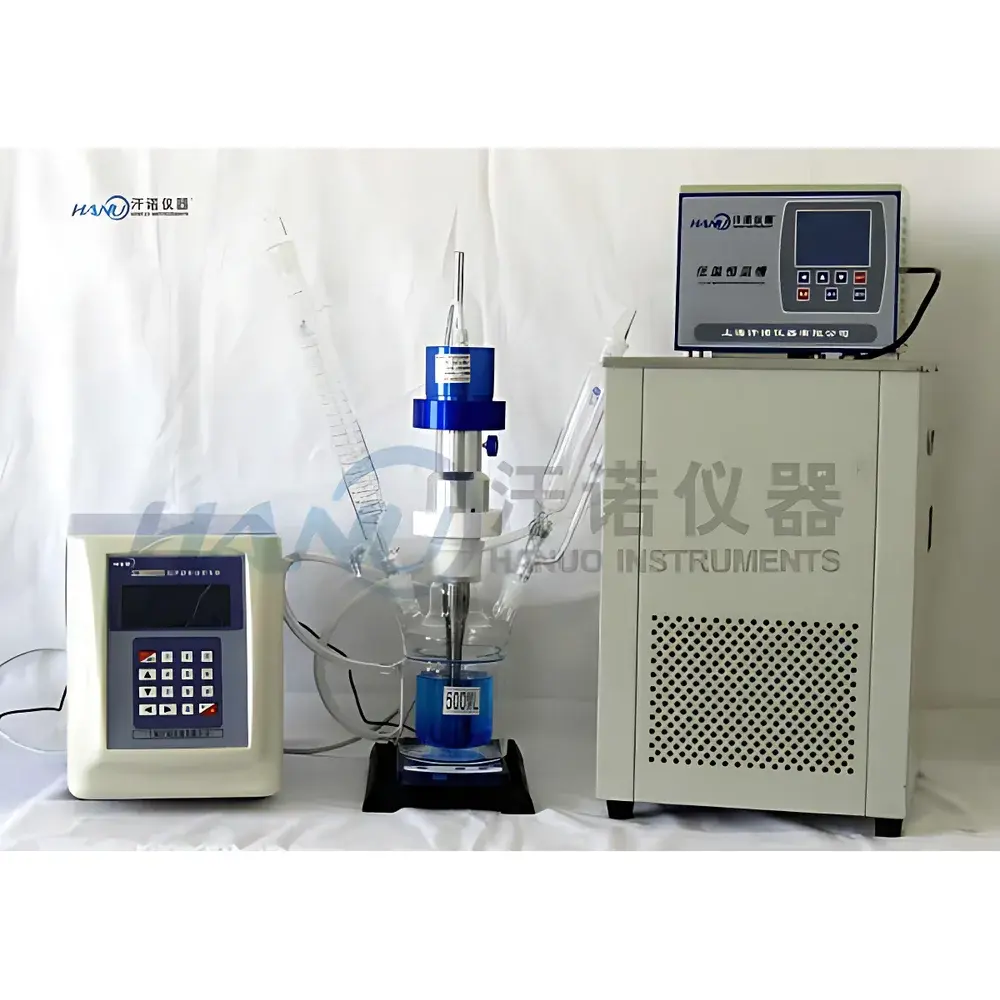
The Hanuo HN-1000D Constant-Temperature Sealed Ultrasonic Reactor is an engineered platform for controlled sonochemical synthesis, enzymatic lysis, nanoparticle dispersion, and cell disruption under precisely regulated thermal and atmospheric conditions. It operates on the principle of high-intensity ultrasonic cavitation—generated via piezoelectric transduction at 20–30 kHz—delivered through a titanium alloy horn immersed directly into the reaction medium. Unlike open-bath or probe-based systems, the HN-1000D integrates a fully sealed, double-jacketed glass reactor vessel, enabling inert gas purging (e.g., N₂, Ar), vacuum-assisted degassing, or pressure-stabilized reactions. Its closed architecture eliminates solvent volatilization, operator exposure to aerosols, and cross-contamination—critical for reproducible bioprocessing and regulatory-compliant workflows in academic, pharmaceutical, and industrial R&D laboratories.
Key Features
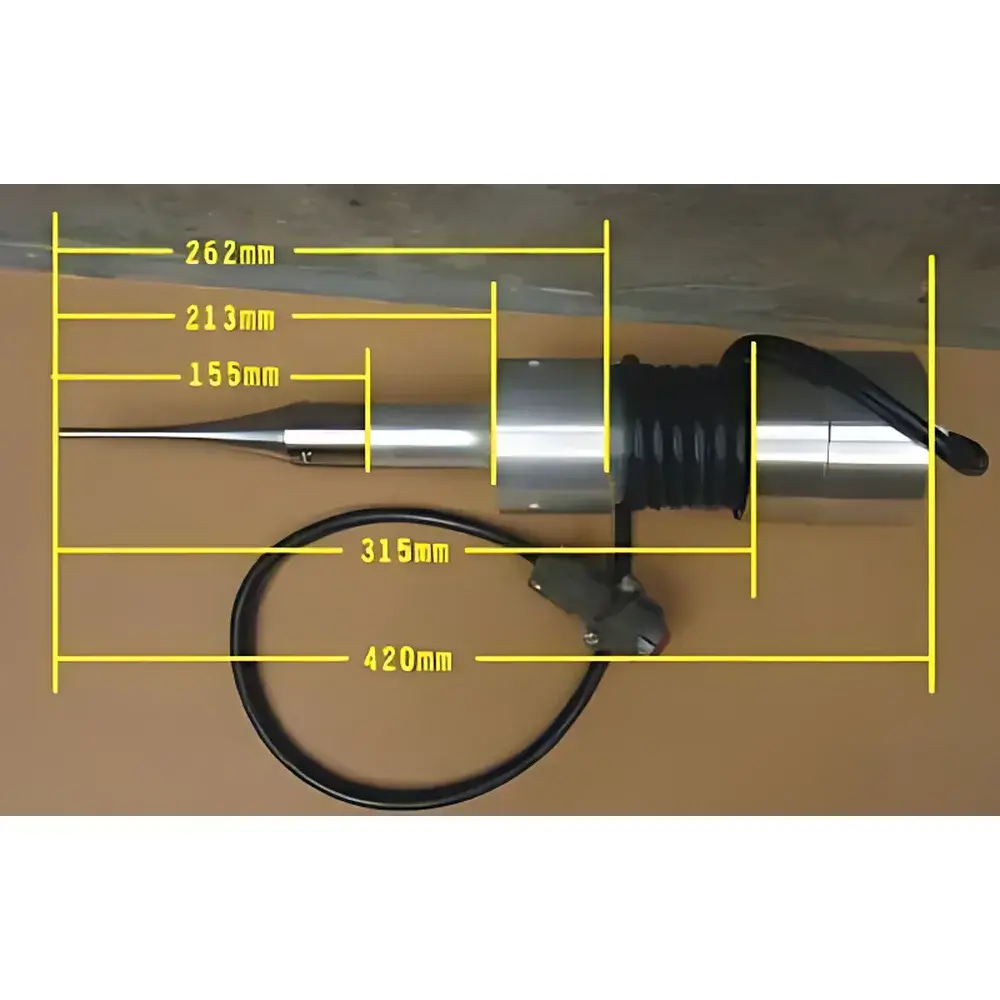
- Immersion-type titanium ultrasonic horn (Φ10 mm or Φ12 mm) ensures efficient energy transfer and corrosion resistance in aqueous, organic, and mildly acidic/basic media.
- Sealed double-jacketed borosilicate glass reactors (50, 100, 250, and 500 mL options) with standard taper joints (24/24, 50/50) allow modular integration with reflux condensers, dropping funnels, gas spargers, and vacuum lines.
- Precise temperature regulation from −5 °C to 100 °C (−120 °C to 300 °C optional) via external chiller/oil circulator connected to the reactor jacket; Pt100 sensor immersed directly in sample provides real-time feedback for ±0.3 °C stability.
- Independent ultrasonic pulse control: adjustable on/off timing (10 ms–999 s), programmable cycle count, and automatic logging—essential for minimizing thermal accumulation during sensitive biomolecular processing.
- Integrated high-torque magnetic stirrer (0–2400 rpm, continuous adjustment) ensures homogeneous suspension of particulates, catalysts, or cells during sonication—eliminating sedimentation artifacts and enhancing mass transfer efficiency.
- LCD interface displays real-time frequency, power output (% and W), temperature setpoint/actual, stirring speed, and pulse parameters; all settings are non-volatile and recallable.
Sample Compatibility & Compliance
The HN-1000D accommodates diverse sample matrices including bacterial and yeast cultures, mammalian cell suspensions, polymer emulsions, metal-organic frameworks (MOFs), and catalytic slurries. Its sealed design meets fundamental requirements for Good Laboratory Practice (GLP) and supports audit-ready documentation when paired with external data loggers. While not certified as FDA 21 CFR Part 11 compliant out-of-the-box, the system’s parameter logging capability—including timestamped power, temperature, and pulse events—enables traceability alignment with ISO/IEC 17025 and USP analytical instrument qualification frameworks. All glass components conform to DIN/ISO 385 and ISO 1042 specifications for volumetric accuracy and thermal shock resistance.
Software & Data Management
The HN-1000D operates autonomously via its embedded microcontroller; no proprietary software is required for basic operation. However, analog voltage outputs (0–5 V) for temperature, power, and RPM enable connection to third-party SCADA or LabVIEW-based acquisition systems for automated protocol execution and long-term trending. Optional RS-485 Modbus RTU interface allows integration into centralized laboratory infrastructure for remote monitoring and event-triggered alerts (e.g., temperature deviation >±1.0 °C). All operational logs—including start/stop timestamps, cumulative sonication time, and pulse history—are stored internally for ≥10,000 cycles and exportable via USB flash drive in CSV format.
Applications
- Controlled cell lysis for protein extraction without denaturation—particularly effective for Gram-negative bacteria and inclusion body solubilization.
- Sonochemical synthesis of nanomaterials (e.g., ZnO, TiO₂, Fe₃O₄) under argon atmosphere to prevent oxidation.
- Accelerated esterification, transesterification, and Suzuki coupling reactions with improved selectivity versus conventional heating.
- Preparation of stable Pickering emulsions and liposome suspensions requiring narrow polydispersity (PDI <0.2).
- In situ monitoring of crystallization kinetics using inline UV-Vis or Raman probes mounted through auxiliary ports.
- Enzyme immobilization on mesoporous silica carriers under low-temperature sonication to preserve activity.
FAQ
What safety certifications does the HN-1000D hold?
The unit complies with IEC 61010-1:2010 for electrical safety in laboratory equipment and carries CE marking for EMC and LVD directives. It is not intrinsically safe for Class I Div 1 hazardous locations.
Can the system be used for high-pressure reactions?
No—the standard glass reactors are rated for ambient pressure only. For pressurized applications, custom quartz or Hastelloy C-276 reactor assemblies must be commissioned separately.
Is the ultrasonic frequency fixed or tunable?
The system employs auto-tuning circuitry that dynamically tracks resonant frequency shifts caused by load changes (e.g., viscosity, temperature, volume), maintaining optimal energy coupling across the 20–30 kHz band.
How is calibration verified?
Users may validate temperature accuracy using a NIST-traceable Pt100 probe; ultrasonic power output can be cross-checked via calorimetric measurement per ASTM E2912 Annex A1.
What maintenance is required for long-term reliability?
Annual inspection of horn thread integrity, O-ring compression set, and magnetic stir bar coating adhesion is recommended. Titanium horns require no routine replacement unless visibly pitted or eroded after >2000 h cumulative use.