
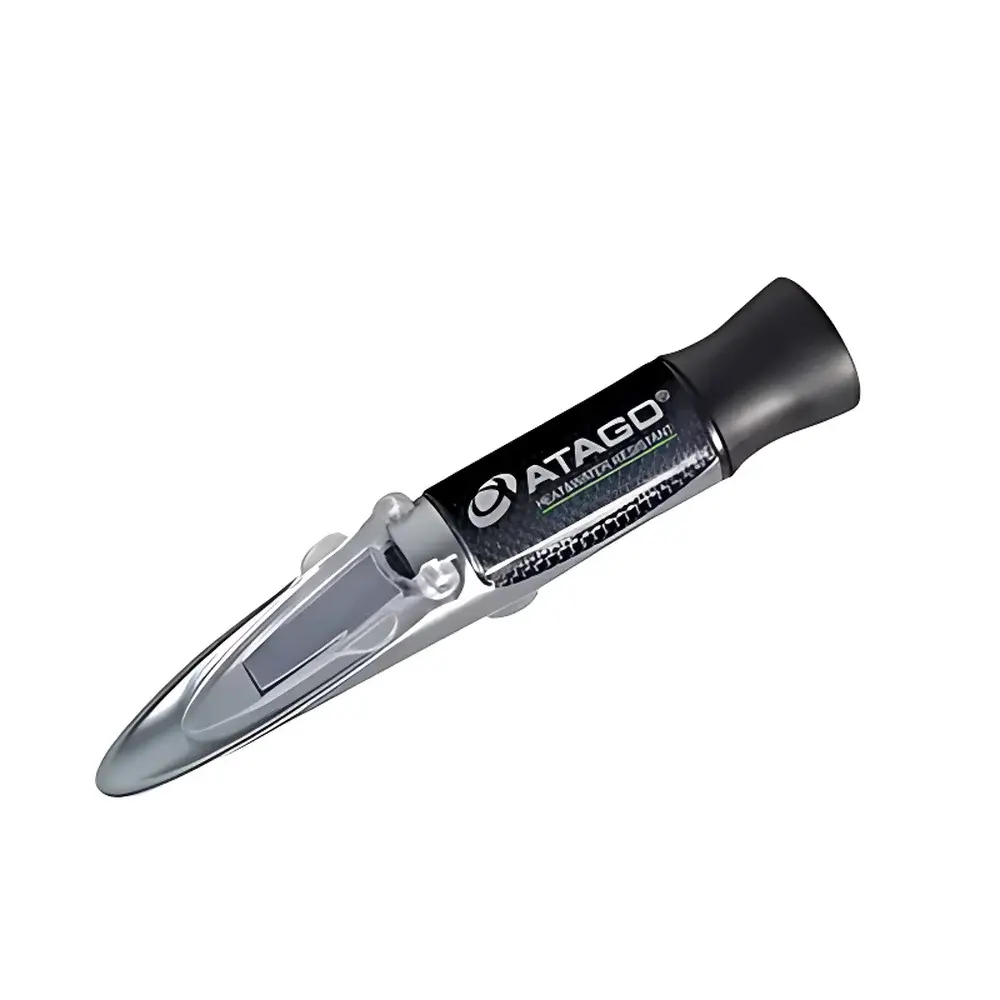
ATAGO MASTER-93H Handheld Digital Refractometer for High-Brix Food Pastes
| Brand | ATAGO |
|---|---|
| Origin | Japan |
| Model | MASTER-93H |
| Product Type | Handheld Refractometer |
| Temperature Compensation | Automatic (ATC) |
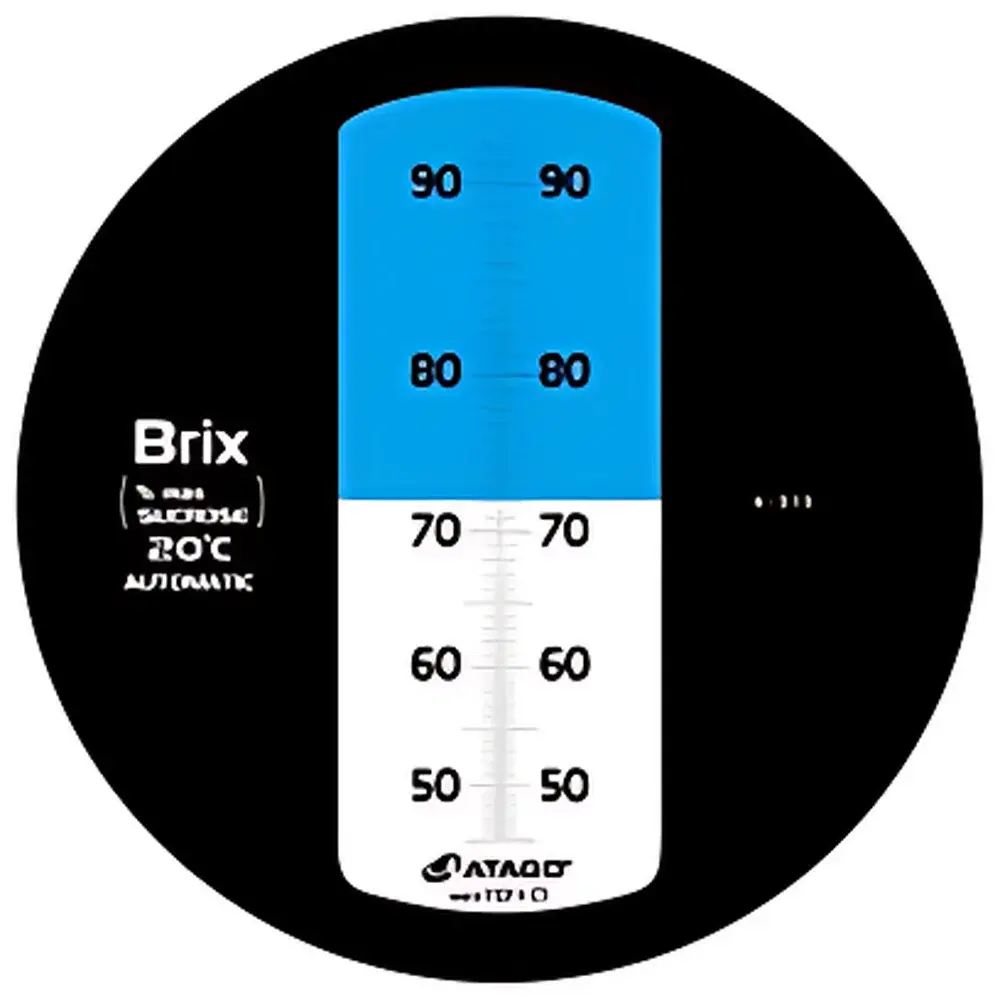
| Measurement Range | Brix 45.0–93.0% |
| Accuracy | ±0.5% Brix |
| Resolution | 0.5% Brix |
| Repeatability | ±0.25% Brix |
| Dimensions | 3.2 × 3.4 × 16.8 cm |
| Weight | 130 g |
| IP Rating | IP65 |
| Prism Material | Acid-Resistant Reinforced Glass |
Overview
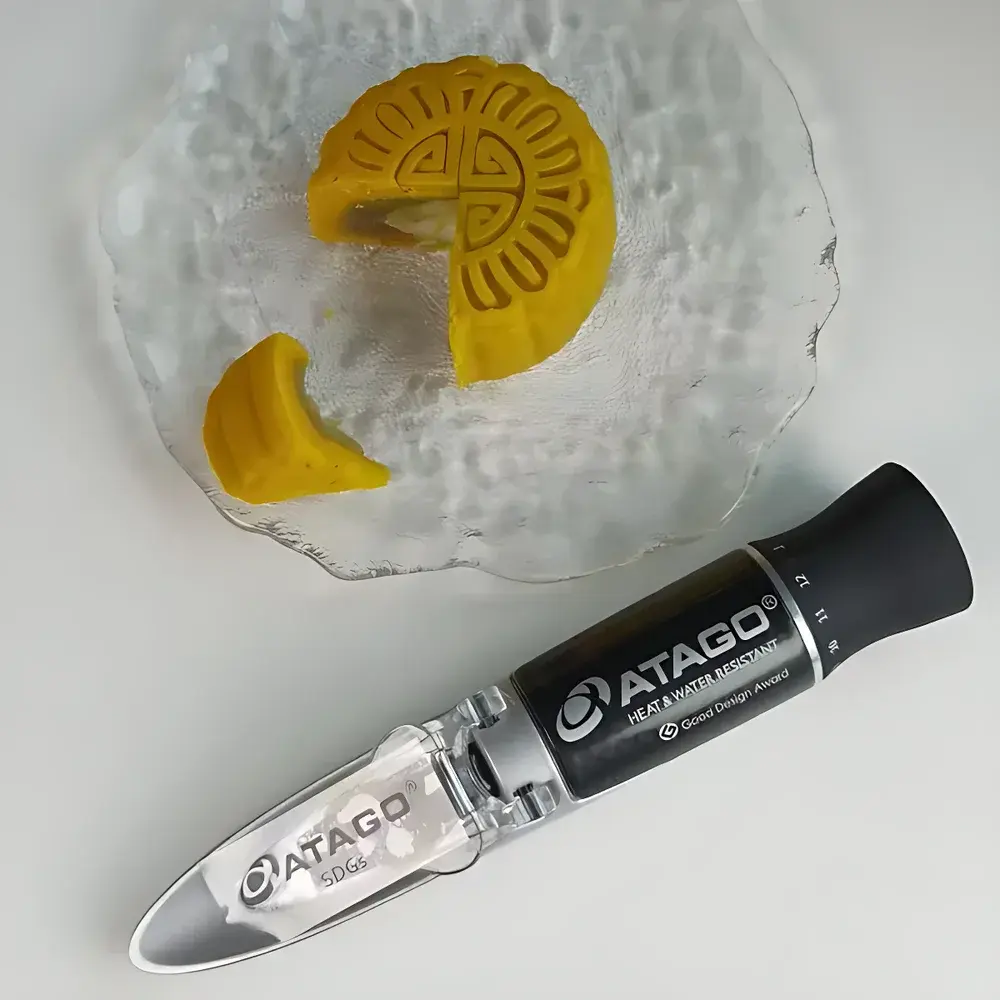
The ATAGO MASTER-93H is a precision handheld refractometer engineered specifically for high-concentration, viscous food pastes—including lotus seed paste, red bean paste, fruit jams, and other confectionery fillings used in mooncake manufacturing. It operates on the principle of total internal reflection: when light passes from the prism into the sample, the critical angle of refraction shifts proportionally to the sample’s solute concentration—expressed as % Brix (sucrose-equivalent mass fraction). Unlike conventional low-range refractometers, the MASTER-93H employs an optimized optical path and acid-resistant reinforced glass prism to maintain optical integrity and long-term calibration stability in highly acidic or high-sugar environments typical of traditional Asian confections. Its automatic temperature compensation (ATC) system—based on a built-in thermistor—corrects readings across 10–40 °C without external recalibration, ensuring consistent results despite ambient or sample temperature fluctuations common in production-floor settings.
Key Features
- Specialized high-Brix scale (45.0–93.0% Brix) tailored for dense, semi-solid food matrices where conventional 0–32% or 0–53% instruments saturate or yield unreliable readings.
- Acid-resistant reinforced glass prism—designed to withstand repeated contact with acidic fruit-based fillings (e.g., osmanthus jam, hawthorn paste) without etching or optical degradation.
- IP65-rated enclosure—providing full protection against dust ingress and low-pressure water jets, enabling safe use in humid bakery environments, QC labs, and wet processing lines.
- Compact ergonomic form factor (130 g, 16.8 cm length)—optimized for one-handed operation during rapid inline checks, minimizing operator fatigue during high-volume batch verification.
- No battery-dependent digital display—optical analog scale ensures immediate readability without power requirements, eliminating downtime due to battery failure or charging cycles.
Sample Compatibility & Compliance
The MASTER-93H accommodates viscous, non-homogeneous pastes with minimal sample volume (0.3–0.5 mL) and no dilution requirement—preserving native rheological and compositional integrity. Its robust prism surface tolerates particulate matter up to 100 µm without measurement interference, making it suitable for coarse-textured fillings such as mung bean paste with retained skins. The instrument complies with ISO 2173:2003 (fruit and vegetable products—determination of soluble solids content), and its ATC algorithm aligns with the temperature correction methodology specified in AOAC Official Method 932.12. While not certified for GLP/GMP audit trails, its mechanical design supports traceable calibration using NIST-traceable sucrose standards (e.g., RE-110050, RE-110060, or LB reference fluid RE-2100-83N), enabling documented calibration records per internal quality protocols.
Software & Data Management
As a fully analog optical instrument, the MASTER-93H does not incorporate onboard memory, Bluetooth, or software connectivity. This architecture eliminates firmware vulnerabilities, data corruption risks, and validation overhead associated with electronic data capture—making it inherently compliant with environments where regulatory simplicity is prioritized (e.g., FDA-regulated facilities operating under 21 CFR Part 11 exemptions for manual recording systems). Users log measurements manually into paper-based or LIMS-integrated spreadsheets, with calibration verification documented per shift using certified reference solutions. Optional accessories—including a portable LED illuminator (RE-1200) and calibrated storage case—support consistent field use and metrological chain continuity.
Applications
- Real-time Brix verification of mooncake fillings pre-baking to ensure optimal caramelization behavior and moisture retention.
- In-process monitoring of jam and paste cooking endpoints—reducing over-concentration (crystallization risk) or under-cooking (microbial stability concerns).
- Raw material acceptance testing for high-sugar syrups, maltose blends, and inverted sugar used in traditional pastry formulations.
- QC release testing aligned with enterprise-defined Brix specifications (e.g., 78.5 ± 1.0% for premium lotus paste) across multiple production lines.
- Supplier qualification audits—where portable, operator-independent measurement reduces subjectivity versus benchtop digital units requiring training and maintenance.
FAQ
Does the MASTER-93H require battery replacement or charging?
No—it is a purely optical instrument with no electronic components, ensuring uninterrupted operation without power dependency.
Can it measure samples below 45.0% Brix?
No—the optical scale is physically limited to 45.0–93.0% Brix; for lower concentrations, ATAGO recommends the MASTER-80H or PAL series digital models.
Is calibration traceable to international standards?
Yes—when performed using ATAGO-certified sucrose reference liquids (RE-110050, RE-110060, or RE-2100-83N), calibration meets ISO/IEC 17025 traceability requirements through ATAGO’s accredited calibration laboratory.
How often should calibration be verified in a production environment?
Per ISO 2173 and internal QA protocols, verification before each shift or after every 20 measurements—whichever occurs first—is recommended to maintain measurement confidence.
What cleaning protocol preserves prism longevity?
Wipe gently with lens tissue and distilled water after each use; avoid alcohol, acetone, or abrasive cloths, especially when residues contain organic acids or starch granules.





