
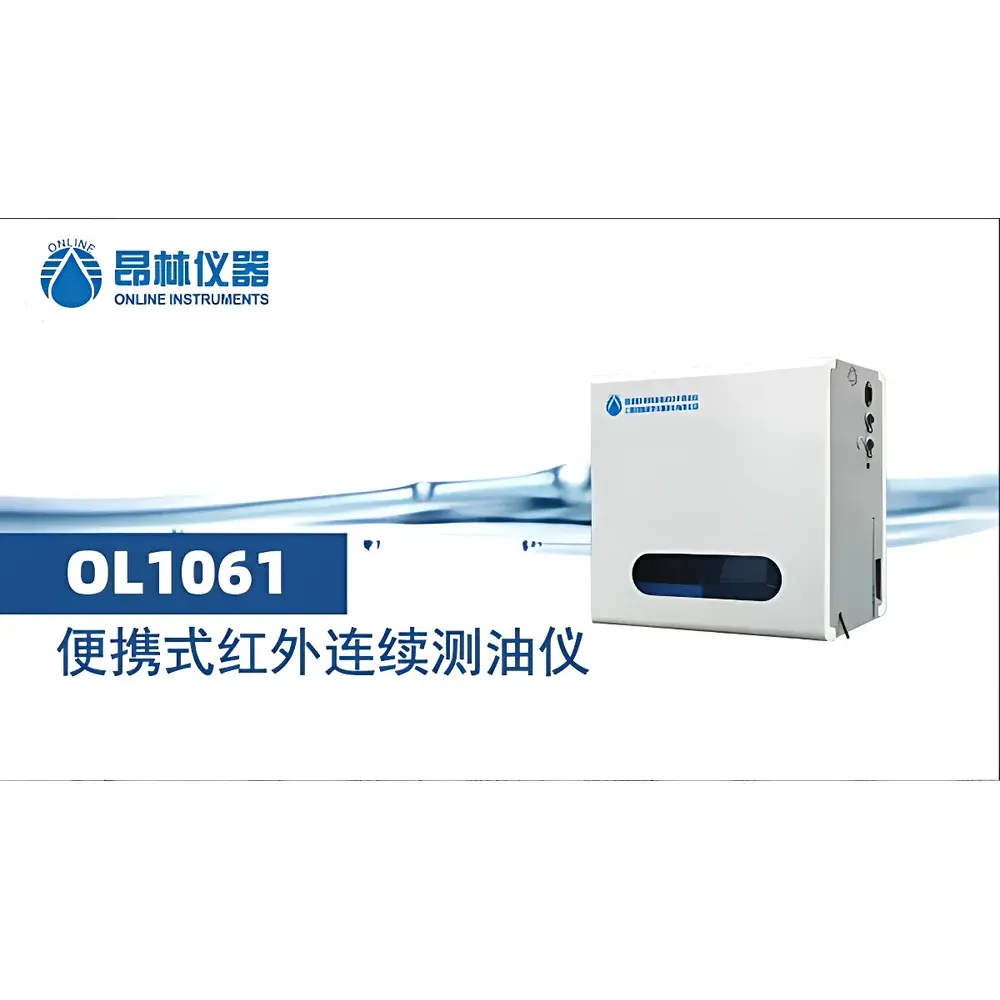
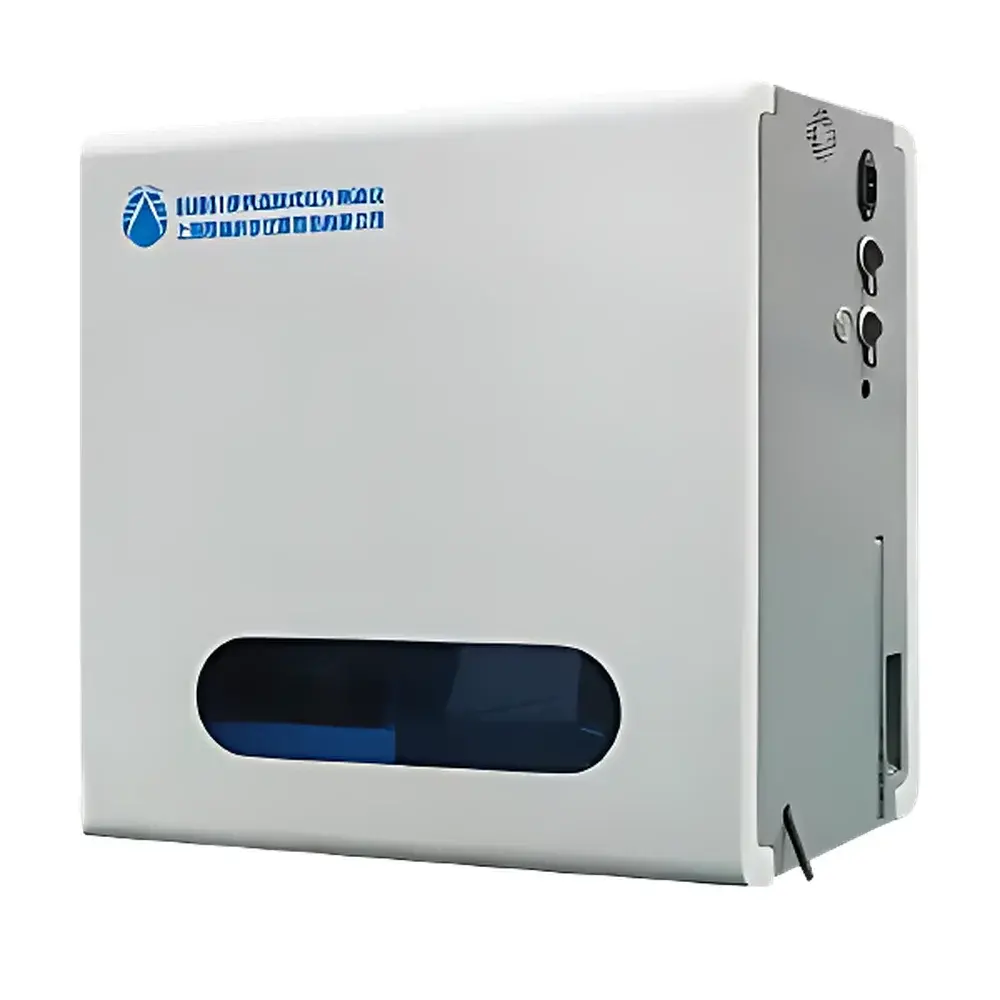
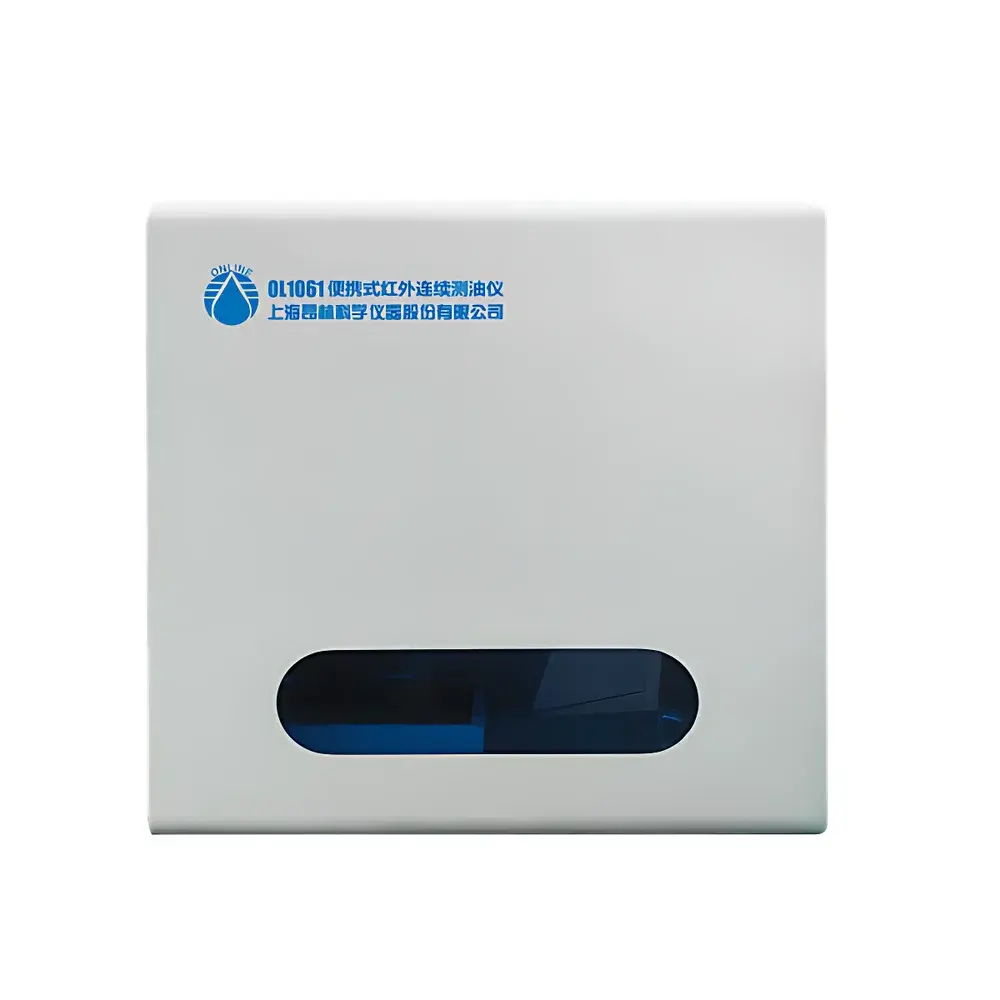
Online Instrument OL1061 Portable Continuous Infrared Oil-in-Water Analyzer
| Brand | Online Instrument |
|---|---|
| Model | OL1061 |
| Origin | Shanghai, China |
| Manufacturer Type | Direct Manufacturer |
| Instrument Type | Portable |
| Measurement Principle | Infrared Absorption (C–H Stretching Band at ~2930 cm⁻¹) |
| Measurement Range | 0–1000 mg/L |
| Detection Limit | 0.06 mg/L |
| Accuracy | ±2% of reading |
| Resolution | 0.001 mg/L |
| Extraction Solvent | Perchloroethylene (C₂Cl₄) |
| Extraction Ratio | Adjustable from 1:1 to 1:50 (solvent:sample) |
| Sampling Depth | Up to 0.5 m submersible |
| Power Supply | Integrated rechargeable battery (4 h continuous operation) |
| Data Interval | Programmable from 1–999 s |
| Interface | Touchscreen industrial PC |
| Compliance | Designed to support EPA Method 1664A, ISO 9377-2, and GB/T 16488–1996 equivalency |
Overview
The Online Instrument OL1061 is a fully integrated, portable continuous infrared oil-in-water analyzer engineered for field-deployable, real-time quantification of total petroleum hydrocarbons (TPH) and non-polar extractable organic matter—including mineral oils, diesel, lubricants, and animal/vegetable fats—in aqueous matrices. It operates on the fundamental principle of mid-infrared absorption spectroscopy, specifically targeting the asymmetric C–H stretching vibration band near 2930 cm⁻¹, which exhibits high specificity and linearity across the 0–1000 mg/L range. Unlike discrete grab-sample analyzers, the OL1061 implements continuous flow-through extraction and measurement, enabling unattended, time-resolved monitoring without manual sample handling or laboratory transfer. Its compact monolithic architecture—housing sampling probe, peristaltic pump, solvent delivery module, liquid–liquid phase separator, flow cell, IR detector, waste management system, and embedded touchscreen controller—ensures mechanical stability under mobile conditions (e.g., onboard environmental monitoring vehicles), with optical path integrity maintained during transit via shock-damped optical train design.
Key Features
- Fully automated workflow: Single-touch initiation triggers sequential steps—submersible sampling (to 0.5 m depth), intelligent volume selection based on preliminary absorbance feedback, solvent-assisted continuous liquid–liquid extraction (C₂Cl₄), gravity-assisted phase separation, flow-cell transfer, and real-time IR measurement—all completed without operator intervention.
- Adaptive sampling logic: Onboard algorithm dynamically adjusts sample intake volume (1–50 mL) in response to pre-scan spectral intensity, minimizing saturation at high concentrations and optimizing signal-to-noise ratio at trace levels.
- Robust field operability: Sealed, IP65-rated enclosure; vibration-isolated optical bench; internal Li-ion battery supporting ≥4 h of continuous operation; optional 12 V DC vehicle power input.
- Regulatory-aligned solvent handling: Perchloroethylene (C₂Cl₄) delivery system complies with EPA 1664A solvent specifications; integrated dual-chamber waste collector segregates aqueous and organic phases to prevent cross-contamination and simplify hazardous waste disposal.
- Configurable temporal resolution: Measurement interval programmable from 1 to 999 seconds, supporting both event-triggered emergency response and long-term trend logging.
Sample Compatibility & Compliance
The OL1061 is validated for use with raw and treated wastewater, surface water, groundwater, cooling tower effluents, and bilge water containing suspended solids ≤50 mg/L. It accommodates turbid and heterogeneous samples through its in-line phase separation module, which removes particulates and immiscible water droplets prior to IR detection. The instrument’s measurement protocol aligns with the technical intent of EPA Method 1664A (revision B), ISO 9377-2:2000 (Water quality — Determination of hydrocarbon oil index — Part 2: Infrared spectrometric method), and Chinese national standard GB/T 16488–1996. While not certified for GLP/GMP production environments, its audit-ready data log includes timestamped raw spectra, calibration history, solvent batch IDs, and operator-initiated annotations—facilitating traceability during regulatory inspections or QA/QC audits.
Software & Data Management
Embedded Linux-based firmware drives a 7-inch capacitive touchscreen interface with intuitive icon-driven navigation. All measurement data—including concentration values, absorbance spectra (1200–3200 cm⁻¹, 4 cm⁻¹ resolution), process status flags, and diagnostic logs—are stored locally on encrypted microSD card (≥32 GB included). USB-C export and optional Wi-Fi/4G LTE modules enable remote data retrieval and over-the-air firmware updates. A companion desktop application (Windows/macOS) supports spectral overlay, calibration curve management (linear and quadratic), method validation reporting (LOD/LOQ, precision, spike recovery), and export to CSV, PDF, or LIMS-compatible XML formats. Remote control via secure HTTPS API allows integration into centralized environmental telemetry platforms.
Applications
- Field-based compliance monitoring at municipal wastewater treatment plants, industrial discharge points (petrochemical, metal finishing, food processing), and stormwater outfalls.
- Rapid-response oil spill assessment—deployable within minutes at riverbanks, harbor interfaces, or pipeline rupture sites.
- Mobile lab operations aboard environmental surveillance vessels or mobile monitoring vans equipped with GPS-synchronized geotagging.
- Process optimization in refinery closed-loop cooling systems and offshore platform produced water treatment units.
- QA/QC verification of laboratory GC-FID or gravimetric oil analysis results through parallel field measurements.
FAQ
Does the OL1061 require daily calibration?
No—factory-calibrated with NIST-traceable oil standards; field verification using a single-point check standard (10 mg/L mineral oil in C₂Cl₄) is recommended before each deployment session.
Can it measure emulsified oil?
Yes—the continuous extraction step breaks stable oil-in-water emulsions using C₂Cl₄, ensuring quantitative recovery of both free and dispersed hydrocarbon phases.
Is perchloroethylene the only compatible extraction solvent?
It is the default and EPA-recommended solvent; alternative IR-transparent solvents (e.g., FC-40) may be used subject to user validation and re-calibration.
How is data integrity ensured during battery-powered operation?
All measurements are written to non-volatile memory before power-down; abrupt shutdown triggers automatic save-and-hibernate sequence to preserve unsent data.
What maintenance is required between deployments?
Flushing the fluidic path with clean C₂Cl₄ for 2 minutes post-use; annual optical window cleaning and pump tubing replacement per maintenance log.
Related Products







