
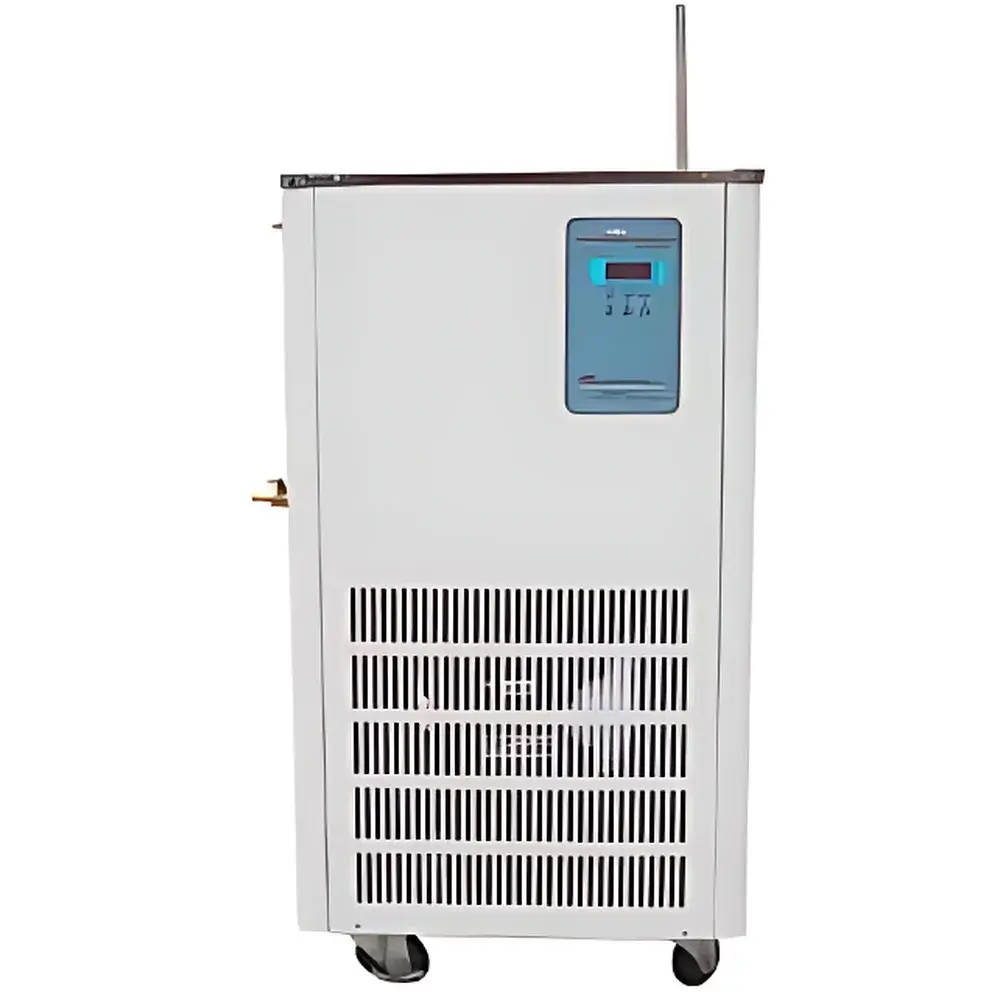
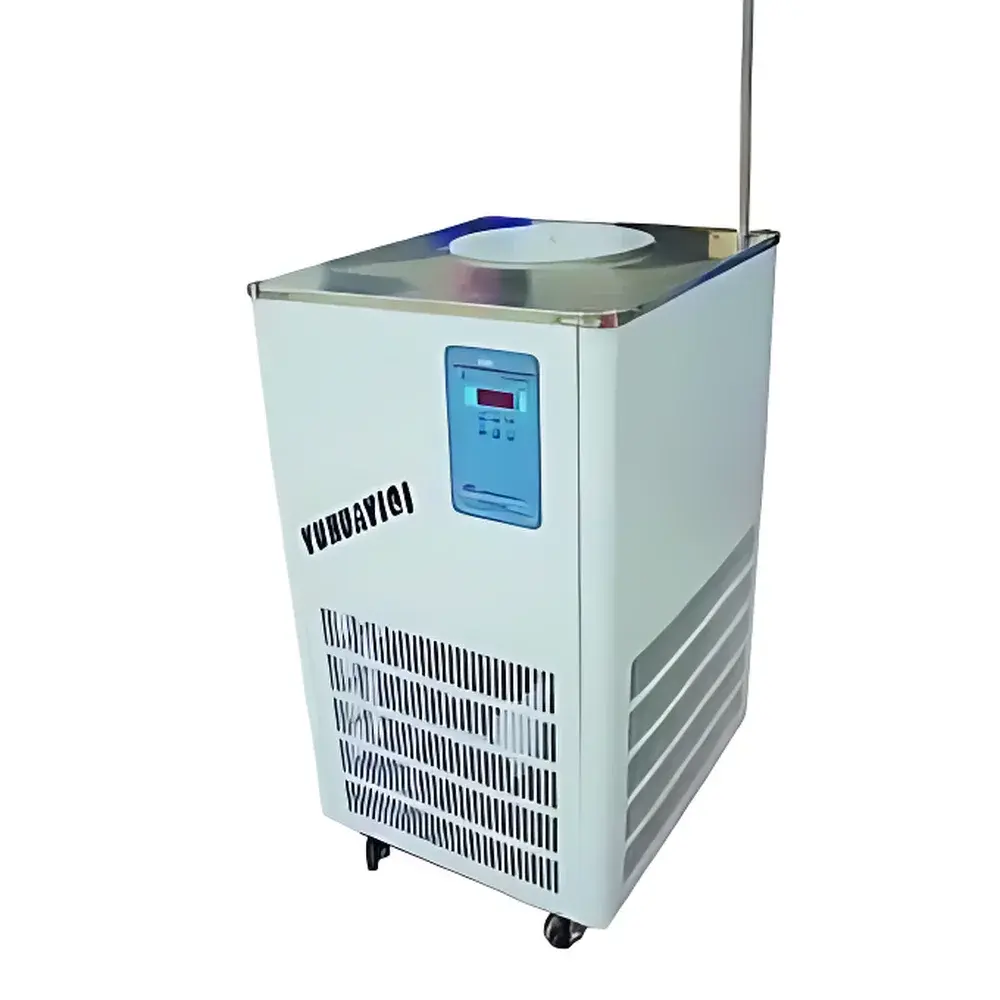
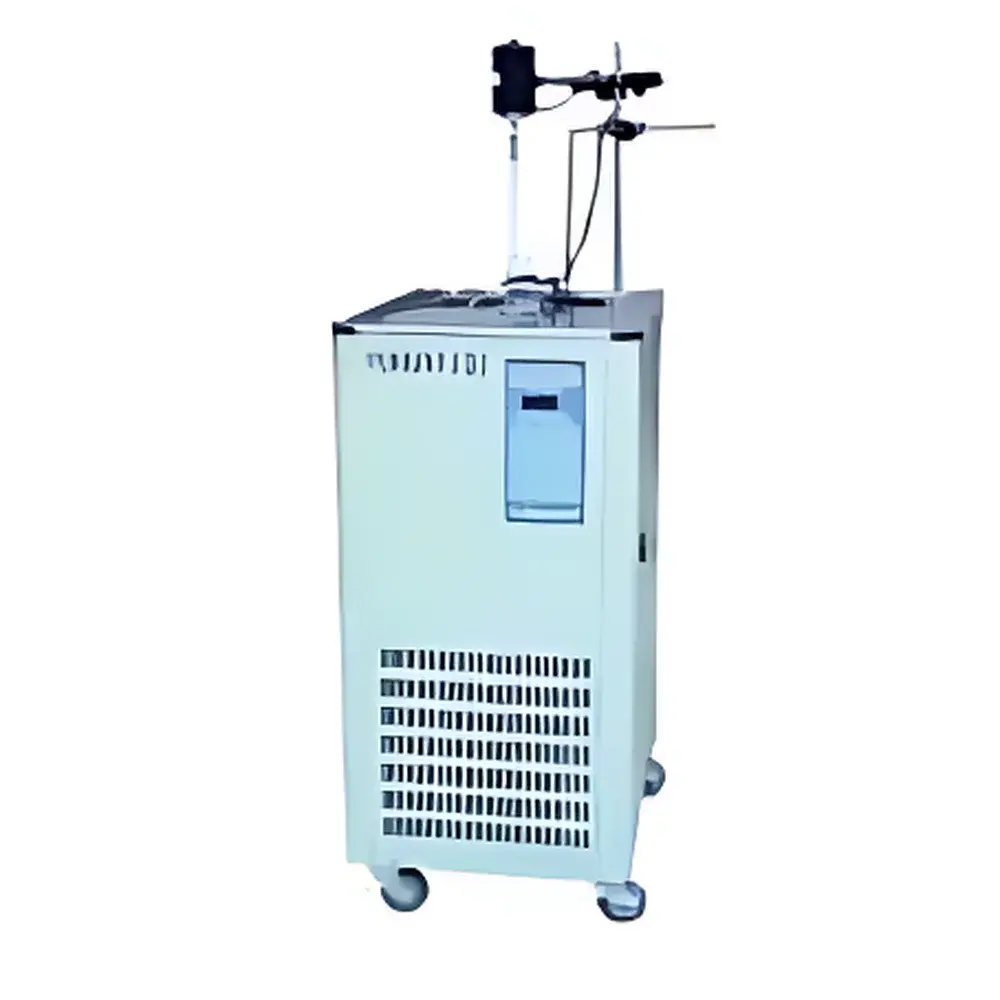
YUHUA DLSB-5/20 Cryogenic Constant Temperature Circulator
| Brand | YUHUA |
|---|---|
| Model | DLSB-5/20 |
| Reservoir Volume | 5 L |
| Minimum No-Load Temperature | -24 °C |
| Temperature Control Range | -20 °C to Room Temperature |
| Temperature Stability | ±0.2 °C |
| Flow Rate | 20 L/min |
| Head | 4–6 m |
| Refrigeration Capacity | 1328–319 W (at -20 °C) |
| Power Supply | 220 V, 50 Hz |
| Ambient Operating Temperature | ≤25 °C |
| Dimensions (W×D×H) | 500×370×540 mm |
| Weight | ~42 kg |
| Construction | Corrosion-Resistant Fluid Path |
| Compressor | Hermetic Scroll Type (Imported) |
| Controller | Microprocessor-Based Digital PID Thermostat |
| Pump Type | Sealed Magnetic Drive Circulation Pump |
Overview
The YUHUA DLSB-5/20 Cryogenic Constant Temperature Circulator is a mechanically refrigerated, closed-loop liquid circulation system engineered for precise, stable low-temperature delivery in laboratory and analytical environments. It operates on vapor-compression refrigeration principles using a high-efficiency hermetic scroll compressor and optimized R404A or R507 refrigerant circuitry—enabling reliable thermal management at sustained setpoints down to –24 °C under no-load conditions, and operationally stable control within ±0.2 °C across its full –20 °C to ambient range. Unlike open-bath chillers, the DLSB-5/20 maintains fluid integrity through a fully sealed circulation path, eliminating evaporation loss and minimizing contamination risk—critical for long-duration experiments involving sensitive biological samples, cryo-electron microscopy prep stations, or vacuum-integrated instrumentation such as sputter coaters and X-ray diffractometers.
Key Features
- Hermetically sealed, imported scroll compressor with integrated overheat and high-pressure protection—ensuring extended service life and consistent cooling performance.
- Corrosion-resistant fluid pathway constructed from stainless steel tubing, fluoropolymer-coated reservoir, and EPDM seals—compatible with water, ethylene glycol/water mixtures (up to 50%), and other non-aggressive heat-transfer fluids.
- Microprocessor-based digital temperature controller with PID algorithm, real-time display, and intuitive keypad interface—supporting ramp-soak programming and manual setpoint override.
- High-capacity magnetic drive circulation pump delivering 20 L/min at 4–6 m head—designed for low-pulsation, continuous flow into external equipment with minimal pressure drop.
- Integrated electric stirrer port enabling in-situ homogenization of bath media without external accessories—ideal for uniform thermal equilibration during reaction calorimetry or crystallization studies.
- Robust aluminum alloy chassis with acoustic insulation and rear-mounted ventilation—optimized for quiet, vibration-damped operation in shared lab spaces.
Sample Compatibility & Compliance
The DLSB-5/20 circulates thermally stable, particle-free coolant to externally connected instruments—including rotary evaporators, freeze dryers, NMR probe coolers, laser diode mounts, and vacuum deposition systems—without requiring modification to host equipment interfaces. Its fluid path meets ISO 8573-1 Class 4 particulate purity standards when used with filtered glycol solutions. While not certified to UL/CSA or CE for medical device integration, the unit complies with IEC 61010-1:2010 safety requirements for laboratory electrical equipment. It supports GLP-compliant workflows via optional data logging (RS485 Modbus RTU output), enabling traceable temperature records aligned with FDA 21 CFR Part 11 audit-trail expectations when paired with validated third-party software.
Software & Data Management
The DLSB-5/20 includes an RS485 serial interface supporting Modbus RTU protocol for integration into centralized lab monitoring platforms (e.g., LabVIEW, Ignition SCADA, or custom Python-based DAQ systems). Optional firmware upgrades enable time-stamped CSV export of temperature, compressor status, and flow alarm events. All setpoints, runtime logs, and error codes are stored in non-volatile memory—retaining configuration after power interruption. For regulated environments, users may configure password-protected parameter locks and enable event-triggered email/SMS alerts via compatible gateway hardware (not included).
Applications
- Low-temperature condensation trapping in rotary evaporation setups (–20 °C coolant supply to condenser jackets).
- Stabilized cooling of high-power laser diodes and optical parametric oscillators requiring sub-ambient thermal anchoring.
- Temperature-controlled sample staging for cryo-SEM specimen preparation and cryo-TEM grid vitrification.
- Process cooling for small-scale vacuum metallization chambers and magnetron sputtering sources where water purity and thermal drift directly impact film stoichiometry.
- Controlled-rate freezing of cell suspensions and protein formulations in biopreservation research.
- Thermal conditioning of rheological test cells, DSC pans, and dielectric spectroscopy electrodes during material characterization.
FAQ
What types of heat-transfer fluids are compatible with the DLSB-5/20?
Deionized water, 30–50% aqueous ethylene glycol, and inhibited propylene glycol solutions are recommended. Avoid chlorinated solvents, acetone, or low-viscosity hydrocarbons due to seal compatibility and flash-point risks.
Can the DLSB-5/20 be used with external reactors requiring precise temperature ramping?
Yes—the microprocessor controller supports linear ramping profiles (°C/min) and multi-step soak sequences, though external PID tuning may be required for complex exothermic reaction control.
Is remote monitoring possible without additional hardware?
Basic status readout requires an RS485-to-USB converter and Modbus-compatible terminal software; full automation integration necessitates a programmable logic controller or SCADA node.
Does the unit include over-temperature or dry-run protection?
Yes—integrated PT100 sensor feedback triggers automatic compressor shutdown if bath temperature exceeds +50 °C or flow rate drops below 5 L/min for >10 seconds.
What maintenance intervals are recommended for optimal longevity?
Compressor oil and refrigerant charge require inspection every 24 months under continuous operation; filter cartridges (if installed) should be replaced quarterly; annual calibration of the PT100 sensor is advised for metrological traceability.




