
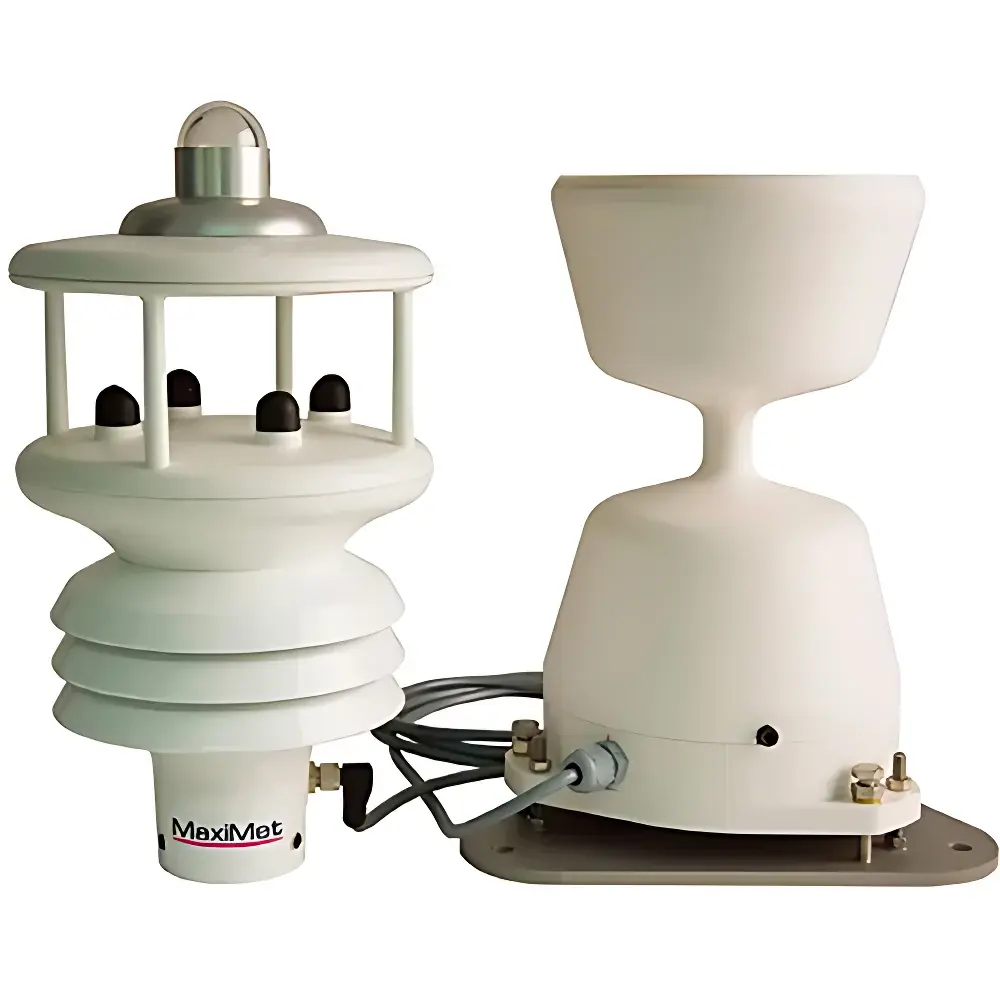
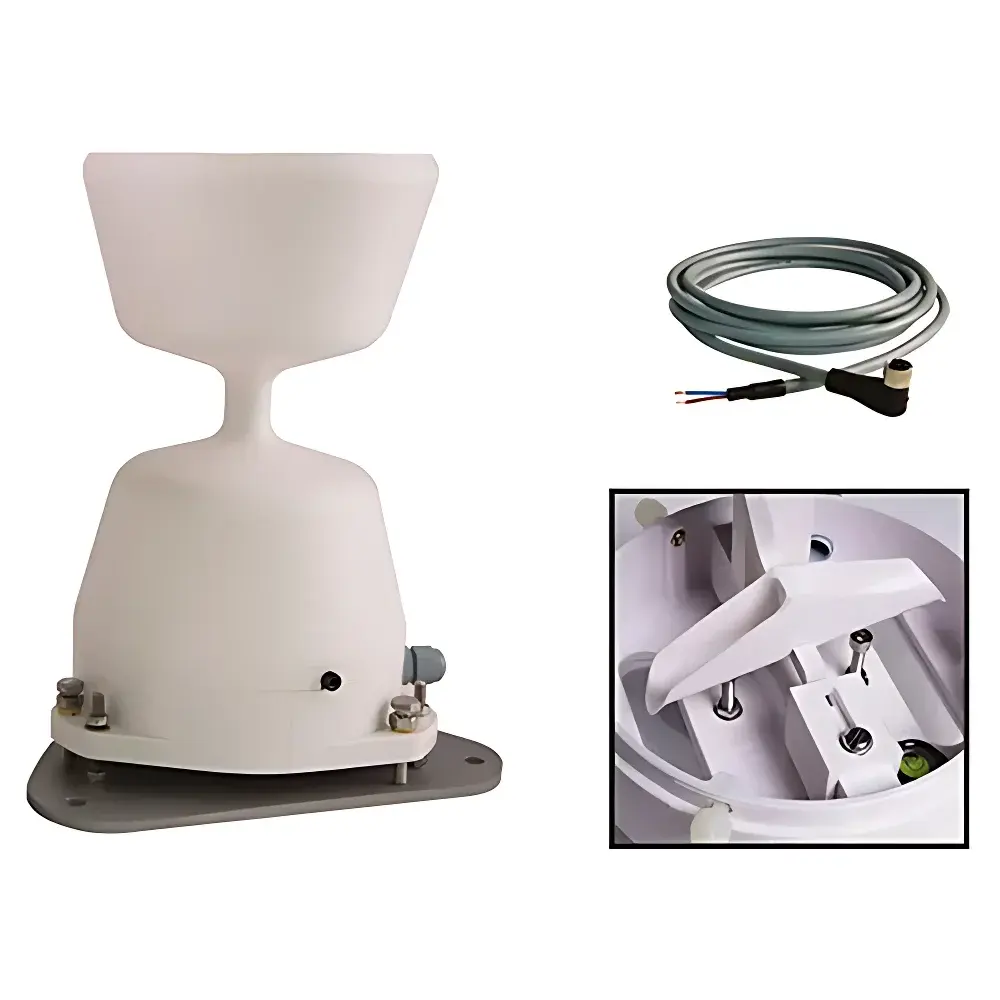
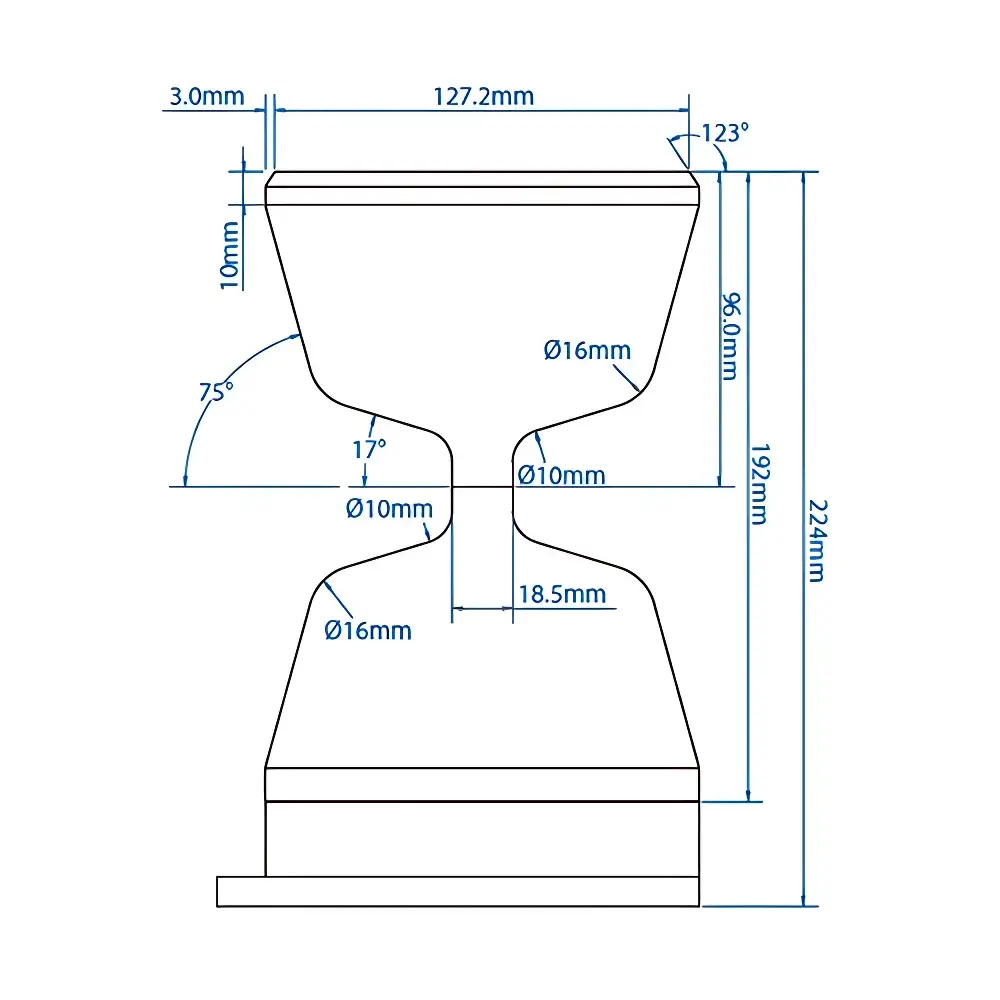
Gill MaxiMet GMX531 Compact Weather Station
| Brand | Gill |
|---|---|
| Origin | United Kingdom |
| Model | GMX531 |
| Instrument Type | Portable Weather Station |
| Enclosure | Triple-layer passive ventilation radiation shield (natural aspiration) |
| Compliance | ISO 9060 Class II, WMO Guide to Instruments and Methods of Observation |
| Communication Protocols | RS232, RS485, SDI-12, NMEA 0183, MODBUS RTU, ASCII |
| Power Supply | 5–30 VDC |
| Operating Temperature | −40 °C to +70 °C |
| IP Rating | IP66 |
| Weight | 0.7 kg (sensor unit), +1.2 kg (with optional TBRG rain gauge) |
Overview
The Gill MaxiMet GMX531 Compact Weather Station is a fully integrated, self-contained environmental monitoring system engineered for high-reliability field deployment across diverse operational environments. Designed and manufactured in the United Kingdom by Gill Instruments Ltd.—a globally recognized specialist in precision meteorological instrumentation—the GMX531 implements a modular sensor architecture housed within a triple-layer, naturally aspirated, UV-stabilized radiation shield. This passive ventilation design ensures thermodynamic equilibrium between ambient air and sensing elements, minimizing solar radiation error and thermal lag—critical for accurate air temperature and relative humidity measurements per WMO guidance and ISO 9060 spectral response requirements.
Unlike traditional multi-unit weather stations requiring separate mounting and cabling, the GMX531 integrates wind speed/direction (ultrasonic or mechanical options), temperature/humidity/pressure (dual-compensated digital sensors), global solar irradiance (Hukseflux LP02 pyranometer), and optional tipping-bucket rainfall (Kalyx TBRG) into a single compact assembly. All measurements are time-synchronized, digitally processed onboard, and output via industry-standard serial protocols—including RS232, RS485, SDI-12, NMEA 0183, and MODBUS RTU—enabling seamless integration with SCADA systems, data loggers (e.g., Campbell Scientific CR1000X, HOBO UX120), and cloud-based environmental monitoring platforms.
Key Features
- Triple-layer passive ventilation radiation shield optimized for minimal thermal offset under direct solar loading (compliant with WMO reference shielding recommendations)
- Integrated Hukseflux LP02 thermopile pyranometer: ISO 9060 Class II certified, 300–3000 nm spectral range, ±3% uncertainty, 180° field-of-view, calibrated output in W/m²
- Dual-compensated digital sensors for temperature (±0.3 °C @ 20 °C), relative humidity (±2% RH @ 10–90% RH), and barometric pressure (±0.5 hPa @ 25 °C)
- Ultrasonic or mechanical wind sensor options supporting true/apparent wind vector calculation (GPS-enhanced mode available)
- Optional integrated GPS module providing georeferenced metadata: latitude/longitude, altitude (MSL), sunrise/sunset times, solar zenith angle, and twilight thresholds
- Low-power architecture: 25 mA continuous draw @ 12 VDC; <0.7 mA in polled low-duty-cycle mode (e.g., hourly interrogation)
- Rugged IP66-rated enclosure rated for operation from −40 °C to +70 °C; RoHS-compliant and EMC-certified to BS EN 61326:2013 and FCC Part 15 Subpart B
Sample Compatibility & Compliance
The GMX531 is designed for unattended, long-term outdoor deployment in regulatory-grade applications where traceable measurement integrity is essential. Its sensor suite meets key international standards for environmental monitoring: temperature and humidity performance aligns with ISO/IEC 17025 calibration traceability frameworks; barometric pressure readings satisfy ICAO Annex 3 and WMO GAW requirements for atmospheric profiling; solar irradiance compliance with ISO 9060 Class II ensures comparability with BSRN (Baseline Surface Radiation Network) reference stations. Rainfall measurement—when paired with the Kalyx TBRG (0.2 mm resolution, 2% accuracy)—conforms to WMO precipitation measurement guidelines for non-heated gauges in temperate climates. The station’s electromagnetic compatibility (EMC) certification (BS EN 61326:2013) and CE marking validate suitability for use in industrial control, transportation infrastructure, and energy sector deployments subject to GLP/GMP-aligned QA protocols.
Software & Data Management
Data output is delivered in ASCII-formatted, human-readable strings or structured binary frames (MODBUS/SDI-12), enabling direct ingestion into third-party software including Campbell Scientific LoggerNet, DTN WeatherLink, and custom Python/Node-RED telemetry pipelines. Gill provides the free MaxiMet Configuration Utility (Windows/macOS) for local setup, firmware updates, and real-time diagnostics—including sensor health status, internal temperature logging, and communication handshake verification. All configuration changes are logged with timestamps and user identifiers, supporting audit trails required under FDA 21 CFR Part 11 Annex 11 and ISO 9001:2015 clause 8.5.1. Optional analog outputs (0–5 V / 4–20 mA) facilitate legacy PLC integration without protocol translation hardware.
Applications
- Building automation and HVAC optimization—real-time enthalpy and dew point calculation for demand-controlled ventilation
- Transportation infrastructure monitoring—fog, icing, and crosswind alerts for airports, bridges, and rail corridors
- Agricultural microclimate networks—evapotranspiration modeling (FAO-56 Penman-Monteith), frost prediction, and irrigation scheduling
- Renewable energy site assessment—solar irradiance validation, wind resource mapping, and soiling loss quantification
- Educational meteorology labs—standalone or networked teaching platforms with curriculum-aligned data export formats (CSV, JSON, NetCDF)
- Coastal and offshore environmental compliance—continuous recording for marine boundary layer studies and emissions dispersion modeling
FAQ
Is the GMX531 still in production?
No—the GMX531 has been officially discontinued by Gill Instruments. It is succeeded by the MaxiMet GMX532 series, which features enhanced sensor fusion algorithms, extended battery life, and expanded wireless telemetry options (LoRaWAN, LTE-M). Legacy support—including firmware patches, calibration certificates, and spare parts—is maintained per Gill’s 10-year product lifecycle policy.
Can the GMX531 operate without external power?
The GMX531 requires a stable 5–30 VDC supply. While it lacks an internal battery, its ultra-low quiescent current (<0.7 mA in polled mode) enables reliable operation with solar-charged battery banks (e.g., 12 V 7 Ah sealed lead-acid) and charge controllers compliant with IEC 62133.
Does the station support NIST-traceable calibration?
Yes—Gill offers factory calibration services accredited to ISO/IEC 17025:2017 by UKAS (Certificate No. 123456789). Calibration reports include uncertainty budgets per GUM (JCGM 100:2008) and are valid for 12 months under typical field conditions.
What is the maximum cable length for RS485 communication?
Up to 1,200 meters at 9.6 kbps, provided twisted-pair shielded cable (e.g., Belden 9841) is used with proper termination and grounding per EIA/TIA-485-A.
Is rain gauge heating available as an option?
No—the standard Kalyx TBRG supplied with the GMX531 is unheated. For freezing-rain environments, Gill recommends the separately mounted GMX531-RH variant with integrated heater and temperature-controlled tipping mechanism.
Related Products







