
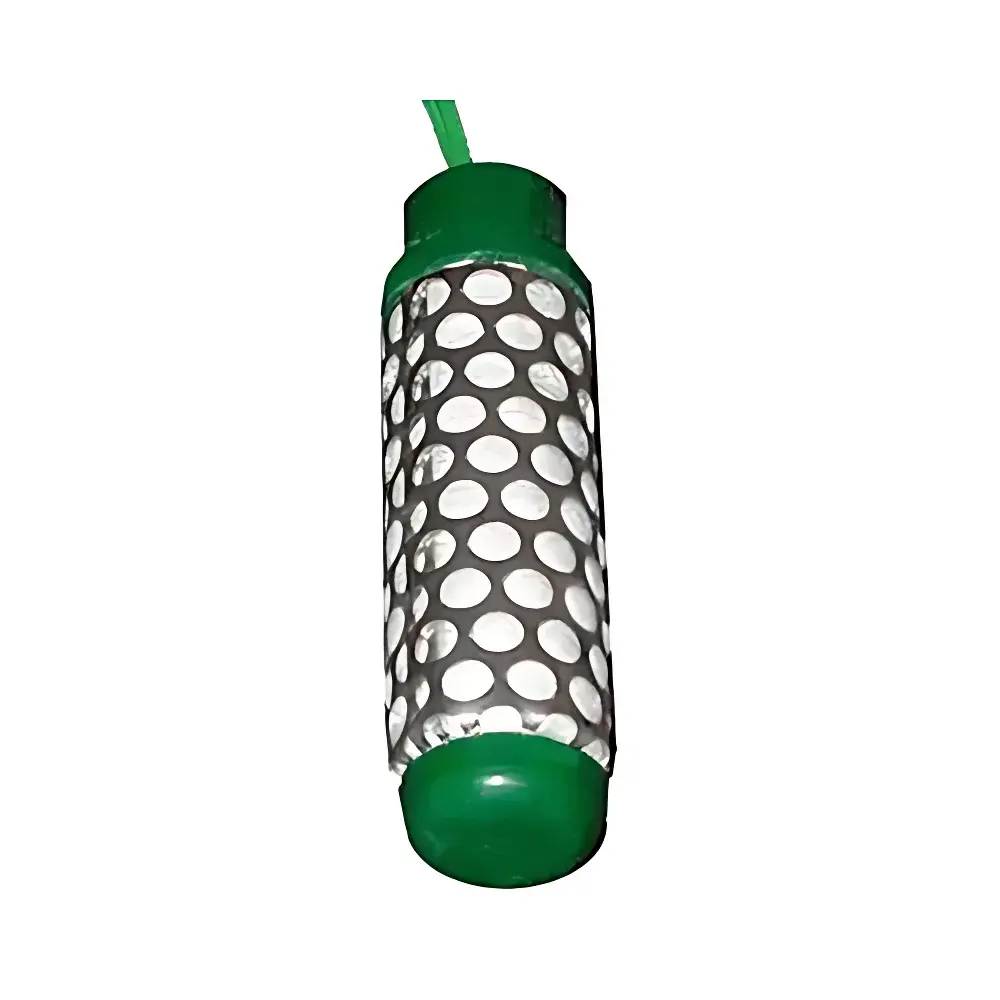
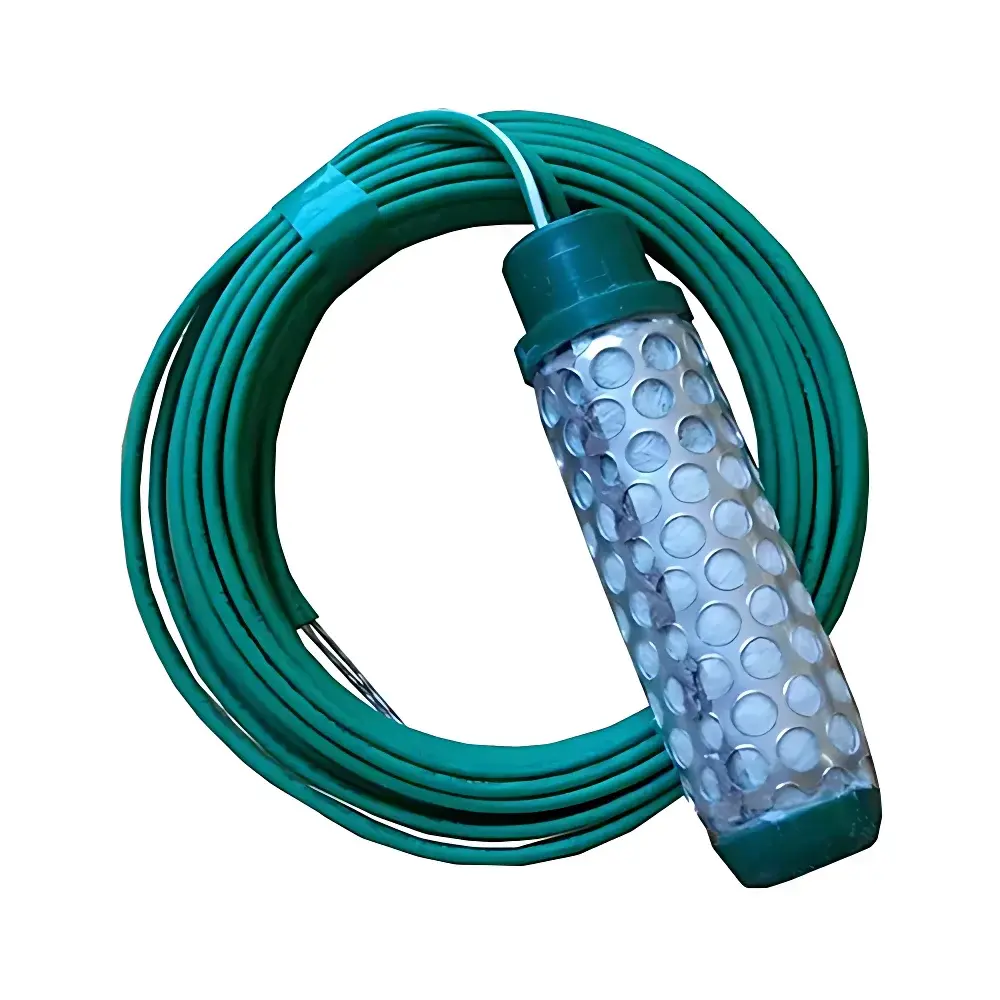
RainWise SM Soil Moisture Sensor
| Brand | RainWise |
|---|---|
| Origin | USA |
| Manufacturer Type | Authorized Distributor |
| Product Category | Imported Instrument |
| Model | SM |
| Instrument Type | Soil Water Potential (Tensiometric) Sensor |
| Measurement Range | 0–200 cbar |
| Resolution | 1 cbar |
| Sensing Principle | Electrical Resistance (Calibrated to Matric Potential) |
| Cable Length | 4.6 m |
| Weight | 103 g |
Overview
The RainWise SM Soil Moisture Sensor is a field-deployable, tensiometric-style water potential sensor engineered for continuous, in-situ monitoring of soil matric potential—the primary physical driver of plant-available water and root water uptake. Unlike volumetric water content sensors (e.g., capacitance or TDR-based devices), the SM sensor operates on a calibrated electrical resistance principle, translating changes in soil solution conductivity into centibar (cbar) units of soil water potential. This enables direct interpretation of plant stress thresholds—critical for irrigation scheduling, drought response modeling, and precision agriculture research. Designed for long-term burial in mineral and loam soils, the sensor features a robust ceramic tip and temperature-compensated circuitry to minimize drift under variable thermal and salinity conditions. Its 4.6-meter shielded cable supports connection to standard data loggers compliant with SDI-12, analog voltage (0–2.5 V), or RS-232 protocols—making it interoperable with Campbell Scientific, Onset HOBO, and Decagon (now METER Group) logging ecosystems.
Key Features
- Calibrated resistance-based sensing element optimized for matric potential measurement in the biologically relevant range (0–200 cbar), where most agronomic crops exhibit stomatal closure and yield reduction
- Ceramic moisture-permeable tip with controlled pore size distribution, ensuring rapid equilibration (< 2 hours in moist soil) and mechanical durability across repeated wet-dry cycles
- Integrated temperature compensation circuitry reduces thermal hysteresis error to < ±0.5 cbar over –10°C to +50°C ambient operating range
- 4.6-meter UV-stabilized, direct-burial-rated polyurethane cable with tinned copper conductors and aluminum foil shielding—rated for IP68 submersion and >5-year field service life
- Low-power design (typical quiescent current < 10 µA) compatible with solar-powered remote stations and battery-operated environmental networks
- Lightweight construction (103 g) minimizes soil disturbance during installation and enables multi-depth profiling without compaction artifacts
Sample Compatibility & Compliance
The SM sensor is validated for use in non-saline to moderately saline soils (EC 30% OM), or soils with aggressive chemical amendments (e.g., high-concentration ammonium nitrate fertilizers), which may accelerate ceramic degradation. The sensor complies with ASTM D4944 (Standard Test Method for Field Determination of Soil Moisture Content) for tensiometric equivalence and meets IEC 60529 ingress protection requirements for IP68-rated enclosures. While not FDA-regulated, its calibration traceability aligns with ISO/IEC 17025 principles when deployed within GLP-compliant environmental monitoring programs. Data integrity is preserved through stable analog output and optional SDI-12 command framing with CRC error checking.
Software & Data Management
The SM sensor outputs analog voltage (0–2.5 V) proportional to water potential (0–200 cbar), enabling direct integration with any data acquisition system supporting 12-bit or higher resolution analog input. When used with SDI-12-compatible loggers, it supports standardized command sets (e.g., “aM!” for measurement, “aD0!” for delay configuration) and automatic address assignment. Raw cbar values are convertible to volumetric water content using site-specific soil water retention curves (e.g., van Genuchten or Brooks-Corey models) via post-processing in R (with soilphysics or hydrus packages), Python (scikit-learn regression pipelines), or commercial platforms such as AquaCrop or CropSyst. All calibration coefficients are stored in non-volatile memory and survive power interruption—eliminating field recalibration needs.
Applications
- Irrigation scheduling in orchards, vineyards, and row-crop systems using real-time plant-available water status
- Long-term ecological monitoring of vadose zone dynamics in LTER (Long Term Ecological Research) sites
- Validation of satellite-derived soil moisture products (e.g., SMAP, Sentinel-1) at ground-truth reference stations
- Controlled-environment studies on root-zone drought stress responses in growth chambers and rhizotrons
- Hydrological modeling input for SWAT, HYDRUS-1D, and WEPP erosion prediction frameworks
- Smart nursery management—automated drip control based on substrate water potential thresholds
FAQ
How does the SM sensor differ from volumetric water content sensors?
It measures soil water potential (energy status), not volume fraction—providing physiologically meaningful data on plant water stress rather than total water present.
Can the SM sensor be used in saline soils?
Yes, up to EC ≈ 4 dS/m; beyond this, calibration drift increases due to ion interference with resistive measurement—site-specific recalibration is advised.
What is the recommended installation depth and method?
Install vertically at target root zone depth (e.g., 15–60 cm) using auger or soil probe; ensure full ceramic contact with undisturbed soil and backfill with native material to avoid air gaps.
Does the sensor require annual recalibration?
No—factory calibration remains stable for ≥3 years under typical field conditions; verification against a reference tensiometer is recommended annually for critical applications.
Is the 4.6 m cable field-repairable?
Yes, using marine-grade heat-shrink splice kits and continuity-tested conductor pairs; however, re-termination voids the IP68 rating unless performed in certified clean-room conditions.
Related Products







