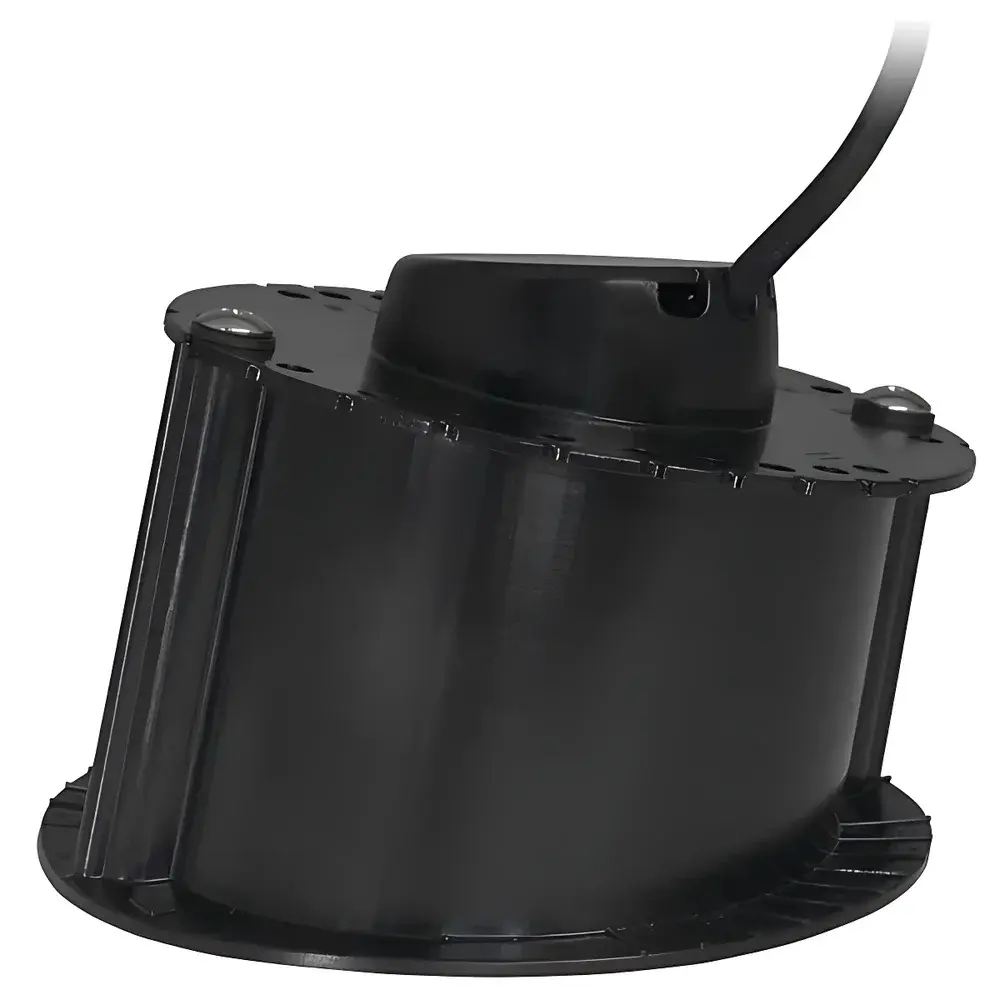
AirMar M135M Chirp Single-Beam Echo Sounder
| Brand | AIRMAR |
|---|---|
| Origin | USA |
| Model | M135M |
| Output Power | 1000 W |
| Operating Frequency Range | 85–135 kHz |
| Beam Width | 24°–16° (adjustable) |
| Maximum Depth Range | 365 m (1200 ft) |
| Depth Accuracy | ±0.54% of reading |
| Depth Resolution | 0.01 m |
| Hull Tilt Compensation | 2°–20° adjustable |
| Housing Material | Polyurethane |
| Fill Medium | Eco-friendly antifreeze liquid |
| Compatible Hull Type | Solid fiberglass |
| Weight | 4.16 kg (9.17 lb) |
| Transducer Mounting | In-hull, flush-mounted |
| Proprietary Technology | Xducer ID® |
Overview
The AirMar M135M is a high-performance, in-hull mounted single-beam chirp echo sounder engineered for precision depth measurement in nearshore marine and inland freshwater environments. Utilizing broadband frequency-modulated (FM) chirp sonar technology, the M135M transmits continuous swept-frequency pulses across the 85–135 kHz band—optimized to balance penetration, resolution, and signal-to-noise ratio in saline and low-turbidity freshwater conditions. Unlike traditional pulsed sonar systems, chirp processing enables improved target discrimination, enhanced bottom detection in soft sediments, and superior depth repeatability through pulse compression and matched filtering. Its in-hull installation architecture eliminates hydrodynamic drag and external fouling risks, making it especially suitable for vessels under 7.6 m (25 ft) with solid fiberglass hulls. The unit employs a patented Xducer ID® system that automatically identifies and configures transducer parameters—including beam angle, tilt offset, and calibration coefficients—ensuring optimal acoustic coupling and minimizing manual setup errors.
Key Features
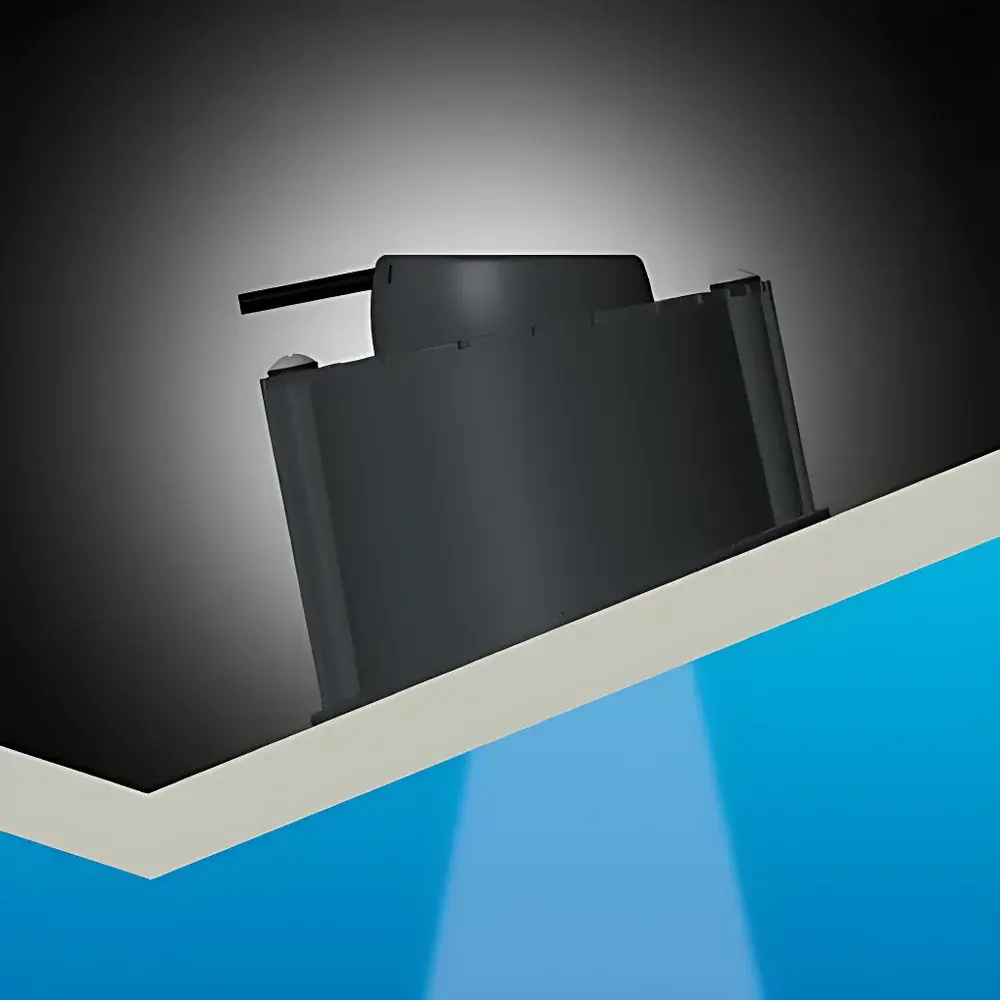
- In-hull mounting design with polyurethane housing filled with environmentally safe antifreeze fluid, enabling efficient acoustic transmission through fiberglass hulls without drilling or external protrusions
- 1000 W peak acoustic output power delivering robust signal return from depths up to 365 m (1200 ft) in typical coastal and lacustrine conditions
- Adjustable beam width (24° at 85 kHz to 16° at 135 kHz), supporting both wide-area scanning and focused high-resolution profiling
- Programmable hull tilt compensation (2°–20°), allowing precise vertical beam alignment on non-level hull surfaces
- Xducer ID® technology provides automatic transducer recognition and firmware-based calibration storage, reducing commissioning time and improving long-term measurement consistency
- Depth resolution of 0.01 m and accuracy of ±0.54% of full-scale reading—meeting requirements for navigational safety, bathymetric survey support, and shallow-water hydrographic validation
Sample Compatibility & Compliance
The M135M is validated for use with solid, non-cored fiberglass hulls having thicknesses between 6 mm and 25 mm and acoustic impedance compatible with the proprietary coupling fluid. It is not recommended for cored composites, aluminum, steel, wood, or hulls with internal air gaps or foam layers. Installation requires proper hull surface preparation and fluid fill verification to ensure acoustic continuity. While not certified to IEC 60945 or IMO MSC.1/Circ.1593 as a Class-approved navigation sensor, the M135M conforms to FCC Part 15 Subpart B (EMI emissions) and RoHS 2011/65/EU material restrictions. Its depth output protocol (NMEA 2000 / NMEA 0183) supports integration into marine electronics networks compliant with ISO 80000-8, IEC 61162-1/-2, and GLONASS/GPS-augmented chartplotter architectures.
Software & Data Management
The M135M interfaces natively with NMEA 2000 networks and outputs standardized depth data (DPT, DBT, MTW) and transducer status (XDR) messages. When paired with compatible chartplotters or PC-based hydrographic software (e.g., MaxSea TimeZero, Qinsy, or HYPACK), raw chirp IQ data can be logged for post-processing using proprietary demodulation algorithms. Firmware updates are performed via USB-C connection using AirMar’s official Configuration Utility (v3.2+), which supports transducer parameter backup, tilt profile mapping, and diagnostic logging. All configuration changes are timestamped and stored in non-volatile memory, supporting audit-ready traceability in commercial fishing or research vessel operations subject to USCG or NOAA reporting standards.
Applications
- Shallow-water bathymetric surveys for coastal zone management and habitat mapping
- Real-time depth monitoring on small commercial workboats, lobster boats, and research tenders
- Under-keel clearance assessment in dredged channels and marina basins
- Integration into autonomous surface vehicle (ASV) platforms requiring compact, low-drag depth sensing
- Calibration reference for multibeam systems during pre-survey verification
- Recreational and light-duty commercial navigation where external transducer mounting is impractical or prohibited
FAQ
Can the M135M be installed on a cored fiberglass hull?
No. The transducer requires direct acoustic coupling through a solid, homogeneous hull section. Cored laminates introduce impedance mismatches and internal reflections that severely degrade signal integrity.
Is the fill fluid replaceable in the field?
The polyurethane housing is sealed and factory-filled; refilling is not supported. Fluid integrity is verified during manufacturing and monitored via integrated temperature and pressure diagnostics.
Does the M135M support bottom discrimination or fish detection?
It is optimized for depth measurement and bottom tracking—not target classification. While strong returns may indicate hard/soft bottom transitions, it lacks dual-frequency or split-beam processing required for biological target analysis.
What NMEA sentences does it output?
Standard DPT (depth below transducer), DBT (depth below waterline), MTW (water temperature), and XDR (transducer status and tilt angle) over NMEA 2000 and NMEA 0183 v3.01.
How is tilt calibration performed?
Using the Configuration Utility, users input measured hull deadrise angle; the device then applies real-time beam steering correction to maintain nadir-aligned echo returns.