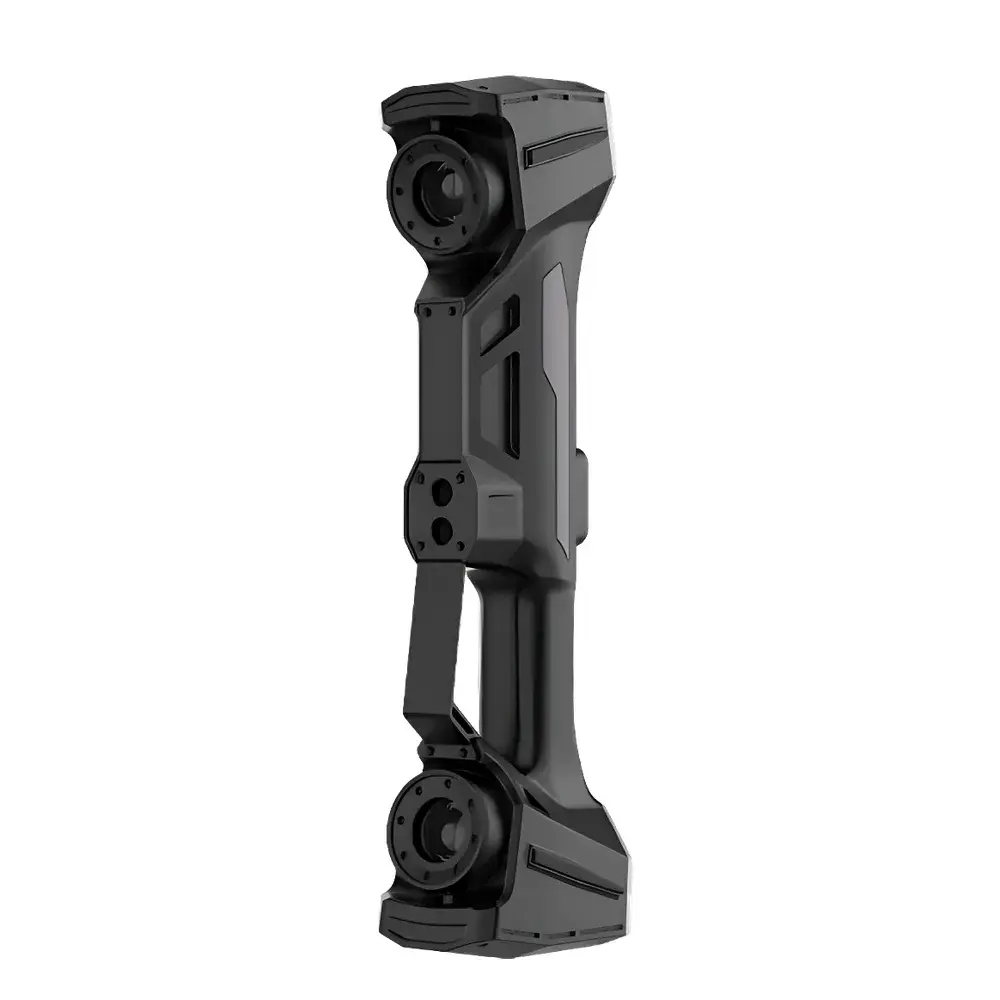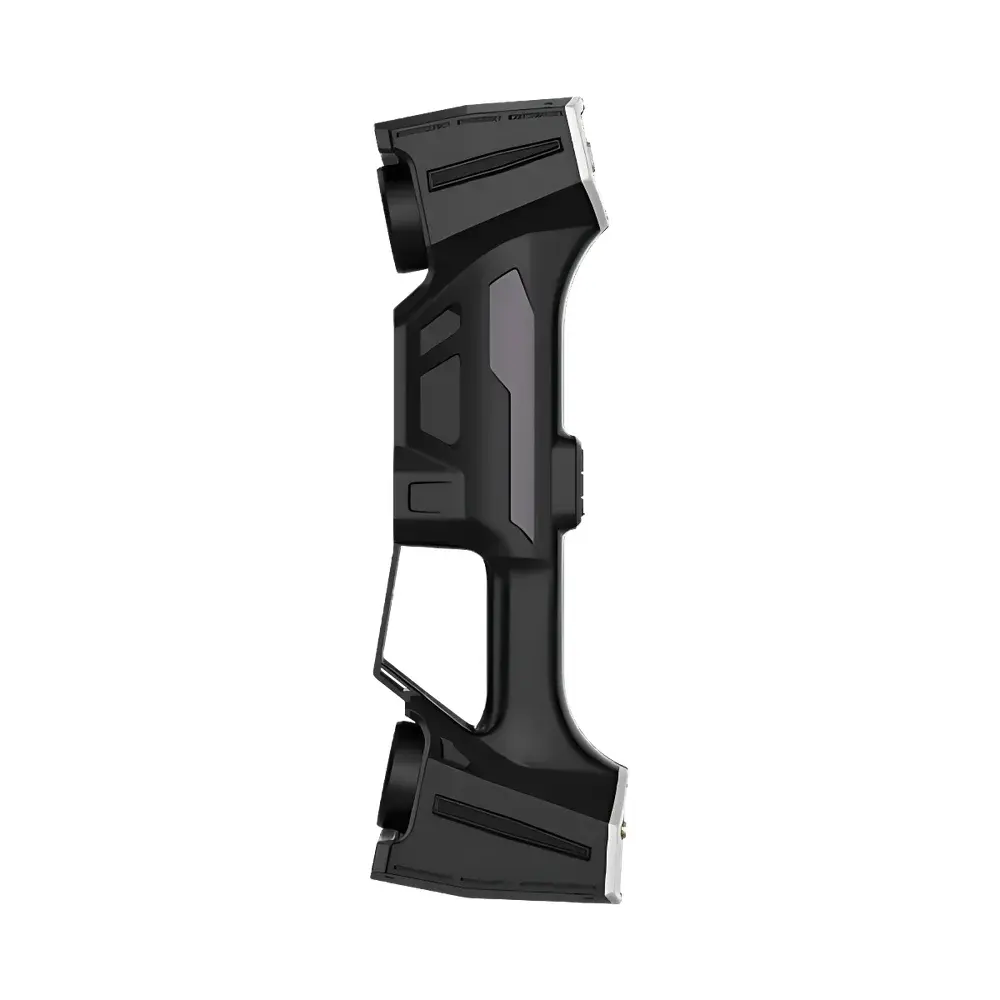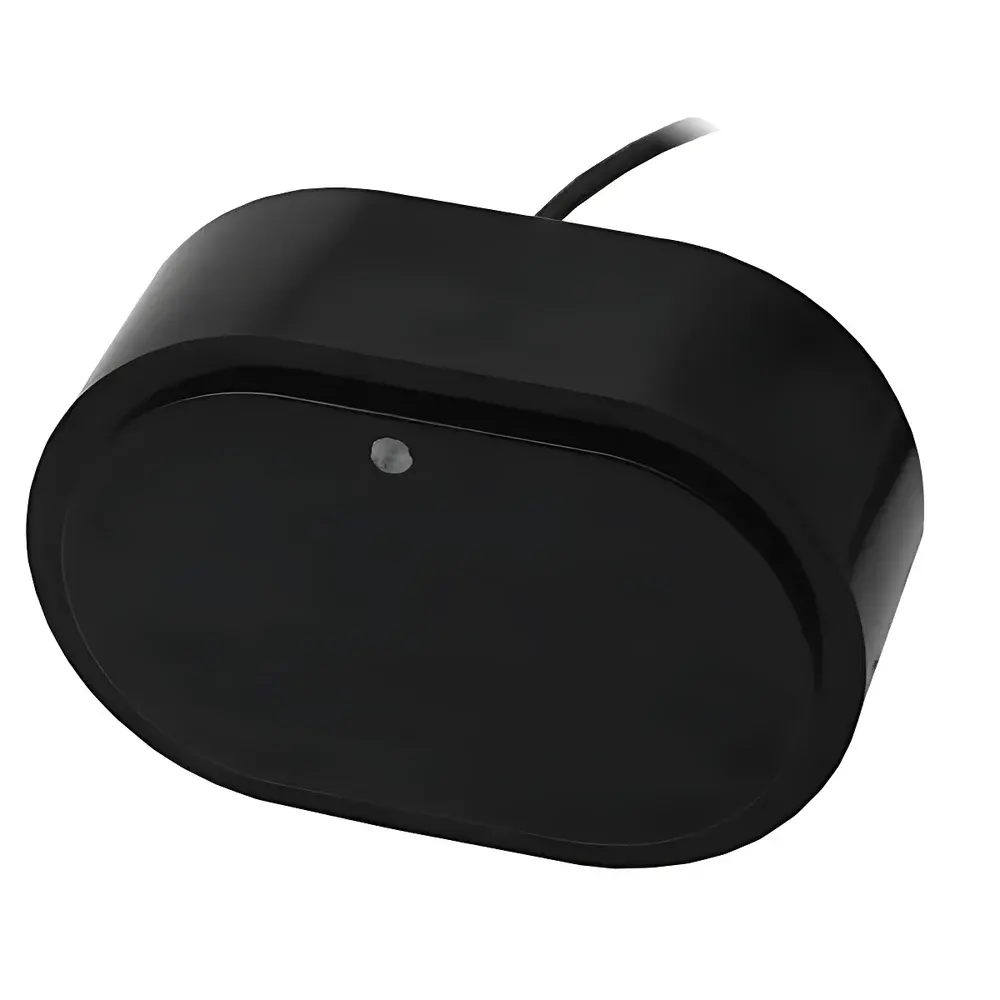
AIRMAR CM275LHW Dual-Frequency CHIRP Depth Sounder
| Brand | AIRMAR |
|---|---|
| Origin | USA |
| Model | CM275LHW |
| Power Output | 1000 W |
| Operating Frequency Bands | Low Band 42–65 kHz (beam width 25°–16°), High Wideband 150–250 kHz (fixed 25° beam width) |
| Max Depth Range | 914 m (low band), 152 m (high wideband) |
| Beamwidth Consistency | Fixed 25° across full high-band sweep |
| Transducer Housing | SEALCAST™ seamless polyurethane |
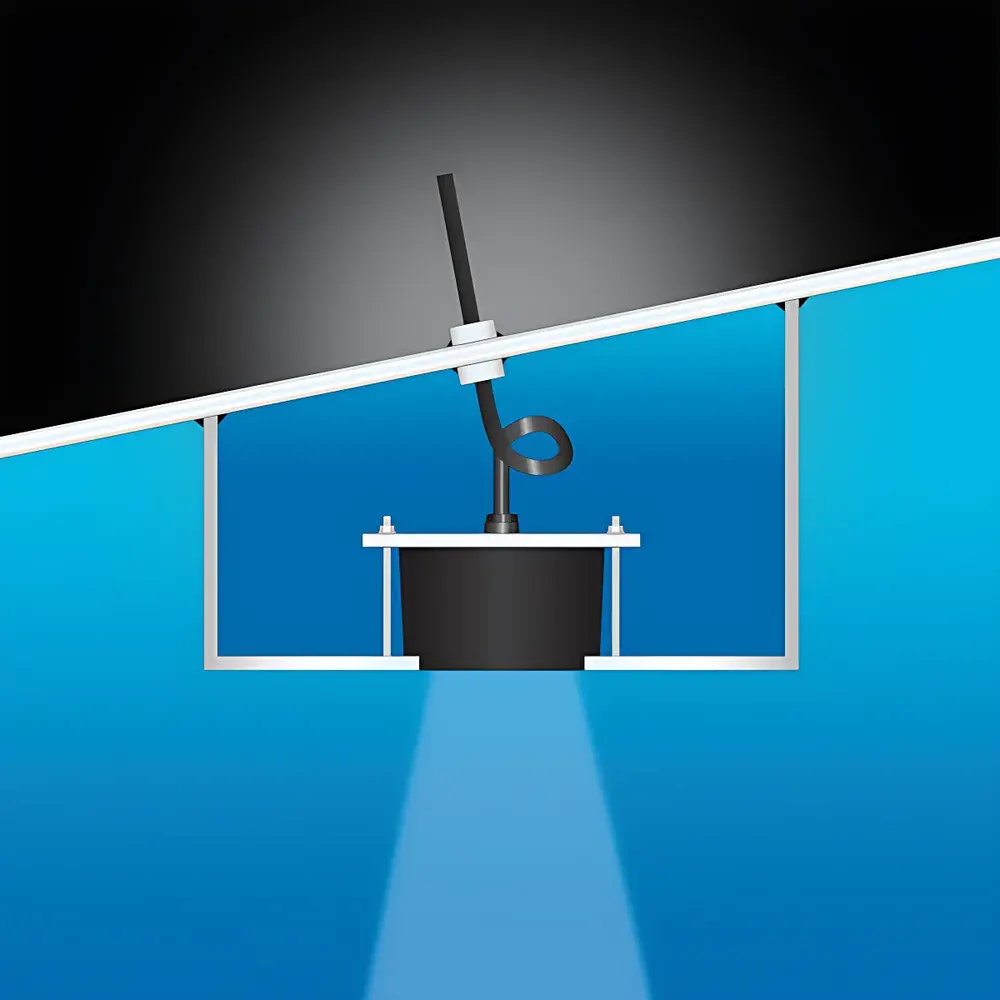
| Mounting Options | Tank, cavity, pocket/keel |
| Temperature Sensor | Integrated fast-response thermistor |
| Weight | 5.3 kg |
| Hull Compatibility | Metal hulls, ≥8 m length, variable deadrise adaptation |
| Material | Polyurethane acoustic window |
| Compliance | Designed for marine GLP-aligned data logging environments, compatible with NMEA 2000® and NMEA 0183 v3.00 protocols |
Overview
The AIRMAR CM275LHW is a dual-frequency CHIRP (Compressed High-Intensity Radar Pulse) depth sounder transducer engineered for high-fidelity hydrographic profiling in both coastal and offshore operational contexts. Unlike conventional pulsed sonar systems, CHIRP technology employs frequency-modulated sweeps across defined bandwidths—here spanning 42–65 kHz (low band) and 150–250 kHz (high wideband)—to deliver enhanced signal-to-noise ratio, improved target resolution, and superior depth discrimination. The transducer’s fixed 25° beamwidth across the entire high-band spectrum ensures consistent spatial coverage and uniform lateral resolution, eliminating the narrow-beam limitations typical of standard 200 kHz transducers. This design enables detection of discrete fish targets within the water column while maintaining clear bottom contour definition—even at depths up to 152 m in high-band mode and 914 m in low-band operation. Its integrated fast-response thermistor provides concurrent water temperature measurement synchronized with depth acquisition, supporting thermal stratification analysis and sensor calibration traceability.
Key Features
- Dual-band CHIRP architecture delivering simultaneous low- and high-frequency operation for multi-layered echo interpretation
- Fixed 25° beamwidth across 150–250 kHz band—doubling lateral coverage versus conventional narrow-beam 200 kHz transducers
- 1000 W peak power output enabling reliable deep-water penetration and high signal fidelity in turbid or sediment-laden environments
- SEALCAST™ seamless polyurethane housing offering corrosion resistance, cavitation resilience, and long-term mechanical stability in saltwater service
- Customizable mounting geometry accommodating tank, cavity, pocket, or keel installations on metal-hulled vessels ≥8 m in length
- Xducer ID® digital identification protocol enabling plug-and-play integration with compatible multifunction displays and sonar processors
- Integrated NMEA 2000® and NMEA 0183 v3.00 interface compliance for standardized data exchange in networked marine electronics ecosystems
Sample Compatibility & Compliance
The CM275LHW is validated for use with seawater, brackish estuarine environments, and freshwater reservoirs. Its polyurethane acoustic window exhibits minimal impedance mismatch with aqueous media, ensuring efficient energy transmission and minimal signal attenuation. The transducer meets IP68 ingress protection requirements when installed per AIRMAR mounting guidelines and supports continuous duty cycle operation under ambient seawater temperatures ranging from –5 °C to +40 °C. While not certified to ISO/IEC 17025 as a standalone metrological instrument, its output conforms to echosounder performance benchmarks outlined in IHO S-44 (Standards for Hydrographic Surveys) for Class 1a applications. Data streams are compatible with GLP-aligned logging systems that enforce audit-trail metadata capture—including timestamp, vessel attitude, and environmental parameters—for regulatory reporting in commercial fisheries and maritime survey operations.
Software & Data Management
The CM275LHW outputs raw echo envelope data, depth, temperature, and beam geometry metadata via NMEA 2000® PGNs (e.g., Depth Below Transducer, Water Temperature, Sonar Configuration). When paired with AIRMAR-compatible chartplotters or third-party sonar processing software (e.g., MAXSEA TimeZero, Furuno TZtouch, Simrad NSS evo3), users can configure CHIRP sweep parameters—including start/stop frequencies, pulse duration, and gain profiles—to optimize for target type (pelagic vs. demersal), water clarity, and bottom composition. All configuration changes are retained in non-volatile memory and support firmware updates via NMEA 2000® diagnostic PGNs. For traceable data workflows, the transducer’s Xducer ID® enables automatic device registration in fleet management databases and supports time-synchronized multi-sensor fusion in integrated navigation systems compliant with IMO Resolution MSC.402(96).
Applications
- Commercial pelagic and demersal fishing operations requiring real-time fish school localization and bathymetric context
- Offshore aquaculture site monitoring—including cage positioning, seafloor profiling, and thermal layer tracking
- Hydrographic survey support for port authority dredging planning and navigational chart updates
- Scientific fisheries acoustics studies involving target strength calibration and species-specific echo classification
- Maritime safety applications including shallow-water grounding risk assessment and underwater obstacle detection
- Research vessel instrumentation where co-located temperature-depth profiling enhances water column characterization
FAQ
Does the CM275LHW require external temperature compensation for depth accuracy?
No—its integrated thermistor provides real-time water temperature input to compatible display units, enabling sound velocity correction per UNESCO algorithms (Chen-Millero equation) without manual calibration.
Can the transducer be used on fiberglass or aluminum hulls?
It is specifically engineered for metal hulls (steel or aluminum); installation on non-conductive hulls requires alternative mounting solutions such as through-hull or bracketed configurations (e.g., B275LHW or TM275LHW variants).
Is firmware update capability built into the transducer?
Yes—via NMEA 2000® diagnostic PGNs, allowing remote field updates to maintain compatibility with evolving display platform firmware releases.
What is the minimum recommended vessel deadrise angle for optimal beam alignment?
The unit supports deadrise angles from 0° to 24°; custom tilt elements are available for installations exceeding this range.
How does the fixed 25° beamwidth affect target separation in shallow water?
At 150–250 kHz, the constant beamwidth improves lateral resolution consistency across depth ranges, enabling reliable discrimination of closely spaced fish targets down to ~1.2 m horizontal separation at 30 m depth under typical absorption conditions.