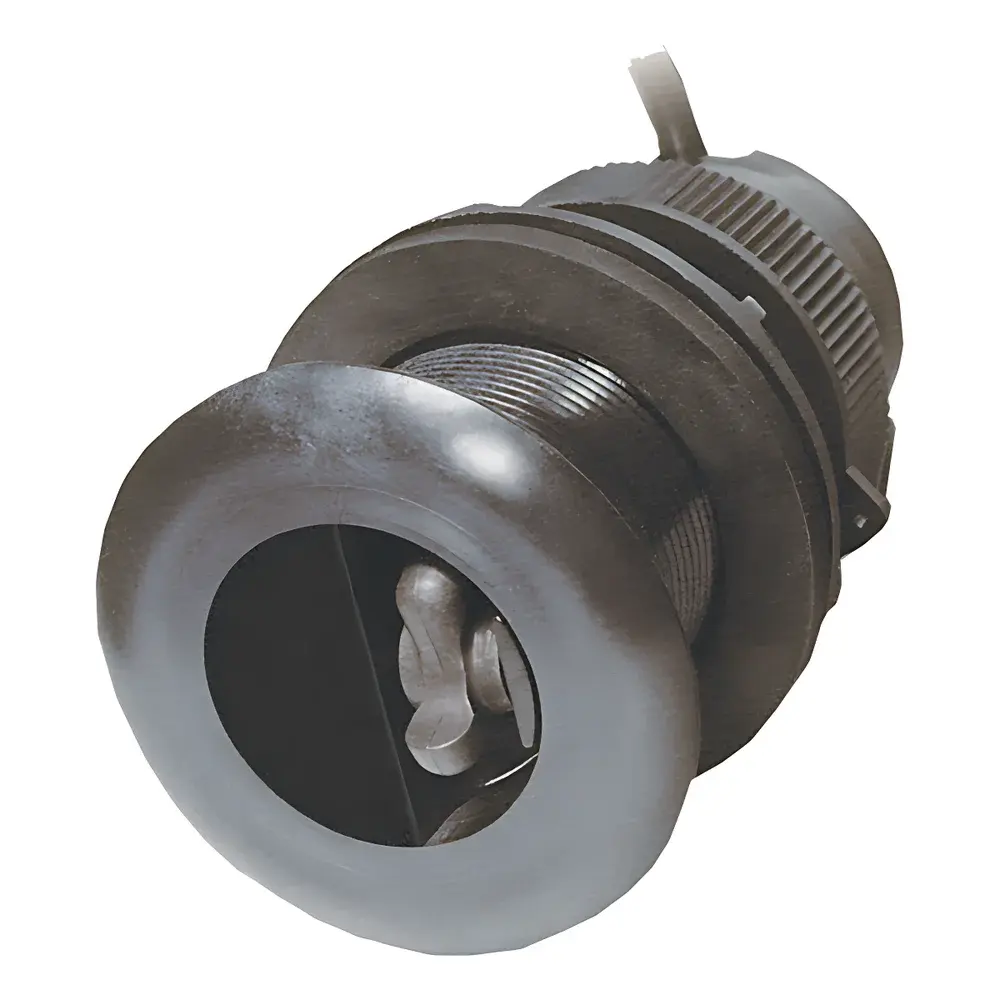
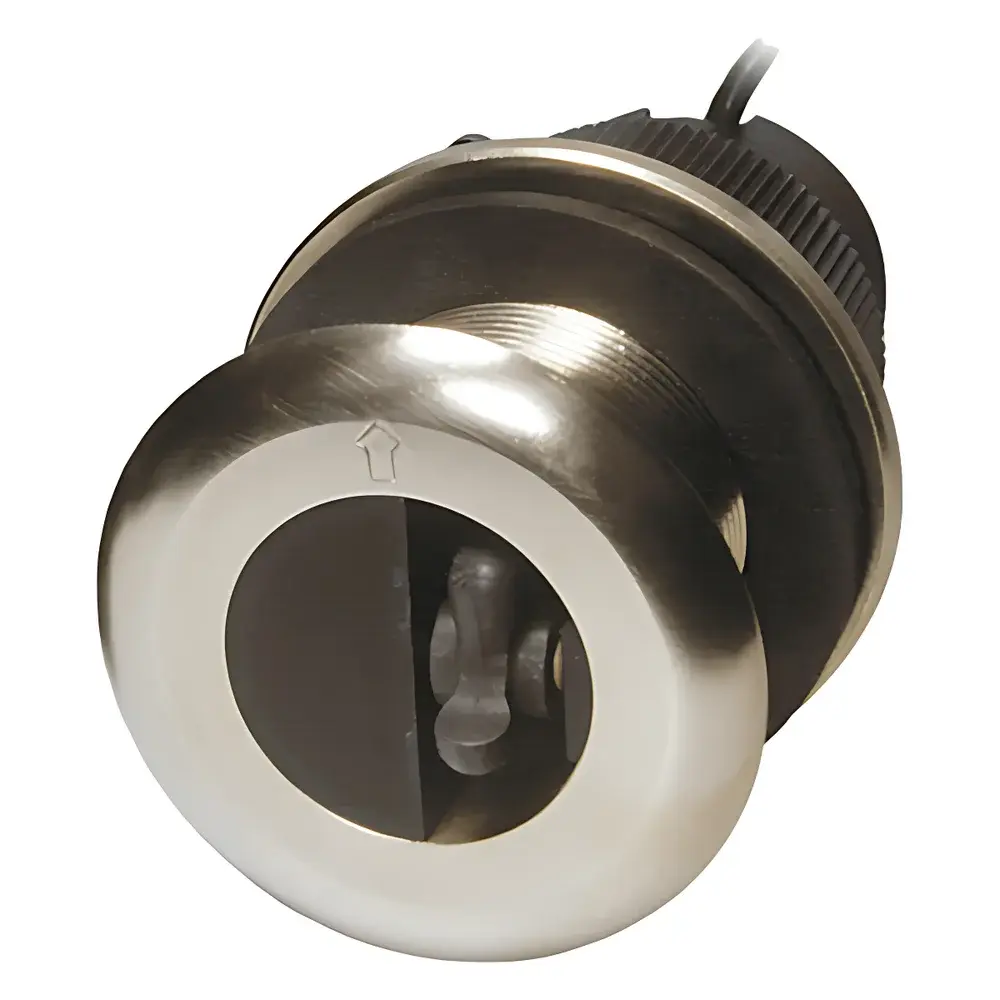
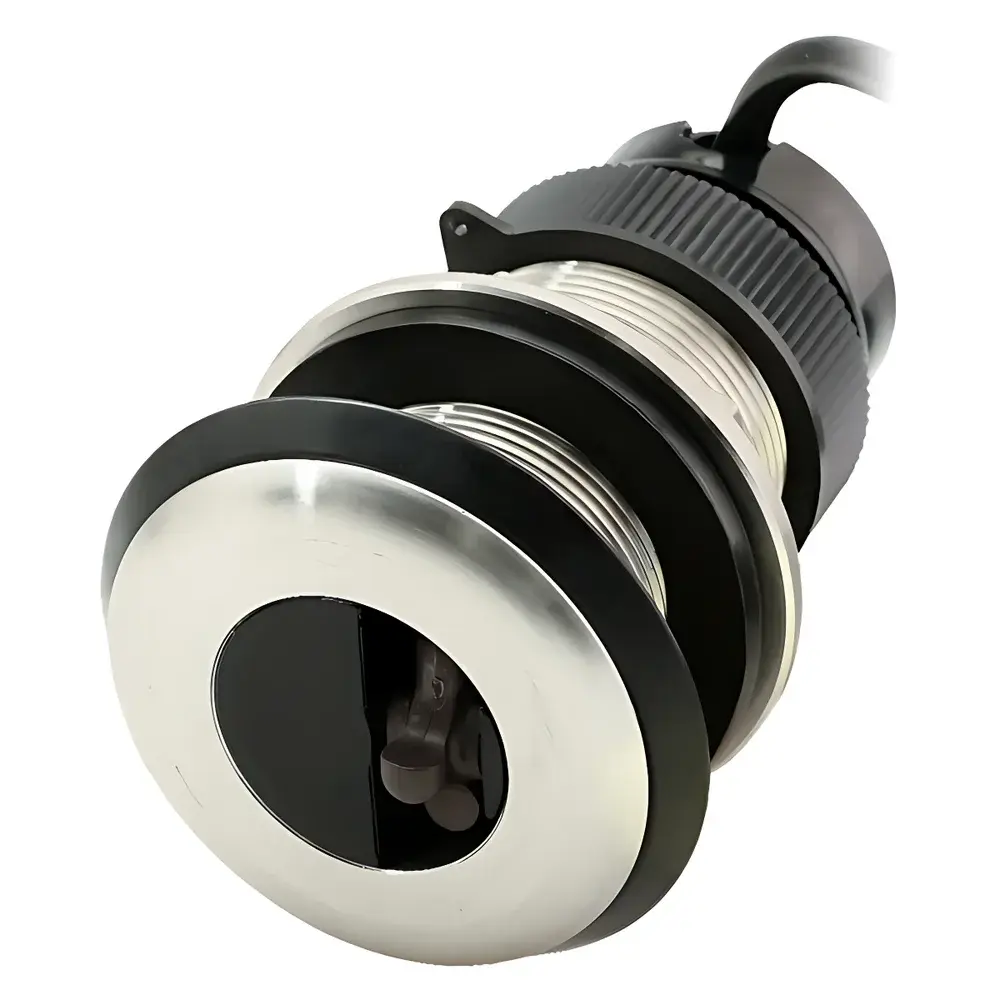
Airmar DST800 Smart™ TriDucer® Depth, Speed & Temperature Sensor
| Brand | Airmar |
|---|---|
| Origin | USA |
| Model | DST800 |
| Frequency | 235 kHz |
| Output Protocols | NMEA 0183 & NMEA 2000® |
| Depth Range | 0.5–70 m (NMEA 0183), up to 100 m (NMEA 2000®) |
| Speed Measurement | Paddlewheel-based, optimized <5 kn with linear output across full speed range |
| Temperature Accuracy | ±0.5°C |
| Operating Temp Range | −10°C to +40°C |
| Housing Options | Plastic, Bronze, or Stainless Steel |
| Beam Angle | Wide扇形 (broad fan-shaped beam, ~60° horizontal coverage) |
| Hull Tilt Compensation | Up to 22° |
| Power | 10–25 VDC (NMEA 0183), 9–16 VDC (NMEA 2000®) |
| Current Draw | <40 mA (NMEA 0183), <200 mA (NMEA 2000®) |
| Cable Length | 10 m (NMEA 0183), 6 m Devicenet (NMEA 2000®) |
| IP Rating / Pressure Rating | 3 m (10 ft) submersion |
| LEN (NMEA 2000® Load Equivalency Number) | 4 |
| Compliance | IEC 60945 |
Overview
The Airmar DST800 Smart™ TriDucer® is an integrated marine transducer engineered for simultaneous, high-fidelity measurement of water depth, vessel speed-through-water (STW), and hull-mounted seawater temperature. Unlike conventional multi-sensor installations requiring separate transducers and through-hull penetrations, the DST800 consolidates all three critical navigational parameters into a single, compact TRIDUCER® architecture. Its embedded microelectronics perform real-time signal conditioning, digital filtering, and protocol-specific data formatting directly within the sensor housing—eliminating analog noise susceptibility and minimizing external processing latency. The device operates at 235 kHz, a frequency selected to minimize cross-talk with standard 50/200 kHz echosounders and sonar systems commonly deployed on recreational and commercial vessels. This spectral isolation ensures reliable depth returns even in congested onboard RF environments. The DST800’s patented paddlewheel speed-sensing algorithm delivers calibrated linearity across the full operational speed range, with enhanced resolution below 5 knots—a regime where traditional impeller-based sensors often exhibit nonlinearity and hysteresis.
Key Features
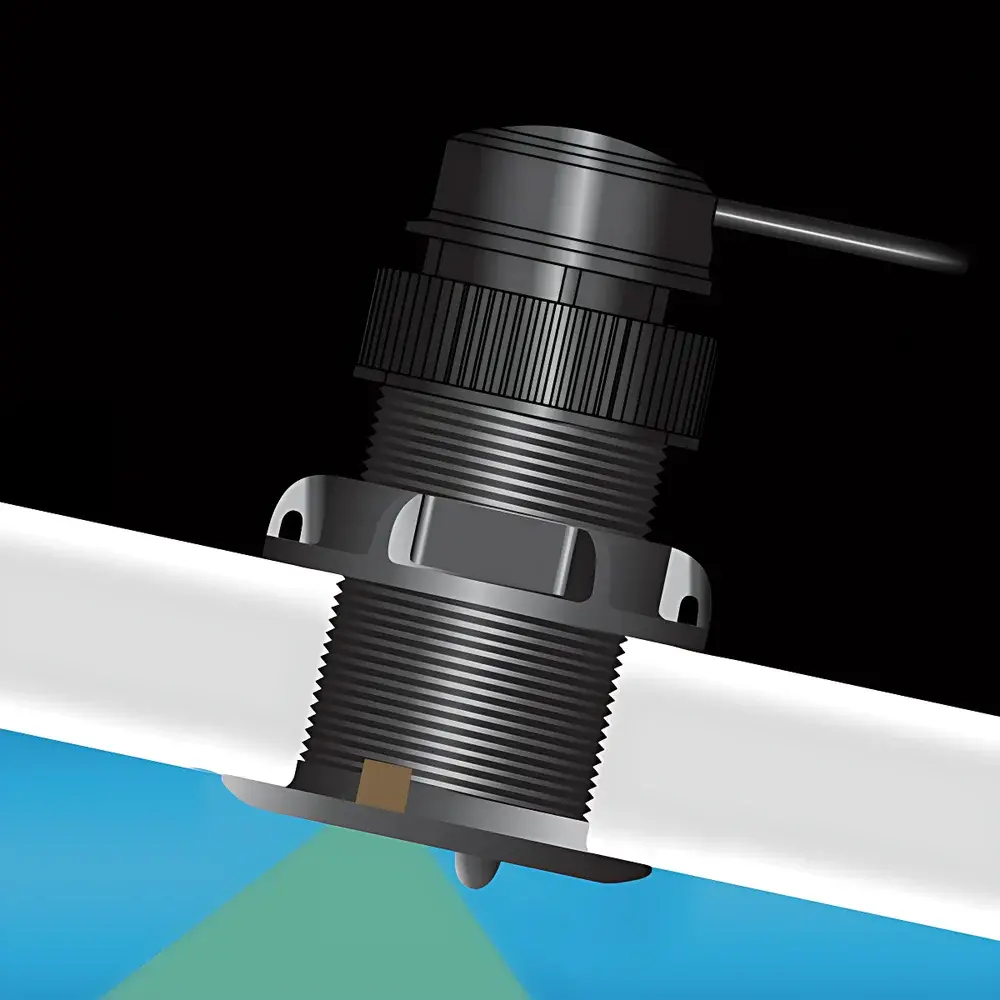
- Single-hole installation: 51 mm (2″) diameter cutout accommodates all three sensing functions—reducing hull integrity risk, labor cost, and hydrodynamic drag.
- Smart internal processing: Onboard DSP handles depth echo analysis, paddlewheel pulse interpolation, and temperature linearization—outputting clean, time-synchronized NMEA 0183 or NMEA 2000® sentences.
- Broad-beam acoustic design: Fan-shaped 235 kHz beam (approx. 60° horizontal coverage) maintains bottom lock on steeply angled hulls (up to 22° deadrise) and heeled sailboats without mechanical gimballing.
- Auto-shut valve mechanism: Integrated elastomeric valve seals the hull aperture when the transducer is removed—preventing uncontrolled ingress during maintenance or replacement.
- Material flexibility: Available in plastic (lightweight, corrosion-resistant), bronze (marine-grade durability), or stainless steel (high-impact, offshore-rated) housings to match vessel class and service environment.
- Temperature accuracy: Fast-response thermistor with ±0.5°C absolute accuracy over −10°C to +40°C, traceable to NIST-calibrated reference standards.
Sample Compatibility & Compliance
The DST800 is designed for permanent mounting on fiberglass, aluminum, and wood hulls, with optional low-profile, flush-mount, and angled-base kits supporting diverse keel configurations. It complies fully with IEC 60945:2019 (Maritime navigation and radiocommunication equipment and systems – General requirements – Methods of testing and required test results), ensuring electromagnetic compatibility (EMC), environmental robustness (vibration, shock, salt mist), and safety under marine operating conditions. As an NMEA 2000® Certified Device (LEN = 4), it interoperates seamlessly with certified displays, autopilots, chartplotters, and VDRs without configuration overhead. While not FDA-regulated, its temperature calibration methodology aligns with ISO/IEC 17025 traceability principles for laboratory-grade thermal metrology. No GLP/GMP or 21 CFR Part 11 requirements apply, as the device serves navigational—not clinical or pharmaceutical—data acquisition.
Software & Data Management
The DST800 requires no proprietary software or firmware updates. All configuration—including NMEA sentence selection (e.g., DPT, VHW, MTW), update rate (1 Hz default), and unit preferences—is performed via standardized NMEA 0183 command strings or NMEA 2000® Parameter Group Numbers (PGNs 127250, 128259, 130311). Raw data streams are compatible with industry-standard marine data loggers (e.g., Actisense NGT-1, Maretron USB100), open-source platforms (Signal K, OpenCPN), and OEM chartplotter ecosystems (Raymarine, Garmin, Furuno, Simrad). Timestamp synchronization is maintained via inherent NMEA message framing; no external GPS time source is required for basic operation. Audit-ready data export is supported through ASCII-formatted NMEA logs, enabling post-mission validation against bathymetric charts or speed calibration benchmarks.
Applications
- Recreational powerboats and motor yachts requiring consolidated instrumentation with minimal hull modification.
- Commercial fishing vessels needing reliable STW data for fuel efficiency modeling and catch-per-unit-effort (CPUE) calculations.
- Sailing yachts operating in variable heel angles where traditional narrow-beam transducers lose bottom lock.
- Research vessels deploying lightweight, low-drag sensor packages for coastal hydrographic surveys.
- Fleet management systems integrating real-time depth, speed, and ambient temperature into centralized telemetry dashboards.
FAQ
Can the DST800 be used on metal hulls?
Yes—when installed with an insulated mounting kit (e.g., Airmar’s M120 or M130 series) to prevent electrical grounding and acoustic damping.
Is the temperature sensor suitable for engine cooling loop monitoring?
No—the DST800’s temperature element is calibrated for ambient seawater only; it is not rated for pressurized or high-temperature fluid circuits.
Does the DST800 support both NMEA 0183 and NMEA 2000® simultaneously?
No—each unit is factory-configured for one protocol; dual-output models are not available.
What is the minimum detectable depth, and how is shallow-water performance ensured?
The specified minimum depth is 0.5 m (1.6 ft); performance at this threshold relies on proper hull fairing, absence of turbulence from thru-hull fittings, and adherence to Airmar’s recommended mounting location guidelines.
How does the DST800 handle air bubbles or debris near the transducer face?
The wide-beam 235 kHz design increases probability of return signal capture despite partial obstruction; however, routine cleaning and avoidance of prop-wash zones remain essential for optimal reliability.