
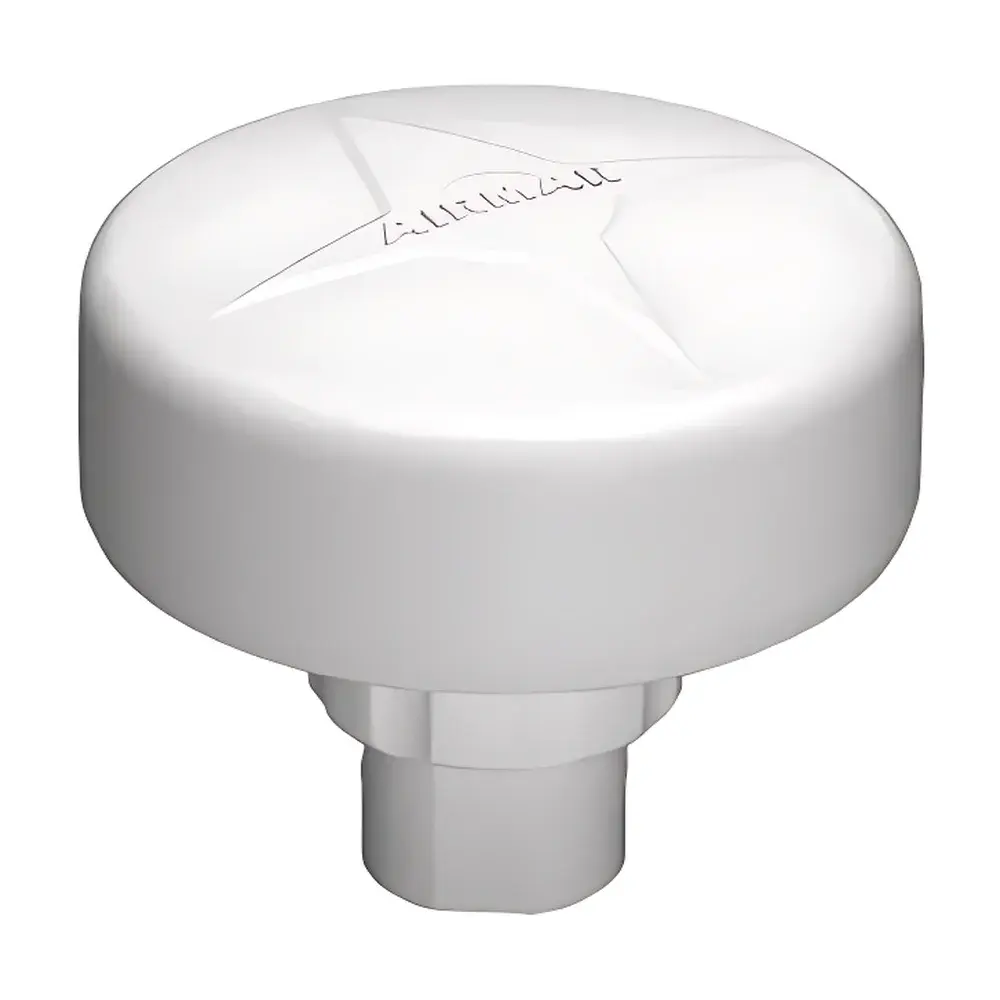
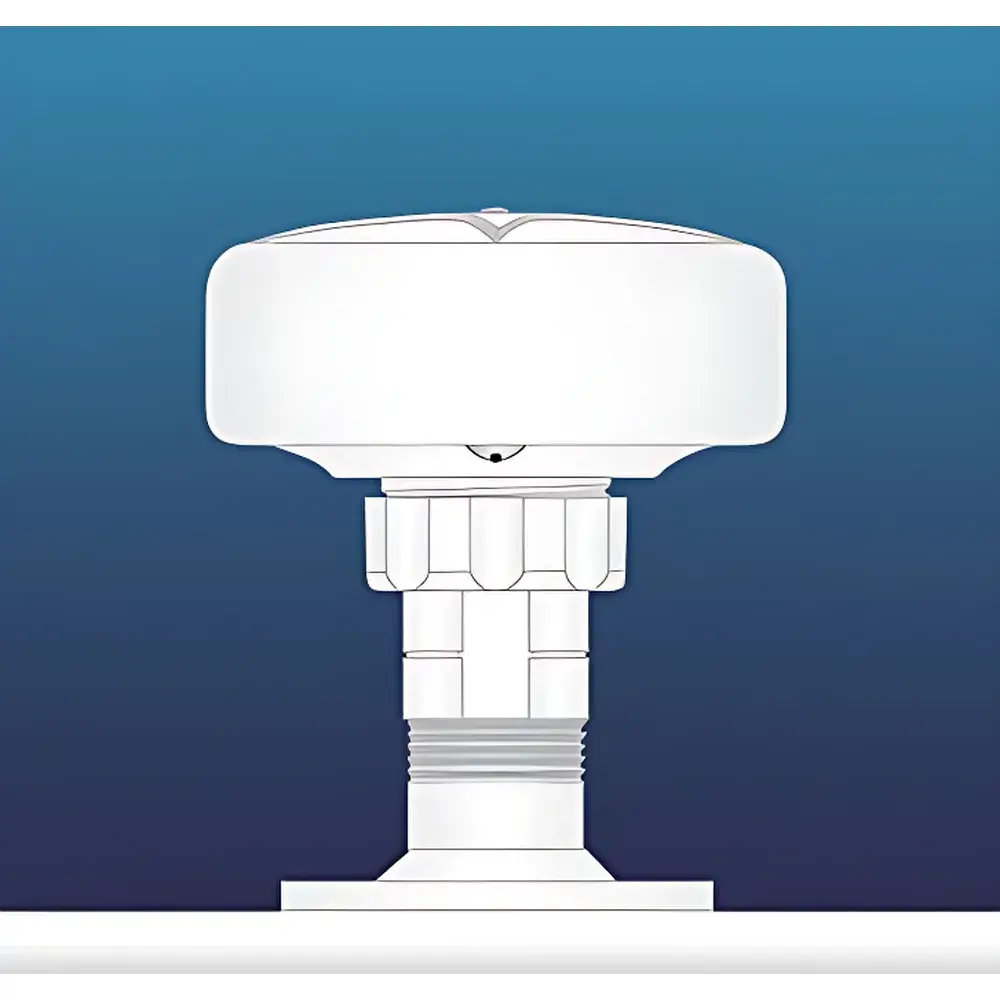
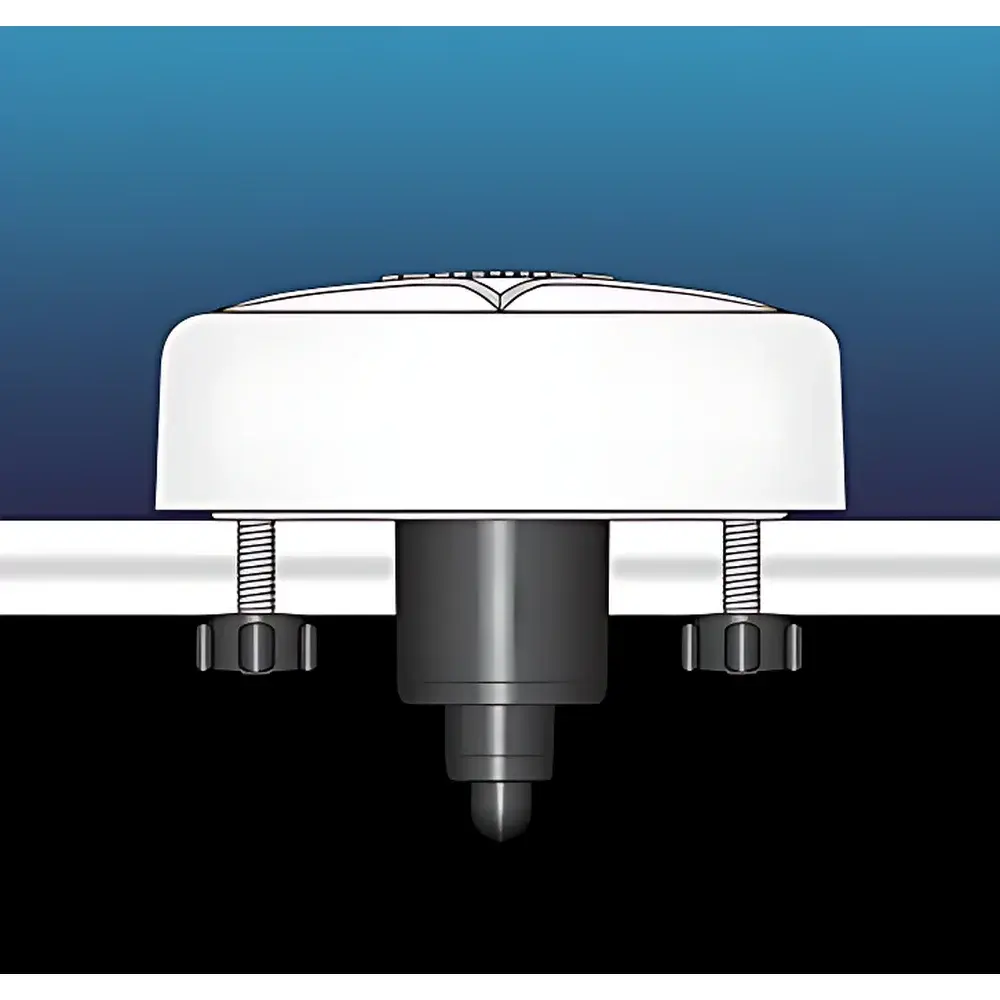
Airmar GH2183 Integrated GPS and Heading Sensor
| Brand | Airmar |
|---|---|
| Origin | USA |
| Model | GH2183 |
| Operating Temperature | −25 to +55 °C |
| Power Supply | 9–40 VDC |
| Current Draw | <80 mA |
| GPS Channels | 14-channel WAAS/EGNOS-enabled |
| Heading Accuracy (Static) | 1° RMS |
| Heading Accuracy (Dynamic, up to ±30° pitch/roll) | 2° RMS |
| Heading Update Rate | 10 Hz (configurable up to 20 Hz on NMEA 2000®) |
| Pitch/Roll Range | ±50° |
| Pitch/Roll Accuracy (Dynamic) | <3° RMS |
| Rate of Turn Range | 0–70°/s |
| Rate of Turn Accuracy | ±1°/s |
| Compliance | CE, RoHS, IEC 60945, IPX6 |
Overview
The Airmar GH2183 is an integrated marine navigation sensor engineered for high-reliability performance in demanding recreational and light-commercial maritime environments. It combines a 14-channel WAAS/EGNOS-enhanced GPS receiver with a solid-state inertial measurement unit (IMU) comprising triaxial accelerometers, triaxial rate gyroscopes, and a fluxgate magnetometer—all housed within a single, compact, deck-mounted enclosure. Unlike conventional dual-sensor installations requiring separate GPS antennas and heading sensors, the GH2183 eliminates inter-unit cabling, alignment dependencies, and installation complexity. Its core functionality relies on sensor fusion algorithms that continuously compensate for vessel motion—including pitch, roll, and yaw—enabling consistent heading accuracy under dynamic sea states. The device operates on the principle of complementary filtering: raw inertial data from the gyros and accelerometers are fused with magnetometer-derived magnetic heading and GPS-derived course-over-ground (COG) to produce robust, low-latency attitude and navigation outputs. This architecture ensures stable heading reference even during aggressive maneuvers, wave-induced oscillations, or operation aboard metal-hulled vessels where magnetic distortion is prevalent.
Key Features
- Single-unit integration of GPS positioning and solid-state electronic compass—no external antenna or secondary heading sensor required
- Dynamic heading accuracy of 2° RMS under real-world conditions, including pitch and roll angles up to ±30°, validated per IEC 60945 test protocols
- Static heading accuracy better than 1° RMS, with 0.1° resolution and sub-second initialization time
- Triaxial IMU with full temperature compensation across the operational range (−25°C to +55°C), ensuring stability in varying thermal environments
- Dual-output capability: simultaneous NMEA 0183 (up to 20 Hz configurable) and NMEA 2000® (PGN-compliant) data streams for seamless integration with chartplotters, autopilots, radar systems, and ECDIS
- IPX6-rated waterproof housing with corrosion-resistant marine-grade materials, certified to IEC 60945 for electromagnetic compatibility and environmental resilience
- WAAS/EGNOS-enabled GPS delivers 3-meter horizontal position accuracy (95% probability, SA off) with rapid 52-second cold start time
- Onboard compass calibration routine executable via any NMEA-compatible display or PC-based configuration utility—no specialized tools required
Sample Compatibility & Compliance
The GH2183 is designed for universal compatibility with modern marine electronics ecosystems. Its NMEA 2000® interface conforms to ISO 11898-2 physical layer specifications and supports 22 standardized PGNs—including vessel heading (127250), rate of turn (127251), attitude (127257), magnetic variation (127258), and GNSS status messages (129538–129541). All NMEA 0183 sentences comply with version 4.10 standards, including $HCHDT, $HCHDG, $TIROT, and $YXXDR for attitude reporting. The unit meets CE marking requirements under the Marine Equipment Directive (MED) 2014/90/EU, complies with RoHS 2011/65/EU restrictions on hazardous substances, and satisfies IEC 60945 environmental and EMC testing criteria for shipboard equipment. It is also rated IPX6 for protection against powerful water jets, making it suitable for exposed deck installations on powerboats, sailboats, and small work vessels.
Software & Data Management
Data output is fully configurable via standard NMEA protocols without proprietary software dependencies. Users may adjust update rates per data type (e.g., heading at 10 Hz, attitude at 2 Hz, GPS position at 1–10 Hz) using either onboard DIP switches or ASCII command strings sent over NMEA 0183. The GH2183 does not store historical logs internally but supports real-time streaming to external recorders or navigation servers compliant with NMEA 2000® network topology. For regulatory traceability, all transmitted NMEA sentences include timestamped metadata and adhere to field definitions specified in NMEA Technical Standard 0183 v4.10 and NMEA 2000® Application Layer v3.300. While the GH2183 itself does not implement FDA 21 CFR Part 11 or GLP audit trails (as it is not a regulated analytical instrument), its deterministic output behavior and deterministic timing make it suitable for use in safety-critical navigation architectures requiring verifiable data lineage.
Applications
- Recreational powerboat and sailboat navigation systems requiring accurate heading independent of vessel speed or GPS signal quality
- Autopilot control inputs where heading stability during turns and beam seas is critical to course-keeping fidelity
- Electronic chart display and information systems (ECDIS) requiring synchronized COG, SOG, heading, and attitude for augmented situational awareness
- Radar overlay applications needing precise vessel orientation for accurate target bearing correlation
- Metal-hull vessel installations where traditional fluxgate compasses suffer from deviation errors—GH2183’s motion-compensated algorithm mitigates soft-iron and hard-iron effects
- Fleet monitoring platforms integrating GNSS position, attitude, and motion metrics for voyage analysis and compliance reporting
FAQ
Does the GH2183 require external calibration after installation?
Yes—initial compass calibration must be performed following the figure-eight maneuver procedure outlined in the user manual; however, no periodic recalibration is needed unless structural modifications affect the vessel’s magnetic signature.
Can the GH2183 operate reliably on aluminum or steel hulls?
Yes—the integrated motion compensation and tilt correction algorithms significantly reduce magnetic interference effects common on metal hulls; additional deviation compensation may be applied via NMEA-configurable offset parameters.
What is the maximum NMEA 2000® load equivalent number (LEN) of the GH2183?
The device presents a load of 2 LEN, permitting direct connection to most NMEA 2000® backbones without requiring a gateway or repeater.
Is firmware upgrade capability supported?
Firmware updates are available through Airmar’s authorized service centers and require dedicated programming hardware; field-upgradeable firmware is not provided for end-user deployment.
Does the GH2183 support differential GPS corrections beyond WAAS/EGNOS?
No—it is optimized for SBAS (Satellite-Based Augmentation System) corrections only; RTK or DGPS base station inputs are not supported.
Related Products







